Kirjahaku
Etsi kirjoja tekijän nimen, kirjan nimen tai ISBN:n perusteella.
1000 tulosta hakusanalla Philip W. Jackson
One day in 1938, John Dewey addressed a room of professional educators and urged them to take up the task of “finding out just what education is.” Reading this lecture in the late 1940s, Philip W. Jackson took Dewey’s charge to heart and spent the next sixty years contemplating his words. The stimulating result of a lifetime of thinking about educating, What Is Education? is a profound philosophical exploration of how we transmit knowledge in human society and how we think about accomplishing that vital task. Most contemporary approaches to education follow a strictly empirical track, aiming to discover pragmatic solutions for teachers and school administrators. Jackson argues that we need to learn not just how to improve on current practices but also how to think about what education means—in short, we need to answer Dewey by constantly rethinking education from the ground up. Guiding us through the many facets of Dewey’s comments, Jackson also calls on Hegel, Kant, and Paul Tillich to shed light on how a society does, can, and should transmit truth and knowledge to successive generations. Teasing out the implications in these thinkers’ works ultimately leads Jackson to the conclusion that education is at root a moral enterprise. At a time when schools increasingly serve as a battleground for ideological contests, What Is Education? is a stirring call to refocus our minds on what is for Jackson the fundamental goal of education: making students as well as teachers—and therefore everyone—better people.
One day in 1938, John Dewey addressed a room of professional educators and urged them to take up the task of "finding out just what education is." Reading this lecture in the late 1940s, Philip W. Jackson took Dewey's charge to heart and spent the next sixty years contemplating his words. The stimulating result of a lifetime of thinking about educating, "What Is Education?" is a profound philosophical exploration of how we transmit knowledge in human society and how we think about accomplishing that vital task. Most contemporary approaches to education follow a strictly empirical track, aiming to discover pragmatic solutions for teachers and school administrators. Jackson argues that we need to learn not just how to improve on current practices but also how to think about what education means - in short, we need to answer Dewey by constantly rethinking education from the ground up. Guiding us through the many facets of Dewey's comments, Jackson also calls on Hegel, Kant, and Paul Tillich to shed light on how a society does, can, and should transmit truth and knowledge to successive generations. Teasing out the implications in these thinkers' works ultimately leads Jackson to the conclusion that education is at root a moral enterprise. At a time when schools increasingly serve as a battleground for ideological contests, "What Is Education?" is a stirring call to refocus our minds on what is for Jackson the fundamental goal of education: making students as well as teachers - and therefore everyone-better people.
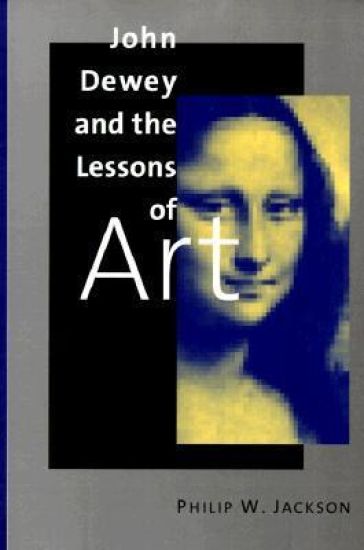
What do the arts have to teach us about how to live our lives? How can teachers use art's "lessons" to improve their teaching? This provocative book examines John Dewey's thinking about the arts and explores the practical implications of that thinking for educators. Philip W. Jackson draws on Art as Experience, the philosopher's only book on the subject, and less well-known observations scattered throughout Dewey's writings to consider the nature and power of art and its relation to education. For those unacquainted with Dewey's thought as well as for Dewey specialists, this book provides rich insights into how the arts might inform educational practice.Jackson introduces the basics of Dewey's aesthetic theory and then looks at the ways in which single works of art can profoundly affect the individuals who either make them or come to them as readers, listeners, or spectators. He considers the experiences of many writers—music and art critics, authors of self-help books, poets, and philosophers—to explore the transformative power of the experience of art. In a concluding chapter on the educational relevance of Dewey's views, the author focuses on two instances of flawed educational practice, showing how a more conscientious application of Dewey's view of the arts could have improved the learning experience.
Since its first appearance, Life in Classrooms has established itself as a classic study of the educational process at its most fundamental level. The book's aim is to encourage researchers to examine more deeply the dynamics of classroom learning, the cornerstone of educational change. Focusing on elementary classrooms, chapters include: The Daily Grind, Students’ Feelings about School, Involvement and Withdrawal in the Classroom, Teachers’ Views, The Need for New Perspectives.
The Moral Life of Schools
Philip W. Jackson; Robert E. Boostrom; David T. Hansen
Jossey-Bass Inc.,U.S.
1998
nidottu
"Rarely have I come across a book that so quickly provoked me to re-examine my own classroom behavior. There is no place to hide in this careful scrutiny of the teacher as crucial player in the daily morality tale that becomes the story of school life." -- Vivian Gussin Paley, teacher, University of Chicago Laboratory SchoolsThis book takes the reader on an eye-opening journey through a variety of elementary and high school classrooms, highlighting the moral significance of all that transpires there. Drawing on the results of a two-and-a-half year study, the authors examine the ways in which moral considerations permeate the everyday life of classrooms. In addition to providing teachers and teacher educators with a new framework for looking at and thinking about the moral dimensions of schooling, the authors also offer specific suggestions about how to look at classroom events from a moral perspective.ContentsOne. Looking for the Moral: An Observer's GuideTwo. Becoming Aware of Moral Complexity Within a School Setting: Four Sets of ObservationsThree. Facing Moral Ambiguity and Tension: Four More Sets of ObservationsFour. Cultivating Expressive Awareness in Schools and ClassroomsPostscript: Where Might One Go from Here?Philip W. Jackson is the David Lee Shillinglaw Distinguished Service Professor of Education and Psychology and a member of the Committee on Ideas and Methods at the University of Chicago.Robert E. Boostrom is a senior research associate of the Benton Center for Curriculum and Instruction at the University of Chicago.David T. Hansen is an assistant professor of curriculum and instruction in the College of Education at the University of Illinois at Chicago
John Dewey and the Philosopher's Task
Philip W. Jackson; Elliot Eisner
Teachers' College Press
2002
nidottu
In this text, readers are taken on a journey into the mind of John Dewey. By analyzing Dewey's attempts to revise the introduction to one of his most important books, ""Experience and Nature"", Philip W. Jackson explores Dewey's efforts (both intellectually and emotionally) to explain the relationship between philosophy and human affairs. This story of Dewey's life-long struggle with a complex philosophical question (one that continues to challenge philosophers) is also the story of Jackson's own struggle to understand Dewey's quest. Written for anyone interested in philosophy or the writings of Dewey, this book should be useful for understanding the philosophic method and the philosopher's task of inquiry.
Behind Closed Doors
Miriam Ben-Peretz; Shifra Schonmann; Philip W. Jackson
State University of New York Press
2000
pokkari
Provides insights into an uncharted territory in the educational environment of schools—the teachers' lounge.What happens behind the closed doors of the teachers' lounge? Does the lounge provide more than a place to rest and maybe drink a cup of coffee between classes? Behind Closed Doors examines the teachers' lounge as a site for the development of communal knowledge. While the book discusses an extensive qualitative study of teacher interactions in 26 teachers' lounges in Israeli schools, it reveals that the culture of teachers transcends national boundaries and is quite recognizable. Teachers in the lounge are regarded in this book as 'learners' whether they are actually involved in formal professional development activities, or in informal exchanges with their colleagues. Teachers learn about students and modes of instruction, but also about norms of collegiality that govern life in the lounge, and about supporting each other and coping with the manifold stresses of teaching. Written in a lively fashion, this book makes a significant contribution to the literature on teacher learning and socialization.
Laurel Tanner examines closely the practices and policies of Dewey's Laboratory School from its inception to the current day. There are extensive excerpts from the school's teachers' reports and other original records, and the volume provides a wealth of practical guidance on how schools today can introduce Deweyan reforms the way they were originally - and successfully - practised.
What Constitutes Value in Real Estate: an Address by Philip W. Kniskern, Vice-President and General Manager, Continental Mortgage Guarantee Company,
Philip W. (Philip Wheeler) Kniskern
Hassell Street Press
2021
nidottu
What Constitutes Value in Real Estate: an Address by Philip W. Kniskern, Vice-President and General Manager, Continental Mortgage Guarantee Company,
Philip W. (Philip Wheeler) Kniskern
Hassell Street Press
2023
sidottu
In this address, Philip W. Kniskern, Vice-President and General Manager of Continental Mortgage Guarantee Company, offers valuable insights into the factors that determine the value of real estate. Drawing on his extensive experience in the industry, Kniskern provides a detailed analysis of the various economic, social, and physical factors that can affect property values. This is an essential resource for anyone interested in understanding the complex dynamics of real estate valuation.This work has been selected by scholars as being culturally important, and is part of the knowledge base of civilization as we know it.This work is in the "public domain in the United States of America, and possibly other nations. Within the United States, you may freely copy and distribute this work, as no entity (individual or corporate) has a copyright on the body of the work.Scholars believe, and we concur, that this work is important enough to be preserved, reproduced, and made generally available to the public. We appreciate your support of the preservation process, and thank you for being an important part of keeping this knowledge alive and relevant.
Biopestycydy ro¿linne w systemach rolniczych
Philip W. M. Draga
Wydawnictwo Nasza Wiedza
2020
nidottu
Badania w dziedzinie rolnictwa są podstawą poprawy tolerancyjnych lub odpornych odmian, zwiększenia plon w i produkcji roślinnej, bezpieczeństwa żywnościowego, wzrostu i rozwoju spoleczności, kraj w i region w. Przed opracowaniem nowoczesnych metodologii, technik i sprzętu wielu pracownik w musialo polegac na prostszych metodach badawczych, aby rozwiązac ogromne problemy, przed kt rymi stoją zar wno rolnicy, przemysl, jak i poszczeg lni chlopi. W niniejszej książce podjęto pr bę wprowadzenia do książki pilnych problem w polowych, kt re przez wiele lat szczeg lnie spustoszyly pola trzciny cukrowej na świecie, ze szczeg lnym uwzględnieniem doświadczeń sudańskich, począwszy od lat 60-tych XX wieku. Smutna choroba trzciny cukrowej wywolana przez grzyb Basidiomycete pojawila się w Sudanie w sezonie zbior w 1964/65 wraz z powstaniem pierwszej cukrowni w Guneid. Dlatego też badanie to zbiega się w czasie i oznacza 47 lat dewastacji upraw trzciny cukrowej przez tę pojedynczą chorobę, kt ra spowodowala ogromne, nie odnotowane straty fizyczne i w sensie pieniężnym, szczeg lnie w suchych, p lpustynnych warunkach Sudanu, kt re sprzyjają tej chorobie. Wcześniejsza epifitotyka doprowadzila do wycofania z produkcji popularnych odmian wysokoplennych.
Patents for Chemicals, Pharmaceuticals, and Biotechnology
Philip W. Grubb; Peter R. Thomsen; Tom Hoxie; Gordon Wright
Oxford University Press
2016
sidottu
Patents for Chemicals, Pharmaceuticals and Biotechnology is the established and highly-acclaimed introduction to patent law and practice, guiding the reader through the legal and procedural complexities of the British, European, Japanese, and United States patent systems. It explains in detail the role of patent practitioners, both in private practice and in-house, in maximising the commercial potential of their company's or client's products. The eagerly awaited new sixth edition of this highly respected text has been fully revised and updated to discuss major new developments in patent law, patent aspects of Free Trade Agreements (FTAs), developments in the area of competition law and patents, and all relevant case law of the US, UK, and the European Patent Office (EPO). This is a comprehensive and invaluable guide to this rapidly developing and increasingly globalised area of law, providing a full description of the techniques and industry know-how that underlie successful patent practice and portfolio management.
The Economy As An Evolving Complex System
Philip W. Anderson; Kenneth Arrow; David Pines
Westview Press Inc
1988
nidottu
This book proceeds from a meeting at the Santa Fe Institute where economists and physical and biological scientists came together to discuss a conceptual framework incorporating a more appropriate mathematics with a greatly strengthened capacity to deal simultaneously with multiple variables, nonlinearity, incomplete information and dynamical processes.
Basic Notions of Condensed Matter Physics is a clear introduction to some of the most significant concepts in the physics of condensed matter. The general principles of many-body physics and perturbation theory are emphasised, providing supportive mathematical structure. This is an expansion and restatement of the second half of Nobel Laureate Philip Anderson's classic Concepts in Solids.
Tanga Region, Tanzania, is an area of persistent rural poverty with a long history of drought, floods, food shortages, famine, and social and economic disruption. Though farmers have been cultivating the land there for hundreds of years, they have consistently been unable to supply adequate food for the region's inhabitants. In "Challenging Nature", Philip Porter examines eighteen farming communities to understand what the farmers there know about their environment and which historical and economic factors play into the lack of food security. Porter first began work on this project in 1972, asking 250 farmers in the region about life history, environmental and agricultural changes, types of crops grown and methods of planting, environmental assessments, agricultural practices, food and water supplies, training and education, and attitudes toward nature. Twenty years later, he returned and reinterviewed as many farmers as could be found from the first survey. The result contextualizes the environmental history of the region while informing current and future agricultural development.
Since recording its first AIDS cases in 1983, Tanzania has reported nearly 90,000 more to the World Health Organization - more than any other country in Africa. The AIDS epidemic has forced Africans to reflect upon the meaning of traditional ideas and practices related to sexuality and fertility, and upon modernity and biomedicine. In this book, anthropologist Philip Setel observes Tanzania's Chagga people and their attempts to cope with and understand AIDS. The work presents an extended case study of the 20th-century AIDS epidemic and the cultural circumstances from which it emerged. It brings together anthropology, demography and epidemiology to explain how a particular community in Africa experiences AIDS.
John Masefield’s fantasy novel The Box of Delights is an enduring Christmas classic. It has a unique place in children’s literature and continues to inspire and engage modern readers with its timeless adventure of ancient magic, good vanquishing evil, and Christmas miracles. For many, watching the 1984 BBC TV adaptation is a Christmas tradition and ‘The Box of Delights Appreciation Society’ has over 2,000 members on Facebook! This visual celebration of The Box of Delights is written by a world expert on the text and showcases fascinating illustrations, photographs, letters, manuscripts and designs from Masefield’s life and across all of the story’s many manifestations – through the different editions of the book (whose illustrators included Quentin Blake), and adaptations on television, radio and stage. With a foreword by award-winning children’s author Piers Torday.