
Kirjahaku
Etsi kirjoja tekijän nimen, kirjan nimen tai ISBN:n perusteella.
1000 tulosta hakusanalla Phillip G Mann

The Bible and Digital Millennials
David G. Ford; Joshua L. Mann; Peter M. Phillips
Routledge
2021
nidottu
The Bible and Digital Millennials explores the place of the Bible in the lives of 18 to 35 year-olds who have been born into the digital age. As the use of digital media becomes increasingly pervasive, it should follow that it will have a significant effect on people’s engagement with religion and the sacred texts associated with it. Drawing on contemporary in-depth surveys, this study unpacks digital millennials’ stance towards, use of and engagement with the Bible in both offline and online settings.The book features results from a nationally representative survey of 2,000 young British people specifically commissioned for this project. The data is also compared with the findings of others, including a poll of 850 British Bible-centric Christians and recent Bible engagement surveys from the USA.This book investigates the relevance of the Bible to the lives of those who have grown up in the digital age. It will, therefore, offer fresh insight to any scholar of biblical studies, religion and digital media, and religious studies.

The Bible and Digital Millennials
David G. Ford; Joshua L. Mann; Peter M. Phillips
Routledge
2019
sidottu
The Bible and Digital Millennials explores the place of the Bible in the lives of 18 to 35 year-olds who have been born into the digital age. As the use of digital media becomes increasingly pervasive, it should follow that it will have a significant effect on people’s engagement with religion and the sacred texts associated with it. Drawing on contemporary in-depth surveys, this study unpacks digital millennials’ stance towards, use of and engagement with the Bible in both offline and online settings.The book features results from a nationally representative survey of 2,000 young British people specifically commissioned for this project. The data is also compared with the findings of others, including a poll of 850 British Bible-centric Christians and recent Bible engagement surveys from the USA.This book investigates the relevance of the Bible to the lives of those who have grown up in the digital age. It will, therefore, offer fresh insight to any scholar of biblical studies, religion and digital media, and religious studies.

This book offers an overview of the developing body of empirical research on the Eisenhower presidency. It provides an analysis of key features of Eisenhower's staffing structure, his institutional presidency, his decision making and relation between the White house and cabinet.

This book offers an overview of the developing body of empirical research on the Eisenhower presidency. It provides an analysis of key features of Eisenhower's staffing structure, his institutional presidency, his decision making and relation between the White house and cabinet.

Embracing Uncertainty: The Essence of Leadership
Phillip G Clampitt; Robert J. DeKoch
Routledge
2001
sidottu
This guide offers a different approach from the misleading formulae for success offered by much self-help business literature. The authors believe that in today's turbulent competitive environment, it is necessary to embrace uncertainty and set more realistic expectations.
Embracing Uncertainty: The Essence of Leadership
Phillip G Clampitt; Robert J. DeKoch
Routledge
2001
nidottu
This guide offers a different approach from the misleading formulae for success offered by much self-help business literature. The authors believe that in today's turbulent competitive environment, it is necessary to embrace uncertainty and set more realistic expectations.

In this work Terrie offers an assessment of the roles that the Adirondacks have played in American history. He brings to life the scientists and scholars, the travellers and sportsmen, the publicists and bureaucrats, who together have contributed to the wilderness aesthetic.

Contested Terrain explores the competing understandings of how best to manage this spectacular natural resource. Terrie introduces the key players and events that have shaped the region and its use, from early settlers and loggers to preservationists, year-round residents, and developers. This new edition includes a comprehensive account of the Pataki years, an era of stunning conservation triumphs combined with unprecedented pressures on the region's ecological integrity.

If George Washington and Abraham Lincoln are the saints in America’s civil religion, then the twenty-ninth president, Warren G. Harding, is our sinner. Prior to the Nixon administration, the Harding scandals were the most infamous of the twentieth century. Harding is consistently judged a failure, ranking dead last among his peers. By examining the public memory of Harding, Phillip G. Payne offers the first significant reinterpretation of his presidency in a generation. Rather than repeating the old stories, Payne examines the contexts and continued meaning of the Harding scandals for various constituencies. Payne explores such topics as Harding’s importance as a midwestern small-town booster, his rumored black ancestry, the role of various biographers in shaping his early image, the tension between public memory and academic history, and, finally, his status as an icon of presidential failure in contemporary political debates. Harding was a popular president and was widely mourned when he died in office in 1923; but with his death began the construction of his public memory and his fall from political grace. In Dead Last, Payne explores how Harding’s name became synonymous with corruption, cronyism, and incompetence and how it is used to this day as an example of what a president should not be.

If George Washington and Abraham Lincoln are the saints in America's civil religion, then the twenty-ninth president, Warren G. Harding, is our sinner. Prior to the Nixon administration, the Harding scandals were the most infamous of the twentieth century. Harding is consistently judged a failure, ranking dead last among his peers. By examining the public memory of Harding, Phillip G. Payne offers the first significant reinterpretation of his presidency in a generation. Rather than repeating the old stories, Payne examines the contexts and continued meaning of the Harding scandals for various constituencies. Payne explores such topics as Harding's importance as a midwestern small-town booster, his rumored black ancestry, the role of various biographers in shaping his early image, the tension between public memory and academic history, and, finally, his status as an icon of presidential failure in contemporary political debates. Harding was a popular president and was widely mourned when he died in office in 1923; but with his death began the construction of his public memory and his fall from political grace. In Dead Last, Payne explores how Harding's name became synonymous with corruption, cronyism, and incompetence and how it is used to this day as an example of what a president should not be.
Within one generation, software has become one of the principal sources of wealth in the world. The development and use of software has grown faster than for any artifact in the history of the world. Probably no topic or subject in history has accelerated in its rate of practice as software has. Software development now needs to mature into a disciplined activity to overcome the difficulties that have traditionally plagued it. Software developers, engineers, and project managers need a reference that describes the evolution of software: where it has been, and where it is going. The Laws of Software Process: A New Model for the Production and Management of Software reveals a novel and compelling structure for development that redefines the very nature and purpose of software. The author explains how, in the modern "knowledge economy," software systems are not "products" in the classical sense, but is the modern medium for the conveyance of information. Literally, software is the currency of the knowledge basis of wealth in today's society. From this definition flows a new assessment of the basics of software development: the purpose of methods and processes; a comparison of programming languages; and an analysis of quality management, cost estimation, and project management and completion. The groundbreaking perspective outlined in this book serves as an expert guide for successful planning and execution of development projects.

Phillip G Asher was raised in Austin, Indiana, a small town in Southern Indiana. He graduated from Austin High School in 1965. He continuedhis education by going to Indiana State University, where he received his BS degree in Earth-Space science secondary education in 1970. He received his MAT degree from Indiana University in Earth Science with a concentration in Geology in 1974.He had a full career in teaching. He taught science for 38 years at Scottsburg High School, Scottsburg, Indiana. During that time, hetaught several years of evening classes at Indiana University Southeast in New Albany, Indiana, where he currently resides withhis beautiful wife, Linda, and their beagle dog, Tyler Joseph. He retired from secondary teaching in 2008. Shortly after that, he served as a full-time lecturer in the Geosciences at Indiana University Southeast for an additional 3 1/2 years, where he taught Geology, Physical Geography, Environmental Geology, Meteorology, and World Regional Geography. He still teaches a lab in Physical Geography at IUS. He also plays the guitar and keyboard as extra hobbies. He finally found the time to do what he always wanted to, which was write a science fiction novel. This is his first novel.

Transforming Leaders Into Progress Makers
Phillip G. Clampitt; Robert J. DeKoch
SAGE Publications Inc
2010
sidottu
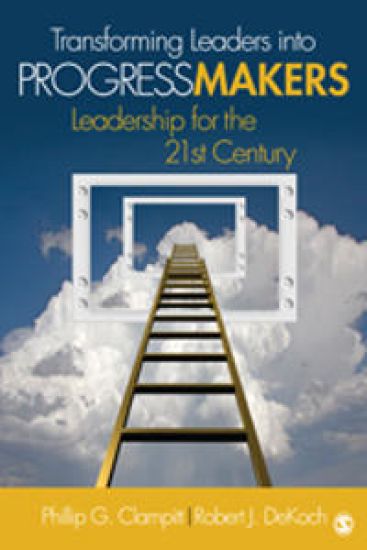
Progress: the focus of a new perspective on leadershipWeaving together original research, novel strategies and tactics, and stories of successful leaders, this book provides insight into how to become a progress-making leader. Written by an academic and a business executive, the book provides actionable ideas grounded in sound research and tested in real organizations. Find out more!1. Click on the Features/New to this Edition tab above for more information about the book.2. Visit the authors' website for teaching and learning resources: 3. Watch the video! A video touching on some of the issues covered in the book is available on YouTube. This video is a great resource that can be used in the classroom to launch discussion about the nature of leadership.
Transforming Leaders Into Progress Makers
Phillip G. Clampitt; Robert J. DeKoch
SAGE Publications Inc
2010
nidottu
Progress: the focus of a new perspective on leadershipWeaving together original research, novel strategies and tactics, and stories of successful leaders, this book provides insight into how to become a progress-making leader. Written by an academic and a business executive, the book provides actionable ideas grounded in sound research and tested in real organizations. Find out more!1. Click on the Features/New to this Edition tab above for more information about the book.2. Visit the authors' website for teaching and learning resources: 3. Watch the video! A video touching on some of the issues covered in the book is available on YouTube. This video is a great resource that can be used in the classroom to launch discussion about the nature of leadership.


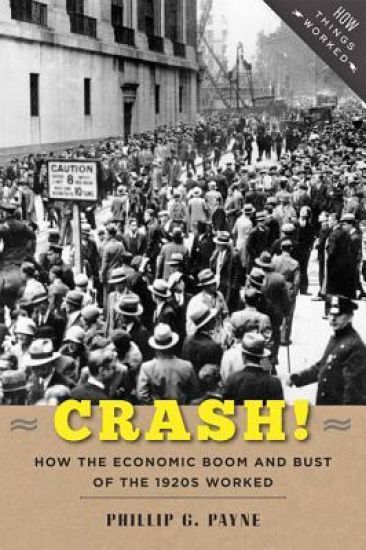
Speculation - an economic reality for centuries-is a hallmark of the modern US economy. But how does speculation work? Is it really caused, as some insist, by popular delusions and the madness of crowds, or do failed regulations play a greater part? And why is it that investors never seem to learn the lessons of past speculative bubbles? Crash! explores these questions by examining the rise and fall of the American economy in the 1920s. Phillip G Payne frames the story of the 1929 stock market crash within the booming New Era economy of the 1920s and the bust of the Great Depression. Taking into account the emotional drivers of the consumer market, he offers a clear, concise explanation of speculation's complex role in creating one of the greatest financial panics in US history. Crash! explains how post-World War I changes in the global financial markets transformed the world economy, examines the role of boosters and politicians in promoting speculation, and describes in detail the disastrous aftermath of the 1929 panic. Payne's book will help students recognize the telltale signs of bubbles and busts, so that they may become savvier consumers and investors.
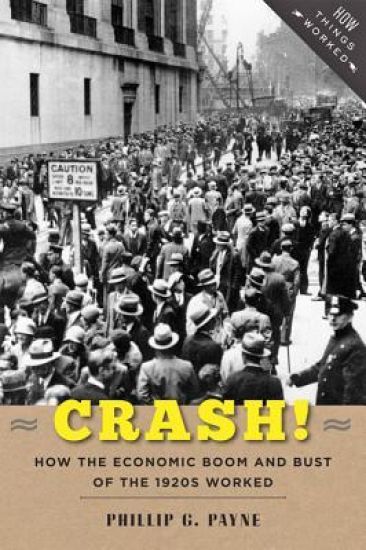
Speculation - an economic reality for centuries-is a hallmark of the modern US economy. But how does speculation work? Is it really caused, as some insist, by popular delusions and the madness of crowds, or do failed regulations play a greater part? And why is it that investors never seem to learn the lessons of past speculative bubbles? Crash! explores these questions by examining the rise and fall of the American economy in the 1920s. Phillip G Payne frames the story of the 1929 stock market crash within the booming New Era economy of the 1920s and the bust of the Great Depression. Taking into account the emotional drivers of the consumer market, he offers a clear, concise explanation of speculation's complex role in creating one of the greatest financial panics in US history. Crash! explains how post-World War I changes in the global financial markets transformed the world economy, examines the role of boosters and politicians in promoting speculation, and describes in detail the disastrous aftermath of the 1929 panic. Payne's book will help students recognize the telltale signs of bubbles and busts, so that they may become savvier consumers and investors.