Kirjojen hintavertailu. Mukana 11 244 527 kirjaa ja 12 kauppaa.

Kirjahaku

Etsi kirjoja tekijän nimen, kirjan nimen tai ISBN:n perusteella.

1000 tulosta hakusanalla Phillip J. Barrish

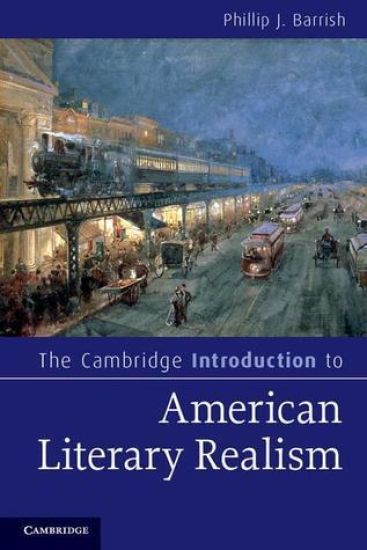
The Cambridge Introduction to American Literary Realism

The Cambridge Introduction to American Literary Realism

Phillip J. Barrish

Cambridge University Press
2011
pokkari
Between the Civil War and the First World War, realism was the most prominent form of American fiction. Realist writers of the period include some of America's greatest, such as Henry James, Edith Wharton and Mark Twain, but also many lesser-known writers whose work still speaks to us today, for instance Charles Chesnutt, Zitkala-Ša and Sarah Orne Jewett. Emphasizing realism's historical context, this introduction traces the genre's relationship with powerful, often violent, social conflicts involving race, gender, class and national origin. It also examines how the realist style was created; the necessarily ambiguous relationship between realism produced on the page and reality outside the book; and the different, often contradictory, forms 'realism' took in literary works by different authors. The most accessible yet sophisticated account of American literary realism currently available, this volume will be of great value to students, teachers and readers of the American novel.
The Cambridge Introduction to American Literary Realism

The Cambridge Introduction to American Literary Realism

Phillip J. Barrish

Cambridge University Press
2011
sidottu
Between the Civil War and the First World War, realism was the most prominent form of American fiction. Realist writers of the period include some of America's greatest, such as Henry James, Edith Wharton and Mark Twain, but also many lesser-known writers whose work still speaks to us today, for instance Charles Chesnutt, Zitkala-Ša and Sarah Orne Jewett. Emphasizing realism's historical context, this introduction traces the genre's relationship with powerful, often violent, social conflicts involving race, gender, class and national origin. It also examines how the realist style was created; the necessarily ambiguous relationship between realism produced on the page and reality outside the book; and the different, often contradictory, forms 'realism' took in literary works by different authors. The most accessible yet sophisticated account of American literary realism currently available, this volume will be of great value to students, teachers and readers of the American novel.
Cotton Fiber Chemistry and Technology

Cotton Fiber Chemistry and Technology

Phillip J. Wakelyn; Noelie R. Bertoniere; Alfred D. French; Devron P. Thibodeaux; Barbara A. Triplett; Marie-Alice Rousselle; Jr. Goynes; J. Vincent Edwards; Lawrance Hunter; David D. McAlister

CRC Press
2019
nidottu
Annual cotton production exceeds 25 million metric tons and accounts for more than 40 percent of the textile fiber consumed worldwide. A key textile fiber for over 5000 years, this complex carbohydrate is also one of the leading crops to benefit from genetic engineering. Cotton Fiber Chemistry and Technology offers a modern examination of cotton chemistry and physics, classification, production, and applications. The book incorporates new insight, technological developments, and other considerations. The book focuses on providing the most up-to-date information on cotton fiber chemistry and properties. Written by leading authorities in cotton chemistry and science, the book details fiber biosynthesis, structure, chemical composition and reactions, physical properties and includes information on biotech, organic, and colored cotton. The final chapters examine worldwide production, consumption, markets, and trends in the cotton industry. They also address environmental, workplace, and consumer risks from exposure to processing chemicals and emissions. Tracing the conversion of cotton fibers from raw materials into marketable products, Cotton Fiber Chemistry and Technology offers a complete overview of the science, technology, and economic factors that impact cotton production and applications today.
Urban Soils

Urban Soils

Phillip J. Craul

John Wiley Sons Inc
1999
sidottu
The soil which is found in large cities offer distinctive challenges to the landscape architect or horticulturist responsible for maintaining these urban plantings. Often compacted, contaminated, or otherwise unsuitable for use in major landscape projects, these soils require practical methods which can insure a successful outcome of a landscape project. This applications-oriented, introductory reference addresses numerous topics in the field of urban soil science.
Urban Soil in Landscape Design

Urban Soil in Landscape Design

Phillip J. Craul

John Wiley Sons Inc
1992
sidottu
Presents essential information on the fundamental properties of soils and how they are affected under urban conditions. Coverage includes the physical, chemical and biological characterisitics of soil; how it can be classified, inventoried and mapped; urban soil properties; problems and solutions to many of the more common urban soils; methods of ameliorating compaction including other major drainage problems and much more. Contains over 150 illustrations.
Signaling Goodness

Signaling Goodness

Phillip J. Nelson; Kenneth V. Greene

The University of Michigan Press
2003
sidottu
Political, intellectual, and academic discourse in the United States has been awash in political correctness, which has itself been berated and defended -- yet little understood. As a corrective, Nelson and Greene look at a more general process: adopting political positions to enhance one's reputation for trustworthiness both to others and to oneself.Phillip Nelson and Kenneth Greene are Professors of Economics in the Department of Economics at the State University of New York, Binghamton.
Milton's Scriptural Reasoning

Milton's Scriptural Reasoning

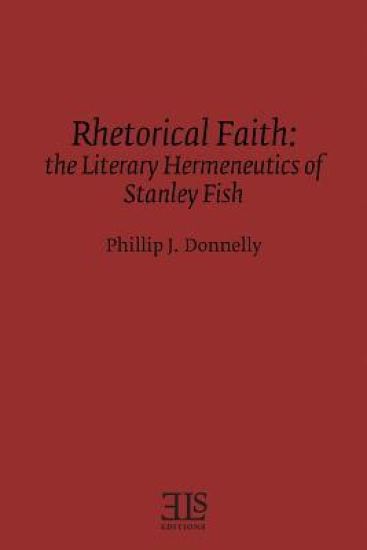
Phillip J. Donnelly

Cambridge University Press
2009
sidottu
John Milton's major poems have long provoked wide-ranging judgements about the purposes of his biblical engagement. In this elegant and insightful study, Phillip J. Donnelly transforms our common perceptions about Milton's writing. He challenges the traditional assumption that the poet shared our modern view that reason is a capacity whose purpose is to control nature. Instead, Milton's conception of reason - both human and divine - is bound up with a poetic sense of difference, a capacity for being faithful to a goodness and beauty that survives the effects of human frailty in the fall. Providing fresh new readings of Paradise Lost, Paradise Regained and Samson Agonistes, Donnelly gives us important new perspectives on Milton's aesthetics, theology and politics.
Battles on the Bench

Battles on the Bench

Phillip J. Cooper

University Press of Kansas
1995
nidottu
This text illuminates the Supreme Court's legendary and little-known clashes from John Marshall to Ruth Ginsberg. It aims to help the reader understand why the justices fight, how they fight and why their fights matter.
The War Against Regulation

The War Against Regulation

Phillip J. Cooper

University Press of Kansas
2009
sidottu
Battered by our economy and disappointed by our government's role in that battering, we might be tempted to point the finger of blame at whoever's currently on the hot seat in front of us. But, as Phillip Cooper shows, we must widen our vision to take in the long history behind this dismal state of affairs. By doing so, it becomes clear that our present circumstances are in many ways the predictable outcome of a several-decades-long war against government regulation and its potential to protect and improve our lives. Cooper explains how the war against regulation has been conducted both from within and outside the government over the past thirty years. Chronicling its major battles from the Jimmy Carter years through the presidency of George W. Bush, he shows that it is a war - waged by Democrats and Republicans alike - that has been fought in high places but whose casualties include children, senior citizens, the infirm, and millions of families who have lost their homes and retirement savings. Cooper tells how Carter, praised for environmental regulation, worked to deregulate airlines, trucking, and banks; how Reagan undertook administrative rather than legislative measures against regulation - most of which weren't understood or even known by the public; and how George H.W. Bush continued the fight with the Quayle Commission. He describes Bill Clinton's commitment to fighting regulation despite having campaigned against his Republican predecessors' policies, then describes the behind-the-scenes maneuverings of George W. Bush as he sought to gut regulatory agencies entirely. He also devotes an entire chapter to parallel developments in the Supreme Court that substantially advanced the deregulation agenda during this era. Cooper contends that regulation, as one of a number of policy tools available to our leaders, is neither good nor bad in and of itself. Excessive deregulation - as opposed to regulatory reform, can present considerable peril, as current events clearly show. By considering key issues important to a more effective understanding and use of regulation in the future, ""The War against Regulation"" makes a vital case for restoring debate about regulation's rightful role within the republic and offers hope that a better understanding of that role can help lift us out of our current crisis.
By Order of the President

By Order of the President

Phillip J. Cooper

University Press of Kansas
2014
sidottu
Scholars and citizens alike have endlessly debated the proper limits of presidential action within our democracy. In this revised and expanded edition, noted scholar Phillip Cooper offers a cogent guide to these powers and shows how presidents from George Washington to Barack Obama have used and abused them in trying to realize their visions for the nation. As Cooper reveals, there has been virtually no significant policy area or level of government left untouched by the application of these presidential ""power tools."" Whether seeking to regulate the economy, committing troops to battle without a congressional declaration of war, or blocking commercial access to federal lands, presidents have wielded these powers to achieve their goals, often in ways that seem to fly in the face of true representative government. Cooper defines the different forms these powers take--executive orders, presidential memoranda, proclamations, national security directives, and signing statements--demonstrates their uses, critiques their strengths and dangers, and shows how they have changed over time. Cooper calls on events in American history with which we are all familiar but whose implications may have escaped us. Examples of executive action include, Washington's ""Neutrality Proclamation""; Lincoln's Emancipation Proclamation; the more than 1,700 executive orders issued by Woodrow Wilson in World War I; FDR also issued the order to incarcerate Japanese Americans during World War II; Truman's orders to desegregate the military; Eisenhower's numerous national security directives. JFK's order to control racial violence in Alabama. As Cooper demonstrates in his balanced treatment of these and subsequent presidencies, each successive administration finds new ways of using these tools to achieve policy goals--especially those goals they know they are unlikely to accomplish with the help of Congress. A key feature of the second edition are case studies on the post-9/11 evolution of presidential direct action in ways that have drawn little public attention. It clarifies the factors that make these policy tools so attractive to presidents and the consequences that can flow from their use and abuse in a post-9/11 environment. There is an important new chapter on ""executive agreements"" which, though they are not treaties within the meaning of the U.S. Constitution and not subject to Senate ratification, appear in many respects to be rapidly replacing treaties as instruments of foreign policy.
By Order of the President

By Order of the President

Phillip J. Cooper

University Press of Kansas
2014
nidottu
Scholars and citizens alike have endlessly debated the proper limits of presidential action within our democracy. In this revised and expanded edition, noted scholar Phillip Cooper offers a cogent guide to these powers and shows how presidents from George Washington to Barack Obama have used and abused them in trying to realize their visions for the nation. As Cooper reveals, there has been virtually no significant policy area or level of government left untouched by the application of these presidential ""power tools."" Whether seeking to regulate the economy, committing troops to battle without a congressional declaration of war, or blocking commercial access to federal lands, presidents have wielded these powers to achieve their goals, often in ways that seem to fly in the face of true representative government. Cooper defines the different forms these powers take--executive orders, presidential memoranda, proclamations, national security directives, and signing statements--demonstrates their uses, critiques their strengths and dangers, and shows how they have changed over time. Cooper calls on events in American history with which we are all familiar but whose implications may have escaped us. Examples of executive action include, Washington's ""Neutrality Proclamation""; Lincoln's Emancipation Proclamation; the more than 1,700 executive orders issued by Woodrow Wilson in World War I; FDR also issued the order to incarcerate Japanese Americans during World War II; Truman's orders to desegregate the military; Eisenhower's numerous national security directives. JFK's order to control racial violence in Alabama. As Cooper demonstrates in his balanced treatment of these and subsequent presidencies, each successive administration finds new ways of using these tools to achieve policy goals--especially those goals they know they are unlikely to accomplish with the help of Congress. A key feature of the second edition are case studies on the post-9/11 evolution of presidential direct action in ways that have drawn little public attention. It clarifies the factors that make these policy tools so attractive to presidents and the consequences that can flow from their use and abuse in a post-9/11 environment. There is an important new chapter on ""executive agreements"" which, though they are not treaties within the meaning of the U.S. Constitution and not subject to Senate ratification, appear in many respects to be rapidly replacing treaties as instruments of foreign policy.
Implementing Sustainable Development

Implementing Sustainable Development

Phillip J. Cooper; Claudia Maria Vargas

Rowman Littlefield Publishers
2004
nidottu
Implementing Sustainable Development focuses on the challenge of turning international commitments and policy promises into action. Using examples and cases from around the U.S. and around the world, it examines the successful and failed efforts designed to address the social, environmental, and economic dimensions of sustainable development. Based on broad research that started before the Earth Summit, Implementing Sustainable Development offers a practical and useful approach to identifying and addressing policy implementation challenges.
Sustainable Development in Crisis Conditions

Sustainable Development in Crisis Conditions

Phillip J. Cooper; Claudia María Vargas

Rowman Littlefield Publishers
2007
nidottu
In the midst of great crisis, it is difficult to contemplate the future. In recent decades, determining what kind of future to imagine has been an ongoing challenge for millions of people around the world who have been subjected to war, terrorism, and civil disorder. While destruction of the environment has long been part of warfare, it has become increasingly important as environmental pressures have intensified in our time. Focusing on the challenges and issues that arise for those contemplating a way forward in the wake of catastrophic upheavals, Sustainable Development in Crisis Conditions takes a broad-based and integrative approach. What emerges is that the post-WWII reconstruction or nation-building perspectives are inadequate and inappropriate to most of the contemporary post-conflict challenges—a successful response requires a sustainable development approach, and Sustainable Development in Crisis Conditions is a preliminary exploration of this complex subject.
Mine to Mill

Mine to Mill

Phillip J. Stager

Schiffer Publishing Ltd
2015
sidottu
The history of the iron ore trade on the Great Lakes, from 1900 to 1980, is perhaps best related in visual form. Historians and enthusiasts alike can now learn about this important part of our country's industrial heritage in nearly 300 views of the mines, railroads, loading docks, and ships of the Great Lakes. Through the medium of the picture postcard, discover the underground and huge open-pit mines on the iron ranges in Wisconsin, Michigan, and Minnesota, and ride the rails as the iron is moved from the mines to the giant loading docks at the Upper Lake ports. In calm seas and stormy weather, travel from these ports to the international locks at Sault Ste. Marie, in Michigan and Ontario. The accurate descriptions and comprehensive deltiological information will appeal to postcard collectors, rail and nautical enthusiasts, industrial archeologists, and lovers of Great Lakes history.
Slave Laws in Virginia

Slave Laws in Virginia

Phillip J. Schwarz

University of Georgia Press
2010
pokkari
The five essays in Slave Laws in Virginia explore two centuries of the ever-changing relationship between a major slave society and the laws that guided it. The topics covered are diverse, including the African judicial background of African American slaves, Thomas Jefferson’s relationship with the laws of slavery, the capital punishment of slaves, nineteenth-century penal transportation of slaves from Virginia as related to the interstate slave trade and the changing market for slaves, and Virginia’s experience with its own fugitive slave laws. Through the history of one large extended family of ex-slaves, Philip J. Schwarz’s conclusion examines how the law shaped the interaction between former slaves and masters after emancipation.Instead of relying on a static view of these two centuries, the author focuses on the diverse and changing ways that lawmakers and law enforcers responded to slaves’ behavior and to whites’ perceptions of and assumptions about that behavior.
The Cincinnati Human Relations Commission

The Cincinnati Human Relations Commission

Phillip J. Obermiller; Thomas E. Wagner

Ohio University Press
2017
sidottu
In the summer of 1943, as World War II raged overseas, the United States also faced internal strife. Earlier that year, Detroit had erupted in a series of race riots that killed dozens and destroyed entire neighborhoods. Across the country, mayors and city councils sought to defuse racial tensions and promote nonviolent solutions to social and economic injustices. In Cincinnati, the result of those efforts was the Mayor's Friendly Relations Committee, later renamed the Cincinnati Human Relations Commission (CHRC). The Cincinnati Human Relations Commission: A History, 1943–2013, is a decade-by-decade chronicle of the agency: its accomplishments, challenges, and failures. The purpose of municipal human relations agencies like the CHRC was to give minority groups access to local government through internal advocacy, education, mediation, and persuasion—in clear contrast to the tactics of lawsuits, sit-ins, boycotts, and marches adopted by many external, nongovernmental organizations. In compiling this history, Phillip J. Obermiller and Thomas E. Wagner have drawn on an extensive base of archival records, reports, speeches, and media sources. In addition, archival and contemporary interviews provide first-person insight into the events and personalities that shaped the agency and the history of civil rights in this midwestern city.
The Secret Life of Real Estate and Banking

The Secret Life of Real Estate and Banking

Phillip J. Anderson

Shepheard-Walwyn (Publishers) Ltd
2009
sidottu
Tracing the history of housing cycles in the United States, this examination shows how the banking system reacts to prosperity and recession and reveals the ways regulations enacted after each collapse tend to disappear when boom times return. With its invaluable insights and practical advice, the discussion is aimed at both novice and experienced investors who want to know why the real estate cycle moves as it does, how it can be forecasted in advance, and how best to profit from this knowledge.
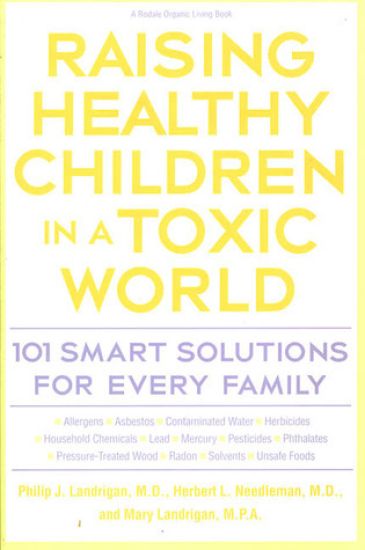
Raising Healthy Children In A Toxic World

Raising Healthy Children In A Toxic World

PHILLIP J. LANDRIGAN

RODALE PRESS
2018
pokkari
A must-have Organic Style title for parents and parents-to-be! All parents want what's best for their children, and protecting them from the toxic materials that surround us---such as lead, asbestos, PCBs, and pesticides---is, of course incredibly pertinent to their well-being. Whether choosing where to buy a home, deciding which toys to buy, or just being informed about the safety of a child's school, Raising Healthy Children in a Toxic World provides parents with necessary information and recommended solutions. Tips for parents and parents-to-be include: Test peeling and chipping paint for lead content; Remove wall-to-wall carpets and replace with scatter rugs you can wash; No soap at all is just fine for bathing; Instead of commercial baby wipes, use a cotton cloth dipped in water and baking soda; Written by pediatricians who have done extensive research on pesticides and lead poisoning, this user-friendly volume includes checklists to help readers identify toxins in and around the home and an extensive list of resources for locating more natural products. Each solution is conveniently rated for its importance and difficulty.