Kirjojen hintavertailu. Mukana 11 244 527 kirjaa ja 12 kauppaa.

Kirjahaku

Etsi kirjoja tekijän nimen, kirjan nimen tai ISBN:n perusteella.

1000 tulosta hakusanalla Phillip J. Cooper

Battles on the Bench

Battles on the Bench

Phillip J. Cooper

University Press of Kansas
1995
nidottu
This text illuminates the Supreme Court's legendary and little-known clashes from John Marshall to Ruth Ginsberg. It aims to help the reader understand why the justices fight, how they fight and why their fights matter.
The War Against Regulation

The War Against Regulation

Phillip J. Cooper

University Press of Kansas
2009
sidottu
Battered by our economy and disappointed by our government's role in that battering, we might be tempted to point the finger of blame at whoever's currently on the hot seat in front of us. But, as Phillip Cooper shows, we must widen our vision to take in the long history behind this dismal state of affairs. By doing so, it becomes clear that our present circumstances are in many ways the predictable outcome of a several-decades-long war against government regulation and its potential to protect and improve our lives. Cooper explains how the war against regulation has been conducted both from within and outside the government over the past thirty years. Chronicling its major battles from the Jimmy Carter years through the presidency of George W. Bush, he shows that it is a war - waged by Democrats and Republicans alike - that has been fought in high places but whose casualties include children, senior citizens, the infirm, and millions of families who have lost their homes and retirement savings. Cooper tells how Carter, praised for environmental regulation, worked to deregulate airlines, trucking, and banks; how Reagan undertook administrative rather than legislative measures against regulation - most of which weren't understood or even known by the public; and how George H.W. Bush continued the fight with the Quayle Commission. He describes Bill Clinton's commitment to fighting regulation despite having campaigned against his Republican predecessors' policies, then describes the behind-the-scenes maneuverings of George W. Bush as he sought to gut regulatory agencies entirely. He also devotes an entire chapter to parallel developments in the Supreme Court that substantially advanced the deregulation agenda during this era. Cooper contends that regulation, as one of a number of policy tools available to our leaders, is neither good nor bad in and of itself. Excessive deregulation - as opposed to regulatory reform, can present considerable peril, as current events clearly show. By considering key issues important to a more effective understanding and use of regulation in the future, ""The War against Regulation"" makes a vital case for restoring debate about regulation's rightful role within the republic and offers hope that a better understanding of that role can help lift us out of our current crisis.
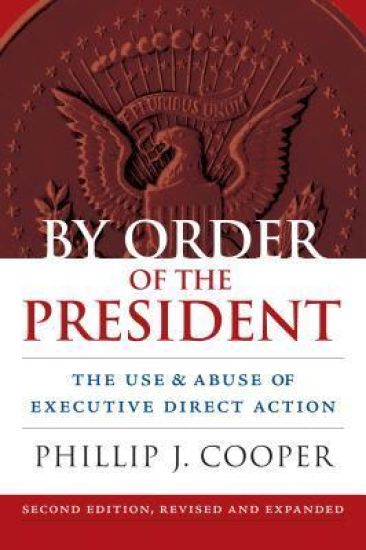
By Order of the President

By Order of the President

Phillip J. Cooper

University Press of Kansas
2014
sidottu
Scholars and citizens alike have endlessly debated the proper limits of presidential action within our democracy. In this revised and expanded edition, noted scholar Phillip Cooper offers a cogent guide to these powers and shows how presidents from George Washington to Barack Obama have used and abused them in trying to realize their visions for the nation. As Cooper reveals, there has been virtually no significant policy area or level of government left untouched by the application of these presidential ""power tools."" Whether seeking to regulate the economy, committing troops to battle without a congressional declaration of war, or blocking commercial access to federal lands, presidents have wielded these powers to achieve their goals, often in ways that seem to fly in the face of true representative government. Cooper defines the different forms these powers take--executive orders, presidential memoranda, proclamations, national security directives, and signing statements--demonstrates their uses, critiques their strengths and dangers, and shows how they have changed over time. Cooper calls on events in American history with which we are all familiar but whose implications may have escaped us. Examples of executive action include, Washington's ""Neutrality Proclamation""; Lincoln's Emancipation Proclamation; the more than 1,700 executive orders issued by Woodrow Wilson in World War I; FDR also issued the order to incarcerate Japanese Americans during World War II; Truman's orders to desegregate the military; Eisenhower's numerous national security directives. JFK's order to control racial violence in Alabama. As Cooper demonstrates in his balanced treatment of these and subsequent presidencies, each successive administration finds new ways of using these tools to achieve policy goals--especially those goals they know they are unlikely to accomplish with the help of Congress. A key feature of the second edition are case studies on the post-9/11 evolution of presidential direct action in ways that have drawn little public attention. It clarifies the factors that make these policy tools so attractive to presidents and the consequences that can flow from their use and abuse in a post-9/11 environment. There is an important new chapter on ""executive agreements"" which, though they are not treaties within the meaning of the U.S. Constitution and not subject to Senate ratification, appear in many respects to be rapidly replacing treaties as instruments of foreign policy.
By Order of the President

By Order of the President

Phillip J. Cooper

University Press of Kansas
2014
nidottu
Scholars and citizens alike have endlessly debated the proper limits of presidential action within our democracy. In this revised and expanded edition, noted scholar Phillip Cooper offers a cogent guide to these powers and shows how presidents from George Washington to Barack Obama have used and abused them in trying to realize their visions for the nation. As Cooper reveals, there has been virtually no significant policy area or level of government left untouched by the application of these presidential ""power tools."" Whether seeking to regulate the economy, committing troops to battle without a congressional declaration of war, or blocking commercial access to federal lands, presidents have wielded these powers to achieve their goals, often in ways that seem to fly in the face of true representative government. Cooper defines the different forms these powers take--executive orders, presidential memoranda, proclamations, national security directives, and signing statements--demonstrates their uses, critiques their strengths and dangers, and shows how they have changed over time. Cooper calls on events in American history with which we are all familiar but whose implications may have escaped us. Examples of executive action include, Washington's ""Neutrality Proclamation""; Lincoln's Emancipation Proclamation; the more than 1,700 executive orders issued by Woodrow Wilson in World War I; FDR also issued the order to incarcerate Japanese Americans during World War II; Truman's orders to desegregate the military; Eisenhower's numerous national security directives. JFK's order to control racial violence in Alabama. As Cooper demonstrates in his balanced treatment of these and subsequent presidencies, each successive administration finds new ways of using these tools to achieve policy goals--especially those goals they know they are unlikely to accomplish with the help of Congress. A key feature of the second edition are case studies on the post-9/11 evolution of presidential direct action in ways that have drawn little public attention. It clarifies the factors that make these policy tools so attractive to presidents and the consequences that can flow from their use and abuse in a post-9/11 environment. There is an important new chapter on ""executive agreements"" which, though they are not treaties within the meaning of the U.S. Constitution and not subject to Senate ratification, appear in many respects to be rapidly replacing treaties as instruments of foreign policy.
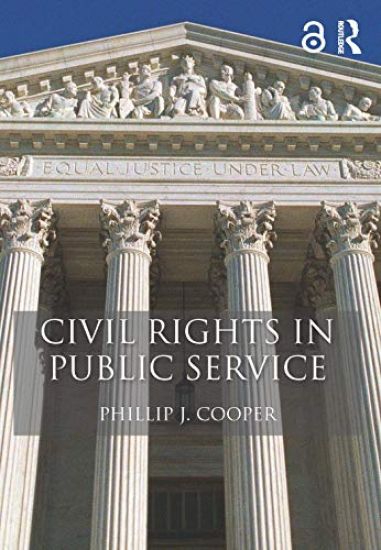
Civil Rights in Public Service

Civil Rights in Public Service

Phillip J. Cooper

Routledge
2016
sidottu
Promises of justice and equality made in the U.S. Constitution, numerous Amendments, and decisions of the Supreme Court are hallmarks of American civil rights. Yet the realities of inequality remain facts of modern life for too many Native Americans, African Americans, and Latino Americans, even though state-mandated racial segregation has been outlawed for years. Women still face a variety of forms of discrimination—some subtle and others more overt. There remain many laws that treat people differently because of sexual orientation. People with disabilities are supposed to be protected by a variety of statutes, but many of these policies remain unfulfilled promises. These are just some of the many challenges of civil rights that persist in a nation that proudly points to the words above the entrance to the U.S. Supreme Court that read "Equal Justice Under Law."This text is for current and future public service professionals —whether they are in government agencies, in nonprofit organizations that provide social services for government, or contractors who operate as state actors—who increasingly serve diverse communities with a range of complex challenges, while working and managing within organizations that, fortunately, are themselves more diverse than ever before. For those who work and serve in such settings, civil rights is not an abstract academic study, but a critically important and very practical fact of daily life. This book may also be used on civil rights law, policy, and public administration courses, and each chapter ends with a section on ‘Issues for Policy and Practice’ to guide an examination of key public policy hurdles in the fight for civil rights as well as the implications for public service practice. Through an engaging exploration of edited court cases, legislation, and speeches, the reader is encouraged to think critically about civil rights law and policy pertaining to African Americans, Native Americans, Latinos/Latinas, gender, sexual orientation, and disabilities, to learn what civil rights require, but also to come to a more empathetic understanding of how different groups of people experience civil rights and the unique challenges they face. Chapter 2 of this book is freely available as a downloadable Open Access PDF at http://www.taylorfrancis.com under a Creative Commons Attribution-Non Commercial-No Derivatives (CC-BY-NC-ND) 4.0 license.
Civil Rights in Public Service

Civil Rights in Public Service

Phillip J. Cooper

Routledge
2016
nidottu
Promises of justice and equality made in the U.S. Constitution, numerous Amendments, and decisions of the Supreme Court are hallmarks of American civil rights. Yet the realities of inequality remain facts of modern life for too many Native Americans, African Americans, and Latino Americans, even though state-mandated racial segregation has been outlawed for years. Women still face a variety of forms of discrimination—some subtle and others more overt. There remain many laws that treat people differently because of sexual orientation. People with disabilities are supposed to be protected by a variety of statutes, but many of these policies remain unfulfilled promises. These are just some of the many challenges of civil rights that persist in a nation that proudly points to the words above the entrance to the U.S. Supreme Court that read "Equal Justice Under Law."This text is for current and future public service professionals —whether they are in government agencies, in nonprofit organizations that provide social services for government, or contractors who operate as state actors—who increasingly serve diverse communities with a range of complex challenges, while working and managing within organizations that, fortunately, are themselves more diverse than ever before. For those who work and serve in such settings, civil rights is not an abstract academic study, but a critically important and very practical fact of daily life. This book may also be used on civil rights law, policy, and public administration courses, and each chapter ends with a section on ‘Issues for Policy and Practice’ to guide an examination of key public policy hurdles in the fight for civil rights as well as the implications for public service practice. Through an engaging exploration of edited court cases, legislation, and speeches, the reader is encouraged to think critically about civil rights law and policy pertaining to African Americans, Native Americans, Latinos/Latinas, gender, sexual orientation, and disabilities, to learn what civil rights require, but also to come to a more empathetic understanding of how different groups of people experience civil rights and the unique challenges they face. Chapter 2 of this book is freely available as a downloadable Open Access PDF at http://www.taylorfrancis.com under a Creative Commons Attribution-Non Commercial-No Derivatives (CC-BY-NC-ND) 4.0 license.
Implementing Sustainable Development

Implementing Sustainable Development

Phillip J. Cooper; Claudia Maria Vargas
Rowman Littlefield Publishers
2004
nidottu
Implementing Sustainable Development focuses on the challenge of turning international commitments and policy promises into action. Using examples and cases from around the U.S. and around the world, it examines the successful and failed efforts designed to address the social, environmental, and economic dimensions of sustainable development. Based on broad research that started before the Earth Summit, Implementing Sustainable Development offers a practical and useful approach to identifying and addressing policy implementation challenges.
Sustainable Development in Crisis Conditions

Sustainable Development in Crisis Conditions

Phillip J. Cooper; Claudia María Vargas

Rowman Littlefield Publishers
2007
nidottu
In the midst of great crisis, it is difficult to contemplate the future. In recent decades, determining what kind of future to imagine has been an ongoing challenge for millions of people around the world who have been subjected to war, terrorism, and civil disorder. While destruction of the environment has long been part of warfare, it has become increasingly important as environmental pressures have intensified in our time. Focusing on the challenges and issues that arise for those contemplating a way forward in the wake of catastrophic upheavals, Sustainable Development in Crisis Conditions takes a broad-based and integrative approach. What emerges is that the post-WWII reconstruction or nation-building perspectives are inadequate and inappropriate to most of the contemporary post-conflict challenges—a successful response requires a sustainable development approach, and Sustainable Development in Crisis Conditions is a preliminary exploration of this complex subject.
Governing by Contract

Governing by Contract

Phillip J. Cooper; Phillip Cooper

CQ Press
2002
nidottu
Is the public getting a good deal when the government contracts out the delivery of goods and services? Phillip Cooper attempts to get at the heart of this question by exploring what happens when public sector organizations—at the federal, state and local levels—form working relationships with other agencies, communities, non-profit organizations and private firms through contracts. Rather than focus on the ongoing debate over privatization, the book emphasizes the tools managers need to form, operate, terminate or transform these contracts amidst a complex web of intergovernmental relations.Cooper frames the issues of public contract management by showing how managers are caught in between governance by authority and government by contract. By looking at cases ranging from the management of Baltimore schools to the contracting of senior citizen programs in Kansas, he offers practical information to students and practitioners and a theoretical context for their work.At every turn, the author avoids bogging readers down in technical jargon. Instead the book sheds light on a crucial part of any public manager's job with lively case material and no-nonsense guidance for making the most of taxpayer dollars.
Implementing Sustainable Development

Implementing Sustainable Development

Claudia María Vargas; Phillip J. Cooper

BLOOMSBURY PUBLISHING PLC
2024
sidottu
Despite all the talk of sustainability, there has not been enough action to halt or reverse the impacts of climate change. Decades after the Rio Earth Summit and despite the many policies and commitments to move toward sustainable development, there continues to be a serious implementation gap.Implementing Sustainable Development focuses on the challenges of turning international commitments and policy promises into local action. Through global examples and cases, the authors examine not only the core principles, but also successful and failed efforts to address the social, environmental, and economic dimensions of sustainable development. They systematically guide readers through the technical, legal, economic, administrative, political, ethical, and cultural feasibility of putting sustainable development solutions in place. Based on broad research, Claudia María Vargas and Phillip J. Cooper offer a practical and useful approach to identifying and addressing policy implementation challenges—what works, what doesn’t, and why.Features of this thoroughly revised second edition include: Dozens of case studies from the throughout the worldAn overview of the UN Sustainable Development GoalsAction-oriented solutions to the challenges of sustainable developmentCareful consideration of local and indigenous knowledgeKey issues of equity, equality, and the importance of community involvement
Implementing Sustainable Development

Implementing Sustainable Development

Claudia María Vargas; Phillip J. Cooper

BLOOMSBURY PUBLISHING PLC
2024
nidottu
Despite all the talk of sustainability, there has not been enough action to halt or reverse the impacts of climate change. Decades after the Rio Earth Summit and despite the many policies and commitments to move toward sustainable development, there continues to be a serious implementation gap.Implementing Sustainable Development focuses on the challenges of turning international commitments and policy promises into local action. Through global examples and cases, the authors examine not only the core principles, but also successful and failed efforts to address the social, environmental, and economic dimensions of sustainable development. They systematically guide readers through the technical, legal, economic, administrative, political, ethical, and cultural feasibility of putting sustainable development solutions in place. Based on broad research, Claudia María Vargas and Phillip J. Cooper offer a practical and useful approach to identifying and addressing policy implementation challenges—what works, what doesn’t, and why.Features of this thoroughly revised second edition include: Dozens of case studies from the throughout the worldAn overview of the UN Sustainable Development GoalsAction-oriented solutions to the challenges of sustainable developmentCareful consideration of local and indigenous knowledgeKey issues of equity, equality, and the importance of community involvement
Work Stress and Coping

Work Stress and Coping

Philip J. Dewe; Cary L. Cooper

SAGE Publications Ltd
2017
sidottu
Work Stress and Coping the authors provide an historical account of workplace stress, taking a broad approach by integrating the macro forces impacting the micro, and highlighting what the research in the field tells us about the changing nature of work so that individuals and organisations can create more liveable working environments. With an emphasis on the growing influence of globalization, the book explores the forces of change within contemporary societies and assesses how they have fundamentally changed the nature of work and the direction of research into stress and coping. Capturing the history, context, critique and transformation of theory into practice, the authors offer an insight into how managers and businesses have failed, the effects this has had on how work is experienced, the evolution and relevance of existing theories and suggest alternative methods and future directions. Suitable reading for students of HRM, Organisational Behaviour and Occupational Psychology.
Work Stress and Coping

Work Stress and Coping

Philip J. Dewe; Cary L. Cooper

SAGE Publications Ltd
2017
nidottu
Work Stress and Coping the authors provide an historical account of workplace stress, taking a broad approach by integrating the macro forces impacting the micro, and highlighting what the research in the field tells us about the changing nature of work so that individuals and organisations can create more liveable working environments. With an emphasis on the growing influence of globalization, the book explores the forces of change within contemporary societies and assesses how they have fundamentally changed the nature of work and the direction of research into stress and coping. Capturing the history, context, critique and transformation of theory into practice, the authors offer an insight into how managers and businesses have failed, the effects this has had on how work is experienced, the evolution and relevance of existing theories and suggest alternative methods and future directions. Suitable reading for students of HRM, Organisational Behaviour and Occupational Psychology.
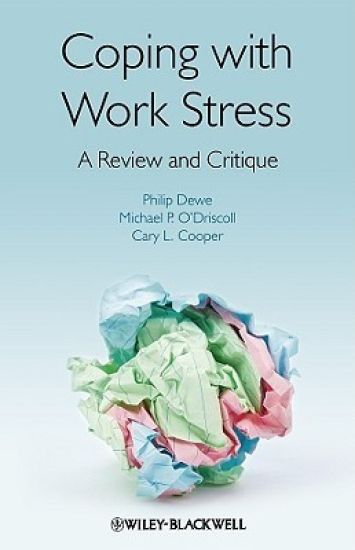
Coping with Work Stress

Coping with Work Stress

Philip J. Dewe; Michael P. O'Driscoll; Cary Cooper
John Wiley Sons Inc
2010
sidottu
Coping with Work Stress: A Review and Critique highlights current research relating to the coping strategies of individuals and organizations, and provides best practice techniques for dealing with the growing epidemic of stress and lack of overall well-being at work. Reviews and critiques the most current research focusing on workplace stressProvides 'best practice' techniques for dealing with stress at the workplaceExtends beyond stress to cover broader issues of well-being at work
Coping with Work Stress

Coping with Work Stress

Philip J. Dewe; Michael P. O'Driscoll; Cary Cooper
John Wiley Sons Inc
2010
nidottu
Coping with Work Stress: A Review and Critique highlights current research relating to the coping strategies of individuals and organizations, and provides best practice techniques for dealing with the growing epidemic of stress and lack of overall well-being at work. Reviews and critiques the most current research focusing on workplace stressProvides 'best practice' techniques for dealing with stress at the workplaceExtends beyond stress to cover broader issues of well-being at work
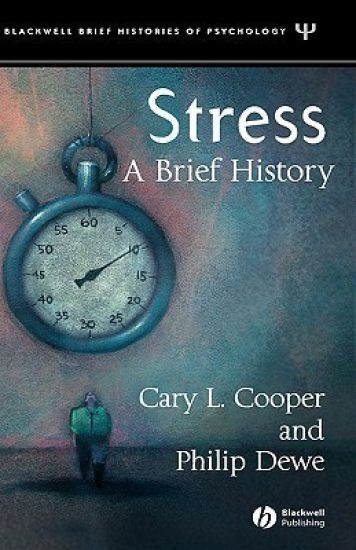
Stress

Stress

Cary Cooper; Philip J. Dewe

Wiley-Blackwell (an imprint of John Wiley Sons Ltd)
2004
sidottu
Stress: A Brief History is a lively, accessible, and detailed examination of the origins of the field of stress research. First concise, accessible, academically grounded book on the origins of the concept of stress. Explores different theories and models of stress such as the psychosomatic approach, homeostasis, and general adaptation syndrome. Discusses the work and intriguing contributions of key researchers in the field such as Walter Cannon, Hans Selye, Harold Wolff, and Richard Lazarus. Explains the origins of key concepts in stress such as stressful life events, the coronary-prone personality, and appraisals and coping. Culminates in a discussion of what makes a good theory and what obligations stress researchers have to those whose working lives they study.
Stress

Stress

Cary Cooper; Philip J. Dewe

JOHN WILEY AND SONS LTD
2004
nidottu
Stress: A Brief History is a lively, accessible, and detailed examination of the origins of the field of stress research. First concise, accessible, academically grounded book on the origins of the concept of stress. Explores different theories and models of stress such as the psychosomatic approach, homeostasis, and general adaptation syndrome. Discusses the work and intriguing contributions of key researchers in the field such as Walter Cannon, Hans Selye, Harold Wolff, and Richard Lazarus. Explains the origins of key concepts in stress such as stressful life events, the coronary-prone personality, and appraisals and coping. Culminates in a discussion of what makes a good theory and what obligations stress researchers have to those whose working lives they study.
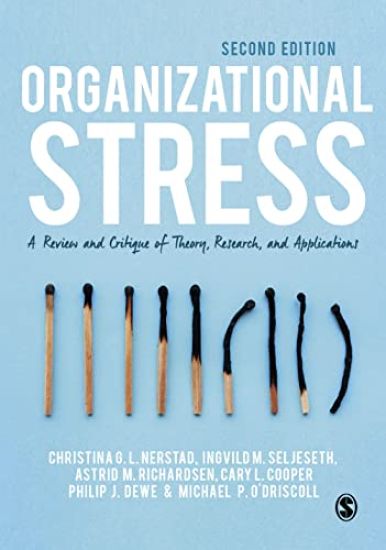
Organizational Stress

Organizational Stress

Christina G. L. Nerstad; Ingvild M. Seljeseth; Astrid M Richardsen; Cary L. Cooper; Philip J. Dewe; Michael P O'Driscoll
SAGE PUBLICATIONS LTD
2023
nidottu
What price do organizations and nations pay for a poor fit between employees and their work environments? Negative stress imposes a high cost on individual health and well-being as well as organizational health and productivity. This comprehensive textbook examines the definitions of job-related stress and the methods used to assess levels and consequences of occupational stress, along with strategies that may be used by individuals and organizations to confront negative stress and its associated problems. From sources of stress to organizational interventions, and from job-related burnout to coping with stress, Organizational Stress gives the reader – whether researcher, student, or practitioner – a basis for tailoring work environments which contribute to the health and well-being of individuals, organizations, and even the societies in which they live. This new edition has been updated to reflect the most relevant research in the field of organisational stress, including a completely new chapter on stress and the brain. It also focusses on the future of work in our rapidly changing world – dealing with contemporary contexts such as the COVID-19 pandemic and the rise of the gig economy. Christina G.L. Nerstad is a Professor at BI Norwegian Business School Ingvild M. Seljeseth is an Associate Professor at Kristiania University College Astrid M. Richardsen is Professor Emerita at BI Norwegian Business School Cary L Cooper is a Professor at Alliance Manchester Business School Philip J. Dewe is Emeritus Professor at Birkbeck, University of London Michael P. O'Driscoll is Emeritus Professor at University of Waikato
Organizational Stress

Organizational Stress

Christina G. L. Nerstad; Ingvild M. Seljeseth; Astrid M Richardsen; Cary L. Cooper; Philip J. Dewe; Michael P O'Driscoll

SAGE PUBLICATIONS LTD
2023
sidottu
What price do organizations and nations pay for a poor fit between employees and their work environments? Negative stress imposes a high cost on individual health and well-being as well as organizational health and productivity. This comprehensive textbook examines the definitions of job-related stress and the methods used to assess levels and consequences of occupational stress, along with strategies that may be used by individuals and organizations to confront negative stress and its associated problems. From sources of stress to organizational interventions, and from job-related burnout to coping with stress, Organizational Stress gives the reader – whether researcher, student, or practitioner – a basis for tailoring work environments which contribute to the health and well-being of individuals, organizations, and even the societies in which they live. This new edition has been updated to reflect the most relevant research in the field of organisational stress, including a completely new chapter on stress and the brain. It also focusses on the future of work in our rapidly changing world – dealing with contemporary contexts such as the COVID-19 pandemic and the rise of the gig economy. Christina G.L. Nerstad is a Professor at BI Norwegian Business School Ingvild M. Seljeseth is an Associate Professor at Kristiania University College Astrid M. Richardsen is Professor Emerita at BI Norwegian Business School Cary L Cooper is a Professor at Alliance Manchester Business School Philip J. Dewe is Emeritus Professor at Birkbeck, University of London Michael P. O'Driscoll is Emeritus Professor at University of Waikato
Socio-Technical Innovation Bundles for Agri-Food Systems Transformation

Socio-Technical Innovation Bundles for Agri-Food Systems Transformation

Christopher B. Barrett; Tim Benton; Jessica Fanzo; Mario Herrero; Rebecca J. Nelson; Elizabeth Bageant; Edward Buckler; Karen Cooper; Isabella Culotta; Shenggen Fan; Rikin Gandhi; Steven James; Mark Kahn; Laté Lawson-Lartego; Jiali Liu; Quinn Marshall; Daniel Mason-D'Croz; Alexander Mathys; Cynthia Mathys; Veronica Mazariegos-Anastassiou; Alesha Miller; Kamakhya Misra; Andrew Mude; Jianbo Shen; Lindiwe Majele Sibanda; Claire Song; Roy Steiner; Philip Thornton; Stephen Wood

Springer Nature Switzerland AG
2022
sidottu
This open access book is the result of an expert panel convened by the Cornell Atkinson Center for Sustainability and Nature Sustainability. The panel tackled the seventeen UN Sustainable Development Goals (SDGs) for 2030 head-on, with respect to the global systems that produce and distribute food. The panel’s rigorous synthesis and analysis of existing research leads compellingly to multiple actionable recommendations that, if adopted, would simultaneously lead to healthy and nutritious diets, equitable and inclusive value chains, resilience to shocks and stressors, and climate and environmental sustainability.