Kirjojen hintavertailu. Mukana 11 244 527 kirjaa ja 12 kauppaa.

Kirjahaku

Etsi kirjoja tekijän nimen, kirjan nimen tai ISBN:n perusteella.

1000 tulosta hakusanalla Phillip Lieberman

The Fate of the Jews in the Early Islamic Near East

The Fate of the Jews in the Early Islamic Near East

Phillip Lieberman

Cambridge University Press
2025
pokkari
In this book, Phillip Lieberman revisits one of the foundational narratives of medieval Jewish history—that the rise of Islam led the Jews of Babylonia, the largest Jewish community prior to the rise of Islam, to abandon a livelihood based on agriculture and move into urban crafts and long-distance trade. Here, he presents an alternative account that reveals the complexity of interfaith relations in early Islam. Using Jewish and Islamic chronicles, legal materials, and the rich documentary evidence of the Cairo Geniza, Lieberman demonstrates that Jews initially remained on the rural periphery after the Islamic conquest of Iraq. Gradually, they assimilated to an emerging Islamicate identity as the new religion took shape, sapping towns and villages of their strength. Simultaneously, a small, elite group of merchants and communal leaders migrated westward. Lieberman here explores their formative influence on the Jewish communities of the southern Mediterranean that flourished under Islamic conquest.
The Fate of the Jews in the Early Islamic Near East

The Fate of the Jews in the Early Islamic Near East

Phillip Lieberman

Cambridge University Press
2022
sidottu
In this book, Phillip Lieberman revisits one of the foundational narratives of medieval Jewish history—that the rise of Islam led the Jews of Babylonia, the largest Jewish community prior to the rise of Islam, to abandon a livelihood based on agriculture and move into urban crafts and long-distance trade. Here, he presents an alternative account that reveals the complexity of interfaith relations in early Islam. Using Jewish and Islamic chronicles, legal materials, and the rich documentary evidence of the Cairo Geniza, Lieberman demonstrates that Jews initially remained on the rural periphery after the Islamic conquest of Iraq. Gradually, they assimilated to an emerging Islamicate identity as the new religion took shape, sapping towns and villages of their strength. Simultaneously, a small, elite group of merchants and communal leaders migrated westward. Lieberman here explores their formative influence on the Jewish communities of the southern Mediterranean that flourished under Islamic conquest.

The Business of Identity

The Business of Identity

Phillip I. Ackerman-Lieberman

Stanford University Press
2014
sidottu
The Cairo Geniza is the largest and richest store of documentary evidence for the medieval Islamic world. This book seeks to revolutionize the way scholars use that treasure trove. Phillip I. Ackerman-Lieberman draws on legal documents from the Geniza to reconceive of life in the medieval Islamic marketplace. In place of the shared practices broadly understood by scholars to have transcended confessional boundaries, he reveals how Jewish merchants in Egypt employed distinctive trading practices. Highly influenced by Jewish law, these commercial practices served to manifest their Jewish identity in the medieval Islamic context. In light of this distinctiveness, Ackerman-Lieberman proposes an alternative model for using the Geniza documents as a tool for understanding daily life in the medieval Islamic world as a whole.
Excitable Cells in Tissue Culture

Excitable Cells in Tissue Culture

Phillip G. Nelson; Melvyn Lieberman

Springer-Verlag New York Inc.
2012
nidottu
The tissue culture approach to the study of membrane properties of excitable cells has progressed beyond the technical problems of culture methodology. Recent developments have fostered substantive contributions in research con­ cerned with the physiology, pharmacology, and biophysics of cell membranes in tissue culture. The scope of this volume is related to the application of tissue culture methodology to developmental processes and cellular mechanisms of electrical and chemical excitability. The major emphasis will be on the body of new biological information made available by the analytic possibilities inherent in the tissue culture systems. Naturally occurring preparations of excitable cells are frequently of suf­ ficient morphological complexity to compromise the analysis of the data obtained from them. Some of the limitations associated with dissected prepa­ rations have to do with the direct visualization of and access to the cell(s) in question and maintenance of steady-state conditions for prolonged periods of time. Since preparations in tissue culture can circumvent these problems, it is feasible to analyze the properties of identifiable cells, grown either singly or in prescribed geometries, as well as to follow the development of cellular inter­ actions. A crucial consideration in the use of cultured preparations is that they must faithfully capture the phenomenon of interest to the investigator. This and other potential limitations on the methodology are of necessary concern in the present volume.
The Theory That Changed Everything

The Theory That Changed Everything

Philip Lieberman

Columbia University Press
2017
sidottu
Few people have done as much to change how we view the world as Charles Darwin. Yet On the Origin of Species is more cited than read. Some of it is considered outdated; in some ways, it has been consigned to the nineteenth century. In The Theory That Changed Everything, the renowned cognitive scientist Philip Lieberman demonstrates that there is no better guide to the world's living things than Darwin, as the phenomena that he observed are still being explored at the frontiers of science. In a wide-ranging voyage from Darwin's transformative trip aboard the Beagle to Lieberman's own sojourns in the remotest regions of the Himalayas, this book relates contemporary findings to the major concepts of Darwinian theory. Drawing on his own research into the evolution of human linguistic and cognitive abilities, Lieberman explains the paths that adapted human anatomy to language, the acrobatics of the lungs and larynx and a tongue that facilitates speech at the cost of the peril of choking. He demystifies the role of recently identified transcriptional and epigenetic factors encoded in DNA, explaining how nineteenth-century Swedish famines alternating with years of plenty caused survivors' grandchildren to die many years short of their life expectancy. Lieberman is equally at home decoding supermarket shelves and climbing with the Sherpas as he discusses how natural selection explains features from lactose tolerance to ease of breathing at Himalayan altitudes. With conversational clarity and memorable examples, Lieberman relates the insights that led to groundbreaking discoveries in both Darwin's time and our own while asking provocative questions about what Darwin would have made of controversial issues today.
The Theory That Changed Everything

The Theory That Changed Everything

Philip Lieberman

Columbia University Press
2019
pokkari
Few people have done as much to change how we view the world as Charles Darwin. Yet On the Origin of Species is more cited than read, and parts of it are even considered outdated. In some ways, it has been consigned to the nineteenth century. In The Theory That Changed Everything, the renowned cognitive scientist Philip Lieberman demonstrates that there is no better guide to the world’s living—and still evolving—things than Darwin and that the phenomena he observed are still being explored at the frontiers of science.In an exploration that ranges from Darwin’s transformative trip aboard the Beagle to Lieberman’s own sojourns in the remotest regions of the Himalayas, this book relates fresh, contemporary findings to the major concepts of Darwinian theory, which transcends natural selection. Drawing on his own research into the evolution of human linguistic and cognitive abilities, Lieberman explains the paths that adapted human anatomy to language. He demystifies the role of recently identified transcriptional and epigenetic factors encoded in DNA, explaining how nineteenth-century Swedish famines alternating with years of plenty caused survivors’ grandchildren to die many years short of their life expectancy. Lieberman is equally at home decoding supermarket shelves and climbing with the Sherpas as he discusses how natural selection explains features from lactose tolerance to ease of breathing at Himalayan altitudes. With conversational clarity and memorable examples, Lieberman relates the insights that led to groundbreaking discoveries in both Darwin’s time and our own while asking provocative questions about what Darwin would have made of controversial issues today, such as GMOs, endangered species, and the God question.
Eve Spoke

Eve Spoke

Philip Lieberman; Herbert Ed Lieberman

W. W. Norton Company
1998
pokkari
"This book is about language and its evolution, yet it also is an adventure in learning about the human brain and how it works. The mystery of how speech organs make sounds is exposed, as is the incredible cognitive processing that is needed to produce or decode language as we know it. . . . A fascinating discourse." --Chris Boehm, University of Southern California
Speech Physiology, Speech Perception, and Acoustic Phonetics

Speech Physiology, Speech Perception, and Acoustic Phonetics

Philip Lieberman; Sheila E. Blumstein

Cambridge University Press
1988
pokkari
This textbook has been carefully designed to provide a thorough introduction to the study of speech. It assumes no technical background, and students from the wide variety of disciplines contributing to this new and exciting field will find the exposition always accessible. Each chapter progresses from simple examples to more detailed discussions of recent primary research and concludes with problem sets which student’s will find interesting and enlightening. All the topics that are essential for a basic understanding of the field are covered - the physiological, biological, and neurological bases of speech; the physics of sound; the source-filter theory of speech production; and the principles underlying electrical and computer models of speech production. All students, whatever their area of special interest speech therapy, phonological theory, psycholinguistics. neurolinguistics, anthropology, etc. - will discover in this text the challenge and fascination of the scientific study of speech. The authors undoubtedly succeed in their explicit aim: not only, to prepare students to evaluate critically the latest research, but also to encourage them to undertake their own research projects.
Human Language and Our Reptilian Brain

Human Language and Our Reptilian Brain

Philip Lieberman

Harvard University Press
2002
nidottu
This book is an entry into the fierce current debate among psycholinguists, neuroscientists, and evolutionary theorists about the nature and origins of human language. A prominent neuroscientist here takes up the Darwinian case, using data seldom considered by psycholinguists and neurolinguists to argue that human language--though more sophisticated than all other forms of animal communication--is not a qualitatively different ability from all forms of animal communication, does not require a quantum evolutionary leap to explain it, and is not unified in a single "language instinct." Using clinical evidence from speech-impaired patients, functional neuroimaging, and evolutionary biology to make his case, Philip Lieberman contends that human language is not a single separate module but a functional neurological system made up of many separate abilities. Language remains as it began, Lieberman argues: a device for coping with the world. But in a blow to human narcissism, he makes the case that this most remarkable human ability is a by-product of our remote reptilian ancestors' abilities to dodge hazards, seize opportunities, and live to see another day.
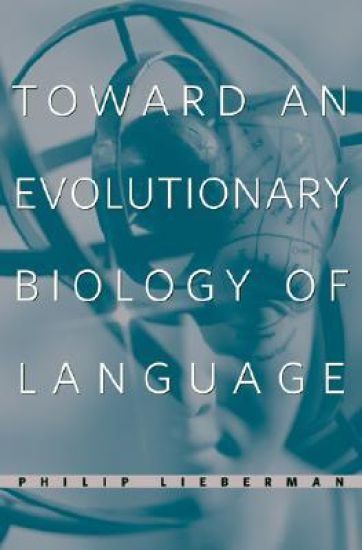
Toward an Evolutionary Biology of Language

Toward an Evolutionary Biology of Language

Philip Lieberman

The Belknap Press
2006
sidottu
In this forcefully argued book, the leading evolutionary theorist of language draws on evidence from evolutionary biology, genetics, physical anthropology, anatomy, and neuroscience, to provide a framework for studying the evolution of human language and cognition. Philip Lieberman argues forcibly that the widely influential theories of language's development, advanced by Chomskian linguists and cognitive scientists, especially those that postulate a single dedicated language "module," "organ," or "instinct," are inconsistent with principles and findings of evolutionary biology and neuroscience. He argues that the human neural system in its totality is the basis for the human language ability, for it requires the coordination of neural circuits that regulate motor control with memory and higher cognitive functions. Pointing out that articulate speech is a remarkably efficient means of conveying information, Lieberman also highlights the adaptive significance of the human tongue. Fully human language involves the species-specific anatomy of speech, together with the neural capacity for thought and movement. In Lieberman's iconoclastic Darwinian view, the human language ability is the confluence of a succession of separate evolutionary developments, jury-rigged by natural selection to work together for an evolutionarily unique ability.
The Biology and Evolution of Language

The Biology and Evolution of Language

Philip Lieberman

Harvard University Press
1987
nidottu
This book synthesizes much of the exciting recent research in the biology of language. Drawing on data from anatomy, neurophysiology, physiology, and behavioral biology, Philip Lieberman develops a new approach to the puzzle of language, arguing that it is the result of many evolutionary compromises. Within his discussion, Lieberman skillfully addresses matters as various as the theory of neoteny (which he refutes), the mating calls of bullfrogs, ape language, dyslexia, and computer-implemented models of the brain.
Uniquely Human

Uniquely Human

Philip Lieberman

Harvard University Press
1993
nidottu
In a stimulating synthesis of cognitive science, anthropology, and linguistics, Philip Lieberman tackles the fundamental questions of human nature: How and why are human beings so different from other species? Can the Darwinian theory of evolution explain human linguistic and cognitive ability? How do our processes of language and thought differ from those of Homo erectus 500,000 years ago, or of the Neanderthals 35,000 years ago? What accounts for human moral sense?Lieberman believes that evolution for rapid, efficient vocal communication forged modern human beings by creating the modern human brain. Earlier hominids lacked fully human speech and syntax, which together allow us to convey complex thoughts rapidly. The author discusses how natural selection acted on older brain mechanisms to produce a structure that can regulate the motor activity necessary for speech and command the complex syntax that enhances the creativity of human language. The unique brain mechanisms underlying human language also enhance human cognitive ability, allowing us to derive abstract concepts and to plan complex activities. These factors are necessary for the development of true altruism and moral behavior.Lieberman supports his argument about the evolution of speech and the human brain by combining the comparative method of Charles Darwin, insights from archaeology and child development, and the results of high-tech research with computerized brain scanning and computer models that can recreate speech sounds made by our ancestors over 100,000 years ago. Uniquely Human will stimulate fresh thought and controversy on the basic question of how we came to be.
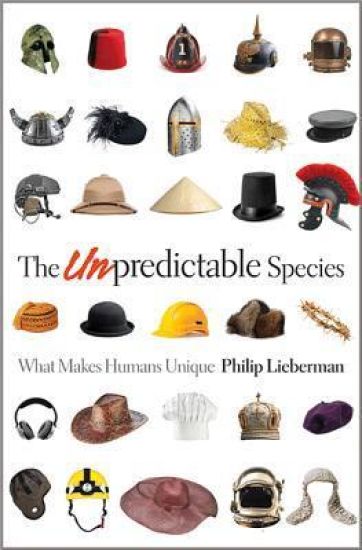
The Unpredictable Species

The Unpredictable Species

Philip Lieberman

PRINCETON UNIVERSITY PRESS
2013
sidottu
The Unpredictable Species argues that the human brain evolved in a way that enhances our cognitive flexibility and capacity for innovation and imitation. In doing so, the book challenges the central claim of evolutionary psychology that we are locked into predictable patterns of behavior that were fixed by genes, and refutes the claim that language is innate. Philip Lieberman builds his case with evidence from neuroscience, genetics, and physical anthropology, showing how our basal ganglia--structures deep within the brain whose origins predate the dinosaurs--came to play a key role in human creativity. He demonstrates how the transfer of information in these structures was enhanced by genetic mutation and evolution, giving rise to supercharged neural circuits linking activity in different parts of the brain. Human invention, expressed in different epochs and locales in the form of stone tools, digital computers, new art forms, complex civilizations--even the latest fashions--stems from these supercharged circuits. The Unpredictable Species boldly upends scientifically controversial yet popular beliefs about how our brains actually work. Along the way, this compelling book provides insights into a host of topics related to human cognition, including associative learning, epigenetics, the skills required to be a samurai, and the causes of cognitive confusion on Mount Everest and of Parkinson's disease.
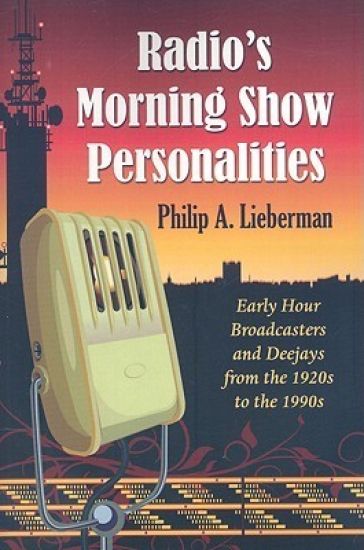
Radio's Morning Show Personalities

Radio's Morning Show Personalities

Philip A. Lieberman

McFarland Co Inc
2009
pokkari
Lengthy biographies are provided for 28 of the most prominent trendsetting morning men, including Gene Rayburn, "Buffalo" Bob Smith, Wolfman Jack, Don Imus, and Howard Stern. The focus is on their careers and their contributions to radio. These are followed by brief concise biographies of more than 200 lesser known morning personalities.
Minnenas musik : 29 författare skriver om musikens inverkan på upplevelser, minnen och livet

Minnenas musik : 29 författare skriver om musikens inverkan på upplevelser, minnen och livet

Kristina Suomela Björklund; Maria Ahlqvist Ruokolahti; Nour Alhouda Kanjo; Monika Chanovian; Erik Edsbagge Engström; Elsa Egnell; Anette Elg; Sara Gren; Alva Isaksson; Monica Ivesköld; Hanna Lenart; Josef Liebera; Per Lindskog; Åsa Lovén; Cathrin Monell; Christian Munthe; Peder Palmstierna; Mikaela Rönnerman; Johanna Samuelson; Sabine Schulz; Johanna Sernelin; Annika Sjögren Arvidson; Ida Sköldengen; Lena Stangmark; Philip Stenström; Patrik Söderberg; Sarah Taubert; Tora Wall; Ingbritt Wik

Whip Media
2022
nidottu
"Musiken från orkestern blandas med mina minnen, jag dansar till tonerna. Rör mig följsamt över ängen. Intensiteten ökar och trumpeterna tar över melodin. Stegvis stiger tempot och jag rör mig snabbare i växtligheten. Snurrar så nattlinnet står ut och skärpet från morgonrocken lossnar. Jag höjer armarna i crescendot och valthornens toner ljuder över trumpeternas. Eufonium och tromboner, pukorna dundrar som bultandet i mitt bröst, pulsen i mina tinningar. Jag ryser, skälver."29 författare skriver om musikens inverkan på upplevelser, minnen och livet.
Phillip

Phillip

Cristin Harber

Mill Creek Press
2019
pokkari
Meet the Blackthorne men, each one as hot, fast, and smooth as the whisky that built the family fortune, and the yachts and race cars that bear their name. From proud Scottish stock, Blackthornes never lose. But, one by one, the seven sexy men in this family are about to risk everything when they fall for strong and beautiful women who test their mettle in life... and love.Phillip - Book 4When Phillip Blackthorne secures his title as Harvard's most mischievous co-ed with a prank that makes the campus newspaper, he also loses his first love and complete opposite, Ashley Catherine Cartwright.Twelve years later, another of Phillip's stunts goes wrong when his runaway golf cart crashes through Ashley's charity event on live TV. Their reunion goes viral-not only for the classic car he's forced to donate, but the sparks that everyone but Ashley can see.Phillip is determined to win her heart again, but his shot at a second chance is doomed if Ashley refuses to see that life's unexpected hurdles can be the best part of a happily ever after.Don't miss these sexy, heartwarming, emotion-filled books by seven bestselling authors: Barbara Freethy, Julia London, Lynn Raye Harris, Cristin Harber, Roxanne St. Claire, Christie Ridgway and Samantha Chase.