Kirjojen hintavertailu. Mukana 11 244 527 kirjaa ja 12 kauppaa.

Kirjahaku

Etsi kirjoja tekijän nimen, kirjan nimen tai ISBN:n perusteella.

1000 tulosta hakusanalla Pierre Baragnon

Le Décret Organique Du 17 Février 1852, Et Le Mémorial Diplomatique, Lettre de M. Pierre Baragnon
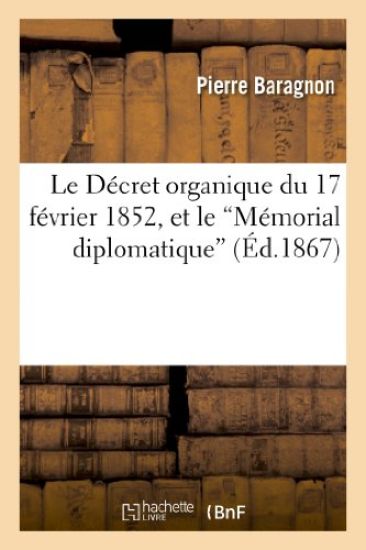
Le Decret organique du 17 fevrier 1852, et le "Memorial diplomatique," lettre de M. Pierre Baragnon a M. le marquis de La Valette, ministre de l'InterieurDate de l'edition originale: 1867Ce livre est la reproduction fidele d une uvre publiee avant 1920 et fait partie d une collection de livres reimprimes a la demande editee par Hachette Livre, dans le cadre d un partenariat avec la Bibliotheque nationale de France, offrant l opportunite d acceder a des ouvrages anciens et souvent rares issus des fonds patrimoniaux de la BnF.Les uvres faisant partie de cette collection ont ete numerisees par la BnF et sont presentes sur Gallica, sa bibliotheque numerique.En entreprenant de redonner vie a ces ouvrages au travers d une collection de livres reimprimes a la demande, nous leur donnons la possibilite de rencontrer un public elargi et participons a la transmission de connaissances et de savoirs parfois difficilement accessibles.Nous avons cherche a concilier la reproduction fidele d un livre ancien a partir de sa version numerisee avec le souci d un confort de lecture optimal. Nous esperons que les ouvrages de cette nouvelle collection vous apporteront entiere satisfaction.Pour plus d informations, rendez-vous sur www.hachettebnf.fr
Lettre de Pierre Baragnon À Léon Gambetta Suivie de Notes Aux Électeurs Municipaux
Lettre de Pierre Baragnon a Leon Gambetta; suivie de Notes aux electeurs municipaux du quartier Bonne-NouvelleDate de l'edition originale: 1876Sujet de l'ouvrage: France -- 1870-1940 (3e Republique)Ce livre est la reproduction fidele d une uvre publiee avant 1920 et fait partie d une collection de livres reimprimes a la demande editee par Hachette Livre, dans le cadre d un partenariat avec la Bibliotheque nationale de France, offrant l opportunite d acceder a des ouvrages anciens et souvent rares issus des fonds patrimoniaux de la BnF.Les uvres faisant partie de cette collection ont ete numerisees par la BnF et sont presentes sur Gallica, sa bibliotheque numerique.En entreprenant de redonner vie a ces ouvrages au travers d une collection de livres reimprimes a la demande, nous leur donnons la possibilite de rencontrer un public elargi et participons a la transmission de connaissances et de savoirs parfois difficilement accessibles.Nous avons cherche a concilier la reproduction fidele d un livre ancien a partir de sa version numerisee avec le souci d un confort de lecture optimal. Nous esperons que les ouvrages de cette nouvelle collection vous apporteront entiere satisfaction.Pour plus d informations, rendez-vous sur www.hachettebnf.fr
PIERRE

PIERRE

HARPERCOLLINS PUBLISHERS INC
2018
nidottu
For over fifty years, children have cared about Pierre, the little boy who doesn't care about anything--until he meets a lion Now in a larger, 5 x 7 trim size, Pierre will continue to make children giggle while also being reminded in the funniest of ways that "I don't care " can become a problem.This beloved classic from Maurice Sendak has helped generations of children put aside "I don't care " as an answer. This edition is perfect for lap sharing and as a baby shower gift.
Pierre

Pierre

Herman Melville

Penguin Classics
1996
pokkari
'Ambiguities indeed! One long brain-muddling, soul-bewildering ambiguity (to borrow Mr. Melville's style), like Melchisedeck, without beginning or end-a labyrinth without a clue - an Irish bog without so much as a Jack o'the'lantern to guide the wanderer's footsteps - the dream of a distempered stomach, disordered by a hasty supper on half-cooked pork chops." So judged the New York Herald when Pierre was first published in 1852, with most contemporary reviewers joining in the general condemnation: 'a dead failure,' 'this crazy rigmarole,' and "a literary mare's nest." Latter-day critics have recognized in the story of Melville's idealistic young hero a corrosive satire of the
Pierre

Pierre

Melville

Northwestern University Press
1972
sidottu
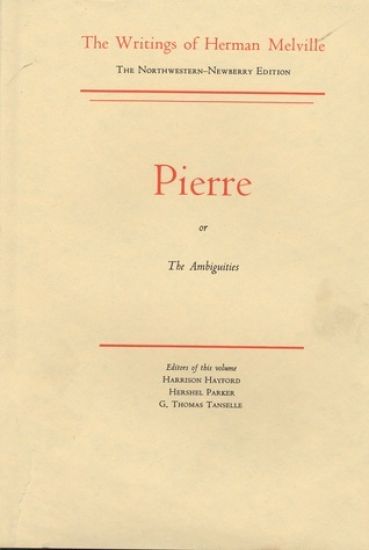
Initially dismissed as a dead failure and a bad book, and declined by Melville's British publisher, Pierre, or The Ambiguities has since struck critics as modern in its psychological probings and literary technique--fit, as Carl Van Vechten said in 1922, to be ranked with The Golden Bowl, Women in Love, and Ulysses. None of Melville's other secondary works has so regularly been acknowledged by its most thorough critics as a work of genuine grandeur, however flawed. This scholarly edition aims to present a text as close to the author's intention as the surviving evidence permits. Based on collations of the two issues and the two impressions of the single edition publishing in Melville's lifetime, it incorporates necessary emendations made by the series editors. This text of Pierre is an Approved Text of the Center for Editions of American Authors (Modern Language Association of America).
Pierre Board Book: A Cautionary Tale in Five Chapters and a Prologue
Pierre, along with the other three classic Nutshell Library titles (Alligators All Around, Chicken Soup with Rice, and One Was Johnny), is the first board book edition of Maurice Sendak's original work You loved Nutshell Library as a miniature collection, and these large board books make it even easier for children to share with their grown-up readers.For over fifty years, children have cared about Pierre, Maurice Sendak's story about a little boy who doesn't care about anything. And they will continue to care about this classic cautionary tale in this durable board book format.
Pierre and Jean

Pierre and Jean

Maupassant Guy de

Penguin Classics
1979
pokkari
The fraternal love that Pierre Roland feels for his younger brother Jean has always been tinged with jealousy. But when a lawyer arrives at the house of their parents, to declare that an old family friend has bequeathed his entire fortune to Jean, this envy rapidly becomes an all-consuming force. Despising himself for the hate that he feels, Pierre roams the seaport of Le Havre alone, desperate to come to terms with his brother's success. As he walks through the streets, however, one thought dominates his mind. Why was he not left a share of the friend's estate? Vivid, ironical and emotionally profound, Pierre and Jean is considered Maupassant's greatest novel - an intensely personal story of suspicion, jealousy and family love.
Pierre Boulez

Pierre Boulez

Joseph Salem

OXFORD UNIVERSITY PRESS INC
2024
sidottu
As an integral figure in twentieth-century music, Pierre Boulez innovated new musical ideas through extraordinary creative processes. His formative years tracked his compositional development from his confrontations with serialism to drafting one of his major works, Pli selon pli, in the early 1960s. Part biography, part survey, Pierre Boulez: The Formative Years situates Boulez and his compositions among a complex network of influences. To best understand Boulez's creative process, author Joseph R. Salem organizes the book into three parts. First, Boulez's early life, training, and education provide biographical context for his career. Salem provides a fresh, revisionist perspective of the composer's life by drawing upon a mix of primary and secondary sources. Second, the brunt of the biography situates Boulez's musical works and experimentation among a host of contextual contexts. In place of scores and complicated musical analyses, Salem employs sketches as a visual metonym. The sketches denote Boulez's continual ability to self-reform, accept feedback from his peers, mentors, and family members, and revitalize old material. Third, Boulez's legacy is associated with contemporaneous aesthetic movements and artistic challenges. While his creative processes undoubtedly influenced music today, Boulez remains a controversial, even taboo, figure among contemporary musicians and audiences. A book that both celebrates and critiques its subject, The Formative Years urges a reconsideration of narratives and discussions surrounding Boulez's life and works.
Pierre de la Rue and Musical Life at the Habsburg-Burgundian Court
Pierre de la Rue, composer at the grande chapelle of the Habsburg-Burgundian court for nearly a quarter of a century, composed for one of the leading musical institutions of his day. Serving successive rulers Maximilian I, Philip the Fair, Juana of Castile, Marguerite of Austria, and the future Charles V, La Rue surpassed a dozen composer colleagues in his creation of polyphony to meet the needs of the court and its extravagant liturgy. Honey Meconi presents the first ever study in English of la Rue's life and career, exploring aspects of his compositional output and highlighting the reawakening of modern scholarship to his unique contribution. Extensive documentation of the events of his life and a complete record of the transmission of his music across Europe make this study essential for everyone studying the musical court in Europe at the turn of the 16th century.
Pierre de L'Estoile and his World in the Wars of Religion
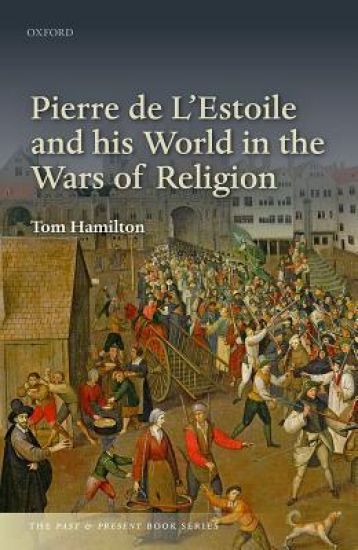
The Wars of Religion embroiled France in decades of faction, violence, and peacemaking in the late sixteenth century. When historians interpret these events they inevitably depend on sources of information gathered by contemporaries, none more valuable than the diaries and collection of Pierre de L'Estoile (1546-1611), who lived through the civil wars in Paris and shaped how they have been remembered ever since. Taking him out of the footnotes, and demonstrating his significance in the culture of the late Renaissance, this is the first life of L'Estoile in any language. It examines how he negotiated and commemorated the conflicts that divided France as he assembled an extraordinary collection of the relics of the troubles, a collection that he called 'the storehouse of my curiosities'. The story of his life and times is the history of the civil wars in the making. Focusing on a crucial individual for understanding Reformation Europe, this study challenges historians' assumptions about the widespread impact of confessional conflict in the sixteenth century. L'Estoile's prudent, non-confessional responses to the events he lived through and recorded were common among his milieu of Gallican Catholics. His life-writing and engagement with contemporary news, books, and pictures reveals how individuals used different genres and media to destabilise rather than fix confessional identities. Bringing together the great variety of topics in society and culture that attracted L'Estoile's curiosity, this volume rethinks his world in the Wars of Religion.
Pierre de L'Estoile and his World in the Wars of Religion
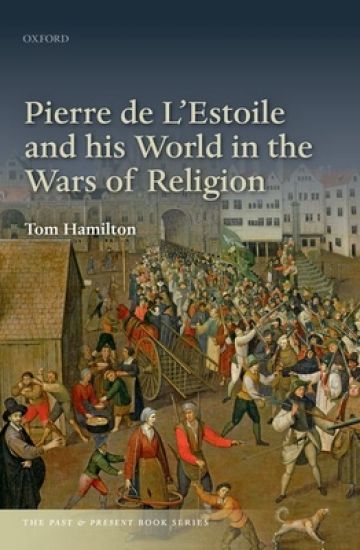
The Wars of Religion embroiled France in decades of faction, violence, and peacemaking in the late sixteenth century. This study offers a new history of these Wars of Religion from the perspective of the period's great diarist and collector, Pierre de L'Estoile (1546-1611), telling the story of his life and times. When historians interpret these events they inevitably depend on sources of information gathered by contemporaries, none more valuable than the diaries and collection of Pierre de L'Estoile (1546-1611), who lived through the civil wars in Paris and shaped how they have been remembered ever since. Taking him out of the footnotes, and demonstrating his significance in the culture of the late Renaissance, this is the first life of L'Estoile in any language. It examines how he negotiated and commemorated the conflicts that divided France as he assembled an extraordinary collection of the relics of the troubles, a collection that he called 'the storehouse of my curiosities'. The story of his life and times is the history of the civil wars in the making. Focusing on a crucial individual for understanding Reformation Europe, this study challenges historians' assumptions about the widespread impact of confessional conflict in the sixteenth century. L'Estoile's prudent, non-confessional responses to the events he lived through and recorded were common among his milieu of Gallican Catholics. His life-writing and engagement with contemporary news, books, and pictures reveals how individuals used different genres and media to destabilise rather than fix confessional identities. Bringing together the great variety of topics in society and culture that attracted L'Estoile's curiosity, this volume rethinks his world in the Wars of Religion.