Kirjojen hintavertailu. Mukana 11 213 693 kirjaa ja 12 kauppaa.

Kirjahaku

Etsi kirjoja tekijän nimen, kirjan nimen tai ISBN:n perusteella.

1000 tulosta hakusanalla Pierre Briant

Darius in the Shadow of Alexander

Darius in the Shadow of Alexander

Pierre Briant

Harvard University Press
2015
sidottu
The last of Cyrus the Great’s dynastic inheritors and the legendary enemy of Alexander the Great, Darius III ruled over a Persian Empire that stretched from the Mediterranean to the Indus River. Yet, despite being the most powerful king of his time, Darius remains an obscure figure.As Pierre Briant explains in the first book ever devoted to the historical memory of Darius III, the little that is known of him comes primarily from Greek and Roman sources, which often present him in an unflattering light, as a decadent Oriental who lacked the masculine virtues of his Western adversaries. Influenced by the Alexander Romance as they are, even the medieval Persian sources are not free of harsh prejudices against the king Dara, whom they deemed deficient in the traditional kingly virtues. Ancient Classical accounts construct a man who is in every respect Alexander’s opposite—feeble-minded, militarily inept, addicted to pleasure, and vain. When Darius’s wife and children are captured by Alexander’s forces at the Battle of Issos, Darius is ready to ransom his entire kingdom to save them—a devoted husband and father, perhaps, but a weak king.While Darius seems doomed to be a footnote in the chronicle of Alexander’s conquests, in one respect it is Darius who has the last laugh. For after Darius’s defeat in 331 BCE, Alexander is described by historians as becoming ever more like his vanquished opponent: a Darius-like sybarite prone to unmanly excess.
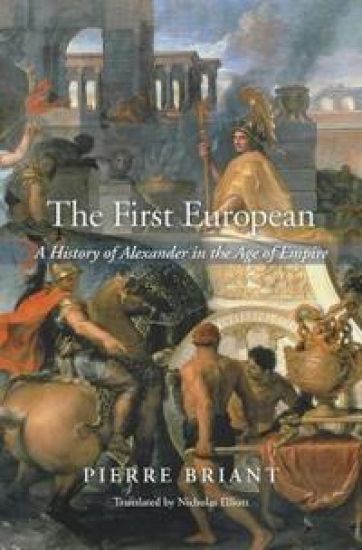
The First European

The First European

Pierre Briant

Harvard University Press
2017
sidottu
The exploits of Alexander the Great were so remarkable that for centuries after his death the Macedonian ruler seemed a figure more of legend than of history. Thinkers of the European Enlightenment, searching for ancient models to understand contemporary affairs, were the first to critically interpret Alexander’s achievements. As Pierre Briant shows, in the minds of eighteenth-century intellectuals and philosophes, Alexander was the first European: a successful creator of empire who opened the door to new sources of trade and scientific knowledge, and an enlightened leader who brought the fruits of Western civilization to an oppressed and backward “Orient.”In France, Scotland, England, and Germany, Alexander the Great became an important point of reference in discourses from philosophy and history to political economy and geography. Voltaire, Montesquieu, and Robertson asked what lessons Alexander’s empire-building had to teach modern Europeans. They saw the ancient Macedonian as the embodiment of the rational and benevolent Western ruler, a historical model to be emulated as Western powers accelerated their colonial expansion into Asia, India, and the Middle East.For a Europe that had to contend with the formidable Ottoman Empire, Alexander provided an important precedent as the conqueror who had brought great tyrants of the “Orient” to heel. As The First European makes clear, in the minds of Europe’s leading thinkers, Alexander was not an aggressive militarist but a civilizing force whose conquests revitalized Asian lands that had lain stagnant for centuries under the lash of despotic rulers.
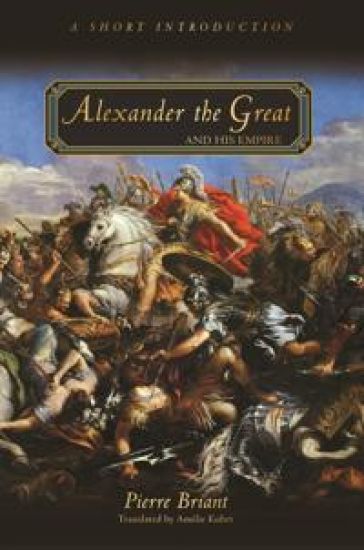
Alexander the Great and His Empire

Alexander the Great and His Empire

Pierre Briant

Princeton University Press
2012
pokkari
This is the first publication in English of Pierre Briant's classic short history of Alexander the Great's conquest of the Persian empire, from the Mediterranean to Central Asia. Eschewing a conventional biographical focus, this is the only book in any language that sets the rise of Alexander's short-lived empire within the broad context of ancient Near Eastern history under Achaemenid Persian rule, as well as against Alexander's Macedonian background. As a renowned historian of both the Macedonians and the Persians, Briant is uniquely able to assess Alexander's significance from the viewpoint of both the conquerors and the conquered, and to trace what changed and what stayed the same as Alexander and the Hellenistic world gained ascendancy over Darius's Persia. After a short account of Alexander's life before his landing in Asia Minor, the book gives a brief overview of the major stages of his conquest. This background sets the stage for a series of concise thematic chapters that explore the origins and objectives of the conquest; the nature and significance of the resistance it met; the administration, defense, and exploitation of the conquered lands; the varying nature of Alexander's relations with the Macedonians, Greeks, and Persians; and the problems of succession following Alexander's death. For this translation, Briant has written a new foreword and conclusion, updated the main text and the thematic annotated bibliography, and added a substantial appendix in which he assesses the current state of scholarship on Alexander and suggests some directions for future research. More than ever, this masterful work provides an original and important perspective on Alexander and his empire.
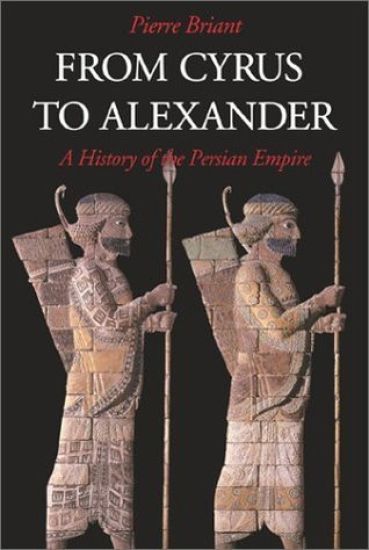
From Cyrus to Alexander

From Cyrus to Alexander

Pierre Briant

Eisenbrauns
2002
sidottu
Around 550 B.C.E. the Persian people—who were previously practically unknown in the annals of history—emerged from their base in southern Iran (Fars) and engaged in a monumental adventure that, under the leadership of Cyrus the Great and his successors, culminated in the creation of an immense Empire that stretched from central Asia to Upper Egypt, from the Indus to the Danube. The Persian (or Achaemenid, named for its reigning dynasty) Empire assimilated an astonishing diversity of lands, peoples, languages, and cultures. This conquest of Near Eastern lands completely altered the history of the world: for the first time, a monolithic State as vast as the future Roman Empire arose, expanded, and matured in the course of more than two centuries (530–330) and endured until the death of Alexander the Great (323), who from a geopolitical perspective was “the last of the Achaemenids.” Even today, the remains of the Empire-the terraces, palaces, reliefs, paintings, and enameled bricks of Pasargadae, Persepolis, and Susa; the impressive royal tombs of Naqsh-i Rustam; the monumental statue of Darius the Great-serve to remind visitors of the power and unprecedented luxury of the Great Kings and their loyal courtiers (the “Faithful Ones”).Though long eclipsed and overshadowed by the towering prestige of the “ancient Orient” and “eternal Greece,” Achaemenid history has emerged into fresh light during the last two decades. Freed from the tattered rags of “Oriental decadence” and “Asiatic stagnation,” research has also benefited from a continually growing number of discoveries that have provided important new evidence-including texts, as well as archaeological, numismatic, and iconographic artifacts.The evidence that this book assembles is voluminous and diverse: the citations of ancient documents and of the archaeological evidence permit the reader to follow the author in his role as a historian who, across space and time, attempts to understand how such an Empire emerged, developed, and faded. Though firmly grounded in the evidence, the author’s discussions do not avoid persistent questions and regularly engages divergent interpretations and alternative hypotheses. This book is without precedent or equivalent, and also offers an exhaustive bibliography and thorough indexes.The French publication of this magisterial work in 1996 was acclaimed in newspapers and literary journals. Now Histoire de l’Empire Perse: De Cyrus a Alexandre is translated in its entirety in a revised edition, with the author himself reviewing the translation, correcting the original edition, and adding new documentation.Pierre Briant, Chaire Histoire et civilisation du monde achémenide et de l’empire d’Alexandre, Collège de France, is a specialist in the history of the Near East during the era of the Persian Empire and the conquests of Alexander. He is the author of numerous books.Peter T. Daniels, the translator, is an independent scholar, editor, and translator who studied at Cornell University and the University of Chicago. He lives and works in New York City.
Alexander den store

Alexander den store

Pierre Briant

Alhambra Förlag AB
1999
pokkari
Pierre Briant räknas som en av världens ledande auktoriteter på Alexander den store och det akemenidiska riket. Han är en fransk iranist, historiker och professor i den akemenidernas historia och kulturhistoria och Alexanders rike vid Collège de France. Briant studierade historia vid Universitetet i Poitiers 1960–1965 och tog sin doktorsexamen 1972.
Alexander the Great

Alexander the Great

Pierre Briant; Jeremy Leggatt

Thames Hudson Ltd
1996
pokkari
Defeating the mighty Persian Empire at the age of 22, Alexander the Great rapidly conquered the rest of the then known world. This book traces the career of Alexander who was destined to become one of the greatest generals the world has known, and celebrates his legacy to Greek civilization.
From Cyrus to Alexander

From Cyrus to Alexander

Briant Pierre

EISENBRAUNS
2002
pokkari
Around 550 B.C.E. the Persian people—who were previously practically unknown in the annals of history—emerged from their base in southern Iran (Fars) and engaged in a monumental adventure that, under the leadership of Cyrus the Great and his successors, culminated in the creation of an immense Empire that stretched from central Asia to Upper Egypt, from the Indus to the Danube. The Persian (or Achaemenid, named for its reigning dynasty) Empire assimilated an astonishing diversity of lands, peoples, languages, and cultures. This conquest of Near Eastern lands completely altered the history of the world: for the first time, a monolithic State as vast as the future Roman Empire arose, expanded, and matured in the course of more than two centuries (530–330) and endured until the death of Alexander the Great (323), who from a geopolitical perspective was “the last of the Achaemenids.” Even today, the remains of the Empire-the terraces, palaces, reliefs, paintings, and enameled bricks of Pasargadae, Persepolis, and Susa; the impressive royal tombs of Naqsh-i Rustam; the monumental statue of Darius the Great-serve to remind visitors of the power and unprecedented luxury of the Great Kings and their loyal courtiers (the “Faithful Ones”).Though long eclipsed and overshadowed by the towering prestige of the “ancient Orient” and “eternal Greece,” Achaemenid history has emerged into fresh light during the last two decades. Freed from the tattered rags of “Oriental decadence” and “Asiatic stagnation,” research has also benefited from a continually growing number of discoveries that have provided important new evidence-including texts, as well as archaeological, numismatic, and iconographic artifacts.The evidence that this book assembles is voluminous and diverse: the citations of ancient documents and of the archaeological evidence permit the reader to follow the author in his role as a historian who, across space and time, attempts to understand how such an Empire emerged, developed, and faded. Though firmly grounded in the evidence, the author’s discussions do not avoid persistent questions and regularly engages divergent interpretations and alternative hypotheses. This book is without precedent or equivalent, and also offers an exhaustive bibliography and thorough indexes.The French publication of this magisterial work in 1996 was acclaimed in newspapers and literary journals. Now Histoire de l’Empire Perse: De Cyrus a Alexandre is translated in its entirety in a revised edition, with the author himself reviewing the translation, correcting the original edition, and adding new documentation.Pierre Briant, Chaire Histoire et civilisation du monde achémenide et de l’empire d’Alexandre, Collège de France, is a specialist in the history of the Near East during the era of the Persian Empire and the conquests of Alexander. He is the author of numerous books.Peter T. Daniels, the translator, is an independent scholar, editor, and translator who studied at Cornell University and the University of Chicago. He lives and works in New York City.
Poésies Inédites de Pierre de Bourdeille, Seigneur Abbé de Brantôme
Poesies inedites de Pierre de Bourdeille, seigneur abbe de Brantome, ... publiees... par le Dr E. GalyDate de l'edition originale: 1880Ce livre est la reproduction fidele d'une oeuvre publiee avant 1920 et fait partie d'une collection de livres reimprimes a la demande editee par Hachette Livre, dans le cadre d'un partenariat avec la Bibliotheque nationale de France, offrant l'opportunite d'acceder a des ouvrages anciens et souvent rares issus des fonds patrimoniaux de la BnF.Les oeuvres faisant partie de cette collection ont ete numerisees par la BnF et sont presentes sur Gallica, sa bibliotheque numerique.En entreprenant de redonner vie a ces ouvrages au travers d'une collection de livres reimprimes a la demande, nous leur donnons la possibilite de rencontrer un public elargi et participons a la transmission de connaissances et de savoirs parfois difficilement accessibles.Nous avons cherche a concilier la reproduction fidele d'un livre ancien a partir de sa version numerisee avec le souci d'un confort de lecture optimal. Nous esperons que les ouvrages de cette nouvelle collection vous apporteront entiere satisfaction.Pour plus d'informations, rendez-vous sur www.hachettebnf.fr