
Kirjahaku
Etsi kirjoja tekijän nimen, kirjan nimen tai ISBN:n perusteella.
1000 tulosta hakusanalla Pieter Bleeker
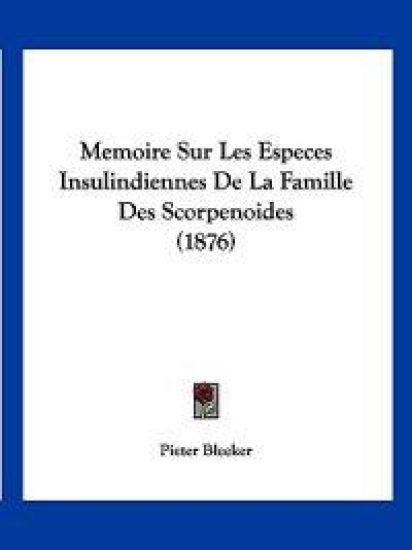
Memoire Sur Les Especes Insulindiennes De La Famille Des Scorpenoides (1876)
Pieter Bleeker
KESSINGER PUBLISHING, LLC
2009
pokkari
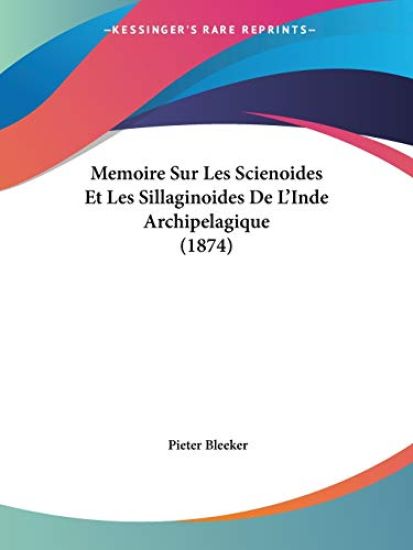
Memoire Sur Les Scienoides Et Les Sillaginoides De L'Inde Archipelagique (1874)
Pieter Bleeker
KESSINGER PUBLISHING, LLC
2010
pokkari
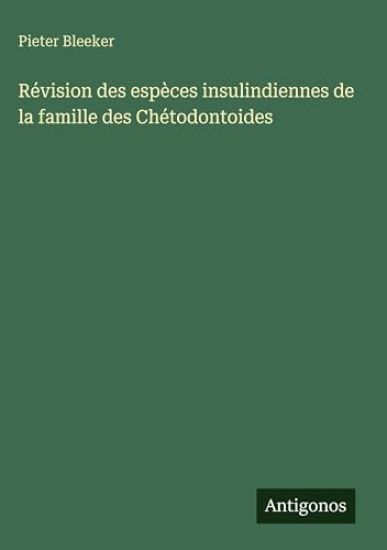
Révision des espèces insulindiennes de la famille des Chétodontoides
Pieter Bleeker
Antigonos Verlag
2025
sidottu
R impression inchang e de l' dition originale de 1877. La maison d' dition Antigonos est sp cialis e dans la publication de r impressions de livres historiques. Nous veillons ce que ces ouvrages soient mis la disposition du public dans de bonnes conditions afin de pr server leur patrimoine culturel.
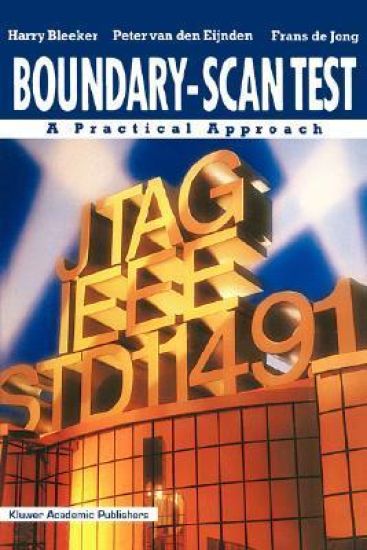
The ever-increasing miniaturization of digital electronic components is hampering the conventional testing of Printed Circuit Boards (PCBs) by means of bed-of-nails fixtures. Basically this is caused by the very high scale of integration of ICs, through which packages with hundreds of pins at very small pitches of down to a fraction of a millimetre, have become available. As a consequence the trace distances between the copper tracks on a printed circuit board cmne down to the same value. Not only the required small physical dimensions of the test nails have made conventional testing unfeasible, but also the complexity to provide test signals for the many hundreds of test nails has grown out of limits. Therefore a new board test methodology had to be invented. Following the evolution in the IC test technology. Boundary-Scan testing hm; become the new approach to PCB testing. By taking precautions in the design of the IC (design for testability), testing on PCB level can be simplified 10 a great extent. This condition has been essential for the success of the introduction of Boundary-Sc,m Test (BST) at board level.
Boundary-Scan Test
Harry Bleeker; Peter van den Eijnden; Frans de Jong
Springer-Verlag New York Inc.
2012
nidottu
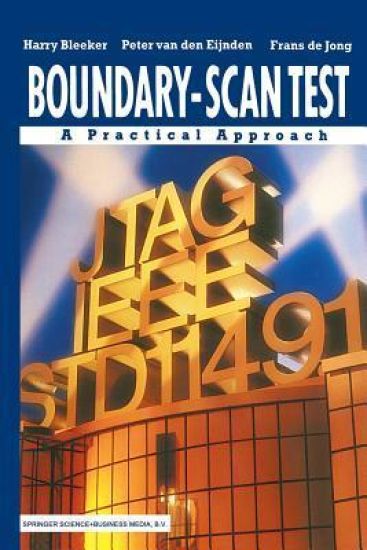
The ever-increasing miniaturization of digital electronic components is hampering the conventional testing of Printed Circuit Boards (PCBs) by means of bed-of-nails fixtures. Basically this is caused by the very high scale of integration of ICs, through which packages with hundreds of pins at very small pitches of down to a fraction of a millimetre, have become available. As a consequence the trace distances between the copper tracks on a printed circuit board cmne down to the same value. Not only the required small physical dimensions of the test nails have made conventional testing unfeasible, but also the complexity to provide test signals for the many hundreds of test nails has grown out of limits. Therefore a new board test methodology had to be invented. Following the evolution in the IC test technology. Boundary-Scan testing hm; become the new approach to PCB testing. By taking precautions in the design of the IC (design for testability), testing on PCB level can be simplified 10 a great extent. This condition has been essential for the success of the introduction of Boundary-Sc,m Test (BST) at board level.
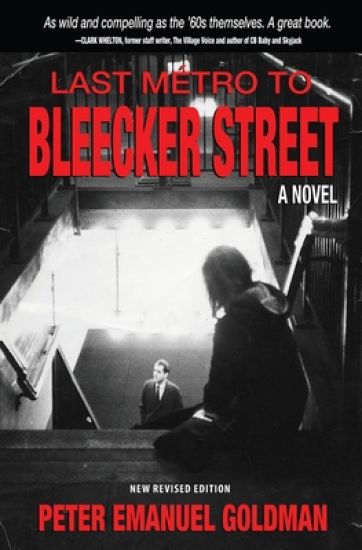
A gripping, lyrical, spiritual, erotic and despairing journey, Last M tro to Bleeker Street plunges the reader into the streets cafes, souls, poetry, folk music, sexual hunger and despair of Paris and New York's Greenwich Village of the 1960s. David, an Underground filmmaker, Richard, a former Catholic seminarian and Yeshiva student, now turned artist, and Kelly, a poet and coffee house waitress, roam the streets and haunt the cafes in a continual, but chaotic, search for experience, sex and meaning. Later, all three become religious, which creates new conflicts and deep fissures in their souls. A chance meeting in Jerusalem produces a shocking surprise. Years later, the horrors of terrorism, contemporary history and old age create new and final realities in their lives. The mix of fiction and memoir places the book in the tradition of Jack Kerouac, Henry Miller, Arthur Rimbaud, Lawrence Durrel, Anais Nin, and the gentle writings of Christopher Isherwood and Paul Zweig. The unique characters, uncompromising passion and flowing style set Last M tro to Bleeker Street apart from anything previously written, bringing the reader to the very essence of existence. "Peter Goldman is the quintessential outsider, a true apostle of the unique." - Liberation, Paris, France
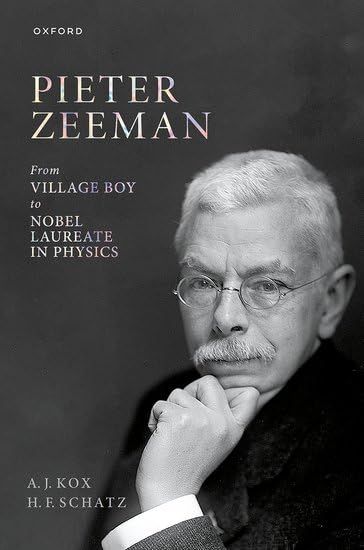
Pieter Zeeman
A. J. (Independent scholar Kox; H. F. (Independent scholar Schatz
Oxford University Press
2025
sidottu
This biography of the life and science of 20th Century physicist Pieter Zeeman draws on a wealth of newly discovered material to describe his life and work, offering enlightening details about his personal life.

Pieter Bruegel’s Historical Imagination
Stephanie Porras
Pennsylvania State University Press
2016
sidottu
The question of how to understand Bruegel’s art has cast the artist in various guises: as a moralizing satirist, comedic humanist, celebrator of vernacular traditions, and proto-ethnographer. Stephanie Porras reorients these apparently contradictory accounts, arguing that the debate about how to read Bruegel has obscured his pictures’ complex relation to time and history. Rather than viewing Bruegel’s art as simply illustrating the social realities of his day, Porras asserts that Bruegel was an artist deeply concerned with the past. In playing with the boundaries of the familiar and the foreign, history and the present, Bruegel’s images engaged with the fraught question of Netherlandish history in the years just prior to the Dutch Revolt, when imperial, religious, and national identities were increasingly drawn into tension. His pictorial style and his manipulation of traditional iconographies reveal the complex relations, unique to this moment, among classical antiquity, local history, and art history. An important reassessment of Renaissance attitudes toward history and of Renaissance humanism in the Low Countries, this volume traces the emergence of archaeological and anthropological practices in historical thinking, their intersections with artistic production, and the developing concept of local art history.
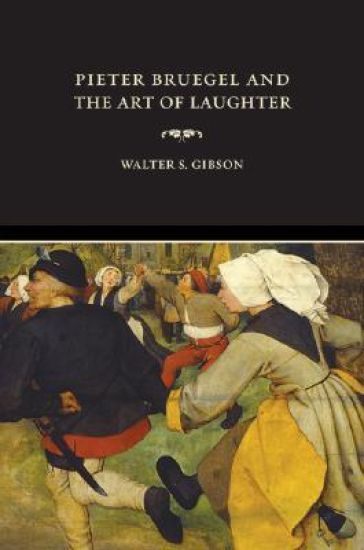
Pieter Bruegel (ca. 1525-1569), generally considered the greatest Flemish painter of the sixteenth century, was described in 1604 by his earliest biographer as a supremely comic artist, few of whose works failed to elicit laughter. Today, however, we approach Bruegel's art as anything but a laughing matter. His paintings and drawings are thought to conceal profound allegories best illuminated with scholarly erudition. In this delightfully engaging book, Walter S. Gibson takes a new look at Bruegel, arguing that the artist was no erudite philosopher, but a man very much in the world, and that a significant part of his art is best appreciated in the context of humor. In his illuminating examination of the witty and amusing elements in Bruegel's paintings, prints, and drawings in relation to the sixteenth century European culture of laughter, Gibson reminds us exactly why Bruegel was one of the most original artists of his time. In a series of engrossing chapters, Gibson explores the function and production of laughter in the sixteenth century, examines the ways in which Bruegel exploited the comic potential of Hieronymus Bosch, and traces how the artist developed his remarkable gift for physiognomy in his work, culminating in three paintings of festive peasants he produced during the 1560s: the Wedding Dance, the Kermis, and the Wedding Banquet. Gibson also takes a detailed look at the Dulle Griet, Bruegel's most complex evocation of Bosch.
Pieter-Dirk Uys se skreeusnaakse, roerende memoires. Ons leer ken die mens agter die ikoon deur sy stories oor sy gesin, sy vriendskap met Sophia Loren, die geboorte van Evita Bezuidenhout, en die vreugdes en hartseer van 'n merkwaardige lewe.

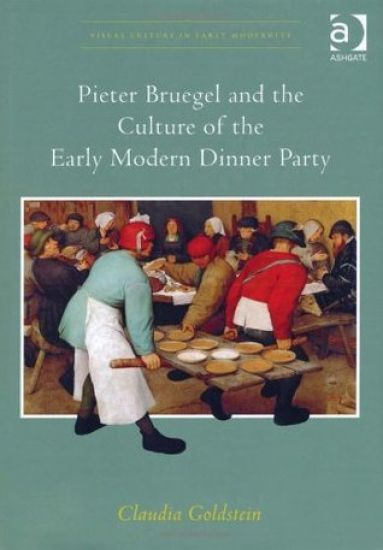
Pieter Bruegel and the Culture of the Early Modern Dinner Party
Claudia Goldstein
Ashgate Publishing Limited
2013
sidottu
Mining a rich, interdisciplinary mix of sources, including stoneware jugs, personal correspondence, paintings, inventories, and literature written for the dining room, this study offers a critical and entirely original examination of the function of early modern images for the people who owned and viewed them. The study explores the emergence, functions and material culture of the Antwerp dinner party during the heady days of the mid-sixteenth century, when Antwerp’s art market was thriving and a new wealthy, non-noble class dominated the city. The author recontextualizes some of Bruegel’s work within the cultural nexus of the dining room, where material culture and theatrical performance met humanist wit and the desire for professional advancement. The narrative also touches on the reception of Northern art in Lombardy, on intersections among painting, material culture, and theater, and on intellectual history.
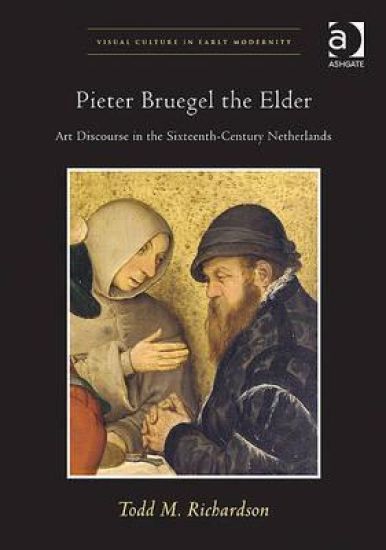
Pieter Bruegel the Elder: Art Discourse in the Sixteenth-Century Netherlands examines the later images by Bruegel in the context of two contemporary discourses - art theoretical and convivial. The first concerns the purely visual interactions between artists and artistic practices that unfold in pictures, which often transgress the categorical boundaries modern scholars place on their work, such as sacred and profane, antique and modern, and Italian and Northern. In this context, the images themselves - those of Bruegel, his contemporaries and predecessors - make up the primary source material from which the author argues. The second deals with the dialogue that occurred between viewers in front of pictures and the way in which pictorial strategies facilitated their visual experience and challenged their analytical capabilities. In this regard, the author expands his base of primary sources to include convivial texts, dialogues and correspondences, and texts by rhetoricians and Northern humanists addressing art theoretical issues. Challenging the conventional wisdom that the artist eschewed Italianate influences, this study demonstrates how Bruegel's later peasant paintings reveal a complicated artistic dialogue in which visual concepts and pictorial motifs from Italian and classical ideas are employed for a subject that was increasingly recognized in the sixteenth century as a specifically Northern phenomenon. Similar to the Dutch rhetorician societies and French Pléiade poets who cultivated the vernacular language using classical Latin, the function of this interpictorial discourse, the author argues, was not simply to imitate international trends, a common practice during the period, but to use it to cultivate his own visual vernacular language. Although the focus is primarily on Bruegel's later work, the author's conclusions are applied to sketch a broader understanding of both the artist himself and the vibrant artistic dialogue occurring in the Netherl
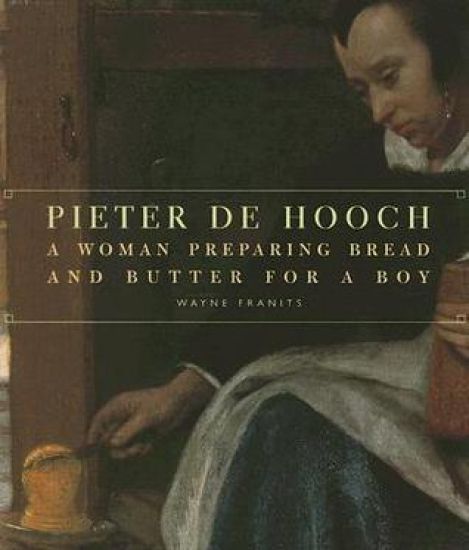
Pieter de Hooch – A Woman Preparing Bread and Butter for a Boy
. Franits
J. Paul Getty Museum
2007
nidottu
This volume examines the painting in relation to the artist's life and works, explores his stylistic development, and considers as well, his often complex relationship with other artists. "Pieter de Hooch" also looks at the subject matter of the piece within the broader historical context of seventeenth - century Dutch concepts of domesticity and parenthood, whilst tying it to other social and cultural developments of the period.
Pieter Bruegel, the Elder (about 1525-1569)
Pieter Ca 1525-1569 Bruegel; Wolfgang 1896-1974 Stechow
Hassell Street Press
2021
sidottu
This work has been selected by scholars as being culturally important and is part of the knowledge base of civilization as we know it.This work is in the public domain in the United States of America, and possibly other nations. Within the United States, you may freely copy and distribute this work, as no entity (individual or corporate) has a copyright on the body of the work.Scholars believe, and we concur, that this work is important enough to be preserved, reproduced, and made generally available to the public. To ensure a quality reading experience, this work has been proofread and republished using a format that seamlessly blends the original graphical elements with text in an easy-to-read typeface.We appreciate your support of the preservation process, and thank you for being an important part of keeping this knowledge alive and relevant.

Pieter Bruegel, the Elder (about 1525-1569)
Pieter Ca 1525-1569 Bruegel; Wolfgang 1896-1974 Stechow
Hassell Street Press
2021
nidottu
The World of Pieter Bruegel, Reproductions of Paintings in the Kunsthistorisches Museum, Vienna, the Kaiser Friedrich Museum, Berlin, the Alte Pinakot
Pieter Ca 1525-1569 Bruegel; A. Hyatt (Alpheus Hyatt) 1901- Mayor
Hassell Street Press
2021
sidottu
This work has been selected by scholars as being culturally important and is part of the knowledge base of civilization as we know it.This work is in the public domain in the United States of America, and possibly other nations. Within the United States, you may freely copy and distribute this work, as no entity (individual or corporate) has a copyright on the body of the work.Scholars believe, and we concur, that this work is important enough to be preserved, reproduced, and made generally available to the public. To ensure a quality reading experience, this work has been proofread and republished using a format that seamlessly blends the original graphical elements with text in an easy-to-read typeface.We appreciate your support of the preservation process, and thank you for being an important part of keeping this knowledge alive and relevant.