Kirjojen hintavertailu. Mukana 12 390 323 kirjaa ja 12 kauppaa.

Kirjahaku

Etsi kirjoja tekijän nimen, kirjan nimen tai ISBN:n perusteella.

1000 tulosta hakusanalla Pietro De Luigi

Tracce per navigare nell'universo di Enoch Arden. Con la traduzione a fronte del poema di Alfred Tennyson
Inghilterra, 1864. Una lunga scogliera si spalanca su un'insenatura. Un porticciolo, un pontile, sabbia e mare, il mare schiumante e rabbioso. Nella baia di Freshwater, isola di Wight, a Farringford, Alfred Tennyson sta scrivendo Enoch Arden, il suo poema pi noto. Qui, su questa costa, cento anni fa... Pu un flashback innescare un percorso d'iniziazione? Si spalanca una finestra sul passato, ma il passato era l , nel futuro, tutto da raccontare. Un marinaio parte e arriva, compie il cerchio della sua vita. La sua navigazione un itinerario spirituale, un viaggio che, lungo l'asse dei giorni, dei mesi e degli anni, sprofonda in quella spirale dove i grappoli del tempo si annodano all'eternit . Una navigazione che anche un appassionante itinerario filosofico e un'indagine investigativa sulle orme di precisi indizi, traccia dentro traccia. *** Ricco commentario al simbolismo di Enoch Arden, la commovente storia di mare e d'amore che nel 1864 vendette 17000 copie nel solo primo giorno di pubblicazione, questo saggio anche un omaggio al suo autore, Alfred Tennyson, pensatore complesso e irriducibilmente metafisico. Il volume include l'apprezzata traduzione integrale di De Luigi con l'originale a fronte e una ricca appendice.

Protecting the Dharma through Calligraphy in Tang China

Protecting the Dharma through Calligraphy in Tang China

Pietro De Laurentis

TAYLOR FRANCIS LTD
2021
sidottu
This is a study of the earliest and finest collated inscription in the history of Chinese calligraphy, the Ji Wang shengjiao xu ????? (Preface to the Sacred Teaching Scriptures Translated by Xuanzang in Wang Xizhi’s Collated Characters), which was erected on January 1, 673. The stele records the two texts written by the Tang emperors Taizong (599–649) and Gaozong (628–683) in honor of the monk Xuanzang (d. 664) and the Buddhist scripture Xin jing (Heart Sutra), collated in the semi-cursive characters of the great master of Chinese calligraphy, Wang Xizhi (303–361). It is thus a Buddhist inscription that combines Buddhist authority, political power, and artistic charm in one single monument. The present book reconstructs the multifaceted context in which the stele was devised, aiming at highlighting the specific role calligraphy played in the propagation and protection of Buddhism in medieval China.
Protecting the Dharma through Calligraphy in Tang China

Protecting the Dharma through Calligraphy in Tang China

Pietro De Laurentis

TAYLOR FRANCIS LTD
2023
nidottu
This is a study of the earliest and finest collated inscription in the history of Chinese calligraphy, the Ji Wang shengjiao xu ????? (Preface to the Sacred Teaching Scriptures Translated by Xuanzang in Wang Xizhi’s Collated Characters), which was erected on January 1, 673. The stele records the two texts written by the Tang emperors Taizong (599–649) and Gaozong (628–683) in honor of the monk Xuanzang (d. 664) and the Buddhist scripture Xin jing (Heart Sutra), collated in the semi-cursive characters of the great master of Chinese calligraphy, Wang Xizhi (303–361). It is thus a Buddhist inscription that combines Buddhist authority, political power, and artistic charm in one single monument. The present book reconstructs the multifaceted context in which the stele was devised, aiming at highlighting the specific role calligraphy played in the propagation and protection of Buddhism in medieval China.
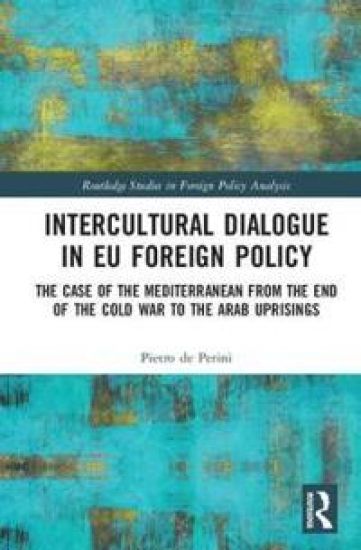
Intercultural Dialogue in EU Foreign Policy

Intercultural Dialogue in EU Foreign Policy

Pietro de Perini

TAYLOR FRANCIS LTD
2021
nidottu
This book provides an original, rigorous and theoretically-grounded investigation into varying EU efforts to advance intercultural dialogue (ICD) in the framework of its foreign policy towards the Mediterranean during the period 1990-2014. From the end of the Cold War, the EU has increasingly invested in both rhetoric and resources on ICD promotion. In spite of this commitment, the EU has never offered a clear and permanent understanding of what this concept entails and has been actually aimed at. By adopting a FPA standpoint and approaching ICD as one of the foreign policy instruments developed by the EU to address the relations with its Mediterranean partners, this book exposes the causes and the modalities of the contradictory development of this relevant and long standing element of EU foreign policy. De Perini investigates change and continuity in the promotion of this tool, and provides in-depth knowledge of what ICD has actually meant for the EU: from the development and launch of the Euro-Mediterranean Partnership or Barcelona Process, to the revision of the European Neighbourhood Policy following the Arab uprisings. The book shows that the EU’s advancement of ICD in its foreign policy has gone through three distinct phases: ‘emergence’ (1990-2001), ‘consolidation’ (2001-2010) and ‘professionalisation’ (2010-2014). Empirically the book provides the first comprehensive and integrative analysis of all aspects of EU efforts to promote ICD. The book exposes a series of trends, limits and contradictions of EU foreign policy which are increasingly relevant today. In particular, it shows that over the last twenty-five years, the EU has addressed a set of persistent challenges characterising its relations with Mediterranean countries and people, namely challenges connected to regional conflicts, religious fundamentalisms, xenophobic attitudes towards Arab/Muslim migrants and related social tensions. As these challenges are still major issues in the current EU agenda and in the broader debate about EU foreign policy, this book provides rich and original empirical knowledge to an understanding of how the EU has decided to address these phenomena at different moments of its recent history.
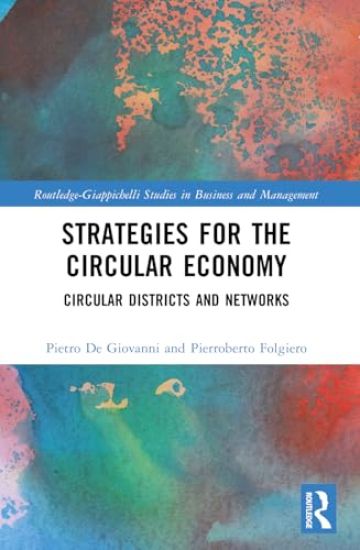
Strategies for the Circular Economy

Strategies for the Circular Economy

Pietro De Giovanni; Pierroberto Folgiero

TAYLOR FRANCIS LTD
2023
sidottu
This book illustrates two approaches for firms to shape successful circular strategies, namely, the Circular Economy and Circular Districts. The former considers firms’ challenges when turning theoretical circular models into practice. Thus, it discusses the opportunities and difficulties in reshaping corporate strategies by reflecting on circular economy principles. The latter approach plays a new role within the new economy systems and this book conceptualizes and operationalizes its definition. The circular district can represent an effective way to accelerate the energy transition process by developing industrial collaborations and exploiting technology synergies to enhance circularity and achieve economic, environmental, and social targets. The book highlights how firms should adjust their strategic thinking, redesign their network of relationships, and reconsider the value creation process when the circular economy is a concrete option. Furthermore, it examines the evolution from circular economy to circular districts by revealing the motivations that push firms and supply chains to redesign their strategies by considering the perspective of a circular district. The book ends by analyzing business experiences in these two areas and proposes advancements for both the scientific community and the business world. The book offers a blend of theoretical frameworks and practical applications and will be of particular interest to scholars in the fields of sustainable operations, closed-loop supply chain, green supply chain management, and circular supply chains. Also, the operationalization of the concept of circular districts, offers a genuine and original theoretical contribution, thus targeting students from Executive programs, MBA programs, and PhD programs. The book will also attract managers, practitioners and professionals interested in real-world cases and experiences as well as practical developments in the domain.
Strategies for the Circular Economy

Strategies for the Circular Economy

Pietro De Giovanni; Pierroberto Folgiero

TAYLOR FRANCIS LTD
2024
nidottu
This book illustrates two approaches for firms to shape successful circular strategies, namely, the Circular Economy and Circular Districts. The former considers firms’ challenges when turning theoretical circular models into practice. Thus, it discusses the opportunities and difficulties in reshaping corporate strategies by reflecting on circular economy principles. The latter approach plays a new role within the new economy systems and this book conceptualizes and operationalizes its definition. The circular district can represent an effective way to accelerate the energy transition process by developing industrial collaborations and exploiting technology synergies to enhance circularity and achieve economic, environmental, and social targets. The book highlights how firms should adjust their strategic thinking, redesign their network of relationships, and reconsider the value creation process when the circular economy is a concrete option. Furthermore, it examines the evolution from circular economy to circular districts by revealing the motivations that push firms and supply chains to redesign their strategies by considering the perspective of a circular district. The book ends by analyzing business experiences in these two areas and proposes advancements for both the scientific community and the business world. The book offers a blend of theoretical frameworks and practical applications and will be of particular interest to scholars in the fields of sustainable operations, closed-loop supply chain, green supply chain management, and circular supply chains. Also, the operationalization of the concept of circular districts, offers a genuine and original theoretical contribution, thus targeting students from Executive programs, MBA programs, and PhD programs. The book will also attract managers, practitioners and professionals interested in real-world cases and experiences as well as practical developments in the domain.
Intercultural Dialogue in EU Foreign Policy
This book provides an original, rigorous and theoretically-grounded investigation into varying EU efforts to advance intercultural dialogue (ICD) in the framework of its foreign policy towards the Mediterranean during the period 1990-2014. From the end of the Cold War, the EU has increasingly invested in both rhetoric and resources on ICD promotion. In spite of this commitment, the EU has never offered a clear and permanent understanding of what this concept entails and has been actually aimed at. By adopting a FPA standpoint and approaching ICD as one of the foreign policy instruments developed by the EU to address the relations with its Mediterranean partners, this book exposes the causes and the modalities of the contradictory development of this relevant and long standing element of EU foreign policy. De Perini investigates change and continuity in the promotion of this tool, and provides in-depth knowledge of what ICD has actually meant for the EU: from the development and launch of the Euro-Mediterranean Partnership or Barcelona Process, to the revision of the European Neighbourhood Policy following the Arab uprisings. The book shows that the EU’s advancement of ICD in its foreign policy has gone through three distinct phases: ‘emergence’ (1990-2001), ‘consolidation’ (2001-2010) and ‘professionalisation’ (2010-2014). Empirically the book provides the first comprehensive and integrative analysis of all aspects of EU efforts to promote ICD. The book exposes a series of trends, limits and contradictions of EU foreign policy which are increasingly relevant today. In particular, it shows that over the last twenty-five years, the EU has addressed a set of persistent challenges characterising its relations with Mediterranean countries and people, namely challenges connected to regional conflicts, religious fundamentalisms, xenophobic attitudes towards Arab/Muslim migrants and related social tensions. As these challenges are still major issues in the current EU agenda and in the broader debate about EU foreign policy, this book provides rich and original empirical knowledge to an understanding of how the EU has decided to address these phenomena at different moments of its recent history.