Kirjojen hintavertailu. Mukana 11 244 527 kirjaa ja 12 kauppaa.

Kirjahaku

Etsi kirjoja tekijän nimen, kirjan nimen tai ISBN:n perusteella.

1000 tulosta hakusanalla Pietro Maroncelli

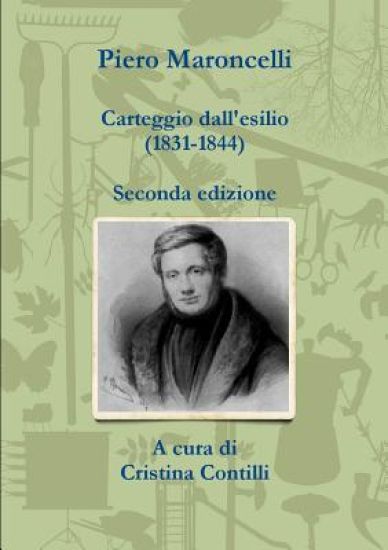
Carteggio dall'esilio (1831-1844) A cura di Cristina Contilli
"Godo che abbiano avuto il nobile pensiero di fare quell'edizione a profitto del mio amatissimo compagno Maroncelli, uomo veramente degno della loro bonta. Io ho vissuto molti anni infelici con questo amico, e l'ho sempre trovato cordiale. "(Silvio Pellico ad Andrew Norton che nel 1836 aveva pubblicato negli Stati Uniti una nuova traduzione inglese de Le mie prigioni)I nomi di Pellico e Maroncelli sono legati fin dall'800 sia nella storiografia sia nella retorica sui martiri del Risorgimento, era inevitabile quindi che, occupandomi di Pellico, mi trovassi nel pieno del suo scambio di lettere, ma anche di sentimenti e di idee con quello che e stato uno dei suoi migliori amici. Nel corso delle mie ricerche mi sono accorta, pero, di una lacuna, a differenza di altri corrispondenti del Pellico che hanno avuto una o piu edizioni delle loro lettere non esiste nessuna edizione delle lettere di Maroncelli che sono state finora pubblicate in ordine sparso in riviste, biografie e atti di convegni...
Carteggio Dall'esilio (1831-1844)

Carteggio Dall'esilio (1831-1844)

Piero Maroncelli

Lulu.com
2013
nidottu
I nomi di Silvio Pellico e Piero Maroncelli sono legati fin dall'800 sia nella storiografia sia nella retorica sui martiri del Risorgimento, era inevitabile quindi che, occupandomi di Silvio Pellico e del suo epistolario, mi trovassi nel pieno del suo scambio di lettere, ma anche di sentimenti e di idee con quello che e stato uno dei suoi migliori amici. Nel corso delle mie ricerche mi sono accorta, pero, di una lacuna, a differenza di altri corrispondenti del Pellico che hanno avuto una o piu edizioni delle loro lettere non esiste nessuna edizione delle lettere di Piero Maroncelli che sono state finora pubblicate in ordine sparso in riviste, biografie e atti di convegni. Ho pensato dunque che poteva essere utile per gli studiosi del periodo risorgimentale avere a disposizione un'edizione di questo tipo.
There is No Two Without Three

There is No Two Without Three

Ted Purves; Sara Thacher; Forrest Lewinger; Anthony Marcellini; Piero Passacantando; Matthew Rana; Jen Rhoads; Brindalyn Webster; Melissa Wyman

Lulu.com
2008
pokkari
This collection of essays, interviews, drawings, prose, fictive narratives and reflections on projects is the second publication from the Social Practice Area of Concentration at the California College of the Arts. This book represents a process of collaboration, negotiation, consensus and dissent.
Pietro

Pietro

Jojo Regalado

iUniverse
2002
pokkari
Pietro is a pathetic serial killer stricken with Lycanthrophy, a mental delusion in which a person believes he is transforming into a ravenous creature prowling for victims. A malevolent entity engulfs Pietro’s psychological essence, forcing him to do reprehensible acts beyond his control.
Pietro

Pietro

Danilo Gapcroft

Independently Published
2019
nidottu
Valter um jovem solit rio que mora pr ximo Favela Santa Helena. Um dia, ao presenciar Jonas - seu amor da adolesc ncia - fugindo da pol cia ap s cometer um crime, ele se depara com o policial de meia idade Pietro Oliveira, o qual lhe pede informa es. Valter se disp e a colaborar com Pietro, desde que Pietro tamb m colabore com o jovem.O bandido, o policial e o jovem lobo solit rio. Quando o destino dos tr s se cruzarem, suas vidas nunca mais ser o as mesmas.Cont m cenas adultas/er ticas.
Pietro

Pietro

Christopher V. Cardew

New Generation Publishing
2005
pokkari
Ranging from South America to Africa and Italy, this novel explores the extremes of nature, and the extremes which men go to in order to survive, find a niche in life and attain personal redemption. A web of dramatic events is drawn together by the appearance of Pietro, a young orphan from a favela in Rio de Janeiro.
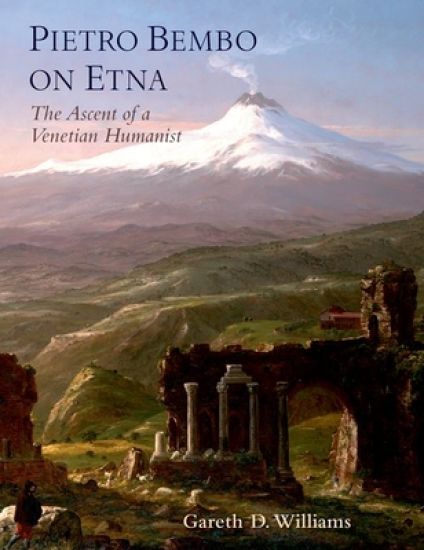
Pietro Bembo on Etna

Pietro Bembo on Etna

Gareth D. Williams

Oxford University Press Inc
2017
sidottu
This book is centered on the Venetian humanist Pietro Bembo (1470-1547), on his two-year stay in Sicily in 1492-4 to study the ancient Greek language under one of its most distinguished contemporary teachers, the Byzantine émigré Constantine Lascaris, and above all on his ascent of Mount Etna in 1493. The more particular focus of this study is on the imaginative capacities that crucially shape Bembo's elegantly crafted account, in Latin, of his Etna adventure in his so-called De Aetna, published at the Aldine press in Venice in 1496. This work is cast in the form of a dialogue that takes place between the young Bembo and his father Bernardo (himself a prominent Venetian statesman with strong humanist involvements) after Pietro's return to Venice from Sicily in 1494. But De Aetna offers much more than a one-dimensional account of the facts, sights and findings of Pietro's climb. Far more important in the present study is his eye for creative elaboration, or for transforming his literal experience on the mountain into a meditation on his coming-of-age at a remove from the conventional career-path expected of one of his station within the Venetian patriciate. Three mutually informing features that are critical to the artistic originality of De Aetna receive detailed treatment in this study: (i) the stimulus that Pietro drew from the complex history of Mount Etna as treated in the Greco-Roman literary tradition from Pindar onwards; (ii) the striking novelty of De Aetna's status as the first Latin text produced at the nascent Aldine press in the prototype of what modern typography knows as Bembo typeface; and (iii) Pietro's ingenious deployment of Etna as a powerful, multivalent symbol that simultaneously reflects the diverse characterizations of, and the generational differences between, father and son in the course of their dialogical exchanges within De Aetna.
Pietro Bembo on Etna

Pietro Bembo on Etna

Gareth D. Williams

Oxford University Press Inc
2022
nidottu
This book is centered on the Venetian humanist Pietro Bembo (1470-1547), on his two-year stay in Sicily in 1492-4 to study the ancient Greek language under one of its most distinguished contemporary teachers, the Byzantine émigré Constantine Lascaris, and above all on his ascent of Mount Etna in 1493. The more particular focus of this study is on the imaginative capacities that crucially shape Bembo's elegantly crafted account, in Latin, of his Etna adventure in his so-called De Aetna, published at the Aldine press in Venice in 1496. This work is cast in the form of a dialogue that takes place between the young Bembo and his father Bernardo (himself a prominent Venetian statesman with strong humanist involvements) after Pietro's return to Venice from Sicily in 1494. But De Aetna offers much more than a one-dimensional account of the facts, sights and findings of Pietro's climb. Far more important in the present study is his eye for creative elaboration, or for transforming his literal experience on the mountain into a meditation on his coming-of-age at a remove from the conventional career-path expected of one of his station within the Venetian patriciate. Three mutually informing features that are critical to the artistic originality of De Aetna receive detailed treatment in this study: (i) the stimulus that Pietro drew from the complex history of Mount Etna as treated in the Greco-Roman literary tradition from Pindar onwards; (ii) the striking novelty of De Aetna's status as the first Latin text produced at the nascent Aldine press in the prototype of what modern typography knows as Bembo typeface; and (iii) Pietro's ingenious deployment of Etna as a powerful, multivalent symbol that simultaneously reflects the diverse characterizations of, and the generational differences between, father and son in the course of their dialogical exchanges within De Aetna.
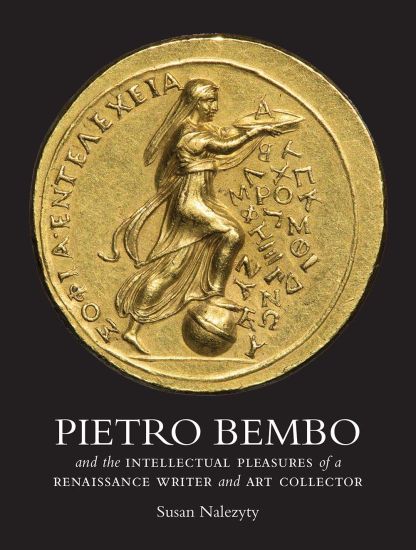
Pietro Bembo and the Intellectual Pleasures of a Renaissance Writer and Art Collector
One of the most influential scholars of the Renaissance, Pietro Bembo (1470–1547) gained fame not only for his literary theory and poetry, but for his incredible collection of art and antiquities. Drawing on anecdotes from Bembo’s letters and unpublished archival material, Susan Nalezyty analyzes how Bembo’s collection functioned as a source of inspiration for artists like Titian and writers like Giovanni della Casa. As visitors to the collection marveled at the quality and variety of the displayed objects, Bembo encouraged investigations into the ways in which contemporary art compared with ancient objects. Often straddling the line between the visual and literary worlds, these critical discussions catalyzed artistic experiments that led to new modes of creative expression. This generously illustrated volume brings Bembo’s collection to life and reveals its key role in the development of Renaissance artistic philosophy and historical study of the classical past.
Pietro Mascagni

Pietro Mascagni

Roger Flury

Greenwood Press
2000
sidottu
Bringing together a vast amount of information on Pietro Mascagni and his works, this volume in the Greenwood Press series Bio-Bibliographies in Music includes a catalogue of the composer's works and performances, bibliography, discography, and brief biographical sketch. Mascagni is best known for Cavalleria Rusticana, but he wrote fifteen other stage works and over 100 other compositions, including sacred music, songs and film scores. Overshadowed by his contemporary Puccini and tainted by association with the fascist regime of Mussolini, Mascagni is both a famous and neglected opera composer. This volume charts the decline in performances of Mascagni's operas other than Cavalleria Rusticana and reveals a growing interest in and changing attitude toward the composer. The discography includes more than 2,500 recordings, and the annotated bibliography includes 361 titles. This research tool will appeal to Mascagni and to opera scholars. Each section is cross-referenced throughout. An appendix includes a chronology of Mascagni's conducting career.