

Kirjahaku
Etsi kirjoja tekijän nimen, kirjan nimen tai ISBN:n perusteella.
1000 tulosta hakusanalla Pitt David G.
This book concentrates on the bureaucratic aspects of the United Nation. It is intended to be educational, and indeed young people are intended to be a special audience. The book attempts to identify explanations for stability and initiative within international secretariats.
This book concentrates on the bureaucratic aspects of the United Nation. It is intended to be educational, and indeed young people are intended to be a special audience. The book attempts to identify explanations for stability and initiative within international secretariats.


The Quality of Thought develops and defends the thesis that thinking is a kind of experience, characterized by a sui generis phenomenology, and draws out the implications of this thesis for dominant views in philosophy of mind, philosophy of language, and metaphysics. The view defended is radically internalist and intensionalist, and goes against received doctrines in philosophy of mind (externalism) and language (extensionalism). The book offers arguments for the thesis, refutations of classic externalism (Putnam and Burge), arguments that standard motivations for direct reference theories of names, indexicals, and demonstratives are not inevitable, and alternative accounts of their (and their conceptual equivalents') semantics. It also addresses outstanding challenges to the phenomenal intentionalist view of thought content, including the existence of unconscious thought, the elusiveness of conceptual phenomenology, the matching content problem, phenomenal compositionality, and the determination of conceptual reference.
A major concern of this book is how ordinary people might come to manage their own environment more effectively. A valuable resource for students of environmental studies, it considers how this might be facilitated by more appropriate technology, assistance and communications. Reviewed by the International Journal of Environmental Studies, it has`... something of interest and information in every chapter of this book and I urge all readers to look at it carefully, for its combination of the examination of general principles and down-to-earth data and problems is one of the best for years'.

Drawing parallels between tribal behavior and international relations to demonstrate that societies are not inherently aggressive but are led into conflict when pride or in-group pressures push people to fight, this profound look at the chilling reality of cold war and its arsenal of nuclear destruction offers valuable new insights into how prejudices and stereotypes contribute to what may seem like an inexorable drift to war. Yet the authors conclude that war is not inevitable, as they offer suggestions for an end to the arms race in the nuclear age. Based on original research, this is a long overdue contribution to the study of war and peace in our time and a text for newly emerging courses on the subject.
A major concern of this book is how ordinary people might come to manage their own environment more effectively. A valuable resource for students of environmental studies, it considers how this might be facilitated by more appropriate technology, assistance and communications. Reviewed by the International Journal of Environmental Studies, it has`... something of interest and information in every chapter of this book and I urge all readers to look at it carefully, for its combination of the examination of general principles and down-to-earth data and problems is one of the best for years'.


This book is small in page numbers but big on sustenance (nutrition) for growth and change. It places us on a path of the most important teaching - love, kindness, honesty and loyalty in a manner that is both tangible and significant for our personal journey choice for end-time destination. We are offered only two choices; its either Heaven or Hell. Have you made your final destination selection? If heaven is for you, then you did right to purchase this book and I thank you for doing so. This book will challenge you to grow by going up. (you will see) Remember caring and hearing will encourage you to share the good news with others for their journey and growth through to eternal life.
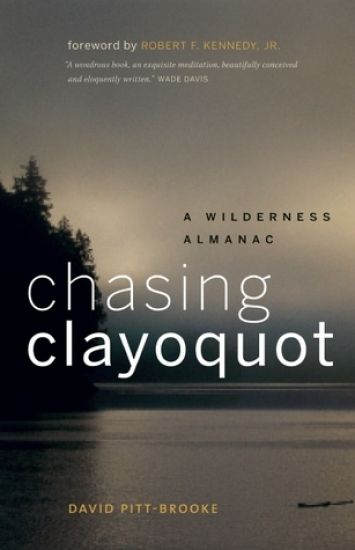
First published in 2004, and now with a new introduction by the author and a foreword by Robert F. Kennedy Jr., this book of natural history, environmentalism, and politics explores one of the Earth's last primeval places: Clayoquot Sound. Pitt-Brooke takes the reader on 12 journeys, one for each month of the year. Each journey covers the outstanding natural event of that season, such as whale-watching in April, shorebird migration in May, and the salmon spawn in October.

Privatization and Transition in Russia in the Early 1990s
Carol Scott Leonard; David Pitt-Watson
Routledge
2013
sidottu
Few economic events have caused such controversy as the privatization process in Russia. Some see it as the foundation of political and economic freedom. For others it was economics gone wrong, and ended in "Russians stealing money from their own country". As Russia reasserts itself, and its new brand of capitalism, it is ever more important that policy makers and scholars understand the roots of the economic structure and governance of that country; what was decided, who made the decisions and why, what actually transpired, and what implications this has for the future of Russia.This work, written by two senior advisors to the Russian government, has unique access to documentation, tracking the decision making process in the Russian Mass Privatization process. By close reference to events, and supplemented by interviews with many of the key participants, it shows that the policies adopted were often influenced and shaped by different forces than those cited by current popular accounts. The book challenges the interpretation of Russian privatization by some of the West’s most eminent economists. It underlines that economists of all schools, who bring assumptions from the West to the analysis of Russia, may reach false or misleading conclusions. It is an essential guide for anyone interested in Russian economic reform, and anyone who seeks to understand this enigmatic country, and its actions today.

'The authors take us into less-known corridors of climate Realpolitik and energy power play. We are provided with the essential vocabulary to understand what is at stake and how the challenge should be tackled' Prince Sadruddin Aga Khan Global warming and the resulting climate change present one of the greatest potential threats humanity has had to face. Every country contributes to them and they affect every person. Correspondingly, the Framework Convention on Climate Change, negotiated at the Earth Summit and since, is potentially one of the most significant international agreements ever reached ? and its successful implementation is vital if the threat is to be averted. This book provides a guide to the Convention and explains in very clear terms what is involved: the background which makes it so necessary; the tortuous process involved in negotiating it; what it says; and most importantly, how it must be interpreted and implemented, making clear the scale of the changes involved and the dangers of evading them. Sten Nilsson is leader of the forest resources project at the International Institute for Applied Systems Analysis. David Pitt is a consultant to the Bellerive Foundation and Alp Action. They are the authors of Mountain World in Danger, published by Earthscan in 1991. Originally published in 1994

The changing climate, the warming of the world and acid rain are among the greatest problems facing us at the end of the twentieth century. This book describes, for the first time, the effects of these phenomena on the high mountains and the forests of Europe. Mountains and the frozen regions (the cryosphere) not only play a major part in our climatic system, but are also central to our water supplies. Yet our glaciers are shrinking, our lakes and soils are becoming acidified, our forests are damaged and the whole fragile ecosystem of ranges like the Alps and the Caucasus is threatened. Nilsson and Pitt present the evidence and assess the probable effects of these changes on mountain society, tourism, water, flora and fauna. They also examine the uncertainties. Above all they look, too, at the best possible strategies in response to What is happening and at what the next steps should be. Originally published in 1991

Privatization and Transition in Russia in the Early 1990s
Carol Scott Leonard; David Pitt-Watson
Routledge
2015
nidottu
Few economic events have caused such controversy as the privatization process in Russia. Some see it as the foundation of political and economic freedom. For others it was economics gone wrong, and ended in "Russians stealing money from their own country". As Russia reasserts itself, and its new brand of capitalism, it is ever more important that policy makers and scholars understand the roots of the economic structure and governance of that country; what was decided, who made the decisions and why, what actually transpired, and what implications this has for the future of Russia.This work, written by two senior advisors to the Russian government, has unique access to documentation, tracking the decision making process in the Russian Mass Privatization process. By close reference to events, and supplemented by interviews with many of the key participants, it shows that the policies adopted were often influenced and shaped by different forces than those cited by current popular accounts. The book challenges the interpretation of Russian privatization by some of the West’s most eminent economists. It underlines that economists of all schools, who bring assumptions from the West to the analysis of Russia, may reach false or misleading conclusions. It is an essential guide for anyone interested in Russian economic reform, and anyone who seeks to understand this enigmatic country, and its actions today.

The changing climate, the warming of the world and acid rain are among the greatest problems facing us at the end of the twentieth century. This book describes, for the first time, the effects of these phenomena on the high mountains and the forests of Europe. Mountains and the frozen regions (the cryosphere) not only play a major part in our climatic system, but are also central to our water supplies. Yet our glaciers are shrinking, our lakes and soils are becoming acidified, our forests are damaged and the whole fragile ecosystem of ranges like the Alps and the Caucasus is threatened. Nilsson and Pitt present the evidence and assess the probable effects of these changes on mountain society, tourism, water, flora and fauna. They also examine the uncertainties. Above all they look, too, at the best possible strategies in response to What is happening and at what the next steps should be. Originally published in 1991

'The authors take us into less-known corridors of climate Realpolitik and energy power play. We are provided with the essential vocabulary to understand what is at stake and how the challenge should be tackled' Prince Sadruddin Aga Khan Global warming and the resulting climate change present one of the greatest potential threats humanity has had to face. Every country contributes to them and they affect every person. Correspondingly, the Framework Convention on Climate Change, negotiated at the Earth Summit and since, is potentially one of the most significant international agreements ever reached ? and its successful implementation is vital if the threat is to be averted. This book provides a guide to the Convention and explains in very clear terms what is involved: the background which makes it so necessary; the tortuous process involved in negotiating it; what it says; and most importantly, how it must be interpreted and implemented, making clear the scale of the changes involved and the dangers of evading them. Sten Nilsson is leader of the forest resources project at the International Institute for Applied Systems Analysis. David Pitt is a consultant to the Bellerive Foundation and Alp Action. They are the authors of Mountain World in Danger, published by Earthscan in 1991. Originally published in 1994

What They Do With Your Money
Stephen Davis; Jon Lukomnik; David Pitt-Watson
Yale University Press
2016
sidottu
A call to reboot capitalism and preserve $85 trillion in retirement savings for their owners—not for use as the financial industry’s ATM Each year we pay billions in fees to those who run our financial system. The money comes from our bank accounts, our pensions, our borrowing, and often we aren’t told that the money has been taken. These billions may be justified if the finance industry does a good job, but as this book shows, it too often fails us. Financial institutions regularly place their business interests first, charging for advice that does nothing to improve performance, employing short-term buying strategies that are corrosive to building long-term value, and sometimes even concealing both their practices and their investment strategies from investors. In their previous prizewinning book, The New Capitalists, the authors demonstrated how ordinary people are working together to demand accountability from even the most powerful corporations. Here they explain how a tyranny of errant expertise, naive regulation, and a misreading of economics combine to impose a huge stealth tax on our savings and our economies. More important, the trio lay out an agenda for curtailing the misalignments that allow the financial industry to profit at our expense. With our financial future at stake, this is a book that analysts, economists, policy makers, and anyone with a retirement nest egg can’t afford to ignore.
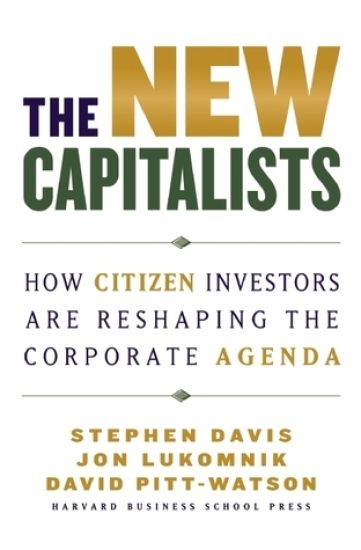
The New Capitalists
Stephen Davis; Jon Lukomnik; David Pitt-Watson
Harvard Business Review Press
2006
sidottu
Thanks to the rise of mutual funds and retirement plans, the actual owners of the world's corporate giants are no longer a few wealthy families. Rather, they're the huge majority of working people who have their pensions and life savings invested in shares of today's largest companies. These grassroots owners have ideas about value that differ from those of tycoons or Wall Street traders. And corporate directors and executives are coming under increasing pressure to respond. The New Capitalists provides examples--from GE to Disney to British Petroleum--of enterprises whose shareholders have recently wielded their control in ways unimaginable just several years ago. Authors Stephen Davis, Jon Lukomnik and David Pitt-Watson describe how civil ownership will profoundly alter our world--including forcing the rise of a new species of corporation. It has already begun demolishing old rules and habits, laying the groundwork for a new "constitution of commerce." The authors spell out conventional thinking destined for extinction--and fresh strategies companies must implement to survive in the emerging "civil economy." They also outline how investors, advisors, activists, and policy makers can make their voices heard.
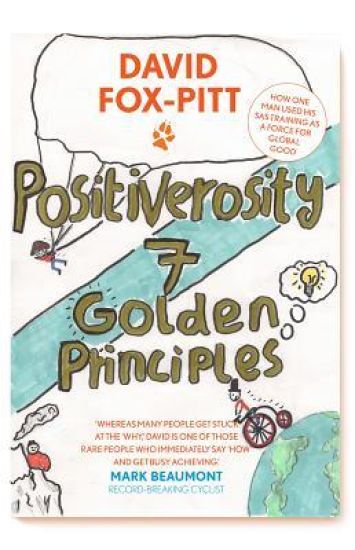
How one man used his SAS training as a force for Global good... David likes to make things happen. In this inspirational book he gives encouragement in an uncertain world through seven golden principles defined by his own adventures, his altruism, and his training in the SAS. This book will motivate, and uplift you and is filled with stories and advice on how to push your boundaries to achieve self-fulfilment.