
Kirjahaku
Etsi kirjoja tekijän nimen, kirjan nimen tai ISBN:n perusteella.
643 tulosta hakusanalla Pittsburgh Post-Gazette
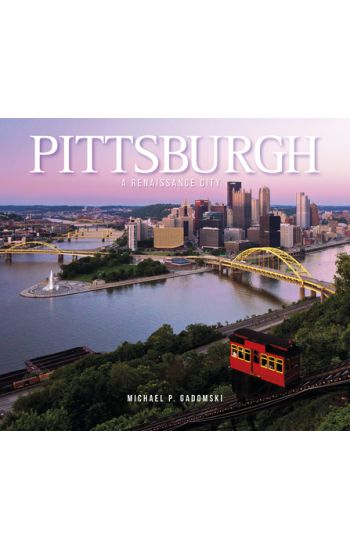
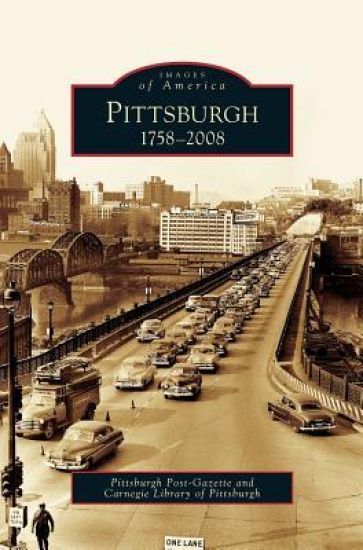
Discover Pittsburgh’s historic sites, modern downtown, famous rivers, recreation, and arts. Witness the city’s progression from an outpost and battleground in the colonial war for the control of North America to one of the nation’s most important industrial cities. Going through several periods of growth and decline, then a renaissance period, Pittsburgh today is one of the nation’s most culturally and economically advanced cities. Once serving as a gateway to the American frontier, Pittsburgh today serves on the frontier of technology, with a strong emphasis on green environmental design, education, and medicine. It is a city others try to emulate and where young professionals find new opportunities. You will discover why Pittsburgh is often rated as one of the World’s Most Livable Cities. This is a book you will want to treasure as a keepsake or give to a family member, friend, or business associate.

85 color photos show Pittsburgh's historic sites, modern downtown, industrial roots, and cultural renaissance, in a convenient keepsake sized package. Discover Pittsburgh’s historic sites, modern downtown, famous rivers, recreation, and arts. Witness the city’s progression from an outpost and battleground in the colonial war for the control of North America to one of the nation’s most important industrial cities. Going through several periods of growth and decline, then a renaissance period, Pittsburgh today is one of the nation’s most culturally and economically advanced cities. Once serving as a gateway to the American frontier, Pittsburgh today serves on the frontier of technology, with a strong emphasis on green environmental design, education, and medicine. It is a city others try to emulate and where young professionals find new opportunities. You will discover why Pittsburgh is often rated as one of the World’s Most Livable Cities. This is a book you will want to treasure as a keepsake or give to a family member or friend.
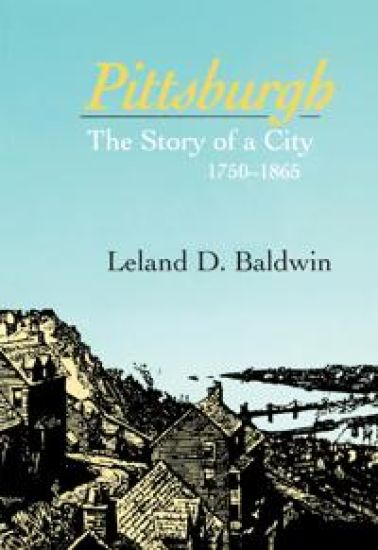
The standard history of Pittsburgh tells the city\u2019s story from its violent days as an eighteenth-century outpost of empire to the onset of its great age of industrial expansion.
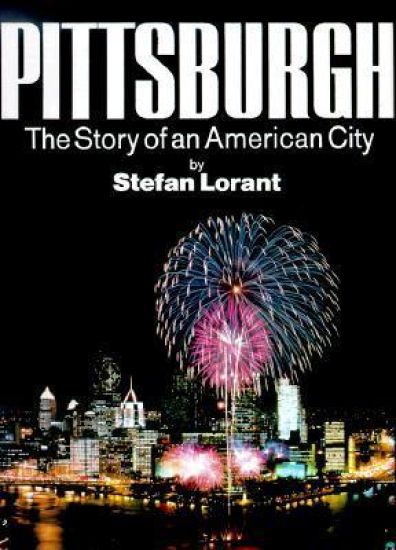
Pittsburgh: The Story of an American City follows Pittsburgh from its frontier beginnings through its evolution into the most heavily industrialized city in the world, to the city's renewal of itself as "America's Most Livable City." This beautiful volume though, is much more than the story of a single city; it is the history of the United States. This book is based on years of research and includes contributions by such noted American historians as Henry Steele Commager and Oscar Handlin. More than 1100 pictures recreate the city's dramatic 200+year history. Featured are photographs by W. Eugene Smith, Margaret Bourke-White, Norman W. Schumm, Lorant himself and others. A chronology of events from 1717 offers historical snapshots in the day to day life of the archetypical American city.

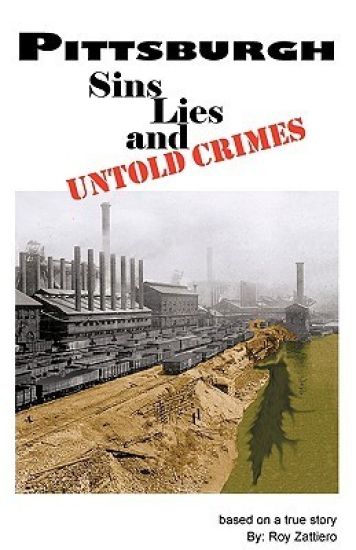
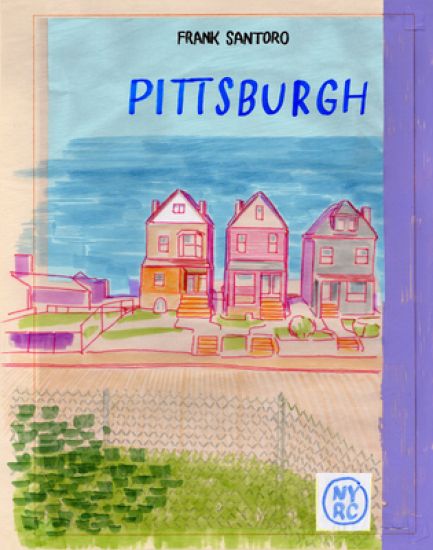
A moving graphic memoir about home, childhood, and family by the author of Storeyville and Pompeii. Pittsburgh is the story of a family, and a city. Frank Santoro faces a straightforward yet heart-rending reality: His parents, once high-school sweethearts, now never speak to each other--despite working in the same building. Stuck in the middle, he tries to understand. The result is this book. Using markers, pencils, scissors, and tape, with a variety of papers, drawing in vivid colors and exuberant lines, Santoro constructs a multi-generational retelling of their lives. Framed by his parents' courtship and marriage, and set amid the vital but fading neighborhood streets, the pages of Pittsburgh are filled with details both quotidian and dramatic--from his childhood mishaps to his father's trauma in Vietnam--interspersed throughout with the mute witness of the family dog, Pretzel. Santoro, the acclaimed author of Storeyville and Pompeii, has created his masterpiece. Pittsburgh is an extraordinary reimagining of the comics form to depict the processes of memory, and a powerful, searching account of a family taking shape, falling apart, and struggling to reinvent itself, as the city around them does the same.

Pittsburgh är historien om en familj och om en stad. Frank Santoro konfronteras med ett enkelt men hjärtskärande faktum: Hans föräldrar, som varit ihop sedan gymnasiet, har vägrat tala med varandra — torts att de arbetar i samma byggnad. Han kommer i kläm och kämpar för att försöka förstå. Resultatet är den här boken. Med hjälp av färgpennor, sax, tejp, en uppsättning olika papper och med starka färger och en expressiv linjeföring så skapar Santoro en släktkrönika som spänner över sina föräldrars första möten, deras äktenskap, allt i ett sakta förslummande Pittsburgh är fyllda med såväl vardagliga som dramatiska scener —allt från egna minnen av missöden i barndoment till hans fars traumatiska krigsminnen från Vietnam — allt med familjens hund, Pretzel, som stumt vittne. Frank Santoro, som givit ut två böcker tidigare i Frankrike och Förenta Staterna, har här skapat sitt mästerverk. Pittsburgh är en unik omdaning av serieformen som skildrar både minnets bedrägliga natur som hur en familj uppstår, rämnar, och försöker hantera den nya situationen, parallellt med att den omgivande staden gör ungefär likadant.

Pittsburgh Prays: Thirty-Six Houses of Worship
Tim Fabian; Brian Cohen; Abby Mendelson
Three Blind Mice Press
2013
nidottu

Join the campfire crowd as you read about a spookier side of Pittsburgh. Meet disappearing students and witness bursting light fixtures at Washington & Jefferson College. Phone calls from the dead prove that the Steel City is filled with ghostly phenomena. Hear an eerie dead child's voice and ghastly growling noises at the St. Patrick's Cemetery in Oakdale. See shadow figures at the psychiatric hospital in Bridgeville. Learn that ghosts have sleepovers in the towns of Bedford, Scenery Hill, and Harmony.

Pittsburgh and the Urban League Movement
Joe William Trotter; Dick Gilbreath
The University Press of Kentucky
2020
sidottu
During the Great Migration, Pittsburgh, Pennsylvania, became a mecca for African Americans seeking better job opportunities, wages, and living conditions. The city's thriving economy and vibrant social and cultural scenes inspired dreams of prosperity and a new start, but this urban haven was not free of discrimination and despair. In the face of injustice, activists formed the Urban League of Pittsburgh (ULP) in 1918 to combat prejudice and support the city's growing African American population.In this broad-ranging history, Joe William Trotter Jr. uses this noteworthy branch of the National Urban League to provide new insights into an organization that has often faced criticism for its social programs' deep class and gender limitations. Surveying issues including housing, healthcare, and occupational mobility, Trotter underscores how the ULP -- often in concert with the Urban League's national headquarters -- bridged social divisions to improve the lives of black citizens of every class. He also sheds new light on the branch's nonviolent direct-action campaigns and places these powerful grassroots operations within the context of the modern Black Freedom Movement.The impact of the National Urban League is a hotly debated topic in African American social and political history. Trotter's study provides valuable new insights that demonstrate how the organization has relieved massive suffering and racial inequality in US cities for more than a century.
Pittsburgh and the Urban League Movement
Joe William Trotter; Dick Gilbreath
The University Press of Kentucky
2020
nidottu
During the Great Migration, Pittsburgh, Pennsylvania, became a mecca for African Americans seeking better job opportunities, wages, and living conditions. The city's thriving economy and vibrant social and cultural scenes inspired dreams of prosperity and a new start, but this urban haven was not free of discrimination and despair. In the face of injustice, activists formed the Urban League of Pittsburgh (ULP) in 1918 to combat prejudice and support the city's growing African American population.In this broad-ranging history, Joe William Trotter Jr. uses this noteworthy branch of the National Urban League to provide new insights into an organization that has often faced criticism for its social programs' deep class and gender limitations. Surveying issues including housing, healthcare, and occupational mobility, Trotter underscores how the ULP - often in concert with the Urban League's national headquarters - bridged social divisions to improve the lives of black citizens of every class. He also sheds new light on the branch's nonviolent direct-action campaigns and places these powerful grassroots operations within the context of the modern Black Freedom Movement.The impact of the National Urban League is a hotly debated topic in African American social and political history. Trotter's study provides valuable new insights that demonstrate how the organization has relieved massive suffering and racial inequality in US cities for more than a century.

Pittsburgh and the Appalachians
University of Pittsburgh Press
2006
sidottu
Few American cities reflect the challenges and promise of a twenty-first-century economy better than Pittsburgh and its surrounding region. Once a titan of the industrial age, Pittsburgh flourished from the benefits of its waterways, central location, and natural resources-bituminous coal to fire steel furnaces; salt and sand for glass making; gas, oil, and just enough ore to spark an early iron industry. Today, like many cities located in the manufacturing triangle that stretches from Boston to Duluth to St. Louis, Pittsburgh has made the transition to a service-based economy.Pittsburgh and the Appalachians presents a collection of eighteen essays that explore the advantages and disadvantages that Pittsburgh and its surrounding region face in the new global economy, from the perspectives of technology, natural resources, workforce, and geography. It offers an extensive examination of the processes and factors that have transformed much of industrial America during the past half-century, and shows how other cities can learn from the steps Pittsburgh has taken through redevelopment, green space acquisition, air and water quality improvement, cultural revival, and public-private partnerships to create a more livable, economically viable region for future populations.
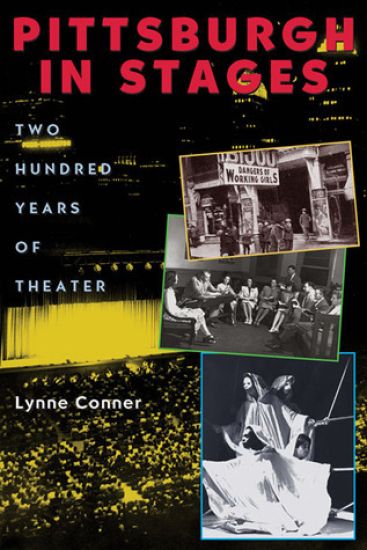
Pittsburgh has a rich and diverse theatrical tradition, from early frontier performances by officers stationed at Fort Pitt through experimental theater at the end of the twentieth century. Pittsburgh in Stages offers the first comprehensive history of theater in Pittsburgh, placing it within the context of cultural development in the city and the history of theater nationally.By the time the first permanent theater was built in 1812, Pittsburgh had already established itself as a serious patron of the theatrical arts. The city soon hosted New York and London-based traveling companies, and gained a national reputation as a proving ground for touring productions. By the early twentieth century, numerous theaters hosted 'popular-priced' productions of vaudeville and burlesque, and theater was brought to the masses. Soon after, Pittsburgh witnessed the emergence of myriad community-based theater groups and the formation of the Federation of Non-Commercial Theatres and the New Theater League, guilds designed to share resources among community producers. The rise of local theater was also instrumental to the growth of African American theatrical groups. Though victims of segregation, their art flourished, and was only later recognized and blended into Pittsburgh's theatrical melting pot.Pittsburgh in Stages relates the significant influence and interpretation of urban socioeconomic trends in the theatrical arts and the role of the theater as an agent of social change. Dividing Pittsburgh's theatrical history into distinct eras, Lynne Conner details the defining movements of each and analyzes how public tastes evolved over time. She offers a fascinating study of regional theatrical development and underscores the substantial contribution of regional theater in the history of American theatrical arts.
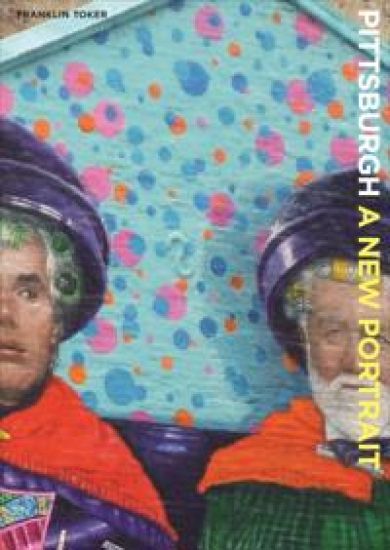
From its founding in 1758, Pittsburgh has experienced several epic transformations. It began its existence as a fortress, on a site originally selected by George Washington. A hundred years later, and well into our own time, no other American city was as intensively industrialized, only to be later consigned to "rustbelt" status. Remade as a thriving twenty-first-century city and an international center for science, medicine, biotechnology, and financial services, Pittsburgh is now routinely acclaimed as one of the most promising and livable of America's cities. Franklin Toker shows us why.Toker highlights this remarkable story of urban reinvention by focusing on what makes Pittsburgh so resilient and appealing - its strong neighborhoods and their surprisingly rich architectural history. The many unique, lively urban communities that make up Pittsburgh are a treasure trove of every imaginable style of structure, from Victorian to Bauhaus, Gothic to Art Deco, and from Industrial to Green. These ordinary homes expressed the aspirations of people who came from around the world to settle in Pittsburgh, while they built the city itself into an economic powerhouse. With the wealth generated by this everyday work, local captains of industry could build their own monumental additions to Pittsburgh's urban landscape, including two of America's greatest buildings: H. H. Richardson's Allegheny Courthouse and Frank Lloyd Wright's Fallingwater.With accessible prose, Toker examines Pittsburgh in its historical context (from Indian settlement to postmodern city), in its regional setting (from the playgrounds of the Laurel Highlands to the hard-working mill towns dotting the landscape), and from the street level (leading the reader on a personal tour through every neighborhood). Lavishly illustrated with photos and maps, Pittsburgh: A New Portrait reveals the true colors of a truly great American city.
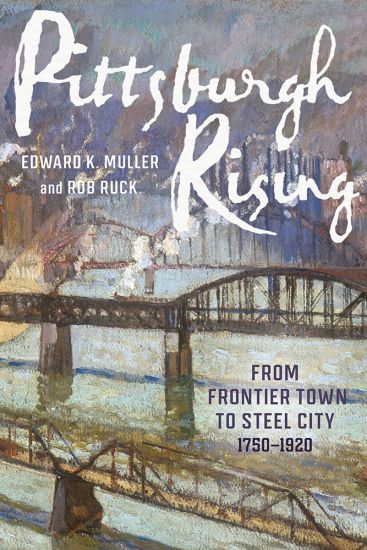
Over 170 years, Pittsburgh rose from remote outpost to industrial powerhouse. With the formation of the United States, the frontier town located at the confluence of three rivers grew into the linchpin for trade and migration between established eastern cities and the growing settlements of the Ohio Valley. Resources, geography, innovation, and personalities led to successful glass, iron, and eventually steel operations. As Pittsburgh blossomed into one of the largest cities in the country and became a center of industry, it generated great wealth for industrial and banking leaders. But immigrants and African American migrants, who labored under insecure, poorly paid, and dangerous conditions, did not share in the rewards of growth. Pittsburgh Rising traces the lives of individuals and families who lived and worked in this early industrial city, jammed into unhealthy housing in overcrowded neighborhoods near the mills. Although workers organized labor unions to improve conditions and charitable groups and reform organizations, often helmed by women, mitigated some of the deplorable conditions, authors Muller and Ruck show that divides along class, religious, ethnic, and racial lines weakened the efforts to improve the inequalities of early twentieth-century Pittsburgh - and persist today.