Kirjojen hintavertailu. Mukana 11 359 595 kirjaa ja 12 kauppaa.

Kirjahaku

Etsi kirjoja tekijän nimen, kirjan nimen tai ISBN:n perusteella.

533 tulosta hakusanalla Piyush Jain Pt

Manual of Kinesiological Taping: an epitome of kinesiology taping techniques

Manual of Kinesiological Taping: an epitome of kinesiology taping techniques

Piyush Jain Pt

Createspace Independent Publishing Platform
2012
nidottu
MANUAL OF KINESIOLOGICAL TAPINGThis book is a reference text for the kinesiology taping therapist who are trained in the method oftaping. The basic steps given in the book can make a practicingTherapist to use taping techniqueinnovatively to the subjects in different clinical conditions. The book is a researched basedapproach to the effect of kinesiology taping in different conditions, structure and functions ofbody.New to this edition: Basics of taping techniques.Evidence based kinesiology taping techniques.Illustrative techniques for muscle, ligaments, fascia and lymphatic techniques.Elaborative pictures for better understanding the techniques

Manual of Dry Needling Techniques

Manual of Dry Needling Techniques

Piyush Jain Pt

Pref Publication
2015
nidottu
Upper & Lower QuarterHeadingPage CHAPTER 1 - INTRODUCTION1History2International Definitions4Introduction to Pain 6Myofascial Trigger Points 14CHAPTER 2 - UNDERSTANDING DRY NEEDLING31Models of Dry Needling32Types of Dry Needling34Physiological Effects of Dry Needling35Analgesic Effects35Biochemical Modulation 38Mechanical Effects39Understanding Needles43Handling Needles44Practising Needling/Method Of Needling45Direction Of Insertion46Basic Insertion Techniques47Manipulation47Order Of Insertion And Removal Of Needles48Patient Education49Hygiene49Material Required53Indications53Contraindications53Precautions55Appropriate Selection Of Patient55Procedure of Dry Needling56Advantages57Management Of Adverse Events57 CHAPTER 3 - TRIGGER POINT DRY NEEDLING (UPPER QUARTER)60Supraspinatus61Infraspinatus62Rhomboid Major And Rhomboid Minor63Latissimus Dorsi65Upper Trapezius66Teres Major68Teres Minor 69Subscapularis70Levator Scapulae71Deltoid72Biceps 74Triceps75Anconeus76Brachialis77Brachioradialis78Supinator79Extensor Carpi Radialis Brevis80Extensor Digitorum81Extensor Carpi Ulnaris82Pronator Teres83Flexor Carpi Radialis 84Flexor Digitorum Profundus And Superficialis85Adductor Pollicis87Opponens Pollicis88Abductor Pollicis Brevis89Dorsal Introssei90CHAPTER 4 - TRIGGER POINT DRY NEEDLING (LOWER QUARTER)91Gluteus Maximus92Gluteus Medius93Gluteus Minimus94Piriformis95Tensor Fascia Latae96Adductor Magnus 97Adductor Longus98Pectenius99Rectus Femoris100Vastus Lateralis101Vastus Medialis102Vastus Intermidius103Hamstring104Sartorius106Popliteus107Gastronemius108Soleus110Plantaris111Tibialis Anterior112Tibialis Posterior113Peroneus Tertius114Peroneus Longus115Extensor Hallucis Longus116Extensor Digitorum Longus117Extensor Digitorum Brevis 118Flexor Hallucis Longus119Flexor Hallucis Brevis120Extensor Hallucis Brevis121Adductor Hallucis 122Abductor Hallucis 123Flexor Digitorum Brevis124Abductor Digiti Minimi125Quadratus Plantae126Dorsal And Planter Interossei127SUGGESTIVE READING129
Manual of Dry Needling Techniques Color Edition

Manual of Dry Needling Techniques Color Edition

Piyush Jain

Createspace Independent Publishing Platform
2016
nidottu
All color picturesUpper & Lower Quarter Heading Page CHAPTER 1 - INTRODUCTION 1 History 2 International Definitions 4 Introduction to Pain 6 Myofascial Trigger Points 14 CHAPTER 2 - UNDERSTANDING DRY NEEDLING 31 Models of Dry Needling 32 Types of Dry Needling 34 Physiological Effects of Dry Needling 35 Analgesic Effects 35 Biochemical Modulation 38 Mechanical Effects 39 Understanding Needles 43 Handling Needles 44 Practising Needling/Method Of Needling 45 Direction Of Insertion 46 Basic Insertion Techniques 47 Manipulation 47 Order Of Insertion And Removal Of Needles 48 Patient Education 49 Hygiene 49 Material Required 53 Indications 53 Contraindications 53 Precautions 55 Appropriate Selection Of Patient 55 Procedure of Dry Needling 56 Advantages 57 Management Of Adverse Events 57 CHAPTER 3 - TRIGGER POINT DRY NEEDLING (UPPER QUARTER) 60 Supraspinatus 61 Infraspinatus 62 Rhomboid Major And Rhomboid Minor 63 Latissimus Dorsi 65 Upper Trapezius 66 Teres Major 68 Teres Minor 69 Subscapularis 70 Levator Scapulae 71 Deltoid 72 Biceps 74 Triceps 75 Anconeus 76 Brachialis 77 Brachioradialis 78 Supinator 79 Extensor Carpi Radialis Brevis 80 Extensor Digitorum 81 Extensor Carpi Ulnaris 82 Pronator Teres 83 Flexor Carpi Radialis 84 Flexor Digitorum Profundus And Superficialis 85 Adductor Pollicis 87 Opponens Pollicis 88 Abductor Pollicis Brevis 89 Dorsal Introssei 90 CHAPTER 4 - TRIGGER POINT DRY NEEDLING (LOWER QUARTER) 91 Gluteus Maximus 92 Gluteus Medius 93 Gluteus Minimus 94 Piriformis 95 Tensor Fascia Latae 96 Adductor Magnus 97 Adductor Longus 98 Pectenius 99 Rectus Femoris 100 Vastus Lateralis 101 Vastus Medialis 102 Vastus Intermidius 103 Hamstring 104 Sartorius 106 Popliteus 107 Gastronemius 108 Soleus 110 Plantaris 111 Tibialis Anterior 112 Tibialis Posterior 113 Peroneus Tertius 114 Peroneus Longus 115 Extensor Hallucis Longus 116 Extensor Digitorum Longus 117 Extensor Digitorum Brevis 118 Flexor Hallucis Longus 119 Flexor Hallucis Brevis 120 Extensor Hallucis Brevis 121 Adductor Hallucis 122 Abductor Hallucis 123 Flexor Digitorum Brevis 124 Abductor Digiti Minimi 125 Quadratus Plantae 126 Dorsal And Planter Interossei 127 SUGGESTIVE READING 129
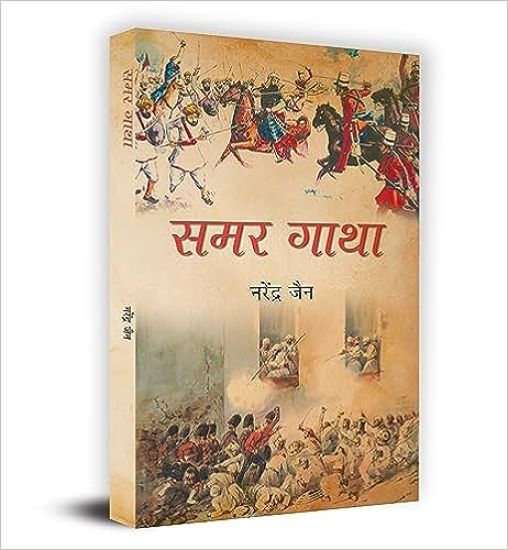
Samargatha

Samargatha

Narendra Jain; Piyush Jain; Pradeep Pandit

Prabhat Prakashan
2023
nidottu
लब खुले, बाँहें फैलीं, खामोशी को तोड़ते शब्द और अहर्निश नदी की तरह बहते विचार एवं उनके समुच्चय का नाम है 'समर गाथा'।यह सिर्फ एक विचार पर कदमताल करते स्वरों का कलरव नहीं, बल्कि अलग-अलग समय में उपजे विचारों का संकलन है। यह ताली-बजाऊ संस्कृति के विरुद्ध सघन और विवेक उद्वेलन का आवश्यक जनमार्ग है। यह सिर्फ विभिन्न दिनों में लिखे गए पत्रकारीय आग्रह भर नहीं है, इसमें सच और अनुभव को व्यक्त करने का जरूरी सामर्थ्य भी है। इसमें गहराई और संश्लिष्टता है, बोधगम्यता है।यह वह केंद्रीभूत धारणा है, जिसने 'समर गाथा' को पुस्तकाकार लेने में मेरी मदद की। मुरली, घर-आँगन, वन-उपवन, मन-तन की नहीं, जीवन की अहर्निश गूँज का नाम है 'समर गाथा'। आप भिज्ञ हैं कि प्राण का रूपांतर भाषा है, इसमें प्रवाह है, स्पर्श है। प्रवाह है, इसलिए गति है, स्पर्श है, इसीलिए संवाद भी है। मैंने जब-जब इन आलेखों को पढ़ा, इसमें तैरता रहा। मुझे लगा कि इसमें सामयिक दृष्टिबोध है, कहन है, कहन में जरूरी घनत्व है, फिर भी बहाव है; जैसे सभी नदियाँ सरस्वती हैं और सभी पहाड़ पुण्य।यह पुस्तक आपको अपने दृष्टिकोण का विकास करने में मदद करेगी। कृपा करेंगे कि इसके पात्रों को हिंदू-मुसलमान के चश्मे से नहीं, क्रांतिकारी के रूप में देखेंगे तो समय और समाज को समझने में मदद मिलेगी। -डॉ. पियूष जैन राष्ट्रीय सचिव, पैफी
Cracking the CSAT Paper 2 (EditionXII)

Cracking the CSAT Paper 2 (EditionXII)

Rudraksh Tripathi; Abhishek Jain; Piyush Kaushik

Arihant Publications India Limited
2023
nidottu
A whole new revised edition of "Cracking the CSAT Paper-2" has been prepared as per the latest format of the UPSC Civil Service Preliminary Exam. Categorized under Best-selling, this book has a scientific and logical presentation of the study material into 8 major subject heads as per the competition level and pattern of the UPSC. A variety of questions based on comprehension, Graphs, Charts, Tables, etc. are also provided with their complete solutions. At the end of the book, 5 Crack Sets have been given according to Previous Years' papers which will definitely help the aspirants to crack the CSAT Paper 2, 2024.
Reasoning Book with Piyush Varshney (English Medium)
Reasoning Book with PIYUSH VARSHNEY is a complete and comprehensive book for various competitive examinations like SSC, BANK, RAILWAY, CSAT, STATE EXAMS, POLICE, NTSE, Etc. as per the latest pattern and trends. Key features of this book are: Covers each section of Reasoning: VERBAL REASONING ( including Logical Reasoning) and NON VERBAL REASONING. Easy explanations of Complex concepts. Different types of questions of multiple patterns.
Manoj Bajpayee

Manoj Bajpayee

Piyush Pandey

Penguin Random House India
2024
nidottu
Manoj Bajpayee is a rarity; he’s one of a small cohort of theatre actors who have gone on from humble beginnings to achieve big heights in Hindi cinema. Bajpayee, famous for iconic movies like Satya and the beloved TV show Family Man, is known not only for his skills but also as a master of his craft. His fans adore him for his selection of always interesting projects that compel them to see a side of the world unfamiliar to them. This biography is the story of Manoj Bajpayee’s commitment and devout passion for acting. It reveals many hitherto unknown aspects of his life to his readers—how his father also had a flair for acting and auditioned at the Pune Film Institute; how his ancestors came to Champaran, Bihar, from Raebareli in Uttar Pradesh; and how he spent his early childhood in the village where Mahatma Gandhi had visited during the Champaran Satyagraha.
Advances In Network Information Theory

Advances In Network Information Theory

Piyush (EDT) Gupta; Gerhard (EDT) Kramer; Adriaan J. (EDT) Van Wijngaarden

Amer Mathematical Society
2004
sidottu
This book is a collection of articles written by leading researchers in information theory stemming from the DIMACS Workshop on Network Information held at Rutgers University (Piscataway, NJ). The articles focus on problems concerning efficient and reliable communication in multi-terminal settings. Information theory has recently attracted renewed attention because of key developments spawning challenging research problems. The material is divided into four parts: 'Information Theory for Sources', which concentrates on network source coding problems; 'Information Theory for Channels', where channels, rather than sources, are central to the problem; 'Information Theory for Sources and Channels', which addresses both source and channel coding; and 'Coding', which deals with more practical issues.Mathematicians using applications such as wireless cellular and LAN data services, ad hoc networks and sensor networks will benefit from the developments outlined in these sections. The book is suitable for graduate students and research mathematicians interested in communications and network information theory.
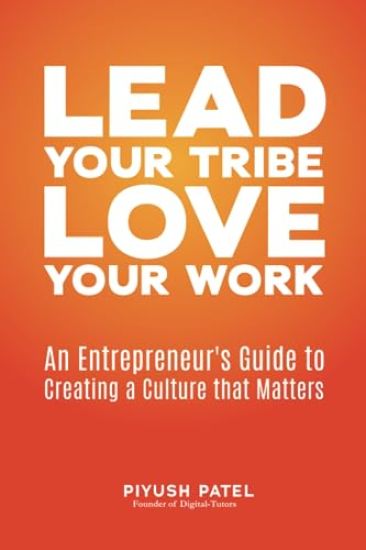
Lead Your Tribe, Love Your Work

Lead Your Tribe, Love Your Work

Piyush Patel

DREAM BIG IMPRINT
2023
pokkari
In Lead Your Tribe, Love Your Work, Piyush Patel offers an insider's perspective on how to unify your team around a common purpose by uncovering your core values and transforming your culture.With over 20 years of entrepreneurial experience, Piyush has discovered that--while leaders can provide opportunities--real culture comes from the heart. Using real-life examples and practical takeaways, Lead Your Tribe, Love Your Work is the ultimate guide to creating a tribe to lead and a workplace you love. Piyush challenges readers to rethink their current paths, unveiling: The business-owner wake-up call: How to tell when your company culture is failing and what to do to fix itThe key to employee retention is BAM--Belonging, Affirmation, and MeaningSecrets to successful onboarding: How to make new employees feel like they already belongConstructive ''uncomfortable'' conversations: Tips for getting positive results from conflictFour questions to ask your employees to get a pulse on your company's cultureWhen successful businesses happen to poor leaders: Identify negative initiatives and reshape your company before it's too lateHow to spot the difference between 'real' and 'faux' culture: Why a company with perks can still be toxicAs a business owner or leader, Lead Your Tribe, Love Your Work will challenge you to take control of your culture and create a thriving company that's built for longevity.
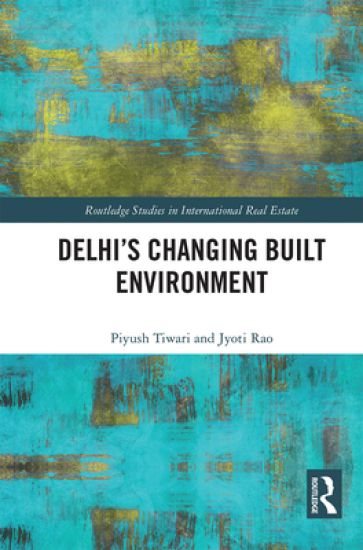
Delhi's Changing Built Environment

Delhi's Changing Built Environment

Piyush Tiwari; Jyoti Rao

Taylor Francis Ltd
2021
nidottu
The rapid expansion, urban form and development of the built environment in the world’s second most populous city, Delhi, has been the consequence of social, political, economic, planning and architectural traditions that have shaped the city over thousands of years. Whilst seamless at times, these traditions have often resulted in the fragmented development of the city’s built environment. This book charts the political, economic and social forces that drove development in India generally and in Delhi in particular, and investigates the drivers and constituents of Delhi’s urban landscape. The book provides a lens through which to examine the development path of a mega-city, which can be used as a guide in the development of emerging urban centres. Furthermore, the strengths and weaknesses of Delhi's built environment are critically analysed, with consideration to the role of the market, finance and policy over time. This book not only provides valuable insight into the physical evolution of Delhi and its surrounds, but it also asks broader questions about how people, power and politics interact with urban environments. It is essential reading for planners, architects, urbanists and social historians.
How to Manage and Survive during a Global Crisis

How to Manage and Survive during a Global Crisis

Piyush Sharma; Tak Yan Leung

TAYLOR FRANCIS LTD
2024
sidottu
Sharma and Leung explore the differences in the national and organizational responses to COVID-19 across various countries.The COVID-19 global pandemic is possibly the worst healthcare disaster ever, and recent studies highlight several differences in the response to COVID-19. Some countries acted quickly with strict measures to successfully contain the initial spread of the COVID-19 and minimize the number of cases and deaths, while others have not been as proactive and have suffered more as a result. The book is organized under distinct themes based on the stages of the COVID-19 pandemic, consisting of (a) discovery and early response, (b) global spread and reactions, (c) early successes and failures, and (d) subsequent waves and new strains. It goes on to analyze the differences in national responses to draw important lessons for managers and governments and concludes with policy recommendations.A useful guide for students, managers, and the general public who are interested in learning about the COVID-19 experience and how such global crises could be managed more effectively in future.
How to Manage and Survive during a Global Crisis

How to Manage and Survive during a Global Crisis

Piyush Sharma; Tak Yan Leung

TAYLOR FRANCIS LTD
2025
nidottu
Sharma and Leung explore the differences in the national and organizational responses to COVID-19 across various countries. The COVID-19 global pandemic is possibly the worst healthcare disaster ever, and recent studies highlight several differences in the response to COVID-19. Some countries acted quickly with strict measures to successfully contain the initial spread of the COVID-19 and minimize the number of cases and deaths, while others have not been as proactive and have suffered more as a result. The book is organized under distinct themes based on the stages of the COVID-19 pandemic, consisting of (a) discovery and early response, (b) global spread and reactions, (c) early successes and failures, and (d) subsequent waves and new strains. It goes on to analyze the differences in national responses to draw important lessons for managers and governments and concludes with policy recommendations. A useful guide for students, managers, and the general public who are interested in learning about the COVID-19 experience and how such global crises could be managed more effectively in future.
Development Paradigms for Urban Housing in BRICS Countries

Development Paradigms for Urban Housing in BRICS Countries

Piyush Tiwari; Jyoti Rao; Jennifer Day

Palgrave Macmillan
2016
sidottu
This book is a concise treatise of the alternative paradigms used in BRICS countries to tackle urban housing shortages. There are a number of alternative methods for meeting these shortages which BRICS countries have adopted. These alternatives may agree in terms of desired outcome, but when it comes to approach, mechanics and scope, they are entirely divergent. By focusing on the political economy and the international structure of each BRICS country, these perspectives present alternative and often conflicting approaches to the attainment of better housing.Development Paradigms for Urban Housing in BRICS Countries explores the various political, economic, institutional and cultural factors that have shaped the housing outcomes in BRICS countries that we see today. The book uses a framework which allows comparison between Brazil, Russia, India, China and South Africa, whilst recognizing the differences in the development path that each of these countries has taken.
Delhi's Changing Built Environment

Delhi's Changing Built Environment

Piyush Tiwari; Jyoti Rao

Routledge
2018
sidottu
The rapid expansion, urban form and development of the built environment in the world’s second most populous city, Delhi, has been the consequence of social, political, economic, planning and architectural traditions that have shaped the city over thousands of years. Whilst seamless at times, these traditions have often resulted in the fragmented development of the city’s built environment. This book charts the political, economic and social forces that drove development in India generally and in Delhi in particular, and investigates the drivers and constituents of Delhi’s urban landscape. The book provides a lens through which to examine the development path of a mega-city, which can be used as a guide in the development of emerging urban centres. Furthermore, the strengths and weaknesses of Delhi's built environment are critically analysed, with consideration to the role of the market, finance and policy over time. This book not only provides valuable insight into the physical evolution of Delhi and its surrounds, but it also asks broader questions about how people, power and politics interact with urban environments. It is essential reading for planners, architects, urbanists and social historians.