
Kirjahaku
Etsi kirjoja tekijän nimen, kirjan nimen tai ISBN:n perusteella.
808 tulosta hakusanalla Pol Nicard

R impression inchang e de l' dition originale de 1882.
R impression inchang e de l' dition originale de 1882.
Ostéographie. Tome 1
Henri-Marierotay Blainville; Pol Nicard; Jacques Christophe Werner
Hachette Livre Bnf
2021
pokkari
La malattia come relazione sospesa. Il metodo delle biocostellazioni
Gabriele Policardo
Amuleti
2017
pokkari
Pol tica. Arist teles. Grecia 384 a. C - 322 a. C
Tommine er nitten år og går mot straumen. Medan dei andre flyttar til Kristiansund, vil ho vere ein anonym og rotlaus student i Bergen. Ho blir venn med Pola Hopmark som også kjem frå Smøla. Saman flytter dei inn i eit kollektiv og bestemmer seg for å gå fottur i Stølsheimen i lag. Romanen vekslar mellom fjell og glashus, sjø og sjøbadet, familieliv og det ålmente.

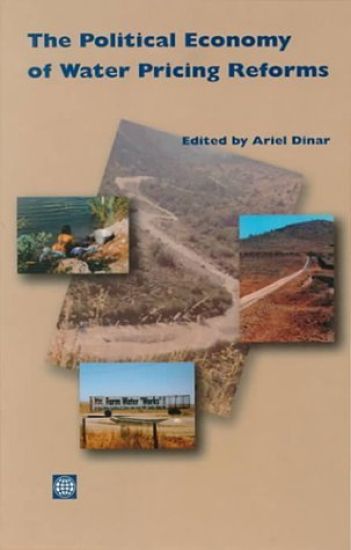
POL ECONOMY OF WATER PRICING REFORMS
Oxford University Press Inc
2000
sidottu
Using case studies from Australia, Belgium, Brazil, Honduras, Mexico, Morocco, Pakistan, Senegal, the US, and the Republic of Yemen, the authors of this book examine the difficulty of designing pricing reforms in the irrigation and urban sub-sectors, and show how such reforms may fall short of their objectives.
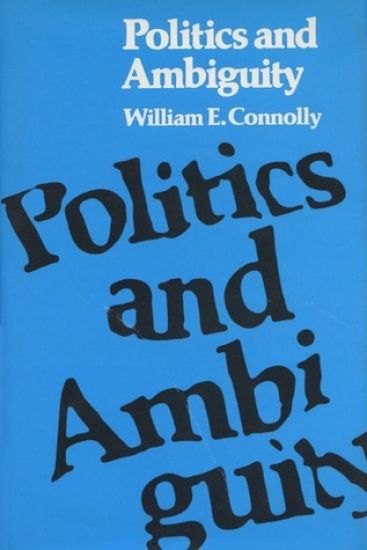
Pol & Ambiguity
University of Wisconsin Press
1987
nidottu
In a series of stimulating essays, William E. Connolly explores the element of ambiguity in politics. He argues that democratic politics in a modern society requires, if it is to flourish, an appreciation of the ambiguous character of the standards and principles we cherish the most. Connolly's work, lucidly, presented and intellectually challenging, will be of interest to students and scholars of political science, philosophy, rhetoric, and law, and to all whose interests include the connections between contemporary epistemological arguments and politics and, more broadly, between thought and language. Connolly criticizes the ways in which contemporary politics extends normalization into various areas of modern existence. He argues, against this trend, for an approach that would provide relief from the rigid identity formations that result from normalization. In supporting his thesis, Connolly shows how the imperative for growth must be relaxed if normalizing pressures are to be obviated. His, however, is not the familiar antigrowth argument; rather, he ties his thesis to his general antinormalization argument, asking how one could create an ethic that would sustain itself when the growth imperatives are relaxed. Connolly's chapters on the work of other thinkers (including Michel Foucault, Jurgen Habermas, Richard Rorty, and Charles Taylor) are linked with his main theme, as he shows how various tendencies in the philosophy of the social sciences and in political theory aid and abed the normalizing tendency. His analyses of Rorty and Taylor are especially important. Connolly shows the significance of antifoundationalism (Rorty's contribution to the debate on epistemology), while providing a compelling critique both of Rorty's stance and Taylor's alternative to it. Especially important to Connolly's thesis is the ontology on which it rests. He shows how the endorsement of an ontology of discordance within concord-a view that all systems of meaning impose order on that which was not designed to fit neatly within them-can support a more democratizing process. His final chapter, "Where the Word Breaks Off," vindicates the ontology of discordance, which has governed the argument throughout the text. Throughout these essays, Connolly builds a consistent argument for the politicalization of normalization, disclosing forms of normalization where others have seen unproblematic modes of communication and problem solving. Original in concept and bold in presentation, Connolly's work will form the basis for considerable debate in the several disciplines it serves.
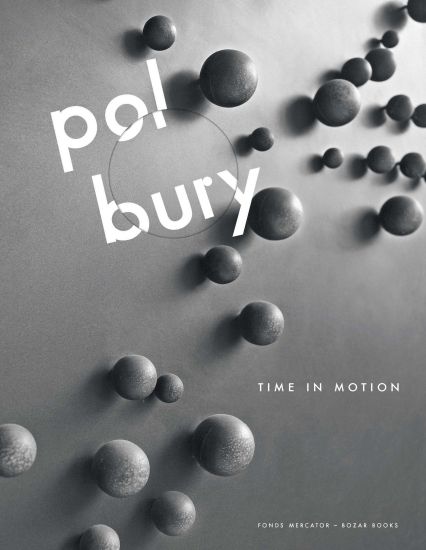
Pol Bury
Kurt de Boodt; Paul Dujardin; Pamela M. Lee; Gilles Marquenie; André Morain; Johan Pas
Yale University Press
2017
sidottu
Pol Bury (1922-2005) was a painter, sculptor, jewelry designer, writer, and graphic artist, but is perhaps best known to the general public for his fountains and sculpture in public spaces throughout the world. Acclaimed as one of the first proponents of “moving” works, driven by a motor, he became one of the protagonists of kinetic art and was without doubt one of Belgium’s most important postwar artists. Accompanying a major exhibition in Belgium, this publication presents an opportunity to rediscover Bury’s multifaceted oeuvre. Distributed for MercatorfondsExhibition Schedule:BOZAR Centre for Fine Arts, Brussels (02/23/17–06/04/17)
This novel discusses the horrors and atrocities that occurred during the Khmer Rouge regime. Told brilliantly by Lea Sophie Mestermann
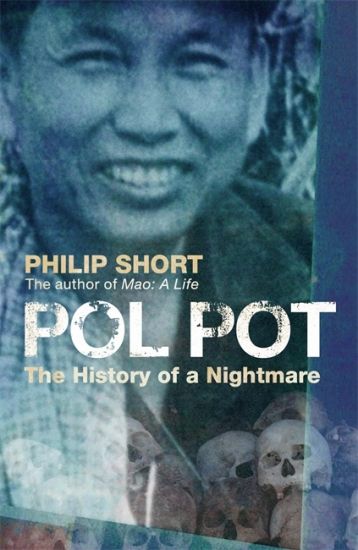
Pol Pot was an idealistic, reclusive figure with great charisma and personal charm. He initiated a revolution whose radical egalitarianism exceeded any other in history. But in the process, Cambodia desended into madness and his name became a byword for oppression.In the three-and-a-half years of his rule, more than a million people, a fifth of Cambodia's population, were executed or died from hunger and disease. A supposedly gentle, carefree land of slumbering temples and smiling peasants became a concentration camp of the mind, a slave state in which absolute obedience was enforced on the 'killing fields'. Why did it happen? How did an idealistic dream of justice and prosperity mutate into one of humanity's worst nightmares? Philip Short, the biographer of Mao, has spent four years travelling the length of Cambodia, interviewing surviving leaders of Pol Pot's Khmer Rouge movement and sifting through previously closed archives. Here, the former Khmer Rouge Head of State, Pol's brother-in-law and scores of lesser figures speak for the first time at length about their beliefs and motives.
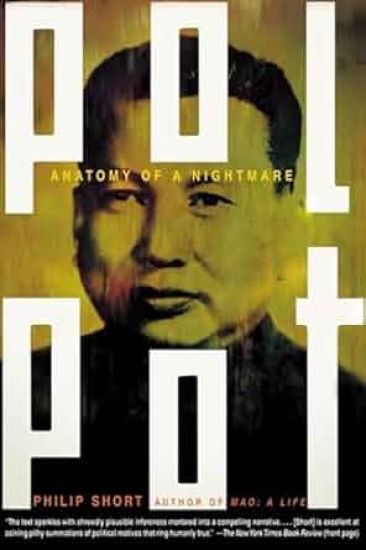
"The text sparkles with shrewdly plausible inferences mortared into a compelling narrative . . . Short] is excellent at coining pithy summations of political motives that ring humanly true."--The New York Times Book Review (front page) Observing Pol Pot at close quarters during the one and only official visit he ever made abroad, to China in 1975, Philip Short was struck by the Cambodian leader's charm and charisma. Yet Pol Pot's utopian experiments in social engineering would result in the death of one in every five Cambodians--more than a million people. How did an idealistic dream of justice and prosperity mutate into one of humanity's worst nightmares? To answer these questions, Short traveled through Cambodia, interviewing former Khmer Rouge leaders and sifting through previously closed archives around the world. Key figures, including Khieu Samphan and Ieng Sary, Pol's brother-in-law and foreign minister, speak here for the first time. Short's masterly narrative serves as the definitive portrait of the man who headed one of the most enigmatic and terrifying regimes of modern times. "Short chronicles the stages of the Cambodian revolution with admirable clarity . . . A few chilling details, expertly deployed, do the necessary work." --The New York Times "A spectacularly efficient job of describing what happened and why . . . A chillingly clear portrait." --The Economist
Pol'skoe bezkorolev'e
Hutson Street Press
2025
sidottu