

Kirjahaku
Etsi kirjoja tekijän nimen, kirjan nimen tai ISBN:n perusteella.
262 tulosta hakusanalla Pompeyo Gratacos
Justino Clarissimo Abreviador De La Historia General Del Famoso Y Excellente Historiador Trogo Pompeyo (1586)
Marcus Junianus Justinus
KESSINGER PUBLISHING, LLC
2009
pokkari

La Muerte y El Diablo.: Historia y Filosofía de Dos Negaciones Supremas. Tomo I
Pompeyo Gener
Independently Published
2019
nidottu
........Pompeyo Gener Babotn naci rn Barcelona entre 846 al 1850-Barcelona y muri el 14 de noviembre de 1920). Fue publicista, dramaturgo espa ol y ocultista. Representante de la componente etnicista del nacionalismo catal n, se embarc en un intento de conectar el nacionalismo catal n con fundamentos "cient ficos". Su enfoque combinaba el positivismo con el darwinismo social.Estudi Medicina aunque no se gradu . Lleg a doctorarse en Farmacia. Estudi Egiptolog a, Filolog a, Lenguas orientales e Historia de las Religiones en Francia, Holanda, Suiza y Alemania. Pompeyo Gener era un sabio de 32 a os con una s lida reputaci n europea. Hab a escrito un libro que se titula La Muerte y el Diablo. Una obra cient fica que le hab a ocupado mucho tiempo, y en la que hay gran acopio de doctrina y de erudici n. Los editores madrile os no la entendieron. Los literatos y los periodistas no hicieron caso de aquel catal n que presumia de erudici n. Gener se propuso publicar su libro en Francia. Para esto necesitaba escribirlo en franc s. Puso manos la obra; escribi en franc s como en castellano. Fue miembro de la Sociedad Antropol gica de Par s, de la Zool gica de Zurich, de la Bibliogr fica de Leipsik, redactor de la acreditad sima revista Le Livre, colaborador de la Revue politique et litteraire; Adem s de doctor en ciencias; posee las lenguas orientales; habla cuatro idiomas; escribe la vez en tres con facilidad. La siguiente publicaci n es una impresi n facsimilar de: La Muerte y El Diablo. Tomo I de Pompeyo Gener publicado por la Editorial Atlante de Barcelona en 1907 . El original consta de 288 p gs. PRINCIPALES TEMAS: La India, la muerte y el mal, De las sombras, De las influencias c smicas consideradas como factores de la evoluci n humana, Decadencia de la antig edad y surgimiento del ascetismo, La voluntad y la conciencia, Del sentido en que empleamos la palabra "conciencia"en lo moral. Este documento es una reproducci n aut ntica del texto original impreso. A pesar de que hemos tratado de mantener la integridad de la obra original, la presente impresi n puede tener errores de menor importancia fuera de nuestro control como: manchas, p ginas perdidas o borrosas e im genes debido al estado de conservaci n del libro por su antig edad. Este libro es una reproducci n facsimilar del texto original impreso.___ Copiar y pegar el enlace para ver nuestros titulos: https: //ediitorialnuevomundo.blogspot.com/
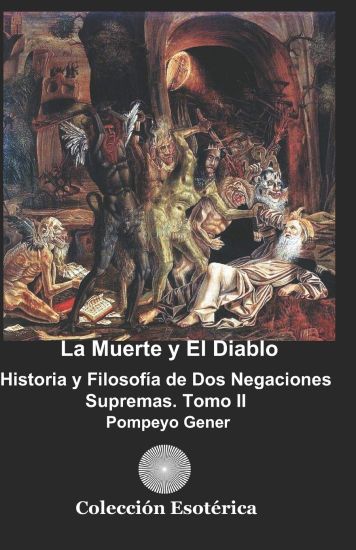
La Muerte y el Diablo: Historia y Filosofía de Dos Negaciones Supremas.Tomo II
Pompeyo Gener
Independently Published
2019
nidottu
.........Pompeyo Gener Babotn naci rn Barcelona entre 846 al 1850-Barcelona y muri el 14 de noviembre de 1920). Fue publicista, dramaturgo espa ol y ocultista. Representante de la componente etnicista del nacionalismo catal n, se embarc en un intento de conectar el nacionalismo catal n con fundamentos "cient ficos". Su enfoque combinaba el positivismo con el darwinismo social.Estudi Medicina aunque no se gradu . Lleg a doctorarse en Farmacia. Estudi Egiptolog a, Filolog a, Lenguas orientales e Historia de las Religiones en Francia, Holanda, Suiza y Alemania. Pompeyo Gener era un sabio de 32 a os con una s lida reputaci n europea. Hab a escrito un libro que se titula La Muerte y el Diablo. Una obra cient fica que le hab a ocupado mucho tiempo, y en la que hay gran acopio de doctrina y de erudici n. Los editores madrile os no la entendieron. Los literatos y los periodistas no hicieron caso de aquel catal n que presumia de erudici n. Gener se propuso publicar su libro en Francia. Para esto necesitaba escribirlo en franc s. Puso manos la obra; escribi en franc s como en castellano. Fue miembro de la Sociedad Antropol gica de Par s, de la Zool gica de Zurich, de la Bibliogr fica de Leipsik, redactor de la acreditad sima revista Le Livre, colaborador de la Revue politique et litteraire; Adem s de doctor en ciencias; posee las lenguas orientales; habla cuatro idiomas; escribe la vez en tres con facilidad. La siguiente publicaci n es una impresi n facsimilar de: La Muerte y El Diablo. Tomo II de Pompeyo Gener publicado por la Editorial Atlante de Barcelona en 1907 . El original consta de 288 p gs. PRINCIPALES TEMAS: Evoluci n de la idea del mal a trav s de sus personificacionesYave (Iahveh y Sat n)Demonios y arte sagradoEl Diablo BestialEl Gran DiabloHechicer a y AlquimiaEl diablo del Renacimiento y el de los tiempos modernosEste documento es una reproducci n aut ntica del texto original impreso. A pesar de que hemos tratado de mantener la integridad de la obra original, la presente impresi n puede tener errores de menor importancia fuera de nuestro control como: manchas, p ginas perdidas o borrosas e im genes debido al estado de conservaci n del libro por su antig edad. Este libro es una reproducci n facsimilar del texto original impreso.____ Copiar y pegar el enlace para ver nuestros titulos: https: //ediitorialnuevomundo.blogspot.com/

Mínimo nomenclador y otras reflexiones
Pompeyo Perez Figueroa
Createspace Independent Publishing Platform
2018
nidottu
Tenemos aqu una serie de reflexiones que el autor, Pompeyo P rez Figueroa, hace de diferentes temas, desde una NOCHE DE GALA, en la que nos relata los aconteceres de la presentaci n de varios coros y orquesta en San Andres Tuxtla, Veracruz, M xico - con gran xito-, hasta la GUERRA FRATRICIDA, y los absurdos de los diferentes nombres que las madres y padres ponen a sus descendientes, en M NIMO NOMENCLADOR. Variado y entretenido.


Primavera erótica y otros cuentos: Cuentos del México profundo y la España añorada
Rosa Feijoo Andrade; Pompeyo Perez Figueroa
Createspace Independent Publishing Platform
2018
nidottu
Cuentos del doctor Pompeyo Perez Figueroa en los que describe su entorno, sus amores, sus a oranzas y su disgusto ante los tiempos que vivimos, de una manera sencilla y amena que nos captura.
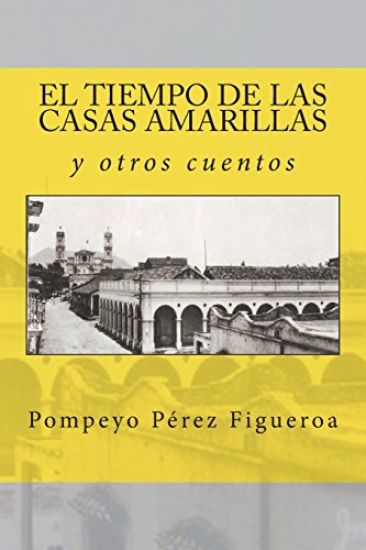
El tiempo de las casas amarillas y otros cuentos: Relatos costumbristas de México
Rosa Feijoo Andrade; Pompeyo Perez Figueroa
Createspace Independent Publishing Platform
2018
nidottu
Segundo libro de cuentos de Pompeyo P rez Figueroa, m dico de profesi n pero escritor desde muy joven. Relata historias de costumbres, amores y a oranzas, al igual que en su libro anterior "Primavera er tica"

Flotando entre mis recuerdos: Poemas y reflexiones
Rosa Feijoo Andrade; Pompeyo Perez Figueroa
Createspace Independent Publishing Platform
2018
nidottu
Este libro contiene poemas escritos durante m s de tres d cadas por el doctor en medicina Pompeyo P rez Figueroa quien, desde su adolescencia, mostr inter s por escribir. De una manera sencilla, sin recovecos, nos presenta su filosof a de la vida y sus inquietudes a la par de relatos biogr ficos, familiares y costumbristas de su tierra natal, San Andr s Tuxtla, al sur del estado de Veracruz, y de M xico en general.

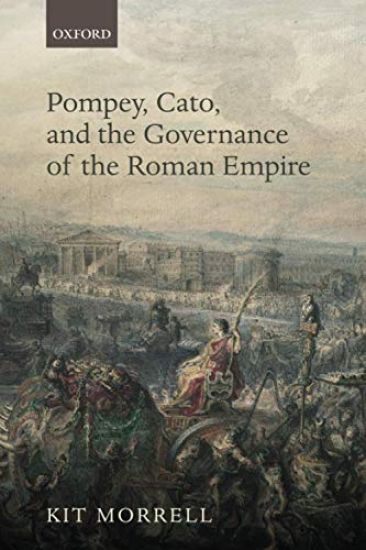
Pompey, Cato, and the Governance of the Roman Empire
Kit Morrell
Oxford University Press
2017
sidottu
Provincial governance under the Roman republic has long been notorious for its corrupt officials and greedy tax-farmers, though this is far from being the whole story. This book challenges the traditional picture, contending that leading late republican citizens were more concerned about the problems of their empire than is generally recognized, and took effective steps to address them. Attempts to improve provincial governance over the period 70-50 BC are examined in depth, with a particular focus on the contributions of Gnaeus Pompeius Magnus (Pompey) and the younger Marcus Porcius Cato. These efforts ranged well beyond the sanctions of the extortion law, encompassing show trials and model governors, and drawing on principles of moral philosophy. In 52-50 BC they culminated in a coordinated reform programme which combined far-sighted administrative change with a concerted attempt to transform the ethos of provincial governance: the union of what Cicero called 'Cato's policy' of ethical governance with Pompey's lex de provinciis, a law which transformed the very nature of provincial command. Though more familiar as political opponents, Pompey and Cato were united in their interest in good governance and were capable of working alongside each other to effect positive change. This book demonstrates that it was their eventual collaboration, in the late 50s BC, that produced the republic's most significant programme of provincial reform. In the process, it offers a new perspective on these two key figures as well as an enriched understanding of provincial governance in the late Roman republic.
Pompey, Cato, and the Governance of the Roman Empire
Kit Morrell
Oxford University Press
2020
nidottu
Provincial governance under the Roman republic has long been notorious for its corrupt officials and greedy tax-farmers, though this is far from being the whole story. This book challenges the traditional picture, contending that leading late republican citizens were more concerned about the problems of their empire than is generally recognized, and took effective steps to address them. Attempts to improve provincial governance over the period 70-50 BC are examined in depth, with a particular focus on the contributions of Gnaeus Pompeius Magnus (Pompey) and the younger Marcus Porcius Cato. These efforts ranged well beyond the sanctions of the extortion law, encompassing show trials and model governors, and drawing on principles of moral philosophy. In 52-50 BC they culminated in a coordinated reform programme which combined far-sighted administrative change with a concerted attempt to transform the ethos of provincial governance: the union of what Cicero called 'Cato's policy' of ethical governance with Pompey's lex de provinciis, a law which transformed the very nature of provincial command. Though more familiar as political opponents, Pompey and Cato were united in their interest in good governance and were capable of working alongside each other to effect positive change. This book demonstrates that it was their eventual collaboration, in the late 50s BC, that produced the republic's most significant programme of provincial reform. In the process, it offers a new perspective on these two key figures as well as an enriched understanding of provincial governance in the late Roman republic.

This meticulously researched catalogue presents an authoritative assessment of the works of Pompeo Batoni (1708–1787), one of the 18th century’s most celebrated painters. Born in Lucca, Batoni established himself in Rome and received commissions from popes, princes, and British aristocrats on the Grand Tour. Batoni was highly sought after for his theatrical yet incisive—and often flattering—portraits. Connoisseurs and cognoscenti also prized his learned and technically brilliant allegorical, religious, and mythological compositions. With entries on more than 480 paintings and 250 drawings, this magnificent two-volume set provides the most complete examination to date of Batoni’s entire oeuvre. Featuring beautiful, high-quality reproductions, the book provides thorough details on provenance and exhibition history as well as biographies of the portrait sitters. New analysis of the works, resulting from decades of research, reinterprets some of Batoni’s iconography, identifies new textual and visual sources of his imagery, and reveals insights gleaned from unpublished archival materials.Published for the Paul Mellon Centre for Studies in British Art in association with the Museum of Fine Arts, Houston

To Romans of later generations the three decades between the dictatorships of Sulla and of Caesar were the age of Pompey the Great. In spite of the central role he played in Roman history, he remains a shadowy figure compared with the likes of Caesar and Cicero.Pompey the Great, first published in 1978, traces the career of this enigmatic character from his first appearance in public life on the staff of his father Strabo during the Social War, through his early military campaigns as Sulla’s lieutenant in the Civil War 83-82, as the Senate’s general in Italy and Spain during the 70s, to his first consulship with Crassus in 70. The important commands against the pirates and Mithridates, the alliance with Caesar, its eventual collapse into civil war, and the significance of Pompey’s constitutional position for an understanding of the later Augustan settlement war are all discussed with clarity and insight.