Kirjojen hintavertailu. Mukana 11 244 527 kirjaa ja 12 kauppaa.

Kirjahaku

Etsi kirjoja tekijän nimen, kirjan nimen tai ISBN:n perusteella.

402 tulosta hakusanalla Pradip K. Ghosh

Introduction to Protein Mass Spectrometry

Introduction to Protein Mass Spectrometry

Pradip K. Ghosh

Academic Press Inc
2015
sidottu
Introduction to Protein Mass Spectrometry provides a comprehensive overview of this increasingly important, yet complex, analytical technique. Unlike many other methods which automatically yield an absolutely unique protein name as output, protein mass spectrometry generally requires a deduction of protein identity from determination of peptide fragmentation products. This book enables readers to both understand, and appreciate, how determinations about protein identity from mass spectrometric data are made. Coverage begins with the technical basics, including preparations, instruments, and spectrometric analysis of peptides and proteins, before exploring applied use in biological applications, bioinformatics, database, and software resources. Citing the most recent and relevant work in the field of biological mass spectrometry, the book is written for researchers and scientists new to the field, but is also an ideal resource for those hoping to hone their analytical abilities.
Ion Traps

Ion Traps

Pradip K. Ghosh

Clarendon Press
1995
sidottu
The author provides, in nine chapters, a compact and up-to-date coverage of the entire range of applications of the two most important ion traps: the Paul('radiofrequency') trap and the Penning('dc) trap. The book begins with full details of the ion confinement principles of both these traps; this is followed by a presentation of the basic experimental techniques, including details of a few actual traps. There is then a chapter on the methods of ion cooling, now an essential integral part of all trap-based experiments. The next four chapters provide a comprehensive coverage of applications in four major areas, broadly classified as: atomic physics, frequency standards, collision studies, and analytical mass spectrometry. The text is appended by a set of more than 600 fully titled chronologically arranged references which mirror the growth of the field as well as providing a comprehensive guide to original research papers. The text should be useful to students both at the senior undergraduate and beginning graduate level as a general reader for professionals in atomic physics, chemical physics, mass spectometry and related fields.
Industrialization and Development

Industrialization and Development

Pradip K. Ghosh

Greenwood Press
1984
sidottu
This book documents and analyzes current trends in the industrialization and industrial development of Third World countries, and evaluates the progress they have made in the past decade in attaining the long term objectives of sustained economic growth and improvement in the quality of life for future generations. Fourteen articles present current international issues and trends affecting industrialization in Third World development, analytical methods, strategies and policies for industrial development, and selected Third World country studies. Statistical information, an annotated bibliography of books, documents, periodical articles published since 1970, and a directory of sources are also provided.
Technology Policy and Development

Technology Policy and Development

Pradip K. Ghosh

Greenwood Press
1984
sidottu
For the developing countries to take advantage of the accumulated and growing body of scientific and technological information, they must develop competence in choosing technology through an institutionalized technology policy. Third World experiences in developing and implementing technology policies are documented and analyzed in this volume. Issues such as the values shaping technology, selection of appropriate technology, technology transfer, technological self-reliance, planning, and development control are discussed in detail. Ideas for future policy development are evaluated.
Energy Policy and Third World Development

Energy Policy and Third World Development

Pradip K. Ghosh

Greenwood Press
1984
sidottu
In designing policies to help resolve its energy problems, every country faces a unique set of conditions. Contributors to this volume profile the energy situation in the developing countries, assess the role of energy policy in Third World development, and discuss the global energy situation in relation to these countries' consumption, production, trade, and resource endowment. The rest of the volume provides researchers with different sources of information--statistical and bibliographic--relating to energy policy development in the Third World. Managing the increasing demand for energy is explored in depth.
Population, Environment and Resources, and Third World Development
There is little question that issues arising from the interrelationships among resources, the environment, population growth, and Third World development are of concern to the whole world. This book is a complete guide for students, researchers, and policymakers to current issues, trends, and strategies and prospects for the future. Demographic data, development policy and strategies, and theory are discussed for the Third World in general as well as for specific countries and regions.
Health, Food, and Nutrition in Third World Development
The development of effective health, food, and nutrition policies are essential to the rapid economic and social development of Third World countries. The essays in this volume cover basic issues such as development of the food supply, health care programs, the human environment, nutrition and malnutrition, the politics of food scarcity, and the impact of health and nutrition on the economy.
Economic Policy and Planning in Third World Development
Planning for economic and social progress has made considerable headway in the developing countries during the past two decades. Although the record shows a wide array of improvements by historical standards, many of the poorest countries and peoples remain untouched by progress. The seventeen articles collected in the first part of this resource book discuss fundamental issues and concerns such as the expansion and diversification of the production of goods and services, increasing employment opportunities, improving the level and distribution of income, eliminating poverty, increasing self-reliance, and mobilizing natural, human, and financial resources for nation-building.
Development Policy and Planning

Development Policy and Planning

Pradip K. Ghosh

Greenwood Press
1984
sidottu
This volume examines the experiences of a number of Third World countries in implementing development plans in the 1970s and offers some guidelines for research, development, and analysis of policy. Some chapters focus on theoretical issues such as the place of development on the policy agenda and the institutionalization of development policy planning. Other chapters detail global and national strategies for employment, reducing poverty, and developing human resources. The use of various economic indicators as tools for planning and analysis is also discussed.
New International Economic Order

New International Economic Order

Pradip K. Ghosh

Greenwood Press
1984
sidottu
Financial resources of the magnitude, form, and character necessary to support changes in the structure of production in developing countries are essential for progress toward a new, more equitable international economic order. Inadequacies in the current monetary and financial system contribute to the underutilization of resources productive to developing countries and to the maintainence of economic imbalance. This volume demonstrates the need for a systematic attack on the acute problems of poverty and underdevelopment. It provides background information and data for those directly involved in the formulation of development theory and the implementation of development policy. The theory developed and practical experience discussed in these essays provide valuable perspectives on the continuing efforts to realign the international economic order.
Foreign Aid and Third World Development

Foreign Aid and Third World Development

Pradip K. Ghosh

Greenwood Press
1984
sidottu
Financial aid given or loaned to developing countries for their accelerated economic and social progress is a key element of international development cooperation. Many complex questions are raised by these external assistance programs. The size of the credit line from donor or lender countries and the terms on which these countries provide the funds are issues of primary concern. The rational and equitable distribution of foreign aid has gained new importance because of the recent weak economic conditions of developed countries and the widely varying social and political conditions prevailing in the Third World. Eleven articles document and analyze current aid distribution policies and the development needs of recipient countries. The conclusions reached in these articles provide a basis for a new and sharper focus on aid to developing countries.
Multi-National Corporations and Third World Development
Whether foreign investment by transnational and multi-national corporations alleviates or perpetuates underdevelopment is the subject of this volume. Multi-national corporations that inhibit building of indigenous institutions and other structures leading to self-reliance and economic growth impede rather than stimulate development. Both the positive and negative impact of multi-nationals in the Third World is investigated in these chapters. Various roles available to company and host country are explored. Variations in planning and development scenarios and objectives are explored.
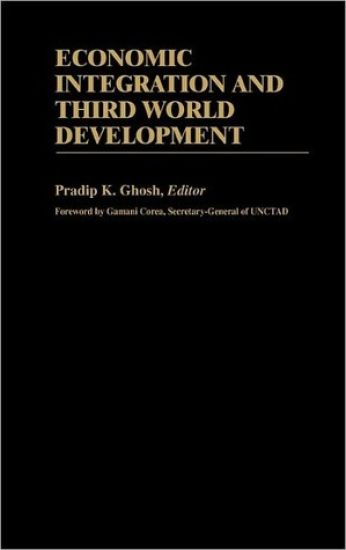
Economic Integration and Third World Development
Although not previously well documented, many instances of regional economic integration occur among Third World countries. Joint industrial planning, monetary integration, trade expansion, and investment planning are among the many facets of economic integration discussed in this volume. Integration schemes most likely to contribute to development are difficult to achieve because ultimate success depends on the willingness and ability of the nations involved to negotiate conditions that contribute to the development of the region as a whole and that assure an acceptable distribution of benefits within the region. The variety of theories and practical examples of regional integration plans detailed here document the complexity of integrated plannning and the difficulties in achieving the desired results. This work defines and explores the many factors necessary for understanding the difficulties involved in economic integration and cooperation among developing countries.
Third World Development

Third World Development

Pradip K. Ghosh

Greenwood Press
1984
sidottu
All aspects of the basic needs approach to development are considered in the various chapters of this volume: issues, implications, impact, planning and policy, and requisite technology, among others. The conflict between basic needs and comprehensive development approaches are explored. Both theoretical models and case studies outline and analyze the thorny issues inherent to the basic needs approach to development. The full range of contemporary theory and exerience is addressed in detail within the seventeen essays collected in this volume.
Appropriate Technology in Third World Development
The role of appropriate technology in developing the Third World is the focus of this volume. The use of such technology, research, selection, and sources of it, and its application within the framework of development policy are among the many aspects of appropriate technology explored and analyzed in these essays. A broad range of theoretical surveys and specific case studies are also provided.
Development Co-operation and Third World Development
The past two decades have witnessed an ongoing search for a more coherent basis for development cooperation and the means to satisfy global needs. The achievement of better relations among developed and developing countries remains an urgent task as the world community seeks to formulate a new and more equitable economic order. Findings in this volume suggest that persistent economic difficulties within industrial countries, especially high unemployment and inflationary tendencies, have made it clear that the rich and poor countries alike must strive for more effective patterns of world economic and development collaboration. Contributors explore cooperation among developing countries as both a means for implementing a new international economic order and a desirable feature of this order. This book provides researchers with much needed knowledge about the different sources of information and data available for the study of the objectives, goals, and methods of development cooperation programs among Third World countries.
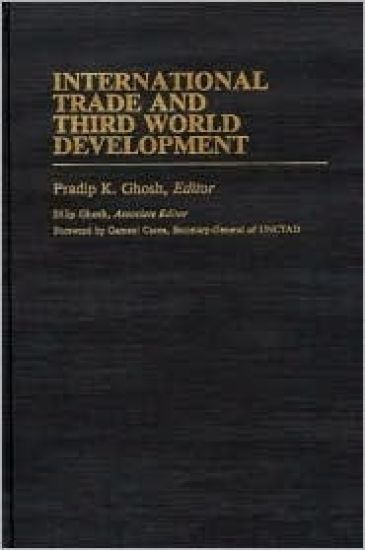
International Trade and Third World Development
Foreign trade is a key factor in the development strategy of Third World countries. The development of world trade as a whole has not, however, led to an improvement in the relative position of the developing countries. Despite efforts to promote and liberalize world trade, serious quota and tariff barriers in world markets--often a violation of the principles advocated and accepted in international forums on world trade--still exist for many Third World countries. Specific issues such as import controls, export subsidies, foreign trade and payments, negotiating strategies, and industrial protectionism are explored as are the broad theoretical aspects of the role of trade in Third World development.
Disarmament and Development

Disarmament and Development

Pradip K. Ghosh

Greenwood Press
1984
sidottu
The escalating arms race and increasing pressure for Third World development have created an intensifying competition for scarce resources. The escalation of the arms race has resulted in slower and more uneven economic growth and development. The disappointing history of disarmament efforts and the unsatisfactory results in establishing a new international economic order underlie the reluctance to perceive a viable relationship between development and disarmament. The seventeen articles in part one of this volume focus on some of the major problems faced by Third World countries, the policy issues posed by the competition between disarmament and development, and offer some guidelines for international disarmament policies.
Developing South Asia

Developing South Asia

Pradip K. Ghosh

Greenwood Press
1984
sidottu
This resource book documents and analyzes current trends in the economic development of the South Asian countries of India, Bangladesh, Pakistan, Sri Lanka, and Nepal, and evaluates the progress they have made in achieving sustained economic growth and improvement in the quality of life for present and future generations. Their current low growth rates condemn the majority of the population of these countries to unremitting misery and make efforts to redistribute income more difficult. Low savings and exports handicap efforts to accelerate economic growth and declining food production dooms increasing numbers to hunger and disease. This volume examines not only the poorer countries, but also the plight of the poor within developing countries.