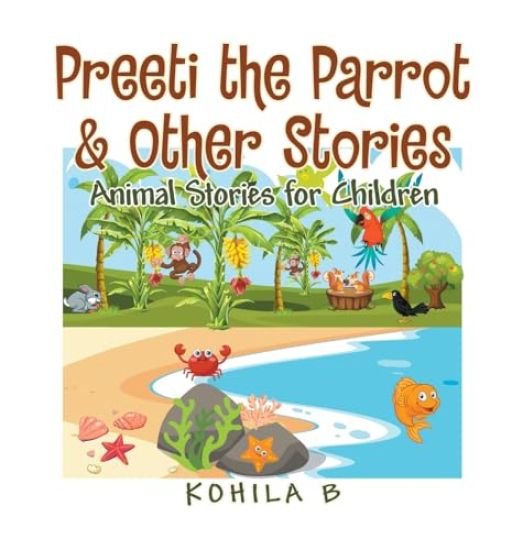
The first story, Preeti the parrot is about a parrot who is so proud of her own beauty. The vain parrot is captivated by her own beauty and boasts about her beauty to the other animals. Young readers will see that its the parrot's pride and vanity, which results in her fall. The second story in the book is about a crow named Coco, who is quick-witted and able to save the forest animals from danger. The short story shows children the importance of learning life skills and being quick. The clever crow is observant, caring and sharing and children reading about her will like to be as quick and clever as her. The final story Freddie the fish is a short story about a friendly fun-loving fish who likes to tell amusing stories and make his fishy friends laugh. He wants to create a happy underwater world for all his friends. This story teaches children how to stay positive even when things get difficult or challenging. At the end of each story, the young reader is invited to reflect about what lessons he/she has learned from that story. This also helps the readers reflect upon the characters in the stories they have read.
The first story, Preeti the parrot is about a parrot who is so proud of her own beauty. The vain parrot is captivated by her own beauty and boasts about her beauty to the other animals. Young readers will see that its the parrot's pride and vanity, which results in her fall. The second story in the book is about a crow named Coco, who is quick-witted and able to save the forest animals from danger. The short story shows children the importance of learning life skills and being quick. The clever crow is observant, caring and sharing and children reading about her will like to be as quick and clever as her. The final story Freddie the fish is a short story about a friendly fun-loving fish who likes to tell amusing stories and make his fishy friends laugh. He wants to create a happy underwater world for all his friends. This story teaches children how to stay positive even when things get difficult or challenging. At the end of each story, the young reader is invited to reflect about what lessons he/she has learned from that story. This also helps the readers reflect upon the characters in the stories they have read.
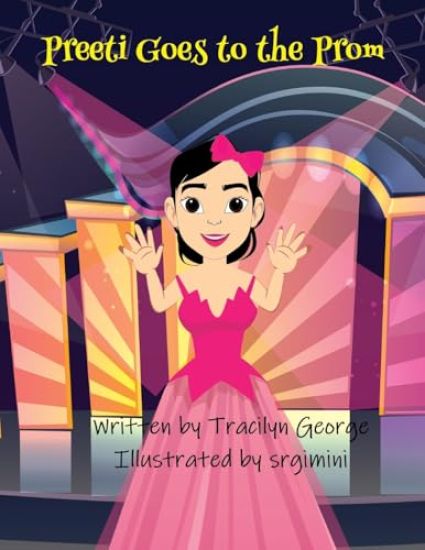
Preeti was invited to the prom, and she looked forward to going. Her mother took her to buy a new outfit and helped her to get ready for the big dance. Preeti loved dressing up and having fun with her friends
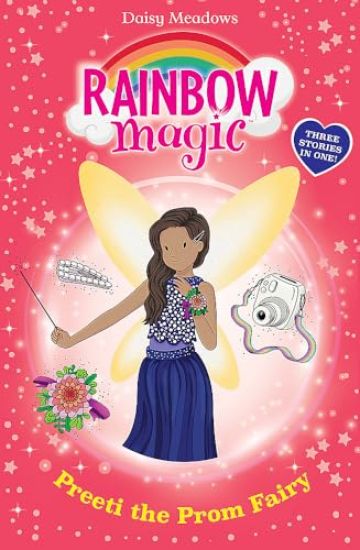
Preeti the Prom Fairy makes sure that every prom goes to plan, but when Jack Frost and his naughty goblins steal her magical objects, school celebrations everywhere start to go wrong. Can Rachel, Kirsty, Gracie and Khadijah help Preeti save the night from disaster?The girls must find Preeti's everlasting corsage, funky hairclip and magical camera so that everyone's school proms can be saved and schoolchildren can dance the night away with their friends!'These stories are magic; they turn children into readers!' ReadingZone.comIf you like Rainbow Magic, check out Daisy Meadows' new series, Pixie Magic!
Book Eight in "My Indian Wife Series." Most of us normal people will have serious issues if our spouses slept with other people. For many, such things are alluring but when they actually try it, one or the other can't handle it and it takes a long time to recover. The primary reason people stay together is because they love and want each other, not others. When you introduce another, this no longer holds true and the fall out is inevitable. My sex starving wife Preeti is the story of a married couple Jatin and Preeti. Jatin is sending conflicting signals to his young wife Preeti. Unknowingly pushing her closer to that threshold of their marriage wherein for her own pleasure she is tempted cross the line. It seems circumstances will push her across the line with or preferably without Jatin's approval or knowledge. Is Preeti going to like it so much that she go for another taste and becomes enthralled by the experience since Jatin can't give her that kind of pleasure. The wild ride of voyeuristic indulgence by a confused and perverted Jatin and his beautiful wife Preeti who is equally confused by these crazy games he insists on playing despite knowing that he really can't and wouldn't be able to handle the consequences if temptation and a strong, dominant man like Akshay takes control of her. Akshay is a big guy, with huge libido, Greek God, so obviously a lot of women will be interested in him. But women don't just want muscles and after a time they move on, except for his wife Shushmita who seemed to have clicked with him. How many other women has he had during his marriage? So, Akshay looks for glamour pussies while she cares for her inability to satisfy her husband hunger. As they say the grass is always greener on the other side... and Jatin is forcing his wife Preeti to go and taste it. With a guy like Akshay, well-built and good looking, all her motherliness in helping him will easily lead to his cock. Jatin's fantasies end up frustrating her and Akshay will provide what she needs. Then bye bye dear hubby. You can only enjoy so much in wifey voyeurism and when you need a real fuck, she's not going to be interested because he wasn't man enough to keep her properly fucked up... only interested in getting other guys to heat her up. Jatin has ended up making her lust after other men and in sexual pleasure there is no turning back. He only wanted to see her fucked by other men (including Akshay of course since he became super-heated when Preeti told him the episode), not end up being a wife substitute to Akshay. And the humiliation and mockery will probably start. Advise: Intended purely for mature readers only, a lot of graphical sex acts and strong language is used. This Erotic Novel contain Explicit Sexuality, and Adult Content that may be deemed by some to be offensive, indecent, or otherwise objectionable, so please read at your own discretion.
Lakhs of students write the GATE exam annually. The level of competition is fierce, owing to the increasing competition every year for a limited number of seats. If you are a serious aspirant, it is advisable to prepare for GATE with the right books. A major game-changer is the habit to practice and revise the concepts and this is why our GATE 2022 Life Sciences Solved Papers are your best bet to be GATE ready This book consists of GATE previous years' completely solved papers from the year 2000 to 2021. Solved papers enable an aspirant to get acquainted with the exam pattern and the weightage of each topic and Section. With the right effort and proper guidance, we're sure that you will be able to face GATE 2022 confidently. Features: 22 years' completely solved papers Comprehensive analysis of previous years' Papers Thoroughly revised and updated.
The forgotten history of the UK's anti-racist campaigners are finally brought to life in this comprehensive account of modern British history, told through ten moments
The forgotten history of the UK's anti-racist campaigners are finally brought to life in this comprehensive account of modern British history, told through ten moments
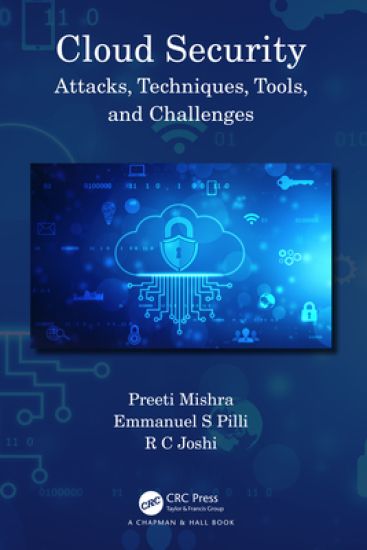
Cloud computing has gained paramount attention and most of the companies are adopting this new paradigm and gaining significant benefits. As number of applications and business operations are being facilitated by the cloud computing paradigm, it has become the potential target to attackers. The importance of well-organized architecture and security roles have become greater with the growing popularity.Cloud Security: Attacks, Techniques, Tools, and Challenges, provides an in-depth technical description about various key essential aspects of cloud security. We have endeavored to provide a technical foundation that will be practically useful not just for students and independent researchers but also for professional cloud security analysts for conducting security procedures, and all those who are curious in the field of cloud securityThe book offers comprehensive coverage of the most essential topics, including: Basic fundamentals of Cloud Computing Cloud security concepts, vulnerabilities, security standards and reference models Cloud security goals, key issues and privacy requirements Threat model, detailed taxonomy of cloud attacks, Attack feature analysis – case study A detailed taxonomy of IDS techniques and Cloud Intrusion Detection Systems (IDS) Attack and security tools, LibVMI – case study Advanced approaches: Virtual Machine Introspection (VMI) and Hypervisor Introspection (HVI) Container security: threat model, attacks and defense systemsThis book is intended for both academic and professional audience. It could also be used as a textbook, for a semester course at undergraduate and post graduate level in Computer Science, Information Technology, Information Security, and Information Science & Management. The book serves as basic reference volume for researchers in cloud security. It will be useful to practitioners, cloud security team, and the cloud security auditor as well. To get the most out of this book, the reader should have a working knowledge of various operating system environments, hypervisors, cloud computing fundamentals, programming languages like Python and a working knowledge of security tools.
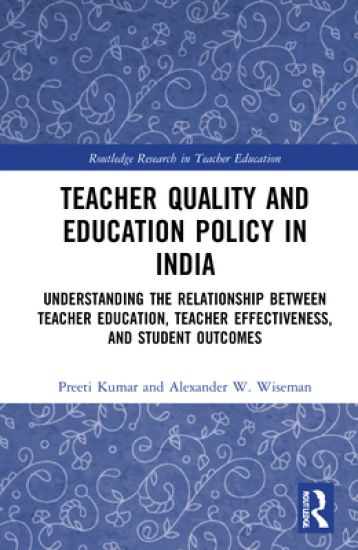
By drawing on quantitative data and qualitative analyses of five major national education policies implemented in India over the last 15 years, this comprehensive volume explores their impact on teacher quality and perceived effectiveness, explaining how this relates to variations in student performance.Responding to a national agenda to increase the quality of the Indian teacher workforce, Teacher Quality and Education Policy in India critically questions the application of human capital theory to Indian education policy. Chapters provide in-depth and strategically structured analyses of five national policies – including the recently approved National Education Policy (NEP) 2020 – to see how Indian policymakers use teacher quality as a driver and measurement of education and national economic development. Ultimately, the text offers evidence-based policy recommendations to improve teacher quality in India, suggesting that while all five policies have contributed significant frameworks and recommendations for teacher quality reform, they have failed to move beyond a symbolic function.Given its rigorous methodological approach, this book will be a valuable addition to the under-researched question of education policymaking in postcolonial contexts. It will be an indispensable resource not only for scholars working on policymaking in the Indian context, but also for those working at the intersection of education, teacher development, and policymaking in developing countries.
By drawing on quantitative data and qualitative analyses of five major national education policies implemented in India over the last 15 years, this comprehensive volume explores their impact on teacher quality and perceived effectiveness, explaining how this relates to variations in student performance.Responding to a national agenda to increase the quality of the Indian teacher workforce, Teacher Quality and Education Policy in India critically questions the application of human capital theory to Indian education policy. Chapters provide in-depth and strategically structured analyses of five national policies – including the recently approved National Education Policy (NEP) 2020 – to see how Indian policymakers use teacher quality as a driver and measurement of education and national economic development. Ultimately, the text offers evidence-based policy recommendations to improve teacher quality in India, suggesting that while all five policies have contributed significant frameworks and recommendations for teacher quality reform, they have failed to move beyond a symbolic function.Given its rigorous methodological approach, this book will be a valuable addition to the under-researched question of education policymaking in postcolonial contexts. It will be an indispensable resource not only for scholars working on policymaking in the Indian context, but also for those working at the intersection of education, teacher development, and policymaking in developing countries.
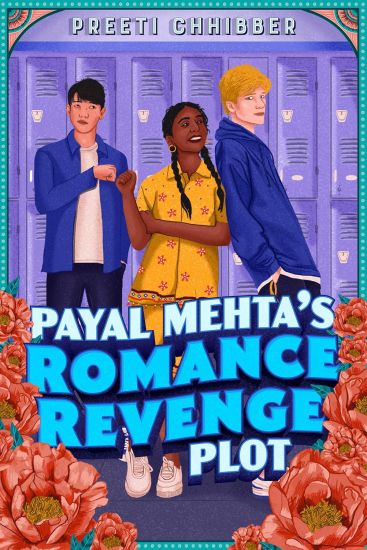
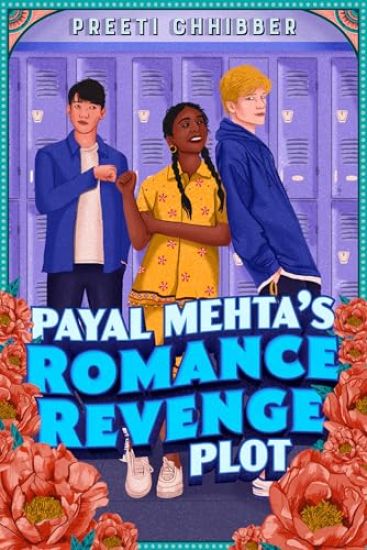
This laugh-out-loud debut romance introduces perfectly imperfect Payal Mehta, whose plan to get her long-time crush to finally notice her is destined for success, but only if she ignores her budding feelings for her archnemesis... Payal Mehta has had a crush on popular, athletic, all-around perfect Jonathan Slate ever since he smiled at her in freshman-year Spanish class. At a party during spring break of her junior year, Payal finally works up the courage to ask Jon to hang out. However, her romantic plans are derailed when he vomits on her Keds. Twice. But when Jon offers to take her out to lunch as an apology, Payal is convinced this is the start of their love story. Over chalupas and burritos at Taco Bell, Payal's best jokes are landing as planned. Jon is basically choking on his Coke--and then it happens. "Do you have a boyfriend?" Payal is (finally) about to get the guy. And then he tries to set her up with his Indian friend. Payal's best friends, Neil Patel and Divya Bhatt, are just as mad about the microagression as Payal is, but they think she's a little too hung up on him. Determined to teach Jon a lesson by making him fall for her, Payal ropes in her archnemesis, Philip Kim, to help. It's the perfect plan. Minus Philip's snarky, annoying quips and lack of faith in its success. But as Payal lies to the people she loves, hides the too-Indian parts of herself in front of her crush, and learns that maybe Philip isn't the worst, she starts to wonder if what she's been looking for has been scowling at her all along...
Payal Mehta has had a crush on popular, athletic, all-around perfect Jonathan Slate ever since he smiled at her in freshman year Spanish class. At a party during spring break of her junior year, Payal finally works up the courage to ask Jon to hang out. However, her romantic plans are derailed when he vomits on her Keds. Twice. But when Jon offers to take her out to lunch as an apology, Payal is convinced this is the start of their love story. Over chalupas and burritos at Taco Bell, Payal's best jokes are landing as planned. Jon is basically choking on his Coke - and then it happens. 'Do you have a boyfriend?' Payal is (finally) about to get the guy. And then he tries to set her up with his Indian friend. Payal's best friends, Neil Patel and Divya Bhatt, are just as mad about the microagression as Payal is, but they think she’s a little too hung up on him. Determined to teach Jon a lesson by making him fall for her, Payal ropes in her archnemesis, Philip Kim, to help. It’s the perfect plan. Minus Philip’s snarky, annoying quips and lack of faith in its success. But as Payal lies to the people she loves, hides the too-Indian parts of herself in front of her crush, and learns that maybe Philip isn't the worst, she starts to wonder if what she's been looking for has been scowling at her all along...
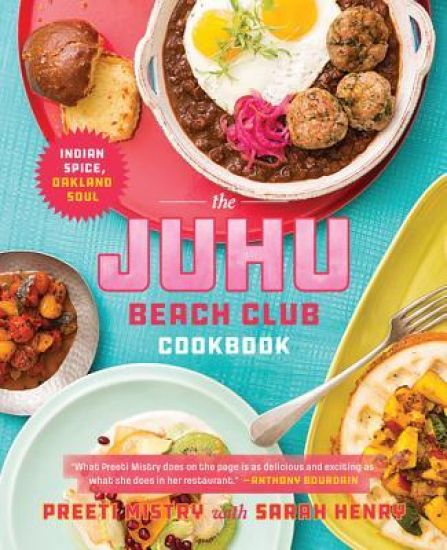
Vibrant and unexpected, The Juhu Beach Club Cookbook brings the outsized opinions and culinary daring of Preeti Mistry, chef/owner of Oakland's Juhu Beach Club, to the page. Influenced by her background as a second-generation Indian -- born in London, raised across the US, now based in the Bay Area -- Preeti's irreverent style informs her personality and her food. This collection of street food, comfort classics, and restaurant favorites blends cuisines from across India with American influences to create irresistible combinations. Organized by feeling rather than course or season, with sections like Mom Meals, Masala Mashups, and JBC Classics, The Juhu Beach Club Cookbook weaves Preeti's culinary journey together with bold, flavor-forward recipes to excite and inspire home cooks. Illustrated throughout with full-color photography and playful line art, this book captures the eclectic energy and wide-ranging influences of one of the West Coast's most up-and-coming chefs.
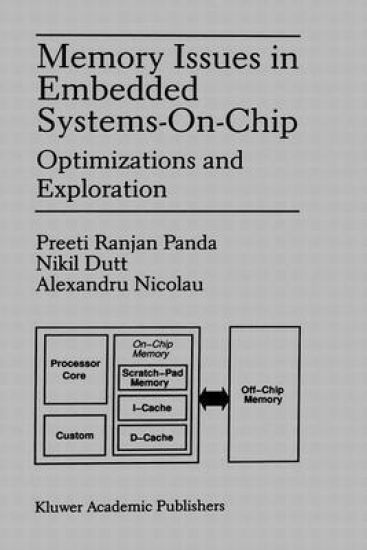
Memory Issues in Embedded Systems-On-Chip: Optimizations and Explorations is designed for different groups in the embedded systems-on-chip arena. First, it is designed for researchers and graduate students who wish to understand the research issues involved in memory system optimization and exploration for embedded systems-on-chip. Second, it is intended for designers of embedded systems who are migrating from a traditional micro-controllers centered, board-based design methodology to newer design methodologies using IP blocks for processor-core-based embedded systems-on-chip. Also, since Memory Issues in Embedded Systems-on-Chip: Optimization and Explorations illustrates a methodology for optimizing and exploring the memory configuration of embedded systems-on-chip, it is intended for managers and system designers who may be interested in the emerging capabilities of embedded systems-on-chip design methodologies for memory-intensive applications.