Kirjojen hintavertailu. Mukana 11 244 527 kirjaa ja 12 kauppaa.

Kirjahaku

Etsi kirjoja tekijän nimen, kirjan nimen tai ISBN:n perusteella.

25 tulosta hakusanalla Qays Imran

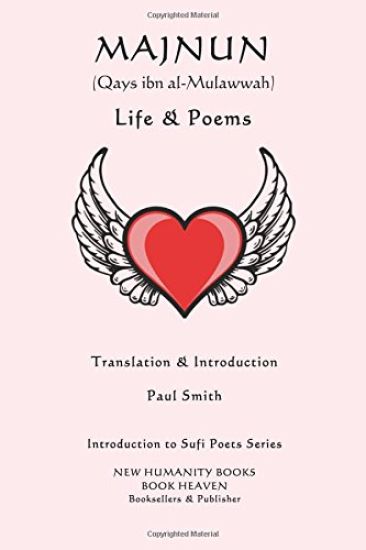
Majnun (Qays Ibn al-Mulawwah) - Life & Poems

Majnun (Qays Ibn al-Mulawwah) - Life & Poems

Createspace Independent Publishing Platform
2016
pokkari
MAJNUN (QAYS IBN AL-MULAWWAH) Life & Poems Translation & Introduction Paul Smith Majnun was a real person Qays (Majnun='madman) was a youth, a Bedouin poet in the seventh century of the Bani Amir tribe in the Najd desert in Arabia. He fell in love with Layla from the same tribe whom he was denied. (It is said that Shakespeare was inspired by their tale for Romeo & Juliet from their tragic love story). Most of his recorded poetry was composed before his descent into love-madness (mast) then through a Perfect Master... his spiritual unification with his beloved. Here in the form of the qit'as in which they were composed, is the largest collection of his immortal poems translated into English. 120 pages. Introduction to Sufi Poets Series 'AISHAH Al-BA'UNIYAH, AMIR KHUSRAU, ANSARI, ANVARI, AL-MA'ARRI, 'ARIFI, 'ATTAR, ABU SA'ID, AUHAD UD-DIN, BABA FARID, BABA AZFAL, BABA TAHIR, BEDIL, BULLEH SHAH, DARA SHIKOH, GHALIB, GHANI KASHMIRI, HAFIZ, HASAN DEHLAVI, HUMA, IBN 'ARABI, IBN YAMIN, IBN AL-FARID, IQBAL, INAYAT KHAN, 'IRAQI, JAHAN KHATUN, JAMI, JIGAR, KAMAL AD-DIN, KABIR, KHAQANI, KHAYYAM, LALLA DED, MAKHFI, MAJNUN, MANSUR HALLAJ, MIR, MU'IN UD-DIN CHISHTI, NAZIR, NESIMI, NIZAMI, NUND RISHI, OBEYD ZAKANI, RABI'A, RAHMAN BABA, RUMI, SADI, SA'IB, SANA'I, SARMAD, SHABISTARI, SHAH LATIF, SHAH NI'MAT'ULLAH, SULTAN BAHU, YUNUS EMRE, EARLY ARABIC SUFI POETS, EARLY PERSIAN SUFI POETS, URDU SUFI POETS, ETC. 90-120 pages each. Paul Smith is a poet, author and translator of many books of Sufi poets of the Persian, Arabic, Urdu, Turkish, Pashtu and other languages including Hafiz, Sadi, Nizami, Rumi, 'Attar, Sana'i, Jahan Khatun, Obeyd Zakani, Mu'in, Amir Khusrau, Nesimi, Kabir, Anvari, Ansari, Jami, Khayyam, Rudaki, Yunus Emre. Lalla Ded, Mahsati, Ibn 'Arabi and others, and his own poetry, fiction, plays, biographies, children's books, screenplays. amazon.com/author/smithpa Published by New Humanity Books
KITAB-E-SULAYM BIN QAYS AL-HILALI, Shia Hadith Collection by Sulaym ibn Qays Hilali
Sulaym ibn Qays Kufi Amari Hilali ra is Tabai' and has seen the lifetime of five Masoom Imams asws ̈ including Imam Ali asws ̈ Imam Hassan asws ̈ Imam Hussain asws ̈Imam Zainul Abadeen asws and Imam Mohammed Baqir asws Sulaym has written those accounts in his priceless book ̈ which he has either observed by his own eyes or has directly heard from those who have directly heard from the Divine tongues of the Prophet Mohammed saww or Amir ul Momineen Ali ibn abi Talib asws. The date of birth of Sulaym ibn Qays can be estimated from the history somewhere during the early years after migration of the Holy Prophet saww to Medina and his demise is believed to have taken place somewhere between 70 to 90 Hijri Most of the Shia scholars have agreed that his book is the first Shia Ahadith book compiled even before the famous Shia book consisting of the sermons and Ahadith narrated by mam Zain ul Abadeen asws 'Sahifa e Kamila'
The Complete Majnun: Poems of Qays Ibn al-Mulawwah and Nizami's Layla & Majnun

The Complete Majnun: Poems of Qays Ibn al-Mulawwah and Nizami's Layla & Majnun

Nizami; Paul Smith; Majnun

Createspace Independent Publishing Platform
2016
nidottu
THE COMPLETE MAJNUN POEMS OF QAYS IBN AL-MULAWWAH AND NIZAMI'S LAYLA & MAJNUN Translation & Introduction Paul Smith Majnun was a real person Qays (Majnun='madman') was a youth, a Bedouin poet in the seventh century of the Bani Amir tribe in the Najd desert in Arabia. He fell in love with Layla from the same tribe whom he was denied. (It is said that Shakespeare was inspired by their tale for Romeo & Juliet from their tragic love story). His poetry was composed before and some after his descent into love-madness (mast). Here, in the form of the qit'as in which they were composed, is the largest collection of his immortal poems translated into English. Nizami's famous telling of their tale came from these poems and other sources. It is impossible to underestimate the effect of Nizami's 'Layla and Majnun' on the world over the past 800 years. Many poets throughout this period have copied or been influenced by his story of the young lovers. Many Master-Poets besides Ibn Arabi, 'Attar, Rumi, Sadi, Hafiz and Jami have quoted from him or like him have used the story of the desperate lovers to illustrate how human love can be transformed into divine love through separation and longing. It is said that no one has painted a more perfect picture of women in Persian Literature than Nizami. The correct rhyme-structure of this long masnavi epic poem is here while retaining the beauty of the poetry, the mystical meaning and simplicity of the form. Large Format Paperback 7" x 10" Pages 267 COMMENTS ON PAUL SMITH'S TRANSLATION OF HAFIZ'S 'DIVAN'. "It is not a joke... the English version of ALL the ghazals of Hafiz is a great feat and of paramount importance. I am astonished." Dr. Mir Mohammad Taghavi (Dr. of Literature) Tehran. "Superb translations. 99% Hafiz 1% Paul Smith." Ali Akbar Shapurzman, translator and knower of Hafiz's Divan off by heart. "Smith has probably put together the greatest collection of literary facts and history concerning Hafiz." Daniel Ladinsky (Penguin Books author). Paul Smith i(b. 1945) s a poet, author and translator of many books of Sufi poets of the Persian, Arabic, Urdu, Turkish, Pashtu and other languages including Hafiz, Sadi, Nizami, Rumi, 'Attar, Sana'i, Jahan Khatun, Obeyd Zakani, Mu'in, Amir Khusrau, Nesimi, Kabir, Anvari, Ansari, Jami, Khayyam, Rudaki, Yunus Emre, Lalla Ded, Bulleh Shah, Mahsati and others, and his own poetry, fiction, plays, biographies, children's books and screenplays. amazon.com/author/smithpa
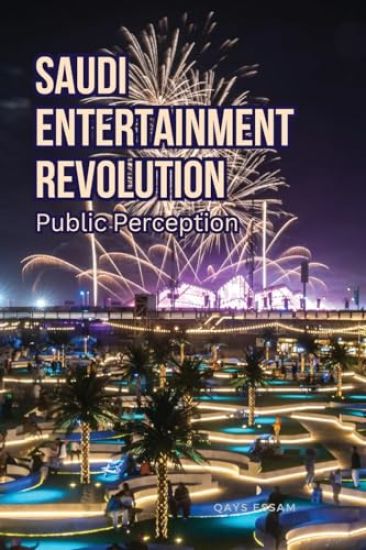
Saudi Entertainment Revolution

Saudi Entertainment Revolution

Qays Essam

Qays Essam
2024
pokkari
Saudi Arabia's rich Islamic heritage intersects with the present administration's pursuit of a more moderate interpretation of Islam, evident in initiatives like the General Entertainment Authority (GEA). This research explores the Saudi population's attitudes towards the GEA, its alignment with societal values, and its impact on the nation's social and political landscape. Employing cognitive-affective-behavioral frameworks, the study delves into participants' perspectives through in-depth interviews and analyzes data using frequency counts and pattern matching. Findings reveal a complex interplay of identities, motivations, and reactions, with the GEA receiving mixed reviews, particularly from religiously conservative segments. Financial concerns also emerge, raising questions about the agency's inclusivity and effectiveness in fostering societal change. While limitations exist, this study serves as an initial step in understanding the evolving events sector and its role in Saudi Arabian society.
Industrialized Building System: The Malaysian Approach
Industrialized building system (IBS) was proposed in several studies as a solution to meet the intensive demands and requirements of modern buildings. The objectives of this book are to highlight the efforts of Malaysian construction sector in adopting IBS in Malaysia, the current status of using it, and to present general conclusions along with the visions and suggestions of several experts towards future developments.
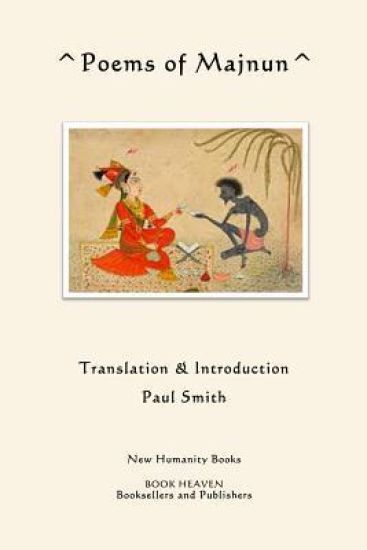
Poems of Majnun

Poems of Majnun

Majnun (Qays)

Createspace Independent Publishing Platform
2012
pokkari
POEMS OF MAJNUN Translation & Introduction by Paul Smith Majnun was a real person Qays (Majnun='madman) was a youth, a Bedouin poet in the seventh century of the Bani Amir tribe in the Najd desert in Arabia. He fell in love with Layla from the same tribe whom he was denied. (It is said that Shakespeare was inspired by their tale for Romeo & Juliet from their tragic love story). Most of his recorded poetry was composed before his descent into love-madness (mast) then through a Perfect Master... his spiritual unification with his beloved. Nizami's famous telling of their tale came from this collected poems (Divan) and other sources. Many other Persian, Turkish and Urdu poets imitated him or wrote their own versions of the story of the height of human love that became Divine and a selection of them are translated in one appendix. Here in the form of the qit'as in which they were composed, is the largest collection of his immortal poems translated into English. Included are four appendixes. 220 pages.COMMENTS ON PAUL SMITH'S TRANSLATION OF HAFIZ'S 'DIVAN'."It is not a joke... the English version of ALL the ghazals of Hafiz is a great feat and of paramount importance. I am astonished. If he comes to Iran I will kiss the fingertips that wrote such a masterpiece inspired by the Creator of all." Dr. Mir Mohammad Taghavi (Dr. of Literature) Tehran."Superb translations. 99% Hafiz 1% Paul Smith." Ali Akbar Shapurzman, translator and knower of Hafiz's Divan off by heart. "Smith has probably put together the greatest collection of literary facts and history concerning Hafiz." Daniel Ladinsky (Penguin Books author). Paul Smith is a poet, author and translator of over 80 books of Sufi poets of the Persian, Arabic, Urdu, Turkish, Pashtu and other languages including Hafiz, Sadi, Nizami, Rumi, 'Attar, Sana'i, Jahan Khatun, Obeyd Zakani, Mu'in, Amir Khusrau, Nesimi, Kabir, Anvari, Ansari, Jami, Khayyam, Rudaki, Yunus Emre, Lalla Ded, Bulleh Shah, Mahsati and others, and his own poetry, fiction, plays, biographies, children's books and screenplays. amazon.com/author/smithpa Published by New Humanity Books
A Quest for Self Recognition

A Quest for Self Recognition

Khalid Qays Abd

Noor Publishing
2019
pokkari
The poetry of Sylvia Plath (1932-1963) attracts the attention of both readers and critics by her fabulous poetic craft which she wields to iconize her own embittered personal experiences. Hence, she becomes directly reputable after her premature death in February 11, 1963, for its order, harmony, organic unity, carefully employed devices and constant thematic implications.1 Plath, then, remains one of the well-known poets whose poetic works are critically examined and new phases of meanings and inspirations are innovatively concluded. Moreover, her poetic craft stems from her whirlwind relationships with her family members, in addition to some other harsh events such as refusals at academic courses, miscarriage and the rejection of publishing some of her poems and short stories. Under such heartbreaking pressures, Plath realizes that she has a quest for her true self that she has lost under such pressures.