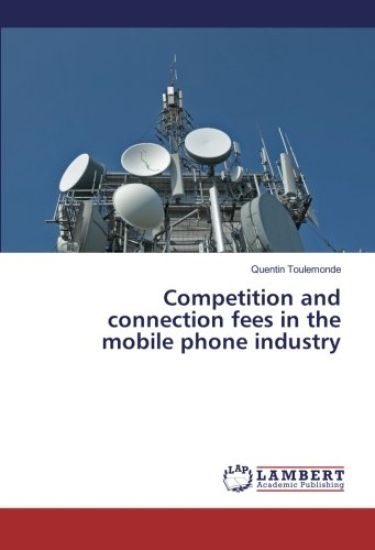
"Stawki za zakończenie polączenia w sieci kom rkowej" (MTR), znane bardziej jako oplaty za polączenie, to oplaty ponoszone przez operator w telefonii kom rkowej, gdy jeden z ich klient w dzwoni poza ich siec. W każdym kraju organ regulacyjny ds. lączności jest odpowiedzialny za ustalenie "sprawiedliwej" stawki MTR, kt ra uwzględnia potrzebę inwestowania w nową infrastrukturę, jednocześnie zapobiegając "cichej zmowie" między operatorami. Niniejsze badanie rozpoczyna się od teoretycznego opisu ram ustalania stawek MTR, a następnie por wnuje podejścia przyjęte przez ARCEP we Francji i Ofcom w Wielkiej Brytanii. Wreszcie, badanie por wnuje konkurencyjne krajobrazy otaczające branżę operator w telefonii kom rkowej w tych dw ch krajach i ocenia, w jakim stopniu r żnice te można przypisac wcześniej opisanym podejściom regulacyjnym.
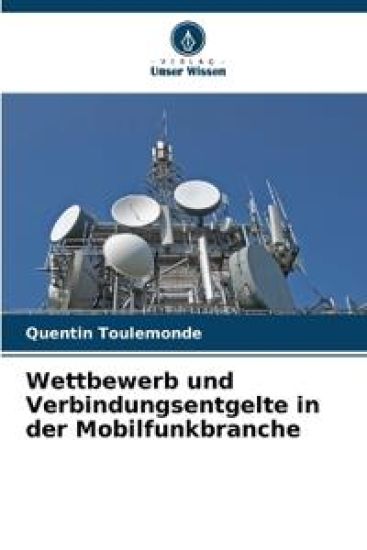
Mobilfunk-Zustellungsentgelte (Mobile Termination Rates, MTR), besser bekannt als Verbindungsentgelte, sind Geb hren, die den Mobilfunkbetreibern entstehen, wenn einer ihrer Kunden au erhalb ihres Netzes anruft. In jedem Land ist die Regulierungsbeh rde f r das Kommunikationswesen daf r zust ndig, eine "faire" MTR festzulegen, die der Notwendigkeit von Investitionen in neue Infrastrukturen Rechnung tr gt und gleichzeitig "stillschweigende Absprachen" zwischen den Betreibern verhindert. Diese Studie beginnt mit einer theoretischen Beschreibung des Rahmens f r die Festsetzung der MTR und vergleicht dann die Ans tze der ARCEP in Frankreich und der Ofcom im Vereinigten K nigreich. Schlie lich vergleicht die Studie die Wettbewerbslandschaft der Mobilfunkbetreiber in diesen beiden L ndern und bewertet, inwieweit diese Unterschiede auf die zuvor beschriebenen Regulierungsans tze zur ckzuf hren sind.
Les tarifs de terminaison d'appel mobile (MTR), plus commun ment appel s frais de connexion, sont des frais encourus par les op rateurs de t l phonie mobile lorsque l'un de leurs clients appelle en dehors de leur r seau. Dans chaque pays, l'autorit de r gulation des communications est charg e de fixer un MTR quitable qui tienne compte de la n cessit d'investir dans de nouvelles infrastructures tout en emp chant la collusion tacite entre les op rateurs. Cette tude commence par une description th orique du cadre de fixation des MTR et compare ensuite les approches adopt es par l'ARCEP en France et l'Ofcom au Royaume-Uni. Enfin, l' tude compare les paysages concurrentiels entourant l'industrie des op rateurs de t l phonie mobile dans ces deux pays et value dans quelle mesure ces diff rences peuvent tre attribu es aux approches r glementaires d crites pr c demment.
Le "tariffe di terminazione mobile" (MTR), pi comunemente note come "tariffe di connessione", sono le spese sostenute dagli operatori di telefonia mobile quando uno dei loro clienti chiama al di fuori della loro rete. In ogni Paese l'autorit di regolamentazione delle comunicazioni responsabile della definizione di un MTR "equo", che tenga conto della necessit di investire in nuove infrastrutture e al contempo impedisca la "tacita collusione" tra gli operatori. Questo studio inizia con una descrizione teorica del quadro di riferimento per la fissazione dell'MTR e confronta poi gli approcci adottati dall'ARCEP in Francia e dall'Ofcom nel Regno Unito. Infine, lo studio confronta i paesaggi competitivi che circondano l'industria degli operatori di telefonia mobile in questi due Paesi e valuta in che misura tali differenze possono essere attribuite agli approcci normativi precedentemente delineati.
As "taxas de termina o m vel" (TTM), mais conhecidas como "taxas de liga o", s o encargos suportados pelos operadores de telem veis quando um dos seus clientes efectua uma chamada para fora da sua rede. Em cada pa s, a entidade reguladora das comunica es respons vel pela fixa o de uma TMR "justa", que tenha em conta a necessidade de investir em novas infra-estruturas, evitando ao mesmo tempo a "colus o t cita" entre os operadores. Este estudo come a com uma descri o te rica do quadro de fixa o das tarifas de termina o m vel, comparando depois as abordagens adoptadas pela ARCEP em Fran a e pelo Ofcom no Reino Unido. Por ltimo, o estudo compara os cen rios concorrenciais que rodeiam o sector dos operadores de telefonia m vel nesses dois pa ses e avalia em que medida essas diferen as podem ser atribu das s abordagens regulamentares anteriormente descritas.
Entrez dans une galerie d'art merveilleuse... D couvrez Quentin, un tableau de ma tre, un de ceux qui sont valu s tr s chers par les experts. Et comprenez que celui-ci est "vivant", qu'il veut choisir lui-m me son acqu reur, sans consid ration d'argent... Une histoire originale et tendre, mise en images par Marie-Ang lique Delara, artiste-peintre au style na f, plein de fra cheur. Livre n 7 de la collection Les contes de Val rie Bonenfant . Des ouvrages dont la vocation est: - de porter l'expression libre d'artistes de tous horizons: illustrateurs, graphistes, peintres, artistes urbains, mais aussi photographes, designers, architectes... - de susciter chez le lecteur, jeune et moins jeune, l'imaginaire, le r ve, l' motion... - d'offrir du beau, de la po sie, de la douceur au monde... Chaque livre est une pi ce unique, porteuse d'art, de cr ativit , d'authenticit . L ger, il s'emm ne facilement avec soi, mais a aussi sa place en biblioth que. - Format A5, 32 pages. - Public: tout ge, partir de 7 ans.
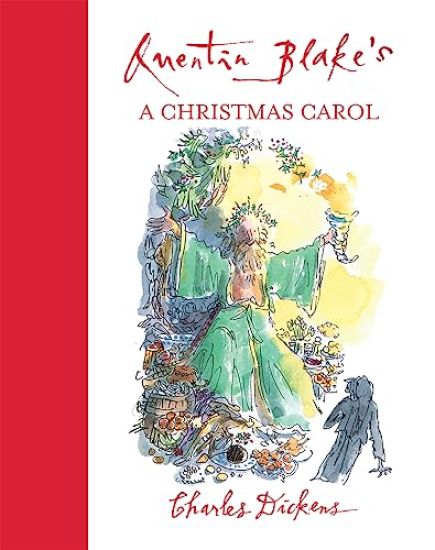
Illustrated by one of the most popular artists working today. Quentin Blake's A Christmas Carol is a beautiful edition of the timeless Christmas classic. A great gift for the season of giving. The wonderful Quentin Blake turns his artistic talents to Dickens’ much-loved Christmas story. A beautiful edition of Dickens' timeless Christmas classic. A Christmas Carol is the book that defines the Christmas spirit. Ebenezer Scrooge, a mean-spirited miser, is visited by three ghosts one Christmas Eve. The ghosts show Scrooge the true value of Christmas: charity, good humour and love for his fellow man. Quentin Blake's colourful illustrations guide the reader through Scrooge's lively journey to find the meaning of Christmas. This unabridged edition contains a foreword by the illustrator and is the ultimate Christmas gift book.
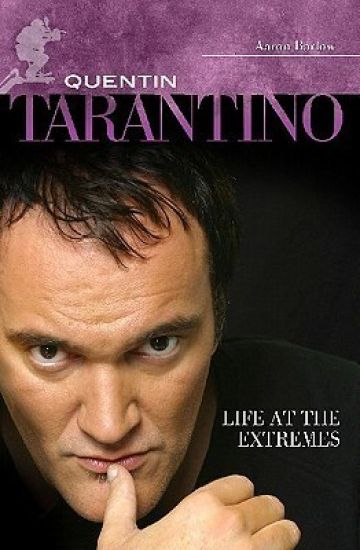
This book places Quentin Tarantino at the heart of Hollywood, showing a director who speaks film through film, who examines the world beyond the movies in a way few have previously attempted, and at which fewer still have succeeded.Quentin Tarantino: Life at the Extremes explores the uses of violence in the films Tarantino has written, directed, and produced. Arguing that extreme violence is central to Tarantino’s art, the book helps readers understand its purpose in his films—as metaphor, as movement, and as motivation. For Tarantino, the book explains, violence serves the purposes of film. In each of his movies, he explores the boundaries of taste and audience reaction, using violence and shock to bring questions of responsibility and expectation to the forefront of discussions on cinema.After introductory chapters placing Tarantino and his films within the broader context of American cinema, author Aaron Barlow focuses on Tarantino's six major directorial efforts. Each film is discussed from its genre starting point and the differing directions the films take are explored, as are the structural elements. In the end, readers will see how Tarantino deliberately pushes film in new directions through old techniques, styles, and even actors, crafting original art from what others have discarded.A chronology dates events in the life of Quentin Tarantino, as well as significant developments in the world of the moviesIncludes a detailed listing of Tarantino's film career, noting his participation in projects as an actor, writer, producer, and director, with details on each film, including cast and other participants
'In recent years I have found myself working increasingly in sequences of drawings which explore subjects and techniques which interest me. These sequences vary in approach and tone, and between reality and fantasy. But I hope that in each of them in its own way will appeal to anyone who like looking at drawings.' Quentin Blake 2019 Quentin Blake, like many illustrators, works essentially in isolation. In normal times he would make two daily trips to his office across the square from where he lives to see what business there was for him to deal with. But during the lockdowns he had no such distractions and demands made of his time. There was still some commissioned works; he finished two books and he did some work for charities raising funds to deal with the lockdowns. But Quentin had a lot more time to explore his visual interests and go wherever his imagination took him. Some of these series were drawn at 6.00 am while he was still in bed. The medium he used for each series was partly decided by whatever was to hand; pencil, biro or Sennelier oil pastels. Similarly, the size, colour and quality of the paper would be decided by what was available. This book is an edited selection of over 3,000 drawings Quentin produced from March 2020 to February 2021; a portfolio of new personal work, not commissioned and not meant for publication. They provide a unique insight into what happens when a great artist is left to his own devices.
As Australia's first female Governor-General, Quentin Bryce handwrote more than fifty letters each week. She wrote to those she had met and connected with as her role took her from palaces to outback schools, from war zones to memorials, from intimate audiences to lavish ceremonies. She received even more letters from every corner of the country. Generous, witty and always heartfelt, her letter-writing skills were honed at boarding school, from where she would write to her parents every Sunday.Dear Quentin is a rich collection of the letters the Governor-General wrote and received during her six-year term to prime ministers Rudd and Gillard, VC Mark Donaldson, pals Anne Summers and Wendy McCarthy, Indigenous elders, war vets, Girl Guides, grandchildren, as well as the proud owner of a calf called Quentin.Royalties from this book will be donated to Murdoch Childrens Research Institute, making a real difference to child health through world-leading research and disease prevention.
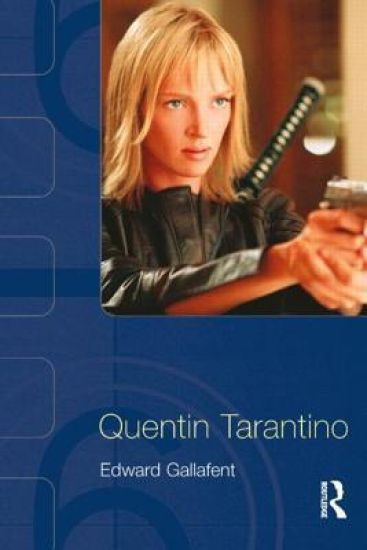
Quentin Tarantino is one of the best-known living American filmmakers in the world, and the story of his career has been the subject of a number of books and articles. But what do his films mean? In this new study, Edward Gallafent does not look at Tarantino’s story but at the films themselves. He asks to what extent Tarantino can be seen as a specifically American filmmaker, with the kinds of preoccupations and interests that have formed part of Hollywood’s traditions, and also how he explores the expressive possibilities of current cinema. The book concentrates on the main feature films of Tarantino’s career so far: Reservoir Dogs, Pulp Fiction, Jackie Brown, and the two volumes of Kill Bill. Apart from Kill Bill the films are not treated individually, but in terms of some of the subjects that connect them together, such as success and tradition, their notorious deployment of violence, and Tarantino’s approach to story-telling: his interest in presenting events out of chronological order. The book also covers adaptations of Tarantino’s work, looking at the screenplays of True Romance and Natural Born Killers as well as the films made from them, and compares Tarantino’s approach to adapting Elmore Leonard with that of another important American filmmaker, Paul Schrader. The aim of the book is to explore these topics and to take the reader back to what the American critic Robert Warshow called the ‘actual, immediate experience of seeing and responding to the movies’. It is designed to appeal both to those who were excited by the films on first seeing them in the cinema and to those taking the opportunity of reconsidering them on the screen or on DVD.
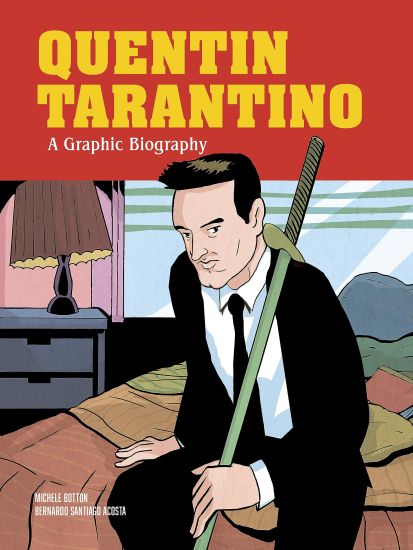
Unofficial and unauthorised.'When people ask me if I went to film school I tell them, "No, I went to films"'. From the set of 1993’s Pulp Fiction, to a bar room meeting with Robert Rodriguez and an inspirational lunch with Leonardo di Caprio, this unique graphic novel takes us across a series of Hollywood-inspired vignettes covering the movie-obsessed life and career of one of modern cinema’s greatest filmmakers – Quentin Tarantino. Join the conversation as Tarantino talks John Travolta into starring in Pulp Fiction, find out about the inspiration for his earliest screenplays and learn about Tarantino’s obsessive childhood growing up in California. For those who already know what they call a Quarter Pounder with Cheese in Paris – as well as those looking for an insight into Tarantino’s influences, inspirations and the development of his signature style – we present Quentin Tarantino: A Graphic Life.
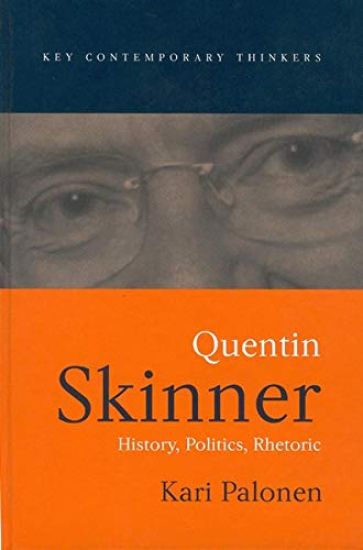
This book is the first comprehensive exposition of the work of one of the most important intellectual historians and political theorists writing today. Quentin Skinner's treatment of political theory as a dimension of political life marks a revolutionary move in the historical as well as the philosophical study of political thought. Skinner brings the study of political theory closer to the language of agents and treats theorists as politicians of a special kind. This is as true of his accounts of his contemporaries, such as Rawls, Rorty, Geertz and Habermas, as it is of his interpretations of classical thinkers such as Machiavelli and Hobbes. Skinner has become internationally renowned for this approach, which ties together historical and contemporary analysis in order to integrate the study of the past and the present, and which tries fully to uncover the historical context and development of key concepts in political theory such as freedom and the state. This volume charts Skinner's work from the early 1960s right up to the present, including his most recent studies in the theory of persuasive speech, and is organized around five major themes: history, linguistic action, political thought, liberty and rhetoric. It pays particular attention to Skinner's work in relation to that of continental thinkers, especially Max Weber and Reinhart Koselleck. The book will be essential reading for students and scholars of political and social theory, history, philosophy and cultural studies.
An exposition of the work of the important intellectual historian and political theorist Quentin Skinner. The volume charts Skinner's work from the early 1960s onwards and is organized around five major themes: history; linguistic action; political thought; liberty and rhetoric.
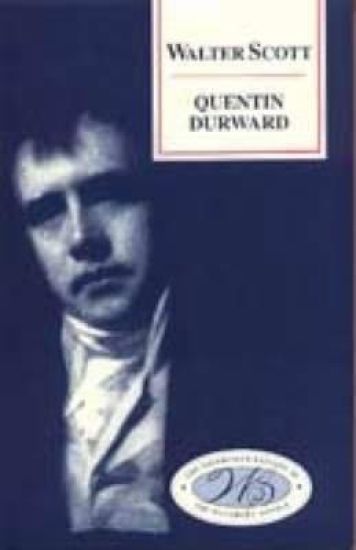
Quentin Durward is a young Scotsman seeking fame and fortune in the France of Louis XI in the fifteenth century. He knows little and understands less, but Scott represents his ignorance and naivete as useful to 'the most sagacious prince in Europe' who needs servants motivated solely by the desire for coin and credit and lacking any interest in France which would interfere with the execution of his political aims. In Quentin Durward Scott studies the first modern state in the process of destroying the European feudal system. By far the most important of Scott's sources for Quentin Durward is the splendid Memoirs of Philippe de Comines. Comines, who has more than a walk-on role in the novel itself, was trusted councillor of Charles the Bold of Burgundy until 1472, when Louis XI persuaded him to enter his service. Scott's contrasting portraits of Louis and Charles, crafty king and fiery duke, essentially derives from Comines, whose memoirs are generally regarded as the first example of modern analytical history rather than chronicle. But it is as story that Quentin Durward succeeds, and it is one of Scott's most absorbing tales.
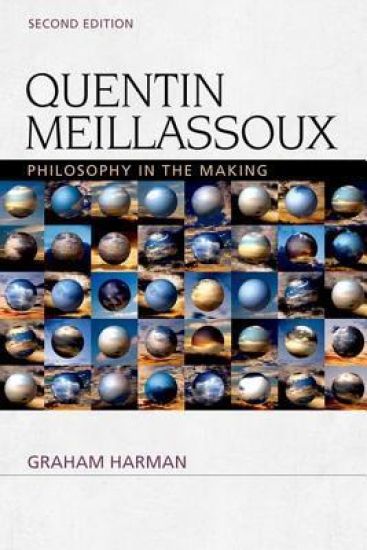
Offers an in depth study of the emerging French philosopher Quentin Meillassoux. In this expanded edition of his landmark 2011 work on Meillassoux, Graham Harman covers new materials not published at the time of the first edition. Along with Meillassoux's startling book on Mallarme's poem 'Un coup de des jamais n'abolira le hasard', Harman discusses several new English articles by Meillassoux, including his controversial April 2012 Berlin lecture with its critique of 'subjectalism'. Freshly called to a professorship at the Sorbonne, Meillassoux's star has continued to rise. This expanded edition of the first book on Meillassoux remains the best introduction to one of Europe's most promising thinkers.
In this expanded edition of his landmark 2011 work on Meillassoux, Graham Harman covers new materials not available to the Anglophone reader at the time of the first edition. Along with Meillassoux's startling book on Mallarme's poem 'Un coup de des jamais n'abolira le hasard,' Harman discusses several new English articles by Meillassoux, including his controversial April 2012 Berlin lecture and its critique of 'subjectalism'.Freshly called to a professorship at the Sorbonne, Meillassoux's star has continued to rise. This expanded edition of the only book on Meillassoux remains the best introduction to one of Europe's most promising thinkers.