Kirjahaku
Etsi kirjoja tekijän nimen, kirjan nimen tai ISBN:n perusteella.
509 tulosta hakusanalla Quintus Septimius Florens Tertullianus

Q. Sept. Flor. Tertulliani Book 9
Quintus Septimius Florens Tertullianus
KESSINGER PUBLISHING, LLC
2009
pokkari

Containing Tertullian's (ca. 160-220 A.D.) De Spectaculis, De Idolatria, De Cultu Feminarum, De Corona Militis, De Testomonio Animae, De Execrandis Gentium Diis and Carmen Genesis. This book uses the versions from The Latin Library, cross-referenced with the Patrologia Latina and Corpus Christianorum, enhanced with more than 280 footnotes of scriptural references and critical commentary (highlighting the differences between the online version and the two aforementioned sources). Greek text has been restored and I have enacted uniform punctuation and spelling practices. Neatly formatted with original forward. Please visit: VitaScriptorium.com for more. This book is also available in hard back --- Link: https: //www.lulu.com/shop/quintus-septimius-florens-tertullianus-and-brooks-hayden-romedy/opera-tertulliani/hardcover/product-47vvpg.html?q=opera+tertulliani&page=1&pageSize=4

Containing Tertullian's (ca. 160-220 A.D.) De Spectaculis, De Idolatria, De Cultu Feminarum, De Corona Militis, De Testomonio Animae, De Execrandis Gentium Diis and Carmen Genesis. This book uses the versions from The Latin Library, cross-referenced with the Patrologia Latina and Corpus Christianorum, enhanced with more than 280 footnotes of scriptural references and critical commentary (highlighting the differences between the online version and the two aforementioned sources). Greek text has been restored and I have enacted uniform punctuation and spelling practices. Neatly formatted with original forward. Please visit: VitaScriptorium.com for more.

De Baptismo
Quintus Septimius Florens Tertullianus
Createspace Independent Publishing Platform
2014
nidottu

De corona militis
Quintus Septimius Florens Tertullianus
Createspace Independent Publishing Platform
2014
nidottu

Apologeticus
Quintus Septimius Florens Tertullianus
Createspace Independent Publishing Platform
2014
nidottu
The Apology (Latin: Apologeticum or Apologeticus) is Tertullian's most famous work, consisting of apologetic and polemic; In this book Tertullian defends the Christian Church, demanding legal toleration and that Christians be treated as all other sects or religions of the Roman Empire. It is in this treatise that one finds the phrase: "the blood of the martyrs is the seed of the Church."
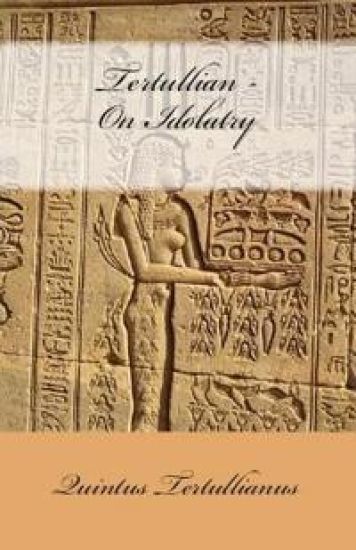
The principal crime of the human race, the highest guilt charged upon the world, the whole procuring cause of judgment, is idolatry. For, although each single fault retains its own proper feature, although it is destined to judgment under its own proper name also, yet it is marked off under the general account of idolatry. Set aside names, examine works, the idolater is likewise a murderer. Do you inquire whom he has slain? If it contributes ought to the aggravation of the indictment, no stranger nor personal enemy, but his own self. By what snares? Those of his error. By what weapon? The offense done to God. By how many blows? As many as are his idolatries. He who affirms that the idolater perishes not, will affirm that the idolater has not committed murder. Further, you may recognize in the same crime adultery and fornication; for he who serves false gods is doubtless an adulterer of truth, because all falsehood is adultery. So, too, he is sunk in fornication. For who that is a fellow-worker with unclean spirits, does not stalk in general pollution and fornication? And thus it is that the Holy Scriptures use the designation of fornication in their upbraiding of idolatry. The essence of fraud, I take it, is, that any should seize what is another's, or refuse to another his due; and, of course, fraud done toward man is a name of greatest crime. Well, but idolatry does fraud to God, by refusing to Him, and conferring on others, His honors; so that to fraud it also conjoins contumely. But if fraud, just as much as fornication and adultery, entails death, then, in these cases, equally with the former, idolatry stands unacquitted of the impeachment of murder. - Quintus Septimius Florens Tertullianus (Tertullian)


Liber De Pallio (1656)
Quintus Septimius Florens Tertullianus; Claudius Salmacius
KESSINGER PUBLISHING, LLC
2009
pokkari

Christian and Pagan in the Roman Empire
Quintus Septimus Florens Tertullian
The Catholic University of America Press
2001
nidottu
Tertullian is a primary source for a modern understanding of the issues that once confronted - and still confront - Christians living in a non-Christian world. Unfortunately, his writings have often been cast aside as too difficult to read. In this volume, Robert D. Sider undertakes a judicious pruning of the original texts and brings an accessibility to the important writings of Tertullian.

Septimii Florentis Tertulliani Libri De Baptismo Et Poenitentia, Notis (1755)
Quintus Septimius F. Tertullianus
KESSINGER PUBLISHING, LLC
2009
pokkari

Augustine: Tertullien et st. Augustin
Augustine; Quintus Septimius F. Tertullianus
Antigonos Verlag
2025
nidottu

With an introduction and commentary.
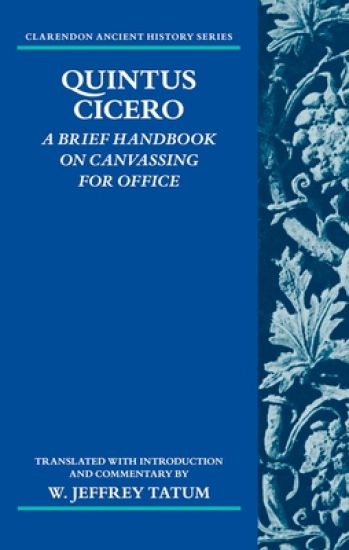
Quintus Cicero: A Brief Handbook on Canvassing for Office (Commentariolum Petitionis)
W. Jeffrey Tatum
Oxford University Press
2018
sidottu
Rome's annual elections were central to the relationship between its citizenry and political leadership, and canvassing for office played no small part in their outcomes. The Brief Handbook on Canvassing for Office (Commentariolum Petitionis), composed by Quintus Cicero for his elder brother, the famous orator and statesman Marcus, is our fullest account of campaigning for office in republican Rome, incorporating candid advice on how best to mobilize political support from voters of every social class alongside searing political vituperation. This volume offers both the Latin text and a fresh translation of the Brief Handbook, as well as the first scholarly commentary on the text in the English language. Its purpose is to aid readers in their appreciation of the Brief Handbook in its multiple guises: as a literary text, an ideological document, a likely specimen of electoral propaganda, and a resource for recovering various aspects of late republican political and cultural history, such as group identities, Roman friendship, and civic rituals. While the comprehensive commentary clarifies the cultural, historical, and literary problems of the text, an incisive introduction supplies the reader with an account of the nature and practice of elections and canvassing for office in the late republic, as well as a detailed rehearsal of particular aspects of Cicero's career that provides the necessary context for understanding his campaign for the consulship in 64. The introduction also examines the literary dimensions of the work, and particularly the question of its authorship: considerations that are crucial to its proper interpretation as a historical source.