Kirjojen hintavertailu. Mukana 11 244 527 kirjaa ja 12 kauppaa.

Kirjahaku

Etsi kirjoja tekijän nimen, kirjan nimen tai ISBN:n perusteella.

1000 tulosta hakusanalla R J Knecht

Catherine de'Medici

Catherine de'Medici

R J Knecht

Longman
1997
nidottu
Catherine de' Medici (1519-89) was the wife of one king of France and the mother of three more - the last, sorry representatives of the Valois, who had ruled France since 1328. She herself is of preeminent importance to French history, and one of the most controversial of all historical figures. Despised until she was powerful enough to be hated, she was, in her own lifetime and since, the subject of a "Black Legend" that has made her a favourite subject of historical novelists (most notably Alexandre Dumas, whose Reine Margot has recently had new currency on film). Yet there is no recent biography of her in English. This new study, by a leading scholar of Renaissance France, is a major event.Catherine, a neglected and insignificant member of the Florentine Medici, entered French history in 1533 when she married the son of Francis I for short-lived political reasons: her uncle was pope Clement VII, who died the following year. Now of no diplomatic value, Catherine was treated with contempt at the French court even after her husband's accession as Henry II in 1547. Even so, she gave him ten children before he was killed in a tournament in 1559. She was left with three young boys, who succeeded to the throne as Francis II (1559-60), Charles IX (1560-74) and Henry III (1574-89). As regent and queen-mother, a woman and with no natural power-base of her own, she faced impossible odds. France was accelerating into chaos, with political faction at court and religious conflict throughout the land. As the country disintegrated, Catherine's overriding concern was for the interests of her children. She was tireless in her efforts to protect her sons' inheritance, and to settle her daughters in advantageous marriages. But France needed more. Catherine herself was both peace-loving and, in an age of frenzied religious hatred, unbigoted. She tried to use the Huguenots to counterbalance the growing power of the ultra-Catholic Guises but extremism on all sides frustrated her. She was drawn into the violence. Her name is ineradicably associated with its culmination, the Massacre of St Bartholomew (24 August 1572), when thousands of Huguenots were slaughtered in Paris and elsewhere. To this day no-one knows for certain whether Catherine instigated the massacre or not, but here Robert Knecht explores the probabilities in a notably level-headed fashion.His book is a gripping narrative in its own right. It offers both a lucid exposition of immensely complex events (with their profound imact on the future of France), and also a convincing portrait of its enigmatic central character. In going behind the familiar Black Legend, Professor Knecht does not make the mistake of whitewashing Catherine; but he shows how intractable was her world, and how shifty or intransigent the people with whom she had to deal. For all her flaws, she emerges as a more sympathetic - and, in her pragmatism, more modern - figure than most of her leading contemporaries.
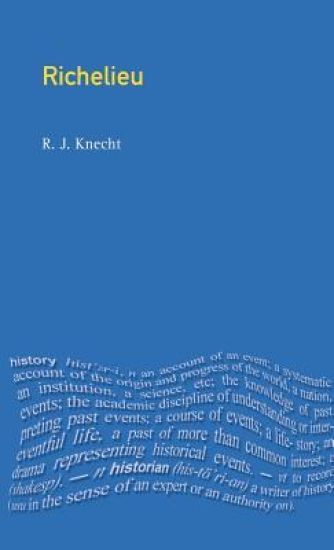
Richelieu

Richelieu

R J Knecht

Routledge
2000
nidottu
This concise and up-to-date assessment of Richelieu's career provides an enthralling introduction to the character and exercise of his power. Richelieu governed France for 18 years until his death and until the mid-20th century was viewed by Anglo-Saxon historians as cold, clever and ruthless. Recent interpretations have been more favourable and in this incisive study R. J. Knecht uses recent research to reassess Richelieu's career and achievements.
Catherine de'Medici

Catherine de'Medici

R J Knecht

Routledge
2017
sidottu
Catherine de' Medici (1519-89) was the wife of one king of France and the mother of three more - the last, sorry representatives of the Valois, who had ruled France since 1328. She herself is of preeminent importance to French history, and one of the most controversial of all historical figures. Despised until she was powerful enough to be hated, she was, in her own lifetime and since, the subject of a "Black Legend" that has made her a favourite subject of historical novelists (most notably Alexandre Dumas, whose Reine Margot has recently had new currency on film). Yet there is no recent biography of her in English. This new study, by a leading scholar of Renaissance France, is a major event.Catherine, a neglected and insignificant member of the Florentine Medici, entered French history in 1533 when she married the son of Francis I for short-lived political reasons: her uncle was pope Clement VII, who died the following year. Now of no diplomatic value, Catherine was treated with contempt at the French court even after her husband's accession as Henry II in 1547. Even so, she gave him ten children before he was killed in a tournament in 1559. She was left with three young boys, who succeeded to the throne as Francis II (1559-60), Charles IX (1560-74) and Henry III (1574-89). As regent and queen-mother, a woman and with no natural power-base of her own, she faced impossible odds. France was accelerating into chaos, with political faction at court and religious conflict throughout the land. As the country disintegrated, Catherine's overriding concern was for the interests of her children. She was tireless in her efforts to protect her sons' inheritance, and to settle her daughters in advantageous marriages. But France needed more. Catherine herself was both peace-loving and, in an age of frenzied religious hatred, unbigoted. She tried to use the Huguenots to counterbalance the growing power of the ultra-Catholic Guises but extremism on all sides frustrated her. She was drawn into the violence. Her name is ineradicably associated with its culmination, the Massacre of St Bartholomew (24 August 1572), when thousands of Huguenots were slaughtered in Paris and elsewhere. To this day no-one knows for certain whether Catherine instigated the massacre or not, but here Robert Knecht explores the probabilities in a notably level-headed fashion.His book is a gripping narrative in its own right. It offers both a lucid exposition of immensely complex events (with their profound imact on the future of France), and also a convincing portrait of its enigmatic central character. In going behind the familiar Black Legend, Professor Knecht does not make the mistake of whitewashing Catherine; but he shows how intractable was her world, and how shifty or intransigent the people with whom she had to deal. For all her flaws, she emerges as a more sympathetic - and, in her pragmatism, more modern - figure than most of her leading contemporaries.

Richelieu

Richelieu

R J Knecht

Routledge
2015
sidottu
This concise and up-to-date assessment of Richelieu's career provides an enthralling introduction to the character and exercise of his power. Richelieu governed France for 18 years until his death and until the mid-20th century was viewed by Anglo-Saxon historians as cold, clever and ruthless. Recent interpretations have been more favourable and in this incisive study R. J. Knecht uses recent research to reassess Richelieu's career and achievements.
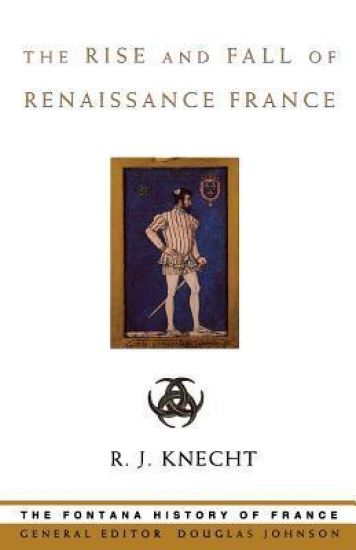
The Rise and Fall of Renaissance France

The Rise and Fall of Renaissance France

R. J. Knecht

HARPERCOLLINS PUBLISHERS
2008
nidottu
The history of Renaissance France is rich and varied. The Renaissance in France, as elsewhere in Europe, saw glory crowned amidst conflict and squalor. At the beginning of the sixteenth century, France seemed set to become the most powerful nation of Europe, but as the century ebbed so did her fortunes. In between, during a century of more or less permanent combat which murdered the dreams, comforts and relatives of many Frenchmen and saw a soaring economy shot down, some of the greatest building, painting and thinking to come out of the whole European Renaissance was being done. Sixteenth-century France was a colourful, confusing and often downright fatal habitat, and we moderns might profitably look on the complexity of its successes and failures, to which Prefessor Knect is a matchlessly illuminating and genial guide.
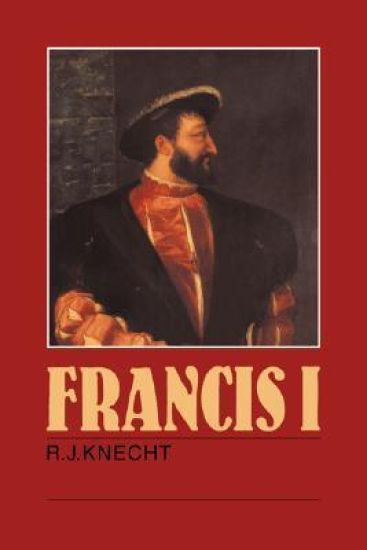
Francis I

Francis I

R. J. Knecht

Cambridge University Press
1984
pokkari
The name of Francis I and his emblem, the salamander, are familiar to the many thousands of tourists who visit the chateaux of the Loire each year. But what sort of monarch was he? Whereas in his own day he was acclaimed as 'the great king Francis', in more recent times he has generally been taken less seriously than his exact contemporaries Henry VIII of England and the Emperor Charles V. Yet his reign was no less important than theirs. It witnessed and promoted fundamental changes in France's political structure, economy, society, religion and cultural life. The king's obsession with war stimulated constitutional change. By entailing expenditures far in excess of the crown's traditional resources, it obliged him to tap new sources of wealth, to reorganise the fiscal system and to promote administrative centralisation. Economically, Francis' reign saw the completion of the recovery that had followed the Hundred Years' War. While the land was reclaimed, the population grew, town life flourished and trade expanded.
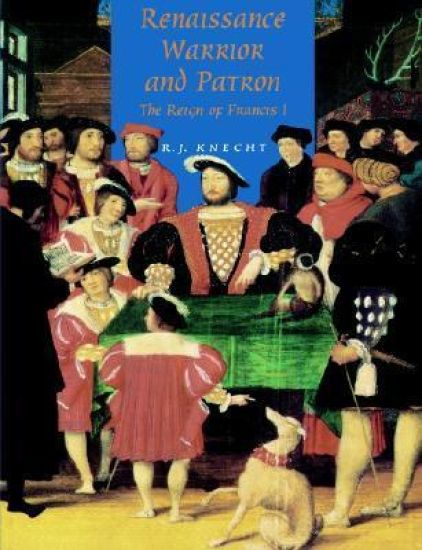
Renaissance Warrior and Patron

Renaissance Warrior and Patron

R. J. Knecht

Cambridge University Press
1996
pokkari
This book offers a full and comprehensive account of one of the most colourful and formative reigns in French history, that of Francis I (1515–47). First published to coincide with the 500th anniversary of Francis’s birth in 1994, this book is a completely revised version of Knecht’s earlier study of the king, Francis I, which was for many years the standard work on the subject. That edition has been superseded by this substantially larger work, in which much new written and illustrative material is included. No other English work on the subject is as up-to-date or as authoritative.
The French Civil Wars, 1562-1598
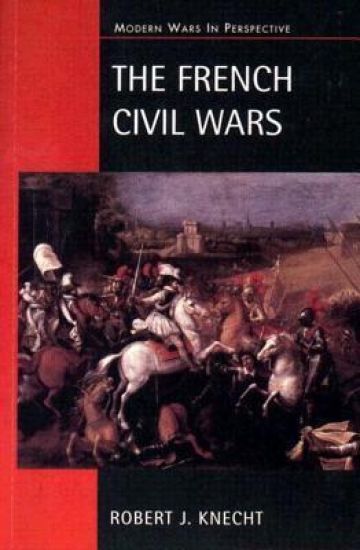
The French Wars of Religion tore the country apart for almost fifty years. They were also part of the wider religious conflict between Catholics and Protestants which raged across Europe during the 16th century. This new study, by a major authority on French history, explores the impact of these wars and sets them in their full European context.
French Renaissance Monarchy

French Renaissance Monarchy

R. J. Knecht

Routledge
1996
nidottu
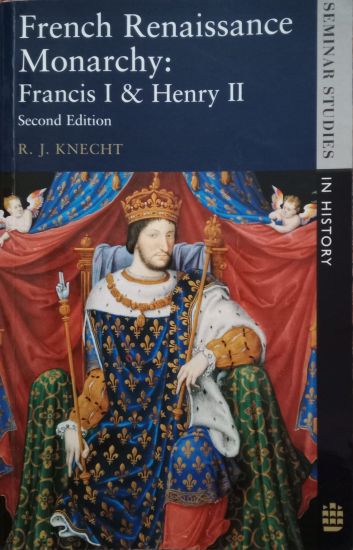
First published in 1984, Professor Knecht's study quickly established itself as the best short account of the period. The reigns of Francis I and Henry II, spanning the first half of the sixteenth century, are one of the most colourful and formative periods of French history. In addition to examining the nature and effectiveness of their reigns, Professor Knecht also examines their foreign policies which brought them into conflict with other major powers. For this new edition the author has added a new chapter on patronage and the arts.
French Renaissance Monarchy

French Renaissance Monarchy

R. J. Knecht

Routledge
2017
sidottu
First published in 1984, Professor Knecht's study quickly established itself as the best short account of the period. The reigns of Francis I and Henry II, spanning the first half of the sixteenth century, are one of the most colourful and formative periods of French history. In addition to examining the nature and effectiveness of their reigns, Professor Knecht also examines their foreign policies which brought them into conflict with other major powers. For this new edition the author has added a new chapter on patronage and the arts.
The French Civil Wars, 1562-1598

The French Civil Wars, 1562-1598

R. J. Knecht

Routledge
2017
sidottu
The French Wars of Religion tore the country apart for almost fifty years. They were also part of the wider religious conflict between Catholics and Protestants which raged across Europe during the 16th century. This new study, by a major authority on French history, explores the impact of these wars and sets them in their full European context.
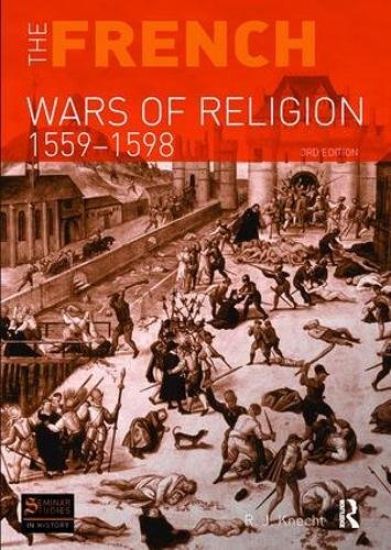
The French Wars of Religion 1559-1598
In the second half of the sixteenth century, France was racked by religious civil wars and peace was only restored when Henry of Navarre finally converted to Catholicism, deciding ? in his immortal phrase ? that 'Paris is worth a mass'. In this lucid introduction to a complex period in French history, Robert Knecht: Explains the evangelical and Lutheran origins of the Huguenot Church in France Challenges simplistic interpretations of the religious conflict as purely a cloak for political rebellion Provides concise analysis of the wars themselves and the ferment of political ideas which they generated Evaluates the extent of France?s recovery under Henry IV This third edition has been updated throughout to take account of the latest scholarship, particularly on the Massacre of St. Bartholomew and the reign of Henry III when the monarchy almost succumbed to the challenge posed by the Catholic League. There is a new colour plate section and the main text is supported by a full glossary of terms, maps and three detailed genealogical tables, as well as a carefully chosen selection of original documents. Each book in the Seminar Studies in History series provides a concise and reliable introduction to complex events and debates. Written by acknowledged experts and supported by extracts from historical Documents, a Chronology, Glossary, Who?s Who of key figures and Guide to Further Reading, Seminar Studies in History are the essential guides to understanding a topic.
The French Wars of Religion 1559-1598
In the second half of the sixteenth century, France was racked by religious civil wars and peace was only restored when Henry of Navarre finally converted to Catholicism, deciding – in his immortal phrase – that 'Paris is worth a mass'. In this lucid introduction to a complex period in French history, Robert Knecht: Explains the evangelical and Lutheran origins of the Huguenot Church in FranceChallenges simplistic interpretations of the religious conflict as purely a cloak for political rebellionProvides concise analysis of the wars themselves and the ferment of political ideas which they generatedEvaluates the extent of France’s recovery under Henry IV This third edition has been updated throughout to take account of the latest scholarship, particularly on the Massacre of St. Bartholomew and the reign of Henry III when the monarchy almost succumbed to the challenge posed by the Catholic League. There is a new colour plate section and the main text is supported by a full glossary of terms, maps and three detailed genealogical tables, as well as a carefully chosen selection of original documents. Each book in the Seminar Studies in History series provides a concise and reliable introduction to complex events and debates. Written by acknowledged experts and supported by extracts from historical Documents, a Chronology, Glossary, Who’s Who of key figures and Guide to Further Reading, Seminar Studies in History are the essential guides to understanding a topic.
R.J. Mitchell: Schooldays to Spitfire

R.J. Mitchell: Schooldays to Spitfire

Gordon Mitchell

The History Press Ltd
2006
nidottu
The Spitfire began as a near disaster. The developments of this famous aircraft took it from uncompromising beginnings to become the legendary last memorial to a great man - an elegant and, with its pilots, a highly effective, weapon of war. The Spitfire would not have happened at all, however, without Mitchell's indomitable courage and determination in the face of severe physical and psychological adversity resulting from cancer. His contribution to the Battle of Britain, and thereafter to the achievement of final victory in 1945, was so great that our debt to him can never be repaid. This poignant story is written from a uniquely personal viewpoint by his son, Gordon Mitchell.
R.J. Rummel

R.J. Rummel

Saint Philip Street Press
2020
pokkari
The book provides a critical and constructive assessment of the many contributions to social science and politics made by Professor R. J. Rummel. Rummel was a prolific writer and an important teacher and mentor to a number of people who in turn have made their mark on the profession. His work has always been controversial. But after the end of the Cold War, his views on genocide and the democratic peace in particular have gained wide recognition in the profession. He was also a pioneer in the use of statistical methods in international relations. His work in not easily classified in the traditional categories of international relations research (realism, idealism, and constructivism). He was by no means a pacifist and his views on the US-Soviet arms race led him to be classified as a hawk. But his work on the democratic peace has become extremely influential among liberal IR scholars and peace researchers. Above all, he was a libertarian. This work was published by Saint Philip Street Press pursuant to a Creative Commons license permitting commercial use. All rights not granted by the work's license are retained by the author or authors.
R.J. Rummel

R.J. Rummel

Saint Philip Street Press
2020
sidottu
The book provides a critical and constructive assessment of the many contributions to social science and politics made by Professor R. J. Rummel. Rummel was a prolific writer and an important teacher and mentor to a number of people who in turn have made their mark on the profession. His work has always been controversial. But after the end of the Cold War, his views on genocide and the democratic peace in particular have gained wide recognition in the profession. He was also a pioneer in the use of statistical methods in international relations. His work in not easily classified in the traditional categories of international relations research (realism, idealism, and constructivism). He was by no means a pacifist and his views on the US-Soviet arms race led him to be classified as a hawk. But his work on the democratic peace has become extremely influential among liberal IR scholars and peace researchers. Above all, he was a libertarian. This work was published by Saint Philip Street Press pursuant to a Creative Commons license permitting commercial use. All rights not granted by the work's license are retained by the author or authors.