Kirjahaku
Etsi kirjoja tekijän nimen, kirjan nimen tai ISBN:n perusteella.
1000 tulosta hakusanalla R. Ames Montgomery
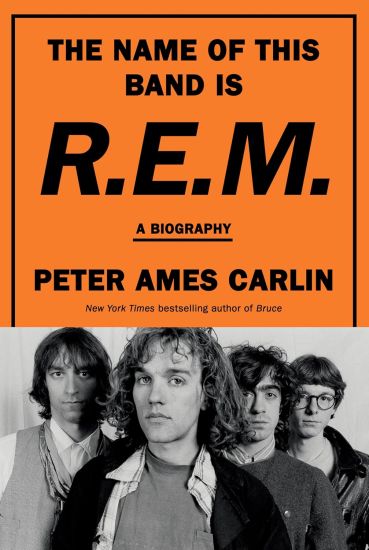
THE NEW YORK TIMES BOOK REVIEW EDITORS' CHOICE - An electrifying cultural biography of the greatest and last American rock band of the millennium, whose music ignited a generation--and reasserted the power of rock and roll " Carlin's] unique gift for capturing the sweep and tenor of a cultural moment...is here on brilliant display." --Michael Chabon In the spring of 1980, an unexpected group of musical eccentrics came together to play their very first performance at a college party in Athens, Georgia. Within a few short years, they had taken over the world - with smash records like Out of Time, Automatic for the People, Monster and Green. Raw, outrageous, and expressive, R.E.M.'s distinctive musical flair was unmatched, and a string of mega-successes solidified them as generational spokesmen. In the tumultuous transition between the wide-open 80s and the anxiety of the early 90s, R.E.M. challenged the corporate and social order, chasing a vision and cultivating a magnetic, transgressive sound. In this rich, intimate biography, critically acclaimed author Peter Ames Carlin looks beyond the sex, drugs, and rock'n'roll to open a window into the fascinating lives of four college friends - Michael Stipe, Peter Buck, Mike Mills and Bill Berry - who stuck together at any cost, until the end. Deeply descriptive and remarkably poetic, steeped in 80s and 90s nostalgia, The Name of This Band is R.E.M. paints a cultural history of the commercial peak and near-total collapse of a great music era, and the story of the generation that came of age at the apotheosis of rock.
THE NEW YORK TIMES BOOK REVIEW EDITORS' CHOICE - An electrifying cultural biography of the greatest and last American rock band of the millennium, whose music ignited a generation--and reasserted the power of rock and roll " Carlin's] unique gift for capturing the sweep and tenor of a cultural moment...is here on brilliant display." --Michael Chabon In the spring of 1980, an unexpected group of musical eccentrics came together to play their very first performance at a college party in Athens, Georgia. Within a few short years, they had taken over the world - with smash records like Out of Time, Automatic for the People, Monster and Green. Raw, outrageous, and expressive, R.E.M.'s distinctive musical flair was unmatched, and a string of mega-successes solidified them as generational spokesmen. In the tumultuous transition between the wide-open 80s and the anxiety of the early 90s, R.E.M. challenged the corporate and social order, chasing a vision and cultivating a magnetic, transgressive sound. In this rich, intimate biography, critically acclaimed author Peter Ames Carlin looks beyond the sex, drugs, and rock'n'roll to open a window into the fascinating lives of four college friends - Michael Stipe, Peter Buck, Mike Mills and Bill Berry - who stuck together at any cost, until the end. Deeply descriptive and remarkably poetic, steeped in 80s and 90s nostalgia, The Name of This Band is R.E.M. paints a cultural history of the commercial peak and near-total collapse of a great music era, and the story of the generation that came of age at the apotheosis of rock.
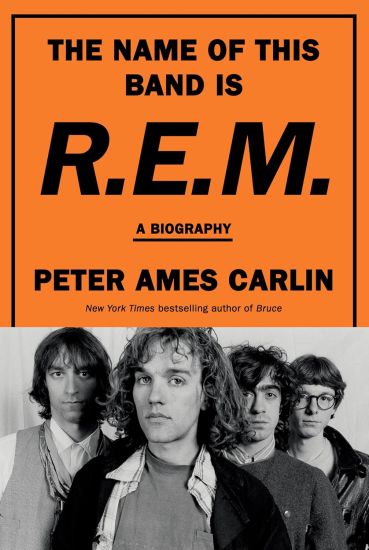
The Name of This Band Is R.E.M.: A Biography
Peter Ames Carlin
Thorndike Press Large Print
2025
sidottu
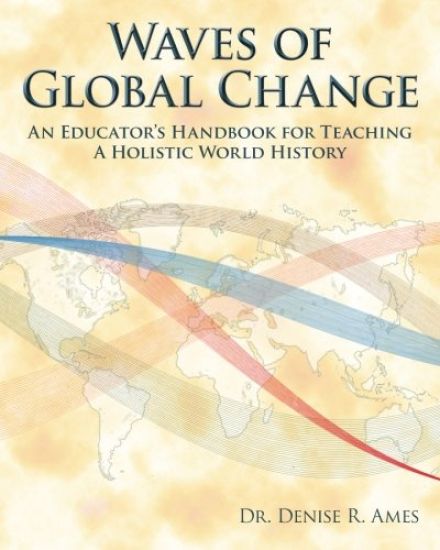
Waves of Global Change: An Educator's Handbook for Teaching a Holistic World History
Denise R. Ames
Global Awareness Publishing
2013
nidottu
Veteran educator Dr. Denise R. Ames has written this handbook especially for educators, K through University, and pre-service teachers in order to differentiate how this holistic world history is taught compared to a traditional world history. The book lays out the principles of the holistic world history model for educators to use directly in the classroom. The purpose of this handbook is to help educators conceptualize and teach about world history in a more holistic way using a systems approach, a global perspective, and a close examination of historical patterns. Laying out the principles of the holistic world history model for educators to use directly in the classroom, Waves of Global Change: An Educator's Handbook explores how all the facets of world history can be successfully pulled together into a thought-provoking and challenging course. This book is for educators and education students. Each chapter includes "Questions to Consider," spurring critical thinking and encouraging readers to "see" the information from perspectives beyond their own. Pictures, activities, suggestions, images, diagrams, graphs, and free on-line resources all heighten understanding. Table of Contents Chapter 1. An Introduction to a Holistic Teaching Model for Educators Chapter 2. Systems Thinking: An Approach to Understanding a Holistic World History Chapter 3. Worldviews: The Way We Look at the World Chapter 4. Waves of Global Change: A Holistic World History Model Chapter 5. 20 Advantages of a Holistic World History Model Chapter 6. Circle of Learning Chapter 7. World History Teaching Tools and Strategies Chapter 8. Strengths and Weaknesses of the Holistic World History Model 1. An Introduction to a Holistic Teaching Model for Educators - After an introductory story about an imaginary woman who lives through the five waves of global change, this chapter introduces the holistic approach used in this world history. Key questions to consider in developing your world history course are posed. 2. Systems Thinking: An Approach to Understanding a Holistic World History - This chapter describes system thinking and makes suggestions on how it can be applied to a holistic world history course. Comparisons between a holistic world history and traditional world history are given and analyzed. 3. Worldviews: The Way We Look at the World - After giving a definition of worldview, the five worldviews-indigenous, modern, fundamentalist, globalized, and transformative-are explained with ideas for integrating this information into your world history course. 4. Waves of Global Change: A Holistic World History Model - This chapter gives an overview of the five waves-communal, agricultural, urban, modern, and global. Also, introduced are the five flows that flow through the universe, our solar system, life on earth, human evolution, and life today. The five comparative currents and twenty-five sub-currents are explained. 5. 20 Advantages of a Holistic World History Model - The 20 advantages of a holistic world history course are listed and explained, with examples given as well. 6. Circle of Learning - A circle of learning illustrates a way in which world history can be taught that utilizes six different skills: remember, understand, apply, analyze, evaluate, and create. Examples of the skills and prompts to use in the classroom are included. 7. World History Teaching Tools and Strategies - This chapter highlights fourteen suggestions and concrete examples for helping to make this holistic world history come to life for students. 8. Strengths and Weaknesses of the Holistic World History Model - This final chapter gives a wrap-up for this holistic teaching approach by considering the strengths and weaknesses of the model.

The Global Economy: Connecting the Roots of a Holistic System
Denise R. Ames
Global Awareness Publishing
2013
nidottu
The global economy is complex, confusing, and crucial to understand if we are to have a stable economic future. This book helps sort out the often overwhelming financial events that are directly affecting us all, in ways we don't always realize. Applying a holistic, "big picture" approach to the economy, educator Dr. Denise Ames explores the interconnectedness of the various facets of the global economy, including free market capitalism, economic globalization, and financialization. This book is for adult learners, educators, and students from grade nine through university. Each chapter includes "Questions to Consider," spurring critical thinking and encouraging readers to "see" the information from perspectives beyond their own. Pictures, activities, suggestions, images, diagrams, graphs, and free on-line resources all heighten understanding. Chapter 1. An Overview of the Global Economy - Definitions and an overview of the global economy comprise this chapter. A holistic, systems approach is used to describe and critique the global economy. Five contemporary worldviews-indigenous, modern, fundamentalist, globalized, and transformative-shed light on how the global economy is interpreted today. Chapter 2. Historical Roots of the Global Economy - This chapter traces the historical roots of the global economy beginning with the Western European economy around 1500. Events are explained through four historical eras: Commercial Capitalism, (1500-1750), Industrial Capitalism (1750-1914), Early Twentieth Century (1914-1945), and the Post World War II Economy (1945-the 1970s). The chapter concludes with the economic crisis of the 1970s and the shift to the political and economic right. Chapter 3. The Neoliberal Stew: A Dozen Essential Ingredients - The chapter starts with an explanation of the philosophy of neoliberalism and its displacement of managed capitalism. The dozen ingredients include free trade, privatization, deregulation, smaller government, supply side economics, lower taxes, deficit reduction, "markets know best," government support of corporations, labor, rugged individualism, and spreading neoliberalism. Chapter 4. The Impact of Neoliberalism in the United States: Ten Consequences - The ten consequences of neoliberalism and their impact in the United States: reduction of self-reliance and the local economy, unbridled economic growth, rampant consumerism, increased commodification, concentration of corporate power, rise of externalized costs, build-up of debt, emasculation of labor, widening social inequality, and the ascension of dollar democracy. Chapter 5. The Economic Globalization Puzzle: Ten Pieces - The ten pieces of the economic globalization puzzle consist of a reduction of local communities and self-reliance, economic growth, a promoting network, making the rules, free trade, privatization and commodification, concentration of corporate power, specialization, the "squeeze" of labor, and military hegemony. Chapter 6. The Impact of Economic Globalization - In this chapter, the impact of economic globalization around the world is evaluated. The direst economic impact, as explained, is on the environment, contributes to greater inequality, and depresses general well-being. Chapter 7. The Financial Sector: Ten Fatal Flaws - After an overview of the financial sector, ten of its fatal flaws are described and evaluated: large banks, deregulation, the Federal Reserve, a real estate bubble, mountains of debt, dicey financial products, speculation, moral hazard and lack of transparency, deceptive rating agencies, and bloated compensation schemes. Chapter 8. The Financial Sector: Crisis and its Aftermath - The patterns of the financial crises are analyzed and several examples are given, including the "tulip mania." The 2008 financial crisis is explained in some depth and its aftermath evaluated. What is the "new normal?"

Financial Literacy: Wall Street and How it Works
Denise R. Ames
Global Awareness Publishing
2014
nidottu
The financial sector is a mysterious part of the global economy, shrouded in ambiguity for those who aren't in it. Yet it is a behemoth that has grown to overshadow other economic sectors, such as manufacturing and agriculture, and it therefore demands our careful attention. Financial Literacy looks closely at the roots and effects of the financial sector. Many books concentrate on what is wrong with the system, but they fail to give us a firm grasp of why its turmoil started in the first place. Nor is it all that helpful to blame everything on the bankers. Author, educator Dr. Denise Ames, feels we need to dig deeper. Financial Literacy presents a clear, holistic examination of the inner workings of the financial sector, laying the groundwork for understanding the crises it has played a role in. With this clearer understanding, we will be better equipped to critique the financial sector, see its fault lines, and propose workable solutions. This book is for adult learners, educators, and students from grade nine through university. Each chapter includes "Questions to Consider," spurring critical thinking and encouraging readers to "see" the information from perspectives beyond their own. Pictures, activities, suggestions, images, diagrams, graphs, and free on-line resources all heighten understanding. Chapter Summaries Chapter 1. The Financial Sector: An Overview After a short overview of the financial sector, a description of the five sectors of the economy is given. Definitions of different forms of capitalism help explain the financial sector. Addressed in the chapter is why the financial sector has become such a dominant segment of the economy. Recklessness, as a master national narrative, helps explain the philosophy surrounding the rise of the financial sector. Chapter 2. Financial Crises Patterns of financial crises are laid out in this chapter. Descriptions of different financial crises are presented beginning with "Tulip Mania" in the Netherlands in the 1770s, highlighting the Stock Market Crash of 1929, and discussing several post-1970s bubbles including the dot com bubble, Japan's asset price bubble in the 1980s, the East Asian bubble in the 1990s, and the bubble in Argentina in 1999-2001. Chapter 3. Ten Fatal Flaws in the Financial Sector: Part I Ten flaws, as seen by the author, are presented and analyzed in chapters three and four. Five of the ten flaws in this chapter include too big to fail banks (TBTF), unchecked deregulation, a "market knows best" Federal Reserve, a real estate bubble and out-of-control lending, and mountains of debt. Chapter 4. Ten Fatal Flaws in the Financial Sector: Part II The final five flaws are presented and analyzed in this chapter. They include dicey financial products, financial speculative mania, moral hazard and lack of transparency, deceptive rating agencies, and bloated compensation schemes. Chapter 5. The Financial Crisis of 2007-2008 The financial crisis is explained in some depth, beginning with the fall of the Lehman Brothers Investments in the fall of 2008. The events and actions taken to alleviate a complete economic meltdown are narrated and analyzed. Chapter 6. The Aftermath of the 2008 Financial Crisis This chapter explains the "New Normal" that came about after 2008, including the 5 Rs--revolt, restore, react, reform, and rebuild. Each of the 5 Rs is explained using examples, and special emphasis is placed on the fifth R, rebuild. The components of the rebuild agenda include emphasizing a small and local economy, challenging the consumer growth model, renewing public ownership, healing our planet, and changing our values.

Connecting the Roots of the Global Economy: A Holistic Approach, Brief Edition
Denise R. Ames
Global Awareness Publishing
2015
nidottu
Gain a clearer understanding of the global economy with this compact volume exploring its many complex issues. This brief edition of The Global Economy, Dr. Denise R. Ames, lays out the key aspects of the global economy with clarity. Starting with an overview and then delving into the historical roots of the global economy, Connecting the Roots then looks at topics such as neoliberalism, globalization, the financial sector, and the crises that have arisen from the financial sector. Ever-relevant subjects include income inequality, class, wages, and the stability of the banking system. This book is for adult learners, educators, and students from grade nine through university. Each chapter includes "Questions to Consider," spurring critical thinking and encouraging readers to "see" the information from perspectives beyond their own. Pictures, activities, images, diagrams, graphs, and free on-line resources are included. Chapter 1. An Overview of the Global Economy - Definitions and an overview of the global economy comprise this chapter. A holistic, systems approach is used to describe and critique the global economy. Chapter 2. Historical Roots of the Global Economy - This chapter traces the historical roots of the global economy beginning with the Western European economy around 1500. Events are explained through four historical eras: Commercial Capitalism, (1500-1750), Industrial Capitalism (1750-1914), Early Twentieth Century (1914-1945), and the Post World War II Economy (1945-the 1970s). The chapter concludes with the economic crisis of the 1970s and the shift to the political and economic right. Chapter 3. The Neoliberal Stew: A Dozen Essential Ingredients - The chapter starts with an explanation of the philosophy of neoliberalism and its displacement of managed capitalism. The dozen ingredients include free trade, privatization, deregulation, smaller government, supply side economics, lower taxes, deficit reduction, "markets know best," government support of corporations, labor, rugged individualism, and spreading neoliberalism. Chapter 4. The Impact of Neoliberalism in the United States: Ten Consequences - The ten consequences of neoliberalism and their impact in the United States: reduction of self-reliance and the local economy, unbridled economic growth, rampant consumerism, increased commodification, concentration of corporate power, rise of externalized costs, build-up of debt, emasculation of labor, widening social inequality, and the ascension of dollar democracy. Chapter 5. The Economic Globalization Puzzle: Ten Pieces - The ten pieces of the economic globalization puzzle consist of a reduction of local communities and self-reliance, economic growth, a promoting network, making the rules, free trade, privatization and commodification, concentration of corporate power, specialization, the "squeeze" of labor, and military hegemony. Chapter 6. The Impact of Economic Globalization - In this chapter, the impact of economic globalization around the world is evaluated. The direst economic impact, as explained, is on the environment, contributes to greater inequality, and depresses general well-being. Chapter 7. The Financial Sector: Ten Fatal Flaws - After an overview of the financial sector, ten of its fatal flaws are described and evaluated: large banks, deregulation, the Federal Reserve, a real estate bubble, mountains of debt, dicey financial products, speculation, moral hazard and lack of transparency, deceptive rating agencies, and bloated compensation schemes. Chapter 8. The Financial Sector: Crisis and its Aftermath - The patterns of the financial crises are analyzed and several examples are given, including the "tulip mania." The 2008 financial crisis is explained in some depth and its aftermath evaluated. What is the "new normal?"
Waves of Global Change: A Holistic World History - Second Edition
Denise R. Ames
Center for Global Awareness
2015
nidottu
Waves of Global Change: A Holistic World History applies a "big picture" holistic approach to world history, from the big bang to the present. The overarching development of humans through time and space organizes this world history into five major transformations or critical turning points called waves-communal, agricultural, urban, modern, and global. Each wave is holistic, with distinctive cultural patterns-currents-that interact and reinforce each other. By illuminating our long human history, Waves of Global Change helps us to see how we have arrived at the present day, which can help us learn valuable lessons from history. Among the topics featured in Waves of Global Change are human commonalities, such as our relationship with nature and the social, political, cultural, and techno-economic currents that have run through each era in human history. Author Dr. Denise Ames, educator and president of the nonprofit Center for Global Awareness, explores each wave's advent, characteristics, and transitions. The book is filled with concrete examples that allow readers to vividly picture historical life. Waves of Global Change ends with reflections on the current global wave, allowing us to contemplate where we are headed next. This book is for educators, students from grade nine through university, and adult learners. Each chapter includes "Questions to Consider" and "Insights," spurring critical thinking and encouraging readers to "see" the information from perspectives beyond their own. Pictures, activities, suggestions, images, diagrams, graphs, and free on-line resources all heighten understanding. Table of ContentsChapter 1. A Holistic World History Approach: An IntroductionChapter 2. The Universe to Human Emergence: A Story of BecomingChapter 3. Our Collective Human Story: Human CommonalitiesChapter 4. People as Nomadic Foragers: The Communal WaveChapter 5. People as Village Farmers: The Agricultural WaveChapter 6. People Create Civilizations: The Urban WaveChapter 7. People Multiply and Dominate the Globe: The Modern WaveChapter 8. People Creating a Future: The Global Wave
Do you sometimes wonder if human beings will ever learn to get along? Worldviews are one of the lenses that help shape our perception of reality. In this thought-provoking book, Dr. Denise Ames, educator and president of the nonprofit Center for Global Awareness, explores five worldviews: indigenous, modern, fundamentalist, globalized, and transformative. Each has its own characteristics and representation, and studying each helps us to understand not just ourselves, but those around us-and around the globe. We need to gain skills to navigate a more diverse world, which includes understanding those who live in different zip codes and have different ways of life. As we learn about these five worldviews, we can improve communication and relations with people who are similar to and different from us, uncovering shared values and bridging cultural and social divides. This book is for adult learners, educators, and students from grade nine through university. Each chapter includes "Questions to Consider," spurring critical thinking and encouraging readers to "see" the information from perspectives beyond their own. Pictures, images, diagrams, graphs, and free on-line resources all heighten understanding. Table of ContentsChapter 1. Introduction to Five Worldviews: The Way We See the WorldChapter 2. The Indigenous WorldviewChapter 3. The Modern WorldviewChapter 4. The Fundamentalist WorldviewChapter 5. The Globalized WorldviewChapter 6. The Transformative WorldviewAfterword: The Populist Worldview Chapter Summaries: Chapter 1. Introduction to Five Worldviews: The Way We See the WorldIn this chapter, the term worldview is defined and an overview and comparison of the five worldviews are given. In the concluding pages, worldviews as a tool for understanding other perspectives is explained. Chapter 2. The Indigenous WorldviewA definition and characteristics of the term indigenous is highlighted in this chapter. The clash between the modern and indigenous worldviews further explains the distinguishing features of the indigenous worldview. The story of an indigenous woman, Nobel Peace Prize recipient Roberta Menchu, further highlights the tale of indigenous people. Chapter 3. The Modern WorldviewThe modern worldview, a distinct change from the indigenous worldview, is explained in four different sections-thought, economy, political, the environment, and society. The chapter concludes with a brief explanation of post-modernism. Chapter 4. The Fundamentalist WorldviewFundamentalism is introduced and defined in this chapter. Since most readers have been influenced by Christianity, Christian fundamentalism is explained in more depth than other types. A briefer explanation of Jewish and Islamic fundamentalism rounds out the chapter. Chapter 5. The Globalized WorldviewExplained in this chapter, a globalized worldview emphasizes the global economy and the importance of accruing wealth. One of the main drivers of wealth creation is the expansion and growth of technology. The influence of the global economy on politics, society, and culture are highlighted. Chapter 6. The Transformative WorldviewThis chapter proposes the formation of a different worldview, the transformative worldview, which takes from and rejects aspects of the other four worldviews. The worldview is further explained in sections on cultural, political, social, economic, technological, and environmental patterns. In the concluding insights, the author looks at what is at stake in the future. Afterword: The Populist WorldviewThe afterword briefly looks at the emergence and ramifications of populism in the United States and Europe.
Divided: Five Colliding Worldviews and How to Navigate Them
Denise R. Ames
Center for Global Awareness
2020
nidottu
Divided addresses the question on the lips of every American: why can't we get along? The cultural divide is threatening our democracy and destabilizing our country. Divided looks at the deep cultural divide through the lens of five colliding worldviews-indigenous, traditional, progressive, globalized, and transformative. This approach helps us make sense of our deep divisions and suggests ways of bridging them.It is urgent that we understand and bridge the cultural divide. Bridging the divide is dependent upon first understanding it. Gaining an understanding of the five worldviews enhances our success of arriving at sensible solutions and increasing civil conversations. If not, rancor and intractability ensue.
Five Worldviews: Different Ways We See the World
Denise R. Ames
Center for Global Awareness
2021
nidottu
Do you sometimes wonder if we will ever get along? Five Worldviews helps us understand why we see the world so differently? Looking at issues through the lens of five worldviews-indigenous, traditional, progressive, globalized, and transformative-helps us arrive at a place of understanding our own and other people's perspectives without trying to change them. If you are intent on learning about the five worldviews and helping to bridge them, this book is for you. We all have a voice and a critical stake in the outcome. Dr. Ames has developed a five worldviews model that reflects different ways of life found in the United States and throughout the world. To further explain the five worldviews-indigenous, traditional, progressive, globalized, and transformative-she has integrated Jonathan Haidt's model of six moral foundations-care/harm, fairness/cheating, loyalty/betrayal, authority/subversion, sanctity/degradation, and liberty/oppression-to clarify how diverse people holding a particular worldview see moral issues differently. Personal experiences, education, geographic location, personality type, and other factors influence how a person acts in and sees the world. Only looking at issues from a single lens, or just one worldview, only shines light on part of the problem. Instead, we need to look through multiple worldviews or lenses when contemplating our local, national, and global difficulties. Today, many of our social and political divides have polarized us to the point of blinding our understanding of others. We retreat into our own bubble of comfort and isolation. Developing awareness of our own and other people's perspectives without necessarily trying to change them can help us arrive at a place of non-judgmental understanding in which we may be able to civilly talk about our differences and improve relations with people who are similar to and different from us. Through this understanding process we can uncover our shared commonalities, as well as contribute to bridging and healing deep divides.

The Battle for North Carolina's Coast
Stanley R. Riggs; Dorothea von der Porten Ames; Stephen J. Culver; David J. Mallinson
The University of North Carolina Press
2020
nidottu
The North Carolina barrier islands, a 325-mile-long string of narrow sand islands that forms the coast of North Carolina, are one of the most beloved areas to live and visit in the United States. However, extensive barrier island segments and their associated wetlands are in jeopardy. In The Battle for North Carolina's Coast, four experts on coastal dynamics examine issues that threaten this national treasure.According to the authors, the North Carolina barrier islands are not permanent. Rather, they are highly mobile piles of sand that are impacted by sea-level rise and major storms and hurricanes. Our present development and management policies for these changing islands are in direct conflict with their natural dynamics. Revealing the urgency of the environmental and economic problems facing coastal North Carolina, this essential book offers a hopeful vision for the coast's future if we are willing to adapt to the barriers' ongoing and natural processes. This will require a radical change in our thinking about development and new approaches to the way we visit and use the coast. Ultimately, we cannot afford to lose these unique and valuable islands of opportunity. This book is an urgent call to protect our coastal resources and preserve our coastal economy.

Circus Parade: Stories of the Big Top
Phyllis R. Fenner; Lee Ames
Literary Licensing, LLC
2013
nidottu

Dress Rehearsal for Murder!: A Play in Two Acts
G. Richard Ames; Eric R. Hill
Independently Published
2019
nidottu
A bad dress rehearsal means a good opening night, right? When the QuarryWorks Theater Company tries to stage a revival of their first original flop, a farcical drama called MURDER , everything that could go wrong does go wrong. Unfortunately, the final dress rehearsal for MURDER is just the beginning...

This beautifully designed monogram initial letter notebook is great for writing down your thoughts, to-do lists, ideas, poems, plans, and goals. Lined notebooks can be used for various purposes such as a journal, planner, diary, and organizer. A compact 6"x 9" notebook which is spacious enough for your writing needs yet portable. Features: White paper Glossy monogram initial letter cover Joyful Creations offer a wide range of journals and notebooks that are suitable for back to school, home or office. Our journals make excellent gifts for birthdays, celebrations, Mother's Day, Father's Day, Valentine's Day, anniversaries, weddings, Secret Santa, bridal showers, Christmas and much more.

College rule (also known as medium ruled paper) is the most common lined paper in use in the United States. It is generally used in middle school through to college and is also popular with adults. This is a good choice for teen or adult notebooks and composition books (known as exercise books outside the US).