
Kirjahaku
Etsi kirjoja tekijän nimen, kirjan nimen tai ISBN:n perusteella.
1000 tulosta hakusanalla R. D. Beeston
First published in 1998. Routledge is an imprint of Taylor & Francis, an informa company.
Reason and Violence: Selected Works R D Laing Vol 3
R. D. Laing; D. G. Cooper
Routledge
1998
sidottu
First published in 1998. Routledge is an imprint of Taylor & Francis, an informa company.
Interpersonal Perception: Selected Works of R D Laing Vol 6
R. D. Laing; H. Phillipson; A. R. Lee
Routledge
1998
sidottu
First published in 1998. Routledge is an imprint of Taylor & Francis, an informa company.
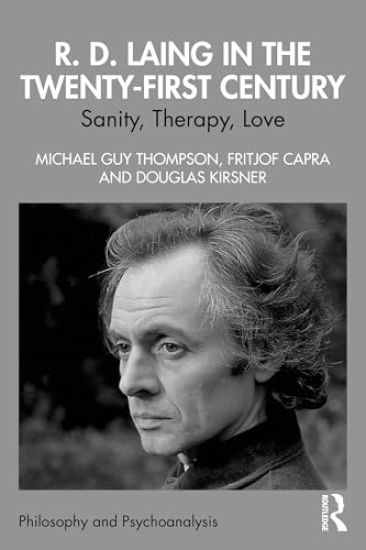
R. D. Laing in the Twenty-First Century
M. Guy Thompson; Fritjof Capra; Douglas Kirsner
TAYLOR FRANCIS LTD
2025
nidottu
In this remarkable review of the seminal contribution of the Scottish psychiatrist and psychoanalyst, R. D. Laing, the three authors, each intimately acquainted with the subject matter, explore Laing’s intellectual and clinical legacy.Written from the perspective of a psychoanalyst, a scientist, and a philosopher, this unique book thoroughly addresses the three principal themes that defined Laing’s work: his views about sanity and madness, the use of therapy with those suffering from psychotic disturbance, and the vicissitudes of love relationships. They also explore authenticity, altered states, and healing. The authors bring a broad range of viewpoints in assessing Laing’s seminal contribution to contemporary thought, from both a scholarly and personal assessment rooted in each of their diverse relationships with him, both professional and personal.This volume will be of interest to those in the worlds of psychoanalysis, philosophy, science, and anyone with an interest in the work of R. D. Laing.
R. D. Laing in the Twenty-First Century
M. Guy Thompson; Fritjof Capra; Douglas Kirsner
TAYLOR FRANCIS LTD
2025
sidottu
In this remarkable review of the seminal contribution of the Scottish psychiatrist and psychoanalyst, R. D. Laing, the three authors, each intimately acquainted with the subject matter, explore Laing’s intellectual and clinical legacy.Written from the perspective of a psychoanalyst, a scientist, and a philosopher, this unique book thoroughly addresses the three principal themes that defined Laing’s work: his views about sanity and madness, the use of therapy with those suffering from psychotic disturbance, and the vicissitudes of love relationships. They also explore authenticity, altered states, and healing. The authors bring a broad range of viewpoints in assessing Laing’s seminal contribution to contemporary thought, from both a scholarly and personal assessment rooted in each of their diverse relationships with him, both professional and personal.This volume will be of interest to those in the worlds of psychoanalysis, philosophy, science, and anyone with an interest in the work of R. D. Laing.
Lorna Doone: A Romance of Exmoor. NOVEL By: R. D. Blackmore (Original Version)
R. D. Blackmore
Createspace Independent Publishing Platform
2016
nidottu
Lorna Doone: a romance of Exmoor. By: R. D. Blackmore (complete in two volume), (illustrated): It is a romance based on a group of
R. D. Blackmore
Createspace Independent Publishing Platform
2017
nidottu

The maid of Sker. New ed., with a frontispiece. By: R. D. Blackmore: Blackmore considered The Maid of Sker to be his best novel.The Maid of Sker is se
R. D. Blackmore
Createspace Independent Publishing Platform
2017
nidottu
Blackmore considered The Maid of Sker to be his best novel. Plot: The Maid of Sker is set at the end of the 18th century, and the story is told by Davy Llewellyn, an old fisherman. The story concerns a two-year-old girl who drifts in a boat onto a beach in Glamorganshire in the calm before a storm. The little girl calls herself Bardie. Llewellyn is tempted to keep the girl, but decides to give her up and keeps the boat for himself. He quarters the pretty child in a simple, but well-to-do, household in his neighbourhood. As she grows up he dotes upon her so far as he can. He watches anxiously over her fortunes, partly or principally because he thinks his own may be bound up with them. It is clear from the refinement of the girl's manners, and from the fineness of her clothes she was washed ashore in, that she is no common child. Davy joins the crew of a ketch trading between Barnstaple and Porthcawl. Whilst in Devon, he encounters several characters who hold the key to solving the mystery of the maid of Sker. These include Sir Philip Bampfylde who spends most of his time looking for his two grandchildren who have mysteriously disappeared; Parson Chowne, a parson of demoniac wickedness and craft who works his will for many years in the north of Devon, defying God, man, and the law; and Captain Drake Bamfylde who is under suspicion of having made away with the children of his elder brother, and heirs to the family property. Old Davy gradually unravels the mystery and sets matters right, although many distractions delay him including an extended period at sea in which Blackmore gives a graphic account of the Battle of the Nile............. Richard Doddridge Blackmore (7 June 1825 - 20 January 1900), known as R. D. Blackmore, was one of the most famous English novelists of the second half of the nineteenth century. He won acclaim for vivid descriptions and personification of the countryside, sharing with Thomas Hardy a Western England background and a strong sense of regional setting in his works. Blackmore, often referred to as the "Last Victorian", was a pioneer of the movement in fiction that continued with Robert Louis Stevenson and others. He has been described as "proud, shy, reticent, strong-willed, sweet-tempered, and self-centred." Apart from his novel Lorna Doone, which has enjoyed continuing popularity, his work has gone out of print. Biography: Richard Doddridge Blackmore was born on 7 June 1825 at Longworth in Berkshire (now Oxfordshire), one year after his elder brother Henry (1824-1875), where his father, John Blackmore, was Curate-in-charge of the parish. His mother died a few months after his birth - the victim of an outbreak of typhus which had occurred in the village. After this loss John Blackmore moved to Bushey, Herts, then to his native Devon, first to Kings Nympton, then Culmstock, Tor Mohun and later to Ashford, in the same county. 2] Richard, however, was taken by his aunt, Mary Frances Knight, and after her marriage to the Rev. Richard Gordon, moved with her to Elsfield rectory, near Oxford. His father married again in 1831, whereupon Richard returned to live with him. Having spent much of his childhood in the lush and pastoral "Doone Country" of Exmoor, and along the Badgworthy Water (where there is now a memorial stone in Blackmore's honour), Blackmore came to love the very countryside he immortalised in Lorna Doone...........
Erema; or, my father's sin (1877). By: R. D. Blackmore (Complete in one volume): The novel is narrated by a teenage girl called Erema whose father esc
R. D. Blackmore
Createspace Independent Publishing Platform
2017
nidottu
Erema; or, my father's sin is a three-volume novel by R. D. Blackmore published in 1877. The novel is narrated by a teenage girl called Erema whose father escaped from England having been charged with a murder he did not commit. Erema has grown up in exile with her father, and the story begins in California in the 1850s. Plot The novel is narrated by the heroine of the story. Erema is the child of a Captain Castlewood, who had been imprisoned on a charge of murdering his father, an English peer, had made his escape from jail while the enquiry was pending, and spent the rest of his life in a miserable exile. His six children had died of diphtheria while he was in prison, and his wife had quickly followed them, leaving only Erema, a newborn infant, to share her father's exile and disgrace. Hand-in-hand these two have wandered together over the earth, till Erema has become a girl of fifteen, and fate brings the luckless pair to California. Here, in a wild parched region of desert, the father dies, and Erema is left solitary. But at this point of her story she is rescued and taken in hand by an old countryman of her father's, Sampson Gundry, who with his grandson, young Ephraim, works a sawmill in the district. He owns a stretch of country along the banks of the swift Blue River. He made a fortune, not by gold-digging, though the very soil he trod on sparkled with nuggets, but by cutting wood. He takes in the orphan child and rears her as his own. 4] In time Erema picks up the story of her father's life-the accusation of murder that had driven him abroad, but which had never been either proved or contradicted. At last she is determined to devote as much of her own life as shall be found necessary to clearing his memory from all shame and blame. With this purpose she crosses the Atlantic, visits her birthplace, and sets to work to hunt out the mystery. By a series of chances she succeeds in discovering the real murderer, and establishes the fact that her father was not only innocent of the crime, but had acted in silence a hero's part. Moreover, by the death of the reigning Lord Castlewood, her cousin, she comes into the family title and estates. Having completed her self-imposed mission, she sets out on her way back to California and the sawmill; reaches the other side of the Atlantic in time to help in nursing the sick and wounded in the civil war; and among them finds her old friends, Sampson Gundry and his grandson, arrayed on opposite sides in the war. The young peeress concludes her romantic history by becoming the wife of the sawyer's grandson.... Richard Doddridge Blackmore (7 June 1825 - 20 January 1900), known as R. D. Blackmore, was one of the most famous English novelists of the second half of the nineteenth century. He won acclaim for vivid descriptions and personification of the countryside, sharing with Thomas Hardy a Western England background and a strong sense of regional setting in his works. Blackmore, often referred to as the "Last Victorian", was a pioneer of the movement in fiction that continued with Robert Louis Stevenson and others. He has been described as "proud, shy, reticent, strong-willed, sweet-tempered, and self-centred." Apart from his novel Lorna Doone, which has enjoyed continuing popularity, his work has gone out of print..........
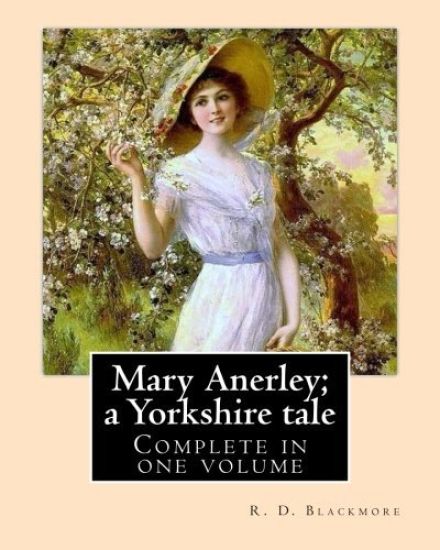
Mary Anerley; a Yorkshire tale. By: R. D. Blackmore (Complete in one volume).: Mary Anerley: a Yorkshire tale is a three-volume novel by R. D. Blackmo
R. D. Blackmore
Createspace Independent Publishing Platform
2017
nidottu
Mary Anerley: a Yorkshire tale is a three-volume novel by R. D. Blackmore published in 1880. The novel is set in the rugged landscape of Yorkshire's North Riding and the sea-coast of its East Riding. Plot introduction The story of Mary Anerley opens in the year 1801, at Scargate Hall, "in the wildest and most rugged part of the wild and rough North Riding"; the first chapter being practically a prologue, which sets forth the strangely dramatic death of Squire Philip Yordas just after he had made a will disinheriting his son Duncan. Thus Scargate Hall, when first described to the reader, is the property two sisters, Philippa Yordas and Eliza Carnaby. Mr. Jellicorse, the family lawyer, comes by chance upon evidence of a fatal flaw in the sisters' title to the estate, and rides over to make them acquainted with this unpleasant fact. In the sixth chapter of the book we are introduced to Anerley Farm, a place about a hundred and twenty miles from Scargate Hall, and the home of Mary Anerley.As Mary rides down the hollow of the Dyke on the same morning on which Mr. Jellicorse leaves Scargate Hall, she falls in with a man who is running for his life from other men who are pursuing him and shooting at him.Acting on the impulse of a moment, she shows him a place where he can hide. This man is Robin Lyth, who as a child was found washed ashore in a little cove north of Flamborough Head, and raised by foster parents. He is on the run from Captain Carroway, a coastguard officer. Love blossoms between Mary and Robin Lyth, but many obstacles interfere with true love's course...... Richard Doddridge Blackmore (7 June 1825 - 20 January 1900), known as R. D. Blackmore, was one of the most famous English novelists of the second half of the nineteenth century. He won acclaim for vivid descriptions and personification of the countryside, sharing with Thomas Hardy a Western England background and a strong sense of regional setting in his works. Blackmore, often referred to as the "Last Victorian", was a pioneer of the movement in fiction that continued with Robert Louis Stevenson and others. He has been described as "proud, shy, reticent, strong-willed, sweet-tempered, and self-centred." Apart from his novel Lorna Doone, which has enjoyed continuing popularity, his work has gone out of print. Biography: Richard Doddridge Blackmore was born on 7 June 1825 at Longworth in Berkshire (now Oxfordshire), one year after his elder brother Henry (1824-1875), where his father, John Blackmore, was Curate-in-charge of the parish. His mother died a few months after his birth - the victim of an outbreak of typhus which had occurred in the village. After this loss John Blackmore moved to Bushey, Herts, then to his native Devon, first to Kings Nympton, then Culmstock, Tor Mohun and later to Ashford, in the same county. 2] Richard, however, was taken by his aunt, Mary Frances Knight, and after her marriage to the Rev. Richard Gordon, moved with her to Elsfield rectory, near Oxford. His father married again in 1831, whereupon Richard returned to live with him. Having spent much of his childhood in the lush and pastoral "Doone Country" of Exmoor, and along the Badgworthy Water (where there is now a memorial stone in Blackmore's honour), Blackmore came to love the very countryside he immortalised in Lorna Doone. ......
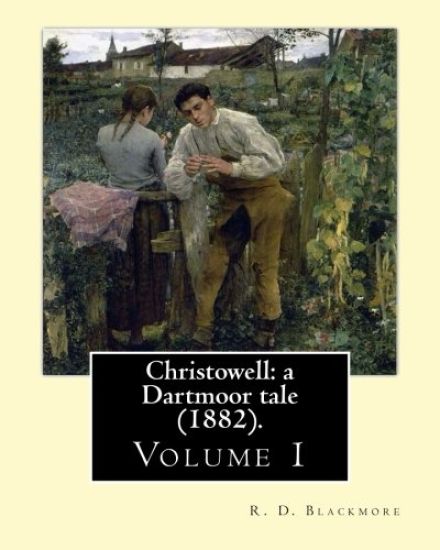
Christowell: a Dartmoor tale (1882). By: R. D. Blackmore (Volume 1). In three volume: Christowell: a Dartmoor tale is a three-volum
R. D. Blackmore
Createspace Independent Publishing Platform
2017
nidottu
Christowell: a Dartmoor tale is a three-volume novel by R. D. Blackmore published in 1882. It is set in the fictional village of Christowell on the eastern edge of Dartmoor. Plot introduction The complex and picturesque life which goes on in the parish of Christowell is the theme of the novel.The story begins with the garden where resides "Captain Larks," alias Mr. Arthur, who is neither Mr. Arthur nor "Captain Larks," but a mysterious soldier who renounced his own good name to save one who was his brother and fellow officer from disgrace. Misfortune has driven him into retirement, and so he lives among his flowers and fruit. Nobody knows anything about him, save the clergyman, Parson Short.Mr. Arthur has a daughter, Rose, who, after visiting him as a child during her holidays for several years, at last comes to live with him at his cottage. It is when she appears, however, that her father's troubles may be said to begin; for she falls in love with Jack Westcombe the son of a retired officer, whom Rose's father declines to see, conscious of the cloud that rests on himself. Among other characters there are Pugsley the carrier, Sir Joseph Touchwood, who has made a fortune out of shoes supplied by contract to Lord Wellington's army, Julia Touchwood, and a Richard ("Dicky") Touchwood who achieves small honors at Cambridge, but greater ones at home as a rat-catcher. The villain of the plot is a Mr. Gaston who attempts every crime from murder to bribery to compass his ends, and succeeds in hoodwinking every one for some time and keeping Mr. Arthur out of his lawful inheritance................ Richard Doddridge Blackmore (7 June 1825 - 20 January 1900), known as R. D. Blackmore, was one of the most famous English novelists of the second half of the nineteenth century. He won acclaim for vivid descriptions and personification of the countryside, sharing with Thomas Hardy a Western England background and a strong sense of regional setting in his works. Blackmore, often referred to as the "Last Victorian", was a pioneer of the movement in fiction that continued with Robert Louis Stevenson and others. He has been described as "proud, shy, reticent, strong-willed, sweet-tempered, and self-centred." Apart from his novel Lorna Doone, which has enjoyed continuing popularity, his work has gone out of print. Biography: Richard Doddridge Blackmore was born on 7 June 1825 at Longworth in Berkshire (now Oxfordshire), one year after his elder brother Henry (1824-1875), where his father, John Blackmore, was Curate-in-charge of the parish. His mother died a few months after his birth - the victim of an outbreak of typhus which had occurred in the village. After this loss John Blackmore moved to Bushey, Herts, then to his native Devon, first to Kings Nympton, then Culmstock, Tor Mohun and later to Ashford, in the same county. 2] Richard, however, was taken by his aunt, Mary Frances Knight, and after her marriage to the Rev. Richard Gordon, moved with her to Elsfield rectory, near Oxford. His father married again in 1831, whereupon Richard returned to live with him. Having spent much of his childhood in the lush and pastoral "Doone Country" of Exmoor, and along the Badgworthy Water (where there is now a memorial stone in Blackmore's honour), Blackmore came to love the very countryside he immortalised in Lorna Doone. .......
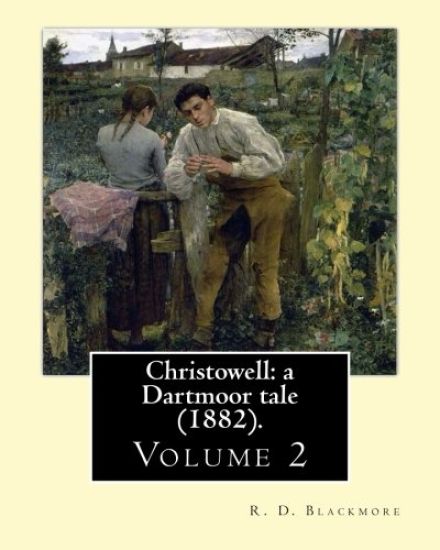
Christowell: a Dartmoor tale (1882). By: R. D. Blackmore (Volume 2).In three volume: Christowell: a Dartmoor tale is a three-volume
R. D. Blackmore
Createspace Independent Publishing Platform
2017
nidottu
Christowell: a Dartmoor tale is a three-volume novel by R. D. Blackmore published in 1882. It is set in the fictional village of Christowell on the eastern edge of Dartmoor. Plot introduction The complex and picturesque life which goes on in the parish of Christowell is the theme of the novel.The story begins with the garden where resides "Captain Larks," alias Mr. Arthur, who is neither Mr. Arthur nor "Captain Larks," but a mysterious soldier who renounced his own good name to save one who was his brother and fellow officer from disgrace. Misfortune has driven him into retirement, and so he lives among his flowers and fruit. Nobody knows anything about him, save the clergyman, Parson Short.Mr. Arthur has a daughter, Rose, who, after visiting him as a child during her holidays for several years, at last comes to live with him at his cottage. It is when she appears, however, that her father's troubles may be said to begin; for she falls in love with Jack Westcombe the son of a retired officer, whom Rose's father declines to see, conscious of the cloud that rests on himself. Among other characters there are Pugsley the carrier, Sir Joseph Touchwood, who has made a fortune out of shoes supplied by contract to Lord Wellington's army, Julia Touchwood, and a Richard ("Dicky") Touchwood who achieves small honors at Cambridge, but greater ones at home as a rat-catcher. The villain of the plot is a Mr. Gaston who attempts every crime from murder to bribery to compass his ends, and succeeds in hoodwinking every one for some time and keeping Mr. Arthur out of his lawful inheritance........ Richard Doddridge Blackmore (7 June 1825 - 20 January 1900), known as R. D. Blackmore, was one of the most famous English novelists of the second half of the nineteenth century. He won acclaim for vivid descriptions and personification of the countryside, sharing with Thomas Hardy a Western England background and a strong sense of regional setting in his works. Blackmore, often referred to as the "Last Victorian", was a pioneer of the movement in fiction that continued with Robert Louis Stevenson and others. He has been described as "proud, shy, reticent, strong-willed, sweet-tempered, and self-centred." Apart from his novel Lorna Doone, which has enjoyed continuing popularity, his work has gone out of print. Biography: Richard Doddridge Blackmore was born on 7 June 1825 at Longworth in Berkshire (now Oxfordshire), one year after his elder brother Henry (1824-1875), where his father, John Blackmore, was Curate-in-charge of the parish. His mother died a few months after his birth - the victim of an outbreak of typhus which had occurred in the village. After this loss John Blackmore moved to Bushey, Herts, then to his native Devon, first to Kings Nympton, then Culmstock, Tor Mohun and later to Ashford, in the same county. 2] Richard, however, was taken by his aunt, Mary Frances Knight, and after her marriage to the Rev. Richard Gordon, moved with her to Elsfield rectory, near Oxford. His father married again in 1831, whereupon Richard returned to live with him. Having spent much of his childhood in the lush and pastoral "Doone Country" of Exmoor, and along the Badgworthy Water (where there is now a memorial stone in Blackmore's honour), Blackmore came to love the very countryside he immortalised in Lorna Doone...........
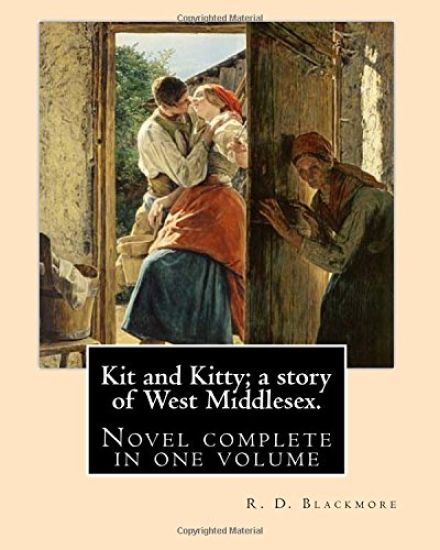
Kit and Kitty; a story of West Middlesex. By: R. D. Blackmore: Kit and Kitty: a story of west Middlesex is a three-volume novel by R. D. Blackmore pub
R. D. Blackmore
Createspace Independent Publishing Platform
2017
nidottu
Kit and Kitty: a story of west Middlesex is a three-volume novel by R. D. Blackmore published in 1890. It is set near Sunbury-on-Thames in Middlesex. Plot The novel is set in and around "Uncle Corny's" garden near Sunbury-on-Thames. The story turns on the love of Kit, the market-gardener's nephew, for Kitty, the daughter of a good but foolish scientific man, who has succeeded in making his own and his daughter's life miserable by marrying a second wife. This lady and her son Donovan are the villains of the story, and by their machinations poor Kit and Kitty are separated and made miserable. The course of true love is thwarted both before and after marriage: Kitty, for example, being stolen from her bridegroom during the honeymoon. Poetic justice is amply wreaked in the end on all ill-doers in an accumulation of horrors, including a parricide, a suicide, a leper husband returned to claim his wife, and her collapse from the shock into paralysis and imbecility........ Richard Doddridge Blackmore (7 June 1825 - 20 January 1900), known as R. D. Blackmore, was one of the most famous English novelists of the second half of the nineteenth century. He won acclaim for vivid descriptions and personification of the countryside, sharing with Thomas Hardy a Western England background and a strong sense of regional setting in his works. Blackmore, often referred to as the "Last Victorian", was a pioneer of the movement in fiction that continued with Robert Louis Stevenson and others. He has been described as "proud, shy, reticent, strong-willed, sweet-tempered, and self-centred." Apart from his novel Lorna Doone, which has enjoyed continuing popularity, his work has gone out of print. Biography: Richard Doddridge Blackmore was born on 7 June 1825 at Longworth in Berkshire (now Oxfordshire), one year after his elder brother Henry (1824-1875), where his father, John Blackmore, was Curate-in-charge of the parish. His mother died a few months after his birth - the victim of an outbreak of typhus which had occurred in the village. After this loss John Blackmore moved to Bushey, Herts, then to his native Devon, first to Kings Nympton, then Culmstock, Tor Mohun and later to Ashford, in the same county. Richard, however, was taken by his aunt, Mary Frances Knight, and after her marriage to the Rev. Richard Gordon, moved with her to Elsfield rectory, near Oxford. His father married again in 1831, whereupon Richard returned to live with him. Having spent much of his childhood in the lush and pastoral "Doone Country" of Exmoor, and along the Badgworthy Water (where there is now a memorial stone in Blackmore's honour), Blackmore came to love the very countryside he immortalised in Lorna Doone............
Kit and Kitty: a story of west Middlesex (1890). By: R. D. Blackmore (Volume 1).: Kit and Kitty: a story of west Middlesex is a three
R. D. Blackmore
Createspace Independent Publishing Platform
2017
nidottu
Kit and Kitty: a story of west Middlesex is a three-volume novel by R. D. Blackmore published in 1890. It is set near Sunbury-on-Thames in Middlesex. Plot The novel is set in and around "Uncle Corny's" garden near Sunbury-on-Thames. The story turns on the love of Kit, the market-gardener's nephew, for Kitty, the daughter of a good but foolish scientific man, who has succeeded in making his own and his daughter's life miserable by marrying a second wife. This lady and her son Donovan are the villains of the story, and by their machinations poor Kit and Kitty are separated and made miserable. The course of true love is thwarted both before and after marriage: Kitty, for example, being stolen from her bridegroom during the honeymoon. Poetic justice is amply wreaked in the end on all ill-doers in an accumulation of horrors, including a parricide, a suicide, a leper husband returned to claim his wife, and her collapse from the shock into paralysis and imbecility....... Richard Doddridge Blackmore (7 June 1825 - 20 January 1900), known as R. D. Blackmore, was one of the most famous English novelists of the second half of the nineteenth century. He won acclaim for vivid descriptions and personification of the countryside, sharing with Thomas Hardy a Western England background and a strong sense of regional setting in his works. Blackmore, often referred to as the "Last Victorian", was a pioneer of the movement in fiction that continued with Robert Louis Stevenson and others. He has been described as "proud, shy, reticent, strong-willed, sweet-tempered, and self-centred." Apart from his novel Lorna Doone, which has enjoyed continuing popularity, his work has gone out of print. Biography: Richard Doddridge Blackmore was born on 7 June 1825 at Longworth in Berkshire (now Oxfordshire), one year after his elder brother Henry (1824-1875), where his father, John Blackmore, was Curate-in-charge of the parish. His mother died a few months after his birth - the victim of an outbreak of typhus which had occurred in the village. After this loss John Blackmore moved to Bushey, Herts, then to his native Devon, first to Kings Nympton, then Culmstock, Tor Mohun and later to Ashford, in the same county. Richard, however, was taken by his aunt, Mary Frances Knight, and after her marriage to the Rev. Richard Gordon, moved with her to Elsfield rectory, near Oxford. His father married again in 1831, whereupon Richard returned to live with him. Having spent much of his childhood in the lush and pastoral "Doone Country" of Exmoor, and along the Badgworthy Water (where there is now a memorial stone in Blackmore's honour), Blackmore came to love the very countryside he immortalised in Lorna Doone................

Kit and Kitty: a story of west Middlesex (1890). By: R. D. Blackmore (Volume 2): Kit and Kitty: a story of west Middlesex is a three-
R. D. Blackmore
Createspace Independent Publishing Platform
2017
nidottu
Kit and Kitty: a story of west Middlesex is a three-volume novel by R. D. Blackmore published in 1890. It is set near Sunbury-on-Thames in Middlesex. Plot The novel is set in and around "Uncle Corny's" garden near Sunbury-on-Thames. The story turns on the love of Kit, the market-gardener's nephew, for Kitty, the daughter of a good but foolish scientific man, who has succeeded in making his own and his daughter's life miserable by marrying a second wife. This lady and her son Donovan are the villains of the story, and by their machinations poor Kit and Kitty are separated and made miserable. The course of true love is thwarted both before and after marriage: Kitty, for example, being stolen from her bridegroom during the honeymoon. Poetic justice is amply wreaked in the end on all ill-doers in an accumulation of horrors, including a parricide, a suicide, a leper husband returned to claim his wife, and her collapse from the shock into paralysis and imbecility...... Richard Doddridge Blackmore (7 June 1825 - 20 January 1900), known as R. D. Blackmore, was one of the most famous English novelists of the second half of the nineteenth century. He won acclaim for vivid descriptions and personification of the countryside, sharing with Thomas Hardy a Western England background and a strong sense of regional setting in his works. Blackmore, often referred to as the "Last Victorian", was a pioneer of the movement in fiction that continued with Robert Louis Stevenson and others. He has been described as "proud, shy, reticent, strong-willed, sweet-tempered, and self-centred." Apart from his novel Lorna Doone, which has enjoyed continuing popularity, his work has gone out of print. Biography: Richard Doddridge Blackmore was born on 7 June 1825 at Longworth in Berkshire (now Oxfordshire), one year after his elder brother Henry (1824-1875), where his father, John Blackmore, was Curate-in-charge of the parish. His mother died a few months after his birth - the victim of an outbreak of typhus which had occurred in the village. After this loss John Blackmore moved to Bushey, Herts, then to his native Devon, first to Kings Nympton, then Culmstock, Tor Mohun and later to Ashford, in the same county. Richard, however, was taken by his aunt, Mary Frances Knight, and after her marriage to the Rev. Richard Gordon, moved with her to Elsfield rectory, near Oxford. His father married again in 1831, whereupon Richard returned to live with him. Having spent much of his childhood in the lush and pastoral "Doone Country" of Exmoor, and along the Badgworthy Water (where there is now a memorial stone in Blackmore's honour), Blackmore came to love the very countryside he immortalised in Lorna Doone.............
Kit and Kitty: a story of west Middlesex (1890). By: R. D. Blackmore (Volume 3).: Kit and Kitty: a story of west Middlesex is a three
R. D. Blackmore
Createspace Independent Publishing Platform
2017
nidottu
Kit and Kitty: a story of west Middlesex is a three-volume novel by R. D. Blackmore published in 1890. It is set near Sunbury-on-Thames in Middlesex. Plot The novel is set in and around "Uncle Corny's" garden near Sunbury-on-Thames. The story turns on the love of Kit, the market-gardener's nephew, for Kitty, the daughter of a good but foolish scientific man, who has succeeded in making his own and his daughter's life miserable by marrying a second wife. This lady and her son Donovan are the villains of the story, and by their machinations poor Kit and Kitty are separated and made miserable. The course of true love is thwarted both before and after marriage: Kitty, for example, being stolen from her bridegroom during the honeymoon. Poetic justice is amply wreaked in the end on all ill-doers in an accumulation of horrors, including a parricide, a suicide, a leper husband returned to claim his wife, and her collapse from the shock into paralysis and imbecility........ Richard Doddridge Blackmore (7 June 1825 - 20 January 1900), known as R. D. Blackmore, was one of the most famous English novelists of the second half of the nineteenth century. He won acclaim for vivid descriptions and personification of the countryside, sharing with Thomas Hardy a Western England background and a strong sense of regional setting in his works. Blackmore, often referred to as the "Last Victorian", was a pioneer of the movement in fiction that continued with Robert Louis Stevenson and others. He has been described as "proud, shy, reticent, strong-willed, sweet-tempered, and self-centred." Apart from his novel Lorna Doone, which has enjoyed continuing popularity, his work has gone out of print. Biography: Richard Doddridge Blackmore was born on 7 June 1825 at Longworth in Berkshire (now Oxfordshire), one year after his elder brother Henry (1824-1875), where his father, John Blackmore, was Curate-in-charge of the parish. His mother died a few months after his birth - the victim of an outbreak of typhus which had occurred in the village. After this loss John Blackmore moved to Bushey, Herts, then to his native Devon, first to Kings Nympton, then Culmstock, Tor Mohun and later to Ashford, in the same county. Richard, however, was taken by his aunt, Mary Frances Knight, and after her marriage to the Rev. Richard Gordon, moved with her to Elsfield rectory, near Oxford. His father married again in 1831, whereupon Richard returned to live with him. Having spent much of his childhood in the lush and pastoral "Doone Country" of Exmoor, and along the Badgworthy Water (where there is now a memorial stone in Blackmore's honour), Blackmore came to love the very countryside he immortalised in Lorna Doone..............