This book looks at the socialization process and persistence to graduation from the perspectives of black students at American universities today. The students' perceptions discussed include what it meant to them to have a pre-college experience, the importance of expectations, the pain caused by racism, and how they were able to find safe spaces in what many considered a hostile environment . Black Students' Perceptions documents and addresses what it means to be a black person getting an education in a predominantly white university.
Effectively Access, Transform, Manipulate, Visualize, and Reason about Data and Computation Data Science in R: A Case Studies Approach to Computational Reasoning and Problem Solving illustrates the details involved in solving real computational problems encountered in data analysis. It reveals the dynamic and iterative process by which data analysts approach a problem and reason about different ways of implementing solutions. The book‘s collection of projects, comprehensive sample solutions, and follow-up exercises encompass practical topics pertaining to data processing, including: Non-standard, complex data formats, such as robot logs and email messages Text processing and regular expressions Newer technologies, such as Web scraping, Web services, Keyhole Markup Language (KML), and Google Earth Statistical methods, such as classification trees, k-nearest neighbors, and na Bayes Visualization and exploratory data analysis Relational databases and Structured Query Language (SQL) Simulation Algorithm implementation Large data and efficiency Suitable for self-study or as supplementary reading in a statistical computing course, the book enables instructors to incorporate interesting problems into their courses so that students gain valuable experience and data science skills. Students learn how to acquire and work with unstructured or semistructured data as well as how to narrow down and carefully frame the questions of interest about the data. Blending computational details with statistical and data analysis concepts, this book provides readers with an understanding of how professional data scientists think about daily computational tasks. It will improve readers computational reasoning of real-world data analyses.
Effectively Access, Transform, Manipulate, Visualize, and Reason about Data and ComputationData Science in R: A Case Studies Approach to Computational Reasoning and Problem Solving illustrates the details involved in solving real computational problems encountered in data analysis. It reveals the dynamic and iterative process by which data analysts approach a problem and reason about different ways of implementing solutions. The book’s collection of projects, comprehensive sample solutions, and follow-up exercises encompass practical topics pertaining to data processing, including: Non-standard, complex data formats, such as robot logs and email messagesText processing and regular expressionsNewer technologies, such as Web scraping, Web services, Keyhole Markup Language (KML), and Google EarthStatistical methods, such as classification trees, k-nearest neighbors, and naïve BayesVisualization and exploratory data analysisRelational databases and Structured Query Language (SQL)SimulationAlgorithm implementationLarge data and efficiencySuitable for self-study or as supplementary reading in a statistical computing course, the book enables instructors to incorporate interesting problems into their courses so that students gain valuable experience and data science skills. Students learn how to acquire and work with unstructured or semistructured data as well as how to narrow down and carefully frame the questions of interest about the data.Blending computational details with statistical and data analysis concepts, this book provides readers with an understanding of how professional data scientists think about daily computational tasks. It will improve readers’ computational reasoning of real-world data analyses.
Web technologies are increasingly relevant to scientists working with data, for both accessing data and creating rich dynamic and interactive displays. The XML and JSON data formats are widely used in Web services, regular Web pages and JavaScript code, and visualization formats such as SVG and KML for Google Earth and Google Maps. In addition, scientists use HTTP and other network protocols to scrape data from Web pages, access REST and SOAP Web Services, and interact with NoSQL databases and text search applications. This book provides a practical hands-on introduction to these technologies, including high-level functions the authors have developed for data scientists. It describes strategies and approaches for extracting data from HTML, XML, and JSON formats and how to programmatically access data from the Web. Along with these general skills, the authors illustrate several applications that are relevant to data scientists, such as reading and writing spreadsheet documents both locally and via Google Docs, creating interactive and dynamic visualizations, displaying spatial-temporal displays with Google Earth, and generating code from descriptions of data structures to read and write data. These topics demonstrate the rich possibilities and opportunities to do new things with these modern technologies. The book contains many examples and case-studies that readers can use directly and adapt to their own work. The authors have focused on the integration of these technologies with the R statistical computing environment. However, the ideas and skills presented here are more general, and statisticians who use other computing environments will also find them relevant to their work.Deborah Nolan is Professor of Statistics at University of California, Berkeley.Duncan Temple Lang is Associate Professor of Statistics at University of California, Davis and has been a member of both the S and R development teams.
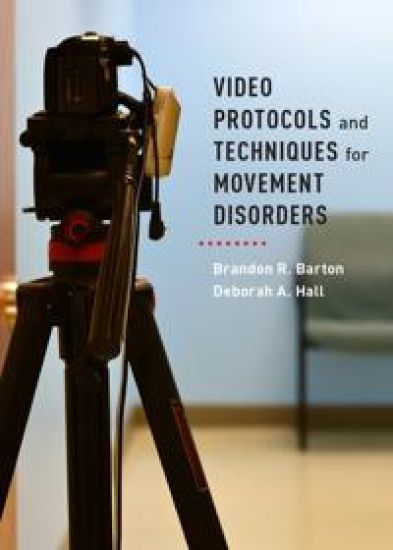
Video Protocols and Techniques for Movement Disorders presents this visually-based subspecialty through a truly unique product, illustrating how to establish a start-of-the-art videotaping workspace as well as how to instruct patients on how to participate in videotaped examination. The authors cover various technical issues-space, lighting, equipment-as well as medical protocols related to filming movement disorders, accounting for patient variability and abilities. This essential guide teaches the reader how to capture the key features of a given patient's disorder, detailing the ideal interactions between the videographer and patient. Issues of video storage and editing are addressed in practical terms. Your purchase of Video Protocols and Techniques for Movement Disorders provides you personal access to this online-only product as part of Oxford Medicine Online (www.oxfordmedicine.com http://www.oxfordmedicine.com). At the time of this printing, Oxford Medicine Online allows you to print, save, cite, email, and share content; download high-resolution figures as PowerPoint® slides; save often-used books, chapters, or searches; annotate; and quickly jump to other chapters or related material on a mobile-optimized platform. Oxford Medicine Online's applicable Privacy Policy and Legal Notice (available at www.oxfordmedicine.com) shall govern your use of the site. Technical Requirements In order to access Video Protocols and Techniques for Movement Disorders as part of the Oxford Medicine Online website, you need a standard web browser such as: Internet Explorer 9; Mozilla Firefox 9; Safari 5; Google Chrome 17 or 18. You will also need an internet connection, HTML and JavaScript support. Your operating system should be one of the following: Windows XP; Windows Vista; Windows 7; MAC OSX+. You will also need MS Office installed on your computer to be able to open images in PowerPoint files. The Oxford Medicine Online products are best viewed with a screen resolution of 1024x768, although they will also work at higher and lower resolutions. Please note that some tables are wide and so require 1024x768 screen resolution.
If Your Adolescent Has an Eating Disorder is an authoritative guide to understanding and helping a teenager with anorexia nervosa, bulimia nervosa, binge eating disorder, avoidant/restrictive food intake disorder, or other eating disorders. It is designed for parents of teens who have recently been diagnosed with an eating disorder, or who are at risk of developing one, and for other adults, such as teachers and guidance counselors, who are regularly in contact with at-risk adolescents. The book combines the latest science--including the newest treatments and most up-to-date research findings on eating disorders--with the practical wisdom of parents who have been in the trenches raising teens with eating disorders. Written in a clear and approachable style, Drs. B. Timothy Walsh and Deborah R. Glasofer explain exactly what eating disorders are and describe their characteristics, as well as signs and symptoms. They outline the right way to go about getting help if you suspect your child may have a problem, about when and where to get treatment, and about how to navigate the healthcare system. There is also advice on how to handle everyday life--both at home and at school--once your child is diagnosed, and on how to communicate with your teen and her or his siblings about issues related to the eating disorder. Complete with red flags to look out for, warnings on the dangers of doing nothing, and a comprehensive list of additional resources, this book will help parents and other adults face and deal effectively with adolescent eating disorders before they become life-threatening.
Traditional approaches to vocational rehabilitation, such as skills training classes, job clubs, and sheltered employment, have not been successful in helping people with severe mental illness gain competitive employment. Supported employment, in which clients are placed in jobs and then trained by on-site coaches, is a radically new conceptual approach to vocational rehabilitation designed for people with developmental disabilities. The Individual Placement and Support (IPS) method utilizes the supported employment concept, but modifies it for use with the severely mentally ill. It is the only approach that has a strong empirical research base: rates of competitive employment are 40% or more in IPS programs, compared to 15% in traditional mental health programs. The third volume in the Innovations in Practice and Service Delivery with Vulnerable Populations series, this will be extremely useful to students in psychiatric rehabilitation programs and social work classes dealing with the severely mentally ill, as well as to practitioners in the field.
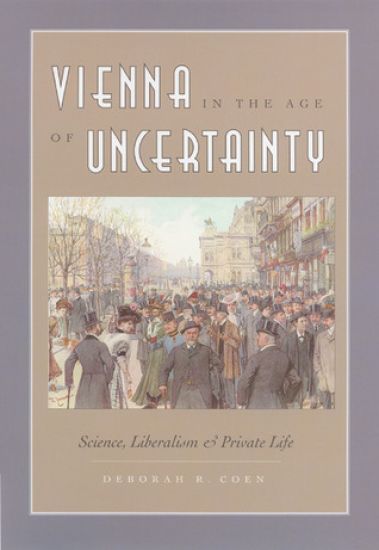
"Vienna in the Age of Uncertainty" traces the vital and varied roles of science through the story of three generations of the eminent Exner family, whose members included Nobel Prize - winning biologist Karl Frisch, the teachers of Freud and of physicist Erwin Schrodinger, artists of the Vienna Secession, and a leader of Vienna's women's movement. Training her critical eye on the Exners through the rise and fall of Austrian liberalism and into the rise of the Third Reich, Deborah R. Coen demonstrates the interdependence of the family's scientific and domestic lives, exploring the ways in which public notions of rationality, objectivity, and autonomy were formed in the private sphere. "Vienna in the Age of Uncertainty" presents the story of the Exners as a microcosm of the larger achievements and tragedies of Austrian political and scientific life in the late nineteenth and early twentieth centuries.
"Vienna in the Age of Uncertainty" traces the vital and varied roles of science through the story of three generations of the eminent Exner family, whose members included Nobel Prize - winning biologist Karl Frisch, the teachers of Freud and of physicist Erwin Schrodinger, artists of the Vienna Secession, and a leader of Vienna's women's movement. Training her critical eye on the Exners through the rise and fall of Austrian liberalism and into the rise of the Third Reich, Deborah R. Coen demonstrates the interdependence of the family's scientific and domestic lives, exploring the ways in which public notions of rationality, objectivity, and autonomy were formed in the private sphere. "Vienna in the Age of Uncertainty" presents the story of the Exners as a microcosm of the larger achievements and tragedies of Austrian political and scientific life in the late nineteenth and early twentieth centuries.