Kirjojen hintavertailu. Mukana 11 244 527 kirjaa ja 12 kauppaa.

Kirjahaku

Etsi kirjoja tekijän nimen, kirjan nimen tai ISBN:n perusteella.

1000 tulosta hakusanalla R. H. Helmholz

The ius commune in England

The ius commune in England

R. H. Helmholz

Oxford University Press Inc
2001
sidottu
Ius commune is the amalgamation of Roman and canon laws on the continent. Helmholz addresses the ius commune's relation to and influence on English law. He begins by observing that there were many overlapping areas between English institutions. Through four studies (the law of sanctuary, the law of compurgation, mortuaries and the law of custom, and civil jurisdiction and the clergy), he draws out the coincidences between English law and the ius commune and shows where they developed parallel bodies of doctrine. Helmholz aims to fill in some of the gaps in scholarship on the common legal past of Western law, the history of the Roman and canon laws, the history of the ecclesiastical courts, parallels between the ius commune and English common law, and English church history.
The Oxford History of the Laws of England Volume I

The Oxford History of the Laws of England Volume I

R. H. Helmholz

Oxford University Press
2004
sidottu
This volume traces the reception and subsequent history of the canon law in England between 597 and 1649. It covers, amongst other topics, the Anglo-Saxon laws, both secular and spiritual; the establishment of consistory courts; and the fate of the canon law during and after the English reformation. Secondly, this volume addresses the subjects under ecclesiastical jurisdiction: Civil procedure and the Law of Proof; monetary obligations and economic regulation; testamentary law and probate jurisdiction; tithes and spiritual dues; churches and the clergy; marriage and divorce; defamation; and crimes and criminal procedure. These subjects are examined using evidence from later medieval and early modern court records, and the volume seeks to place them within the context of formal canon law. The volume also places ecclesiastical jurisdiction within the context of English society and the English common law.
Roman Canon Law in Reformation England

Roman Canon Law in Reformation England

R. H. Helmholz

Cambridge University Press
1990
sidottu
In this book one of the world’s foremost legal historians draws upon the evidence of the canon law, court records and the English common-law system to demonstrate the extent to which, contrary to received wisdom, Roman canon law survived in England after the upheavals of the Protestant Reformation. R. H. Helmholz provides an extensive examination of the manuscript records of the ecclesiastical courts and professional literature of the English civilians. Rebutting the views of Maitland and others, he shows how English looked to the Continent for guidance and authority in administering the system of justice they had inherited from the Middle Ages. Intellectual links between England and the Continent are shown to have survived the Reformation and the abolition of papal jurisdiction. The extent to which papal material was still used in England during the sixteenth and seventeenth centuries will interest all readers and surprise many.
Roman Canon Law in Reformation England

Roman Canon Law in Reformation England

R. H. Helmholz

Cambridge University Press
2004
pokkari
In this book one of the world’s foremost legal historians draws upon the evidence of the canon law, court records and the English common-law system to demonstrate the extent to which, contrary to received wisdom, Roman canon law survived in England after the upheavals of the Protestant Reformation. R. H. Helmholz provides an extensive examination of the manuscript records of the ecclesiastical courts and professional literature of the English civilians. Rebutting the views of Maitland and others, he shows how English looked to the Continent for guidance and authority in administering the system of justice they had inherited from the Middle Ages. Intellectual links between England and the Continent are shown to have survived the Reformation and the abolition of papal jurisdiction. The extent to which papal material was still used in England during the sixteenth and seventeenth centuries will interest all readers and surprise many.
Natural Law in Court

Natural Law in Court

R. H. Helmholz

Harvard University Press
2015
sidottu
The theory of natural law grounds human laws in the universal truths of God’s creation. Until very recently, lawyers in the Western tradition studied natural law as part of their training, and the task of the judicial system was to put its tenets into concrete form, building an edifice of positive law on natural law’s foundations. Although much has been written about natural law in theory, surprisingly little has been said about how it has shaped legal practice. Natural Law in Court asks how lawyers and judges made and interpreted natural law arguments in England, Europe, and the United States, from the beginning of the sixteenth century to the American Civil War.R. H. Helmholz sees a remarkable consistency in how English, Continental, and early American jurisprudence understood and applied natural law in cases ranging from family law and inheritance to criminal and commercial law. Despite differences in their judicial systems, natural law was treated across the board as the source of positive law, not its rival. The idea that no person should be condemned without a day in court, or that penalties should be proportional to the crime committed, or that self-preservation confers the right to protect oneself against attacks are valuable legal rules that originate in natural law. From a historical perspective, Helmholz concludes, natural law has advanced the cause of justice.
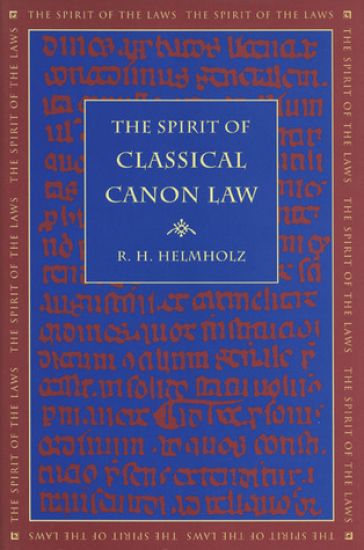
The Spirit of Classical Canon Law

The Spirit of Classical Canon Law

R. H. Helmholz

University of Georgia Press
2010
pokkari
Despite the long reach of classical canon law—across Europe, well into modern times, and into such secular subjects as theft, wills, and the sale of goods—it has been the subject of far too few general studies in English. Illuminating the basic nature of the canon, this work explores the roles of moral, social, political, and religious values in the laws' development through the seventeenth century. At the same time, R. H. Helmholz makes relevant the attitudes and formal techniques of the laws' authors, practitioners, and interpreters.Helmholz first discusses the origins of the canon law; the collection of texts, known as the Corpus iuris canonici, which form its foundation; the basic sources on which the Corpus draws, including the Bible and Roman law; and the body of juristic commentary on the Corpus. He then considers, in turn, fourteen of the major areas affected by the laws such as the governance of the Church (in particular the law of election of bishops), the sacraments (baptism), and legal sanctions (the law of excommunication).In conclusion, Helmholz points to three common themes that characterize the laws and their implementation: their close connection with the goals and ideals of the Gregorian reform movement, a concern for the spiritual health of all concerned parties, and an interest in securing justice and protection for the unfortunate. Helmholz also comments on the lawyerly skill of the men who devoted their careers to the canon law and the law's ambitious goals. He does not shrink from describing its unpalatable aspects, such as its acceptance of slavery, its restrictions on religious freedom, and its use as an instrument of the clergy's agenda.The size and complexity of the body of church law and its jurisprudence have kept historians in many fields from appreciating how this topic might enrich their studies. The Spirit of Classical Canon Law provides them with the ideal entree.
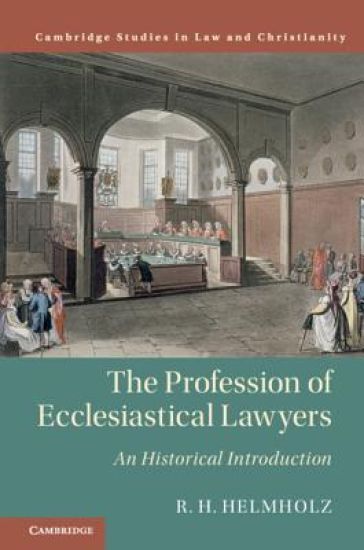
The Profession of Ecclesiastical Lawyers

The Profession of Ecclesiastical Lawyers

R. H. Helmholz

Cambridge University Press
2019
sidottu
Historians of the English legal profession have written comparatively little about the lawyers who served in the courts of the Church. This volume fills a gap; it investigates the law by which they were governed and discusses their careers in legal practice. Using sources drawn from the Roman and canon laws and also from manuscripts found in local archives, R. H. Helmholz brings together previously published work and new evidence about the professional careers of these men. His book covers the careers of many lesser known ecclesiastical lawyers, dealing with their education in law, their reaction to the coming of the Reformation, and their relationship with English common lawyers on the eve of the Civil War. Making connections with the European ius commune, this volume will be of special interest to English and Continental legal historians, as well as to students of the relationship between law and religion.
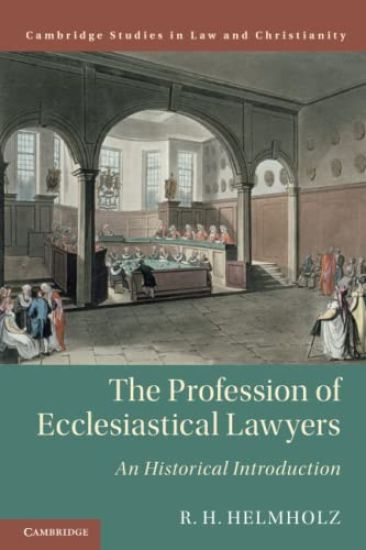
The Profession of Ecclesiastical Lawyers

The Profession of Ecclesiastical Lawyers

R. H. Helmholz

Cambridge University Press
2022
pokkari
Historians of the English legal profession have written comparatively little about the lawyers who served in the courts of the Church. This volume fills a gap; it investigates the law by which they were governed and discusses their careers in legal practice. Using sources drawn from the Roman and canon laws and also from manuscripts found in local archives, R. H. Helmholz brings together previously published work and new evidence about the professional careers of these men. His book covers the careers of many lesser known ecclesiastical lawyers, dealing with their education in law, their reaction to the coming of the Reformation, and their relationship with English common lawyers on the eve of the Civil War. Making connections with the European ius commune, this volume will be of special interest to English and Continental legal historians, as well as to students of the relationship between law and religion.
The Privilege against Self-Incrimination

The Privilege against Self-Incrimination

R. H. Helmholz; Charles M. Gray; John H. Langbein; Eben Moglen

University of Chicago Press
1997
sidottu
This is a history of the privilege in law against self-incrimination, demonstrating that what is sometimes considered an unchanging tenet of the legal system has actually encompassed many different legal consequences. The book seeks to uncover what the privilege meant in practice, and traces its history from its origins in the medieval period to its first appearance in English common law; and from its translation to the American colonies to its development into an effective protection for criminal defendants in the 19th century. The authors aim to show that the modern privilege, "the right to remain silent", is far from being a basic civil liberty. The book also questions how well an expansive notion of the privilege accords with commonly accepted principles of morality. This study seeks to provide a revision of our understanding of an important aspect of both criminal and constitutional law.
Marriage Litigation in Medieval England

Marriage Litigation in Medieval England

Helmholz R. H.

Cambridge University Press
2007
pokkari
This book tells one part of the long history of the institution of marriage. Questions concerning the formation and annulment of marriage came under the exclusive jurisdiction of the church courts during the Middle Ages. Drawing on unpublished records of these courts, Professor Helmholz describes the practical side of matrimonial jurisdiction and relates it to his outline of the formal law of marriage. He investigates the nature of the cases heard, the procedure used, the people involved and changes over the period covered, all of which add to what is known about marriage and legal practice in medieval England. The concluding assessment of canonical jurisdiction over marriage suggests that the application of the law was more successful than is usually thought.
The Rise and Fall of the English Ecclesiastical Courts, 1500–1860

The Rise and Fall of the English Ecclesiastical Courts, 1500–1860

R. B. Outhwaite; Richard H. Helmholz

Cambridge University Press
2007
sidottu
The first history of ecclesiastical jurisdiction in England that covers the period up to the removal of principal subjects inherited from the Middle Ages. Probate, marriage and divorce, tithes, defamation, and disciplinary prosecutions involving the laity are all covered. All disappeared from the church's courts during the mid-nineteenth century, and were taken over by the royal courts. The book traces the steps and reasons - large and small - by which this occurred.
R. H. Charles

R. H. Charles

James C. VanderKam

Oxford University Press
2023
sidottu
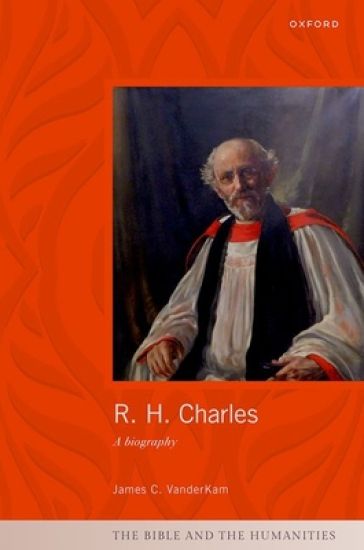
R.H. Charles: A Biography first situates Charles's work in the history of biblical scholarship. The remainder of the book is divided into three parts that draw on material stored in several archives and other sources. The first provides an account of his early life and education in Ireland. Part two is devoted to his Oxford years (1890-1913). Within a chronological framework, the chapters regarding the Oxford period focus on his pioneering work with Jewish apocalypses as evident in his many textual editions, translations, and commentaries. For all of his major publications an attempt is made to assess how his work was received at the time and how it continues to affect the field of early Judaism. The third part furnishes a biographical overview of his work as a canon of Westminster (1913-31). At the Abbey, he carried out pastoral duties but also published books that made contributions to publicly debated issues such as divorce, while at the same time continuing his scholarly endeavours. The volume includes bibliographies of Charles's many publications and of works cited.
R. H. Tawney's Commonplace Book

R. H. Tawney's Commonplace Book

Cambridge University Press
2006
pokkari
Richard Henry Tawney was a man of deep Christian beliefs and powerful emotions, and nowhere can we gain as full a view of his mind and temperament, of the limitations of his ideas as well as their strengths, as in the Commonplace Book or diary which he kept at Manchester from 1912 to 1914. This document is a unique record of the assumptions which supported Tawney's life long work as a socialist and as a scholar. The pattern of his historical interests and, in embryonic form, the outline of many of the arguments which he later developed in his three most influential books, The Acquisitive Society (1921), Religion and the Rise of Capitalism (1926), and Equality (1931), clearly emerge from the pages of this pre-war diary. He appears therein as a man engaged in the exploration of the internal world of his Christian beliefs; and also vigorously seeking to relate them to social and economic life. Though written sixty years ago, this private diary of a remarkable man of powerful moral convictions is no less pertinent today than it was then.
R. H. Tawney and His Times

R. H. Tawney and His Times

Ross Terrill

Harvard University Press
1973
nidottu
Economic historian, democratic socialist, educator, and British labor party activist, R. H. Tawney touched many worlds. His life, too, spanned great distance and change. When he was born in Calcutta in 1880, Gladstone, Tennyson, and Queen Victoria were flourishing and the British Empire was approaching its height. By the time of his death in 1962, the Empire had shrunk to a few tourist islands, and socialism, once so shocking, was now commonplace.Ross Terrill, in this absorbing first study of Tawney’s thought, view his subject within three related contexts. The first is Tawney, the man. Terrill makes skillful use of unpublished material—the early diary, speech and lecture notes, letters, interviews with friends and associates—to tell the story of Tawney’s life in relation to his times. Second is social democracy. Tawney was one of its most influential philosophers and prophets, and this book argues for the continuing validity of his socialism as a path between capitalism and communism. Third is British politics. From Edwardian liberal “consensus” to mid-century collectivist “consensus,” Tawney’s long career, often at odds with prevailing orthodoxies, offers a window on British political culture.Four key ideas are found in Tawney’s political thought: equality and the dispersion of power—the “shape of socialism”; function and citizenship—the “life of socialism.” These ideas, and indeed the life of the man himself, Terrill believes, are summed up in socialism as fellowship. “As long as men are men,” Tawney said, “a poor society cannot be too poor to find a right order of life, nor a rich society too rich to have need to seek it.”This book is a blend of biography, history, and the study of political ideas. It provides a striking portrait of a remarkable man and a panorama of changing ideas and situations in the society where he tried to realize his socialist vision. It offers many glimpses of Tawney’s associates, among them Beveridge, the Webbs, Laski, A. P. Wadsworth, Temple, Margaret Cole, and Leonard Woolf; and surprising snippets, like the fact that Tawney used the phrase “private affluence and public squalor” in 1919.
R. H. Cromek, Engraver, Editor, and Entrepreneur

R. H. Cromek, Engraver, Editor, and Entrepreneur

Dennis M. Read

Ashgate Publishing Limited
2011
sidottu
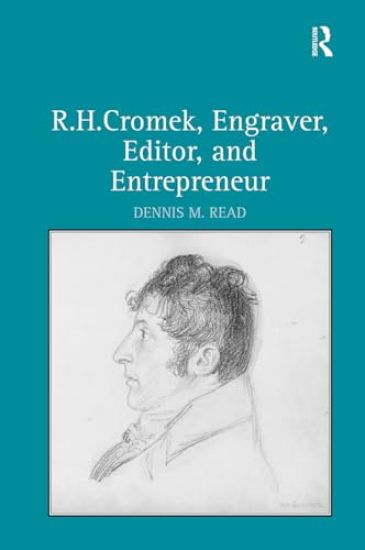
Based on meticulous archival research, Dennis M. Read's study offers the most accurate and thorough account to date of the engraver, editor, and arts enthusiast R. H. Cromek. Though he is best known today as William Blake's nemesis, Cromek made significant contributions to the vitality of the arts in nineteenth-century Britain. Read traces Cromek's early years as an accomplished engraver, his collaborations and falling out with Blake, and his editing and publishing ventures, showing him to be a pioneer who recognized the opportunities of the emerging market economy. Read's descriptions of Cromek's disastrous associations with the Chalcographic Society, his publication of Robert Burns's unpublished works, and his duping by the perpetrator of a literary hoax make for fascinating reading and tell us much about the commercial art and publishing scenes in England and Scotland. Perhaps most important, Read salvages Cromek's reputation as an unscrupulous exploiter of Blake and others. A fuller and more balanced portrait emerges that shows Cromek's efforts to bring the arts to emerging cities of the midlands and beyond, describes his friendships and associations with luminaries of the fine arts and literature such as Leigh Hunt and Benjamin West, and challenges more biased reports of his successes and failures as an entrepreneur.
R. H. Cromek, Engraver, Editor, and Entrepreneur

R. H. Cromek, Engraver, Editor, and Entrepreneur

Dennis M. Read

TAYLOR FRANCIS LTD
2024
nidottu
Based on meticulous archival research, Dennis M. Read's study offers the most accurate and thorough account to date of the engraver, editor, and arts enthusiast R. H. Cromek. Though he is best known today as William Blake's nemesis, Cromek made significant contributions to the vitality of the arts in nineteenth-century Britain. Read traces Cromek's early years as an accomplished engraver, his collaborations and falling out with Blake, and his editing and publishing ventures, showing him to be a pioneer who recognized the opportunities of the emerging market economy. Read's descriptions of Cromek's disastrous associations with the Chalcographic Society, his publication of Robert Burns's unpublished works, and his duping by the perpetrator of a literary hoax make for fascinating reading and tell us much about the commercial art and publishing scenes in England and Scotland. Perhaps most important, Read salvages Cromek's reputation as an unscrupulous exploiter of Blake and others. A fuller and more balanced portrait emerges that shows Cromek's efforts to bring the arts to emerging cities of the midlands and beyond, describes his friendships and associations with luminaries of the fine arts and literature such as Leigh Hunt and Benjamin West, and challenges more biased reports of his successes and failures as an entrepreneur.