What makes Methodist worship "Methodist" or "Wesleyan?" How do Methodists evaluate emerging forms of worship in light of their own liturgical heritage? This book considers these questions by bringing to light the work and significance of three Methodist liturgists who have until now received precious little scholarly focus: Thomas O. Summers (1812-1882), Nolan B. Harmon (1892-1993), and James F. White (1932-2004). Exploring each one’s contribution to the Methodist movement, it evaluates their continuing legacies as scholars and practitioners of Methodist worship. Importantly, the work of all these men occurred during times of cultural change, which gave rise to new ways of worship within the landscape of American Methodism. Addressing them in chronological order, this study shows how each figure enacted liturgical reform and renewal by drawing from the liturgical textual tradition inherited directly from John Wesley’s Sunday Service of the Methodist in North America as well as the hymnody of Charles Wesley. It also demonstrates how they sought to inculturate the Wesleyan liturgical tradition in the midst of these significant changes.Evaluating historic and emerging trends in Methodist liturgical praxis, this is a book that will be of great interest to scholars of Methodism, the History of Religion, Liturgical Studies and Theology.
What makes Methodist worship "Methodist" or "Wesleyan?" How do Methodists evaluate emerging forms of worship in light of their own liturgical heritage? This book considers these questions by bringing to light the work and significance of three Methodist liturgists who have until now received precious little scholarly focus: Thomas O. Summers (1812-1882), Nolan B. Harmon (1892-1993), and James F. White (1932-2004). Exploring each one’s contribution to the Methodist movement, it evaluates their continuing legacies as scholars and practitioners of Methodist worship. Importantly, the work of all these men occurred during times of cultural change, which gave rise to new ways of worship within the landscape of American Methodism. Addressing them in chronological order, this study shows how each figure enacted liturgical reform and renewal by drawing from the liturgical textual tradition inherited directly from John Wesley’s Sunday Service of the Methodist in North America as well as the hymnody of Charles Wesley. It also demonstrates how they sought to inculturate the Wesleyan liturgical tradition in the midst of these significant changes.Evaluating historic and emerging trends in Methodist liturgical praxis, this is a book that will be of great interest to scholars of Methodism, the History of Religion, Liturgical Studies and Theology.
Jemar Tisby; Christopher P. Momany; Sègbégnon Mathieu Gnonhossou; David D. Daniels; R. Matthew Sigler; Douglas M. Strong; Diane Leclerc; Esther Chung-Kim; Albert G. Miller; Estrelda Y. Alexander
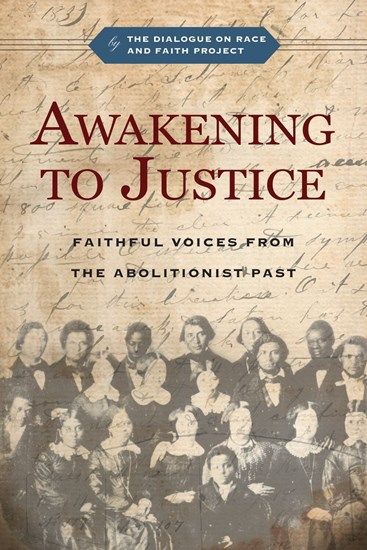
"O where are the sympathies of Christians for the slave and where are their exertions for their liberation? . . . It seems as if the church were asleep."David Ingraham, 1839In 2015, the historian Chris Momany helped discover a manuscript that had been forgotten in a storage closet at Adrian College in Michigan. He identified it as the journal of a nineteenth-century Christian abolitionist and missionary, David Ingraham. As Momany and a fellow historian Doug Strong pored over the diary, they realized that studying this document could open new conversations for twenty-first-century Christians to address the reality of racism today. They invited a multiracial team of fourteen scholars to join in, thus launching the Dialogue on Race and Faith Project.Awakening to Justice presents the groundbreaking work of these scholars. In addition to reflecting on Ingraham's journal, chapters also explore the life and writings of two of Ingraham's Black colleagues, James Bradley and Nancy Prince. Appendixes feature writings by all three abolitionists so readers can engage the primary sources directly.Through considering connections between the revivalist, holiness, and abolitionist movements; the experiences of enslaved and freed people; abolitionists' spiritual practices; various tactics used by abolitionists; and other themes, the authors offer insight and hope for Christians concerned about racial justice. They highlight how Christians associated with Charles Finney's style of revivalism formed intentional, countercultural communities such as Oberlin College to be exemplars of interracial cooperation and equality.Christians have all too often compromised with racism throughout history, but that's not the whole story. Hearing the prophetic witness of revivalist social justice efforts in the nineteenth century can provide a fresh approach to today's conversations about race and faith in the church.
Matthew Flinders (1774–1814) joined the Royal Navy at fifteen, later claiming to have been inspired by Robinson Crusoe. He served under William Bligh, and charted the Bass Strait in 1798. In 1801 he was commissioned to chart 'New Holland', and so became the first to circumnavigate the island he referred to as Australia. After being shipwrecked on the Barrier Reef and imprisoned for six years on Mauritius on suspicion of spying, he returned to England in 1810 and began work on A Voyage to Terra Australis. He died the day after his book and maps were published. This biography, published in 1914 to mark the centenary of his death, was the first comprehensive study of this central figure of Australian maritime exploration. The leading Australian historian Ernest Scott (1868–1939) based his account on material held in private collections in France as well as on documents deposited in Australian libraries.
This work has been selected by scholars as being culturally important and is part of the knowledge base of civilization as we know it.This work is in the public domain in the United States of America, and possibly other nations. Within the United States, you may freely copy and distribute this work, as no entity (individual or corporate) has a copyright on the body of the work.Scholars believe, and we concur, that this work is important enough to be preserved, reproduced, and made generally available to the public. To ensure a quality reading experience, this work has been proofread and republished using a format that seamlessly blends the original graphical elements with text in an easy-to-read typeface.We appreciate your support of the preservation process, and thank you for being an important part of keeping this knowledge alive and relevant.
-It is a special pleasure to introduce R T (Dick) France's commentary to the pastoral and scholarly community, who should find it a truly exceptional - and helpful - volume.- So says Gordon Fee in his preface to this work. France's masterful commentary on Matthew focuses on exegesis of Matthew's text as it stands rather than on the prehistory of the material or details of Synoptic comparison. It is concerned throughout with what Matthew himself meant to convey about Jesus and how he set about doing so within the cultural and historical context of first-century Palestine. Amid the wide array of Matthew commentaries available today, France's world-class stature, his clear focus on Matthew and Jesus, his careful methodology, and his user-friendly style promise to make this volume an enduring standard for years to come.
From beginning to end, the very structure of the Gospel of Matthew emphasizes that Jesus is the Son of God. At climactic points Jesus is so identified—by Peter, by a Roman centurion, by Jesus himself, and by God the Father. With The Gospel of the Son of God, David Bauer provides a comprehensive introduction to this Gospel that has been so foundational to the Christian church. Arguing that the nature of Matthew itself should provide us with the framework for its study, he presents a holistic inductive approach with a literary, theological, and canonical focus. In the first section on orientation, Bauer explores issues of genre, interpretive methods, authorship, audience, and literary structure. Then he moves to interpretation, guiding readers through the meaning of sections of the text. Finally, the reflection section synthesizes and develops major theological themes emerging from the interpretation, including Christology, salvation history, eschatology, and discipleship. While providing a sound basis for the study of Matthew, Bauer goes beyond typical introductory issues to draw out the rich theological vision of the Gospel. His careful scholarship and clear exposition will make this a valuable resource for college and seminary students and pastors.
This book courageously probes the many challenges now facing the evangelical church here in America - challenges that far too many Christian leaders are ignoring. With the whole world spinning out of control and events now taking place that clearly correspond to the End Times scenario the Bible spells out, believers are pleading with their pastors to teach on prophecy. But those pleas, with but a few exceptions, are being brushed aside. It's a failure the church will soon desperately regret - because it's leaving believers ill-equipped to either face the hard times that lie ahead or reap the vast harvest of souls that hard times always make possible.Pastor Shearer begins with a careful exposition of Matthew 24:1-31, and clearly spells out the many events that Jesus himself warns will herald the approach of the Tribulation. With stunning boldness, Pastor Shearer proclaims that we've been living in the lead-up to the Tribulation for the last 100 years, an era that Jesus calls the Birth Pangs; that, furthermore, many of the events Matthew 24:1-31 delineates have already taken place or are even now taking place and about to climax. The hour is urgent Following his exposition of Matthew 24:1-31, Pastor Shearer takes up the Parables of Readiness and Judgment, extending from Matthew 24:32 through to the end of Matthew 25. He shows (1) how those parables are linked to Jesus description of the Tribulation and its lead-up and are meant to warn believers to remain faithful; and (2) how several of the parables put believers on notice that their faithfulness will be evaluated at the Judgment Seat of Christ. Three of the parables spell out the actual criteria Jesus will use in evaluating a believer's faithfulness: watchfulness, walk, and service. For those believers whose faithfulness measures up, they will be rewarded; for those whose faithfulness falls short, they will suffer loss.Following his exposition of Matthew 24 and 25, Pastor Shearer traces out the long forty to fifty year decline of American evangelicalism, first lapsing into a defensive posture, building walls of protection around itself; and now into a state that can only be described as irrelevant. He then goes on to show how the ever-mounting hostility the church has been confronting for the last thirty years has led to serious compromises that have eviscerated the gospel message. He especially focuses on the issue of homosexuality, and shows how it has become the leading edge of a battering ram used by the secular elites to undermine the crucial importance of sin. But sin is what the gospel is all about: deliverance from both its penalty and its power. Playing down the crucial importance of sin strips the gospel of its power and its authenticity. Next Pastor Shearer focuses on the role of Israel in the Last Days scenario - and how ignoring Israel mutes the alarm bell that God is using to warn both the saved and the unsaved that judgment is on its way. Finally, Pastor Shearer spells out a series of strategies he believes will help revitalize the church.


![Jem Bunt ... by the Old Sailor [I.E. Matthew H. Barker] ... with Twenty-Three Illustrations on Steel by R. Cruikshank.](/covers/9781241234171.jpg)