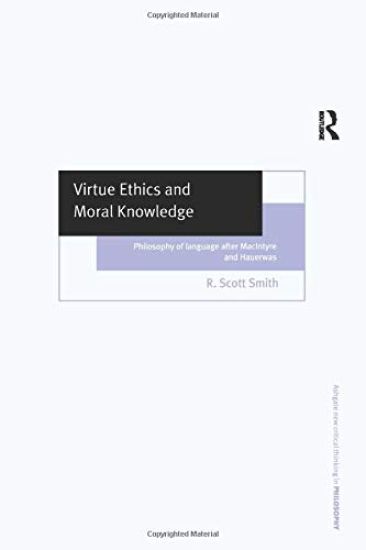
We live in a time of moral confusion: many believe there are no overarching moral norms, and we have lost an accepted body of moral knowledge. Alasdair MacIntyre addresses this problem in his much-heralded restatement of Aristotelian and Thomistic virtue ethics; Stanley Hauerwas does so through his highly influential work in Christian ethics. Both recast virtue ethics in light of their interpretations of the later Wittgenstein's views of language. This book systematically assesses the underlying presuppositions of MacIntyre and Hauerwas, finding that their attempts to secure moral knowledge and restate virtue ethics, both philosophical and theological, fail. Scott Smith proposes alternative indications as to how we can secure moral knowledge, and how we should proceed in virtue ethics.
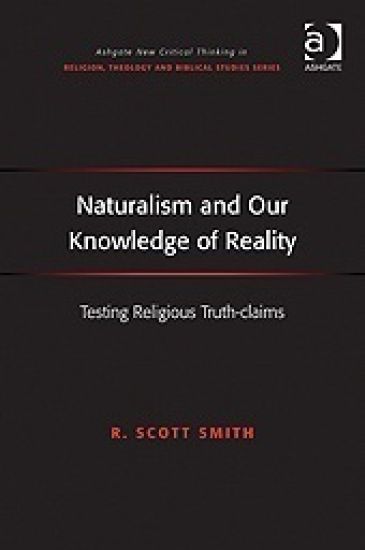
Philosophical naturalism is taken to be the preferred and reigning epistemology and metaphysics that underwrites many ideas and knowledge claims. But what if we cannot know reality on that basis? What if the institution of science is threatened by its reliance on naturalism? R. Scott Smith argues in a fresh way that we cannot know reality on the basis of naturalism. Moreover, the "fact-value" split has failed to serve our interests of wanting to know reality. The author provocatively argues that since we can know reality, it must be due to a non-naturalistic ontology, best explained by the fact that human knowers are made and designed by God. The book offers fresh implications for the testing of religious truth-claims, science, ethics, education, and public policy. Consequently, naturalism and the fact-value split are shown to be false, and Christian theism is shown to be true.
We live in a time of moral confusion: many believe there are no overarching moral norms, and we have lost an accepted body of moral knowledge. Alasdair MacIntyre addresses this problem in his much-heralded restatement of Aristotelian and Thomistic virtue ethics; Stanley Hauerwas does so through his highly influential work in Christian ethics. Both recast virtue ethics in light of their interpretations of the later Wittgenstein's views of language. This book systematically assesses the underlying presuppositions of MacIntyre and Hauerwas, finding that their attempts to secure moral knowledge and restate virtue ethics, both philosophical and theological, fail. Scott Smith proposes alternative indications as to how we can secure moral knowledge, and how we should proceed in virtue ethics.
Philosophical naturalism is taken to be the preferred and reigning epistemology and metaphysics that underwrites many ideas and knowledge claims. But what if we cannot know reality on that basis? What if the institution of science is threatened by its reliance on naturalism? R. Scott Smith argues in a fresh way that we cannot know reality on the basis of naturalism. Moreover, the "fact-value" split has failed to serve our interests of wanting to know reality. The author provocatively argues that since we can know reality, it must be due to a non-naturalistic ontology, best explained by the fact that human knowers are made and designed by God. The book offers fresh implications for the testing of religious truth-claims, science, ethics, education, and public policy. Consequently, naturalism and the fact-value split are shown to be false, and Christian theism is shown to be true.
"An Impressive and well-chosen selection of key sources for the study of ancient Rome, renderedinto lively and engaging English. Together they offer a panorama of republican and imperial lifeand letters. Highly recommended." -Nathan Rosenstein, The Ohio State University
"Terrific ...exactly the sort of collection we have long needed: one offering a wide range of texts, both literary and documentary, and that--with the inclusion of Sulpicia and Perpetua--allows students to hear the voices of actual women from the ancient world. The translations themselves are fluid; the inclusion of long extracts allows students to sink their teeth into material in ways not possible with traditional source books. The anonymous texts, inscriptions, and other non-literary material topically arranged in the 'Documentary' section will enable students to see how the documentary evidence supplements or undermines the views advanced in the literary texts. This is a book that should be of great use to anyone teaching a survey of the history of Ancient Rome or a Roman Civilization course. I look forward to teaching with this book which is, I think, the best source book I have seen for the way we teach these days." --David Potter, University of Michigan
Constructivism dominates over other theories of knowledge in much of western academia, especially the humanities and social sciences. In Exposing the Roots of Constructivism: Nominalism and the Ontology of Knowledge, R. Scott Smith argues that constructivism is linked to the embrace of nominalism, the theory that everything is particular and located in space and time. Indeed, nominalism is sufficient for a view to be constructivist.However, the natural sciences still enjoy great prestige from the “fact-value split.” They are often perceived as giving us knowledge of the facts of reality, and not merely our constructs. In contrast, ethics and religion, which also have been greatly influenced by nominalism, usually are perceived as giving us just our constructs and opinions. Yet, even the natural sciences have embraced nominalism, and Smith shows that this will undermine knowledge in those disciplines as well. Indeed, the author demonstrates that, at best, nominalism leaves us with only interpretations, but at worst, it undermines all knowledge whatsoever. However, there are many clear examples of knowledge we do have in the many different disciplines, and therefore those must be due to a different ontology of properties. Thus, nominalism should be rejected. In its place, the author defends a kind of Platonic realism about properties.
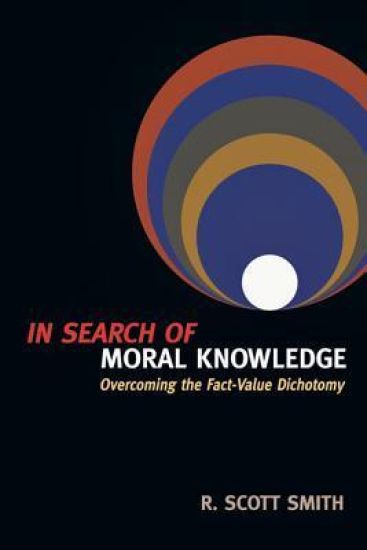
Are Brian McLaren, Tony Jones, Doug Pagitt, and Rob Bell ""yesterday's news,"" as many evangelicals seem to think? Truth and the New Kind of Christian (2005) tried to provide a balanced assessment of McLaren's and Jones's views. But, they seem to be right about much more that is affecting evangelicals than was realized then. Also, that book misunderstood one of their core claims: everything is interpretation. Moreover, their views have developed over the years, e.g., ethically about colonialism, its influences, and how we should live now. They also have advanced several further claims about the gospel and traditional doctrines. To what extent should Christians embrace their views? Are these the ways to go forward toward a more authentic Christianity, one that is morally better, and a better fit, for our times? Like Truth, this book gives careful attention to their thought. It also offers its own portrait of major shaping influences on Western, Americanized Christianity. But, there remains a root issue that keeps the Western church, whether progressive emergents or evangelicals, in its ""Babylonian captivity."" It is liberation from that root that will lead to an authentically emergent Christianity. ""R. Scott Smith is one of the leading thinkers in Christian circles on the emergent church movement and a biblical assessment of it. His evaluation, rooted in solid theology and philosophical rigor, offers a positive contribution to the discussion."" --Barry H. Corey, President of Biola University and author of Love Kindness: Discover the Power of a Forgotten Christian Virtue R. Scott Smith is Professor of Ethics and Christian Apologetics at Biola University's MA in Christian Apologetics program. He is the author of Truth and the New Kind of Christian (2005), Naturalism and Our Knowledge of Reality (2012), and In Search of Moral Knowledge (2014).
Are Brian McLaren, Tony Jones, Doug Pagitt, and Rob Bell ""yesterday's news,"" as many evangelicals seem to think? Truth and the New Kind of Christian (2005) tried to provide a balanced assessment of McLaren's and Jones's views. But, they seem to be right about much more that is affecting evangelicals than was realized then. Also, that book misunderstood one of their core claims: everything is interpretation. Moreover, their views have developed over the years, e.g., ethically about colonialism, its influences, and how we should live now. They also have advanced several further claims about the gospel and traditional doctrines. To what extent should Christians embrace their views? Are these the ways to go forward toward a more authentic Christianity, one that is morally better, and a better fit, for our times? Like Truth, this book gives careful attention to their thought. It also offers its own portrait of major shaping influences on Western, Americanized Christianity. But, there remains a root issue that keeps the Western church, whether progressive emergents or evangelicals, in its ""Babylonian captivity."" It is liberation from that root that will lead to an authentically emergent Christianity. ""R. Scott Smith is one of the leading thinkers in Christian circles on the emergent church movement and a biblical assessment of it. His evaluation, rooted in solid theology and philosophical rigor, offers a positive contribution to the discussion."" --Barry H. Corey, President of Biola University and author of Love Kindness: Discover the Power of a Forgotten Christian Virtue R. Scott Smith is Professor of Ethics and Christian Apologetics at Biola University's MA in Christian Apologetics program. He is the author of Truth and the New Kind of Christian (2005), Naturalism and Our Knowledge of Reality (2012), and In Search of Moral Knowledge (2014).
MGM Resorts International’s CityCenter is the largest privately financed building project in the United States to date; its development brought together star architects and major interior design firms and landscape architects. The design and concurrent construction of seven separate buildings and accompanying infrastructure are documented here from start to finish in stunning photographs.
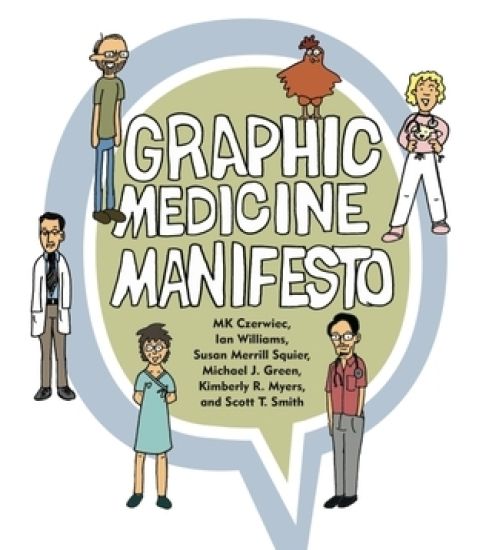
This inaugural volume in the Graphic Medicine series establishes the principles of graphic medicine and begins to map the field. The volume combines scholarly essays by members of the editorial team with previously unpublished visual narratives by Ian Williams and MK Czerwiec, and it includes arresting visual work from a wide range of graphic medicine practitioners. The book’s first section, featuring essays by Scott Smith and Susan Squier, argues that as a new area of scholarship, research on graphic medicine has the potential to challenge the conventional boundaries of academic disciplines, raise questions about their foundations, and reinvigorate literary scholarship—and the notion of the literary text—for a broader audience. The second section, incorporating essays by Michael Green and Kimberly Myers, demonstrates that graphic medicine narratives can engage members of the health professions with literary and visual representations and symbolic practices that offer patients, family members, physicians, and other caregivers new ways to experience and work with the complex challenges of the medical experience. The final section, by Ian Williams and MK Czerwiec, focuses on the practice of creating graphic narratives, iconography, drawing as a social practice, and the nature of comics as visual rhetoric. A conclusion (in comics form) testifies to the diverse and growing graphic medicine community. Two valuable bibliographies guide readers to comics and scholarly works relevant to the field.
A decade ago, Graphic Medicine Manifesto established a bold new framework for understanding the intersection of comics and healthcare. It was a call to action—an invitation to rethink the ways we engage with medicine, illness, disability, and caregiving through the power of visual storytelling. Now, ten years later, this landmark volume returns in a special anniversary edition that expands and reimagines its mission for a new era. With a new critical preface, this tenth-anniversary edition reflects on Graphic Medicine Manifesto’s legacy and its impact on healthcare, scholarship, and comics. It reaffirms the power of comics to challenge disciplines, amplify marginalized voices, and transform teaching in a range of health fields. Organized into six sections, the introduction explores the manifesto’s origins and ongoing relevance, its role as a radical tool in comics, the power of storytelling in health education, the expanding influence of graphic medicine on disability studies and the humanities, the importance of community and collaboration in breaking disciplinary silos, and the future of the field. Featuring these newly contextualized insights alongside the original essays and visual narratives by Ian Williams, MK Czerwiec, and other leading practitioners, this new edition reaffirms Graphic Medicine Manifesto as an essential text for scholars, healthcare professionals, creators, and anyone engaging with medicine, illness, and caregiving through the power of comics.