Kirjojen hintavertailu. Mukana 11 244 527 kirjaa ja 12 kauppaa.

Kirjahaku

Etsi kirjoja tekijän nimen, kirjan nimen tai ISBN:n perusteella.

1000 tulosta hakusanalla R.J. Willis

Justus Ludewig von Uslar, and the First Book on Allelopathy

Justus Ludewig von Uslar, and the First Book on Allelopathy

R.J. Willis

Springer-Verlag New York Inc.
2005
sidottu
Allelopathy is a fascinating and perplexing topic that concerns the chemical interactions of plants. It has profound implications in agriculture and forestry where species are grown artificially in mixture, with no evolutionary history of co-existence. The topic of allelopathy is widely credited as commencing in 1937, when the term ‘allelopathy’ was coined by Molisch. However, the concept of allelopathy has been recorded since Greek and Roman times, became extremely controversial in the first half of the 19th century, and remains so today. This book concerns a virtually unknown treatise by Justus Ludewig von Uslar, published in 1844, which emerges as the first book entirely devoted to the concept of allelopathy. The book provides the historical background to allelopathic knowledge, from antiquity to c. 1840. It also provides for the first time a biography of Justus Ludewig von Uslar, who is best known as the first Consul-General for Hannover in Mexico, and Director of the Mexican Company, a British venture mining company. In many ways von Uslar epitomises the tradition of the gentleman scientist of the 19th century. The book then offers a full translation into English of von Uslar's rare treatise, which foreshadows many ideas current in allelopathic research.
The History of Allelopathy

The History of Allelopathy

R.J. Willis

Springer-Verlag New York Inc.
2007
sidottu
This book had its beginnings about thirty-five years ago, when I migrated to Australia from Canada, and began a doctoral study concerning the role of allelopathy in forests of the eucalypt known in Australia as mountain ash (Eucalyptus regnans), under the supervision of Dr Kingsley Rowan and the late Dr David Ashton. In first assembling materials for the usual survey of the relevant literature, I came to realise that the relative youth of Australia as a nation and its geographical remoteness were to be barriers in fully dealing with historical concepts. At times, the simplest option was to buy the requisite antiquarian books, if they were not readily available from local libraries. I remember that one of the first such works that I acquired was de Candolle’s Physiologie Végétale, and it was then that I began to learn that the history of allelopathy had been only superficially investigated. Allelopathy is a topic which has been very much in the limelight of plant ecology in the past few decades. It is a controversial topic which has a surprisingly large body of literature associated with it, yet the mere existence of allelopathy as an ecological process is still considered doubtful by many. Most students of allelopathy seem to have assumed that the topic has been c- menced in 1937 with the work of Hans Molisch, or to those more historically minded, the theories of A. P.
The History of Allelopathy

The History of Allelopathy

R.J. Willis

Springer
2010
nidottu
This book had its beginnings about thirty-five years ago, when I migrated to Australia from Canada, and began a doctoral study concerning the role of allelopathy in forests of the eucalypt known in Australia as mountain ash (Eucalyptus regnans), under the supervision of Dr Kingsley Rowan and the late Dr David Ashton. In first assembling materials for the usual survey of the relevant literature, I came to realise that the relative youth of Australia as a nation and its geographical remoteness were to be barriers in fully dealing with historical concepts. At times, the simplest option was to buy the requisite antiquarian books, if they were not readily available from local libraries. I remember that one of the first such works that I acquired was de Candolle’s Physiologie Végétale, and it was then that I began to learn that the history of allelopathy had been only superficially investigated. Allelopathy is a topic which has been very much in the limelight of plant ecology in the past few decades. It is a controversial topic which has a surprisingly large body of literature associated with it, yet the mere existence of allelopathy as an ecological process is still considered doubtful by many. Most students of allelopathy seem to have assumed that the topic has been c- menced in 1937 with the work of Hans Molisch, or to those more historically minded, the theories of A. P.
Justus Ludewig von Uslar, and the First Book on Allelopathy
Allelopathy is a fascinating and perplexing topic that concerns the chemical interactions of plants. It has profound implications in agriculture and forestry where species are grown artificially in mixture, with no evolutionary history of co-existence. The topic of allelopathy is widely credited as commencing in 1937, when the term ‘allelopathy’ was coined by Molisch. However, the concept of allelopathy has been recorded since Greek and Roman times, became extremely controversial in the first half of the 19th century, and remains so today. This book concerns a virtually unknown treatise by Justus Ludewig von Uslar, published in 1844, which emerges as the first book entirely devoted to the concept of allelopathy. The book provides the historical background to allelopathic knowledge, from antiquity to c. 1840. It also provides for the first time a biography of Justus Ludewig von Uslar, who is best known as the first Consul-General for Hannover in Mexico, and Director of the Mexican Company, a British venture mining company. In many ways von Uslar epitomises the tradition of the gentleman scientist of the 19th century. The book then offers a full translation into English of von Uslar's rare treatise, which foreshadows many ideas current in allelopathic research.
Ecology of Dunes, Salt Marsh and Shingle

Ecology of Dunes, Salt Marsh and Shingle

J.R. Packham; A.J. Willis

Chapman and Hall
1997
sidottu
Life in coastal sand dunes, salt marshes and shingle banks presents a variety of challenges to their inhabitants. By describing the interactions of coastal organisms with the physical processes shaping the granular deposits within and on which they live, the authors illuminate many aspects of adaptation, population dynamics, community ecology, zonation and ecophysiology. A wide range of biological principles and geomorphological features are illustrated and there is lively discussion of the relevant aspects of applied biology, environmental threat and conservation management. Well-chosen examples and case studies have been drawn from coastal systems around the world, particularly those of the British Isles, continental Europe and North America.
Unexploded Ordnance

Unexploded Ordnance

Jacqueline McDonald; Debra Knopman; J.R. Lockwood; Gary Cecchine; Henry H. Willis

RAND
2004
pokkari
Evaluates the technical soundness of existing methods for assessing the risks posed by unexploded ordnance at U.S. military installations. This report examines methods for assessing the risks of unexploded ordnance (UXO) on former military training land, particularly sites on closed or transferred bases that will be or have been converted to civilian use. This work is the first to analyze in detail all the approaches the Army has developed to assess the risks of UXO sites, recommending ways for the Army to develop risk assessment protocols acceptable to all parties with an interest in UXO sites.
Homeland Security National Risk Characterization

Homeland Security National Risk Characterization

Henry H Willis; Mary Tighe; Andrew Lauland; Liisa Ecola; Shoshana R Shelton; Meagan L Smith; John G Rivers; Kristin J Leuschner; Terry Marsh; Daniel M Gerstein

RAND
2018
nidottu
To provide transparency into the decisionmaking process surrounding its planning processes, the U.S. Department of Homeland Security (DHS) asked RAND to develop a risk assessment methodology that can be used to identify the greatest risks to homeland security and support prioritization of DHS mission elements. The methodology is presented in this report.
William Shakespeare's R & J: Teachers Book

William Shakespeare's R & J: Teachers Book

Double Dutch Discords

Createspace Independent Publishing Platform
2013
nidottu
Shakespeare's Romeo & Juliet - Teacher's BookA resource book for teachers to use as supplementary material to the relevant course materials.Written by Afsoon Elmy and edited by Penny Spiers, the book is to be used in conjunction with William Shakespeare's Romeo & Juliet CD of 22 songs by Double Dutch Discords (sold separately). This book serves to inject the classroom with bursts of motivation, interest and enjoyment, as and when required by the teacher. It provides a natural change of activity and pace in a lesson and adds an element of fun to the learning process. The book is easy to use and can be photocopied. The book is indexed in line with song titles on the CD. All exercises are multi-skill, involve reading, listening, speaking and writing and demand active learner participation. Guidance Notes, suggested Lesson Plan Guide, introductory Shakespeare-Speak, Key and additional discussion points are also provided. The 22 songs cover the main events in Romeo & Juliet: The Play. The words/text itself are Shakespeare word for word. The songs are eclectic in style and bring the text to life by reflecting mood and atmosphere of scenes. The songs are also available as downloads.
The Metaphysics of Donald C. Williams

The Metaphysics of Donald C. Williams

A.R.J. Fisher

Springer International Publishing AG
2025
sidottu
The thesis of this book is that Williams played a key role in the development and revival of analytic metaphysics. This book begins with an account of Williams' approach to philosophy given the rise of realism in the early twentieth century, with a focus on his use of induction and parsimony to argue for metaphysical theses such as metaphysical realism and metaphysical naturalism. It explains his critique of logical positivism and his defence of an empirical conception of metaphysics, which in turn reveals how he took himself to be standing up to rising anti-metaphysical trends. This book then expounds—within the framework of his empirical metaphysics—his one-category trope ontology and its origins, arguing that his systematisation of the concept of an abstract particular (or trope) is his most novel contribution to analytic ontology. This book further presents an original interpretation of his account of concrete objects and abstract universals, engaging with current debates in the metaphysics of properties—sometimes defending Williams, sometimes correcting misinterpretations, sometimes critically reassessing his views. This book also explains his defence of the four-dimensional manifold theory of time and his objections to competing theories such as the growing block theory and presentism (incorporating recently posthumously published work in The Elements and Patterns of Being, ed. A.R.J. Fisher, 2018), with up-to-date references to the latest work in the metaphysics of time. Lastly, this book analyses Williams's influence on later philosophers such as Lewis and Armstrong (and others in Australia), drawing from correspondence between Williams, Lewis, and Armstrong, and evaluates his place in the history of analytic philosophy, concluding that he played a key role in the development and revival of analytic metaphysics.
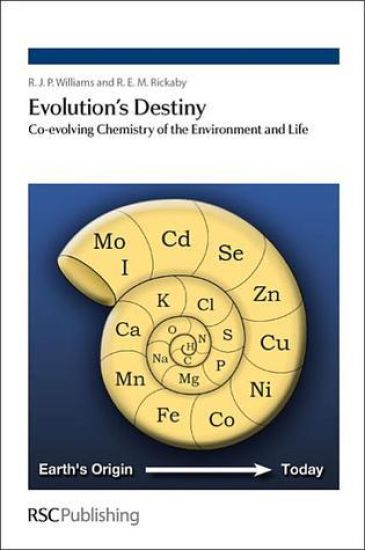
Evolution's Destiny

Evolution's Destiny

R J P Williams; Ros Rickaby

Royal Society of Chemistry
2012
sidottu
This book is written as an addition to Darwin's work and that of molecular biologists on evolution so as to include views of it from the point of view of chemistry rather than just from our knowledge of the biology and genes of organisms. By concentrating on a wide range of chemical elements, not just those in traditional organic compounds, we show that there is a close relationship between the geological or environmental chemical changes from the formation of Earth and those of organisms from the time of their origin. These are considerations which Darwin or other scientists could not have explored until very recent times since sufficient analytical data were not available. They lead us to suggest that there is a combined geo- and bio-chemical evolution, that of an ecosystem, which has had a systematic chemical development. In this development the arrival of new very similar species is shown to be by random Darwinian competitive selection processes such that a huge variety of species coexist with only minor differences in chemistry and advantages. This is in agreement with previous studies. On the large scale of evolution of very different organisms, and over greater timescales, by way of contrast, we observe that groups of species have special, different, chemical features and function. It is more difficult to understand how they evolved and therefore we examine their chemical development in detail. Overall there is a cooperative evolution of a chemical system driven by capture of energy, mainly from the sun, and its degradation in which the chemistry of both the environment and organisms are facilitating intermediates. We shall suggest that the overall drive of the whole joint system is to optimise the rate of this energy degradation. Since the environmental changes are inorganic and relatively fast they move inevitably to equilibrium. The living part of the system, the organisms, under the influence of this inevitable environmental change are forced to follow but as they are increasingly energised and their reactions are slow, they move further away from equilibrium. We are able to explore the ways in which this chemical system evolved, recognising that as complexity of the chemistry of organisms increased, they had to be formed from more and more compartments and to become part of a chemically cooperative overall activity. They could not remain as isolated species. Only in the last chapter do we attempt to make a connection between the changing chemistry of organisms with the coded molecules of each cell which have to exist to explain reproduction.
Coloproctology

Coloproctology

R.J. Nicholls; J. Alexander-Williams; R. Glass

Springer-Verlag Berlin and Heidelberg GmbH Co. K
1985
nidottu
In this age of specialization most patients with diseases of the hind gut and anus are still managed by general physicians or surgeons. The speciality of coloproctology has grown from the art of 'anology', a study of conditions limited to that distance from the anal verge that could be inspected easily by torch- or candlelight or with the aid of a simple speculum. Two centuries ago many proctological ills were often treated by itinerant quacks, partly because the physician considered himself rather too grand to meddle around the anus and the medical profession in general tended to look down on those who studied anal disease. Today, in certain countries, coloproctology has become a speciality every bit as exclusive as urology or orthopaedic surgery, with its own training programme and examinations, usually undertaken after the end of general surgical training. Such super-specialization has undeniable advantages with rapidly advancing technology and therapeutic possibilities. There is no doubt that for the patient suffering from a low rectal carcinoma or severe inflammatory bowel disease there are advantages in being treated by surgeons who are dealing with several cases in a year rather than by a general surgeon who sees such problems relatively rarely. Such specialized colorectal surgery units makes good sense medically and economically in large centres of population with good communications.
Introduction to Behavioral Science in Medicine

Introduction to Behavioral Science in Medicine

F.R. Hine; R.C. Carson; G.L. Maddox; R.J. Jr. Thompson; R.B. Williams

Springer-Verlag New York Inc.
1982
nidottu
This book is the product of many years' experience teaching behavioral science in a way that demonstrates its relevance to clinical medicine. We have been guided by the reactions and evaluations of many first-year medical students. The result is a conceptual framework different from those that we and others had tried before. Because the clinical relevance of knowledge about human behavior is less apparent to many first-year students than that of the other traditional pre­ clinical courses, books and courses organized as brief introductions to psychology, sociology, and behavioral neurology have often been poorly received. Various medical schools and texts have explored ways to overcome this difficulty. One text organizes the presentation around very practical problems which are of unmistakable interest to the future physician: the therapeutic relationship, death and dying, sexuality, and pain, to give a few examples. Another emphasizes stages of development, periods of the human life cycle, as its organizing principle. Both of these approaches have merit and have been used successfully in various schools. They seem to us, however, to have a potentially serious shortcoming. They focus student attention too much on the more immediately intriguing issues of specific clinical problems or on the more easily recognized age­ specific behavioral issues. In the limited time available, the teaching of general principles of human behavioral functioning may then be neglected.
Introduction to Stochastic Integration

Introduction to Stochastic Integration

K.L. Chung; R.J. Williams

Birkhauser Boston Inc
2013
nidottu
A highly readable introduction to stochastic integration and stochastic differential equations, this book combines developments of the basic theory with applications. It is written in a style suitable for the text of a graduate course in stochastic calculus, following a course in probability.Using the modern approach, the stochastic integral is defined for predictable integrands and local martingales; then It’s change of variable formula is developed for continuous martingales. Applications include a characterization of Brownian motion, Hermite polynomials of martingales, the Feynman–Kac functional and the Schrödinger equation. For Brownian motion, the topics of local time, reflected Brownian motion, and time change are discussed.New to the second edition are a discussion of the Cameron–Martin–Girsanov transformation and a final chapter which provides an introduction to stochastic differential equations, as well as many exercises for classroom use.This book willbe a valuable resource to all mathematicians, statisticians, economists, and engineers employing the modern tools of stochastic analysis.The text also proves that stochastic integration has made an important impact on mathematical progress over the last decades and that stochastic calculus has become one of the most powerful tools in modern probability theory. —Journal of the American Statistical Association An attractive text…written in [a] lean and precise style…eminently readable. Especially pleasant are the care and attention devoted to details… A very fine book.—Mathematical Reviews
The Secret Lore of London

The Secret Lore of London

Nigel Pennick; John Matthews; Caroline Wise; Caitlín Matthews; Carol Clancy; R.J. Stewart; Bernard Nesfield-Cookson; Gareth Knight; Robert Stephenson; Geraldine Beskin; Chesca Potter; William Stukeley; Lewis Spence; Harold Bayley; Alan V. Insole; Ross Nichols

Coronet Books
2016
pokkari
With a foreword by Iain Sinclair. London is an ancient city, whose foundation dates back literally thousands of years into the legendary prehistory of these islands. Not surprisingly it has accumulated a large number of stories, both historic and mythical, during this period, many of which, though faithfully recorded at the time, have lain almost forgotten in dusty libraries throughout the city. The Secret Lore of London is a guide to the legends, including a discussion of their importance as part of the oral tradition of Britain, combining Prehistoric, Celtic, Arthurian, Roman, Saxon and Norman levels - each of which has contributed to the many-layered life of the city. The first part contains a unique selection of essays (some printed here for the first time) by experts in their fields, each of whom possesses a unique interest in the legends of these islands, and who have written widely on associated themes. The second part of the book will consist of a Gazetteer of the sites mentioned which are still in existence, together with various other sites of associated interest, compiled by the Editor, the contributors, and members of the London Earth Mysteries Group. This part will be fully updated and extended to include many more sites. The result is a wide ranging and wholly fascinating book, with wide sales application possible. A series of appendixes will include William Stukley's extraordinary document The Brill, which relates to the ancient prehistoric sites around the area of present day St. Pancras, and excerpts from some of the best known 19th and early 20th century works on Legendary London by Lewis Spence and Harold BayleyContributors to the book are: Nigel PennickJohn MatthewsCaroline WiseCaitlín MatthewsCarol Clancy R.J. StewartBernard Nesfield-CooksonGareth KnightRobert StephensonGeraldine BeskinChesca PotterWilliam StukeleyLewis SpenceHarold BayleyAlan V. InsoleRoss Nichols