

Kirjahaku
Etsi kirjoja tekijän nimen, kirjan nimen tai ISBN:n perusteella.
1000 tulosta hakusanalla RUTH FREY-SAMLOWSKI



House-Keeping in the Sunny South
Valerie J. Frey; Ella Ruth Tennent
UNIVERSITY OF GEORGIA PRESS
2025
pokkari
With its roots in the meetings of the Phoenix Agricultural Club of Marietta, Georgia, Ella Ruth Tennent’s House-Keeping in the Sunny South offers nearly eight hundred food recipes, over seventy formulas for household compounds or medicines, and eight essays on managing various rooms of the house. More than just a cookbook, this 1885 publication illuminates home life in Marietta, the Atlanta area, and greater Georgia in the last quarter of the nineteenth century.The day-to-day details of the writing in this volume tell a larger story. When the preface states that the recipes are inexpensive to “meet the pressure of the times,” for example, it is hinting at the fact that the nation—and the South especially—was still recovering from an economic depression. Yet the cookbook also reveals a changing South. It is peppered with recipes from hotels and restaurants, claims contributors from twenty-two states, and calls for newly available commercial ingredients as well as exotic ones that demanded, at the time, global shipping networks. And the presence of chilled dishes between these covers also reveals how prevalent affordable year-round kitchen ice was becoming. But this remains a culinary guide from a time and place poised at the cusp of transition. It includes instructions for extracting the “jelly” from a calf's foot, for example, alongside gelatin recipes dependent on store-bought thickener. House-Keeping in the Sunny South was intended for Georgia’s rapidly changing kitchens, but there is much for modern audiences to learn (and taste) from these pages.
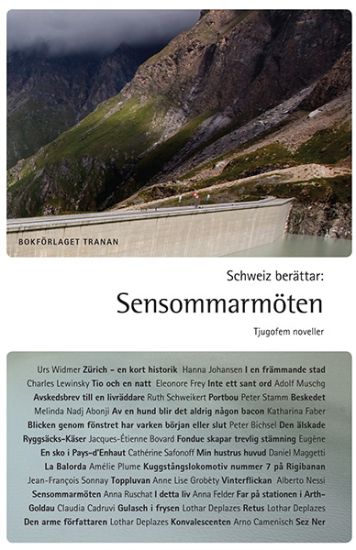
Schweiz berättar : sensommarmöten - tjugofem noveller
Peter Bichsel; Jacques-Étienne Bovard; Claudia Cadruvi; Arno Camenisch; Lothar Deplazes; Eugène; Katharina Faber; Eleonore Frey; Anna Felder; Anne-Lise Grobéty; Hanna Johansen; Charles Lewinsky; Daniel Maggetti; Adolf Muschg; Melinda Nadj Abonji; Alberto Nessi; Amélie Plume; Anna Ruchat; Cathérine Safonoff; Ruth Schweikert; Jean-François Sonnay; Peter Stamm; Urs Widmer
Bokförlaget Tranan
2011
nidottu
Schweiz geografiska läge i Alperna, mitt i Europa, är både centralt och avskilt och har gett landet dess speciella karaktär med en stor språklig och kulturell mångfald. I mötet med de angränsande kulturområdena har människorna konfronterats med sin egen identitet likväl som med de andras, med sin egen hembygd och det främmande. Det har givetvis satt sina spår i litteraturen. Så skriver Benita F
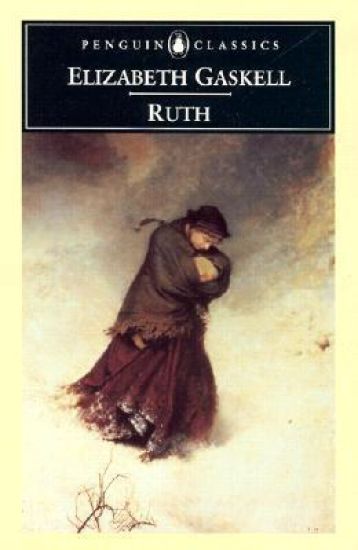
Ruth Hilton is an orphaned young seamstress who catches the eye of a gentleman, Henry Bellingham, who is captivated by her simplicity and beauty. When she loses her job and home, he offers her comfort and shelter, only to cruelly desert her soon after. Nearly dead with grief and shame, Ruth is offered the chance of a new life among people who give her love and respect, even though they are at first unaware of her secret - an illegitimate child. When Henry enters her life again, however, Ruth must make the impossible choice between social acceptance and personal pride. In writing Ruth, Elizabeth Gaskell daringly confronted prevailing views about sin and illegitimacy with her compassionate and honest portrait of a 'fallen woman'.
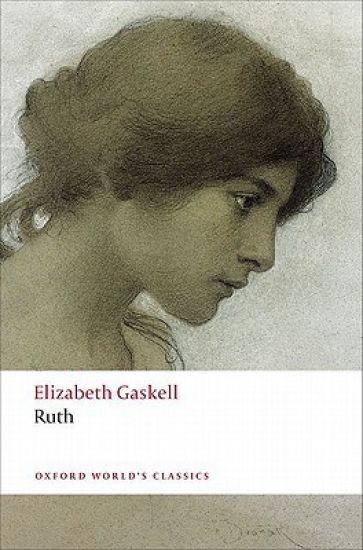
'I think I must be an improper woman without knowing it, I do so manage to shock people.' Elizabeth Gaskell's second novel challenged contemporary social attitudes by taking as its heroine a fallen woman. Ruth Hilton is an orphan and an overworked seamstress, an innocent preyed upon by a weak, wealthy seducer. When he heartlessly abandons her she finds shelter and kindness in the home of a dissenting minister and his sister, who do not reject her when she gives birth to an illegitimate child. But Ruth's self-sacrificing love and devotion are tested to the limit by a twist of fate that brings her past back to haunt her. Gaskell's depiction of Ruth lays bare Victorian hypocrisy and sexual double-standards, and her novel is a remarkable story of love, of the sanctuary and tyranny of the family, and of the consequences of lies and deception. ABOUT THE SERIES: For over 100 years Oxford World's Classics has made available the widest range of literature from around the globe. Each affordable volume reflects Oxford's commitment to scholarship, providing the most accurate text plus a wealth of other valuable features, including expert introductions by leading authorities, helpful notes to clarify the text, up-to-date bibliographies for further study, and much more.
Il libro di Ruth annuncia non solo l'universalit della salvezza, come gi avevano fatto i profeti, ma anche il fatto che la salvezza giunger perIsraeleproprio attraverso la discendenza di una donna straniera (si tenga presente che si Ebrei se si figli di madre ebrea).
This is a rags to riches romance. Ruth, the heroine, was the daughter of a whore attached to The Duke of Wellington's Peninsular Army. She thinks that she was born in 1800. She hardly remembers her mother who died when she was only five years old. She follows the British army to Waterloo where she steals a horse and rescues a young, blinded, cavalry officer, who actually is Lord Chandos. They fall in love and with her help they arrive at his country seat, 'Stowe'. She bears him ten children who all play major roles in the story. Her mission is to help him to regain his sight.

Ruth (Volume 7 in the Anchor Bible Commentary series), a tale of human kindness and just dealing far beyond the norm, contains elements that for centuries have been the subject of debate. With a sprightly translation and a commentary rich in informed speculation, Professor Campbell considers the questions of layman and scholar alike. Finding no overt mighty acts, the layman asks, "Why was Ruth included in the Bible at all? Where is God?" Professor Campbell shows that God is not only present throughout but is indeed the moving force behind all the developments of the story. Naomi, Ruth, and Boaz each act as God to each other, by taking extraordinary responsibility and performing extraordinary acts of kindness. And it is God who is responsible for the series of coincidences on which the plot hinges. The scholar's questions deal with such matters as purpose, date, and genre. Professor Campbell's research into ancient customs and linguistics suggests to him that Ruth is a historical novelette, entertaining and instructive, composed not long after the reign of King David, during the time of Solomon or within the subsequent century. Professor Campbell demonstrates the storyteller's skill with sensitive analysis of form, pacing, and wordplay. By delving into word origins and nuances he shows how convincingly the characters are developed. One instance: Naomi and Boaz use obsolescent language, emphasizing the generation gap between them and Ruth. In addition, the illustrations help the reader understand unfamiliar elements of the story-the setting, the agricultural seasons and harvesting, the clothing of the times, the city gate where elders and interested villagers gather to make sure that all is done in a just and godly way.
In recent years, students, scholars, and lay readers of the Bible have been increasingly drawn to the book of Ruth. Delving deeply into the complicated nature of its characters’ relationships, Jeremy Schipper encourages readers to consider the roles that categories of difference involving gender, disability, household status, ethnicity, and sexual desire play throughout the text. This fresh translation of the deceptively simple book is more literal and less idiosyncratic than its predecessors. Combining the traditional strengths of the Anchor Yale Bible series with the latest research in biblical scholarship, Schipper’s much-needed volume will succeed Edward F. Campbell’s 1975 edition as the go-to commentary for years to come.
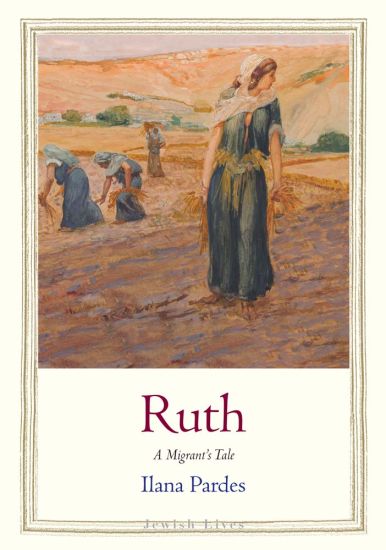
A wide-ranging exploration of the story of Ruth, a foreigner who became the founding mother of the Davidic dynasty “[A]n insightful exploration of the book’s themes of otherness, kindness, and loyalty. This is a valuable contribution to the literature on Ruth.”—Publishers Weekly “A virtuoso exploration of the Book of Ruth as an admirable touchstone in the realms of literature, art, and human values. Ilana Pardes foregrounds the timeless emergency of migrants and refugees with compassion and depth.”—Galit Hasan-Rokem, author of Web of Life The biblical Ruth has inspired numerous readers from diverse cultural backgrounds across many centuries. In this insightful volume, Ilana Pardes invites us to marvel at the ever-changing perspectives on Ruth’s foreignness. She explores the rabbis’ lauding of Ruth as an exemplary convert, and the Zohar’s insistence that Ruth’s Moabite background is vital to her redemptive powers. In moving to early modern French art, she looks at pastoral paintings in which Ruth becomes a local gleaner, holding sheaves in her hands. Pardes concludes with contemporary adaptations in literature, photography, and film in which Ruth is admired for being a paradigmatic migrant woman. Ruth’s afterlives not only reveal much about their own times but also shine new light on this remarkable ancient tale and point to its enduring significance. In our own era of widespread migration and dislocation, Ruth remains as relevant as ever.
How a biblical author says something is just as important as what they say.Designed for the pastor and Bible teacher, this series carefully analyzes the discourse of each Old Testament book and shows how the main thrust of each passage contributes to the development of the whole composition in the original Hebrew.For each passage, the ZECOT provides:The main idea of the passage.Its literary context.The author's original translation.Exegetical outline with Hebrew layout.Its structure and literary form.An explanation of the text.Its canonical and practical significance. While primarily designed for those with a basic knowledge of biblical Hebrew, Hebrew words are always explained so that anyone who desires to understand the Old Testament and communicate its message will benefit from the depth and accessibility these volumes offer.


"Irresistibly smart and funny." --Jenny Offill, author of Weather and Dept. of Speculation "The serenely weird testament of an unintentional heroine in an intentional community, and an act of novelistic grace that deserves not only cult status but its own religion." --Joshua Cohen, author of the Pulitzer Prize-winning The Netanyahus In this mesmerizing and profound novel, the arc of a woman's life in a devout, insular community challenges our deepest assumptions about what infuses life with meaning. Ruth is raised in a snow globe of Christian communism, a world without private property, television, or tolerance for idle questions. Every morning she braids her hair and wears the same costume, sings the same breakfast song in a family room identical to every other family room in the community; every one of these moments is meant to be a prayer, but to Ruth they remain puzzles. Her life is seen in glimpses through childhood, marriage, and motherhood, as she tries to manage her own perilous curiosity in a community built on holy mystery. Is she happy? Might this in fact be happiness? Ruth immerses us in an experience that challenges our most fervent beliefs.

The narrative of the book of Ruth is a drama of ordinary human life, but the drama unfolds against a background of the providence and purposes of God. Katharine Doob Sakenfeld has written a commentary that makes very clear why the book of Ruth has such great importance as literature and as Scripture.Interpretation: A Bible Commentary for Teaching and Preaching is a distinctive resource for those who interpret the Bible in the church. Planned and written specifically for teaching and preaching needs, this critically acclaimed biblical commentary is a major contribution to scholarship and ministry.

Friendship, devotion, reconciliation, childlessness, poverty, faith, commitment, romance, and love. These are issues many women will face in their lives today, and they are the same issues Ruth dealt with centuries ago. In this delightful book, Diana Hagee leads women through the book of Ruth and explores the powerful promise of God's redemptive grace for each woman and for all mankind. Each chapter details the struggle of Israel and our entire humanity as we seek to find the answers to our emptiness, hunger, loneliness and estrangement from God.The historic characters show God's story of redemption, culminating in the romance between Ruth (the heroine) and Boaz (the kinsman redeemer).