Kirjojen hintavertailu. Mukana 11 244 527 kirjaa ja 12 kauppaa.

Kirjahaku

Etsi kirjoja tekijän nimen, kirjan nimen tai ISBN:n perusteella.

1000 tulosta hakusanalla Raffaela Romano

Solo grazie a te

Solo grazie a te

Raffaela Romano

Lulu.com
2013
pokkari
Pu un'enorme bugia diventare una stupenda verit ? Rebecca era innamorata di Daniele da pi di tre anni, ma lui non aveva mai provato qualcosa che andasse oltre l'amicizia per lei. Ma un giorno, inaspettatamente, Daniele chiede a Rebecca di fidanzarsi per finta con lui per far ingelosire l'ex fidanzata e farla tornare da lui. Rebecca accetta per un solo motivo: forse Daniele, fingendo di amarla, potr innamorarsi davvero di lei. Ma le cose non saranno cos facili come le aveva immaginate. Tra amore, dolore, litigi, voglia di mollare tutto, Daniele e Rebecca vivranno una storia che va oltre le loro capacit di comprensione. Ma il destino in agguato, e ha scritto un finale che nessuno aveva immaginato. Meno che mai i protagonisti.

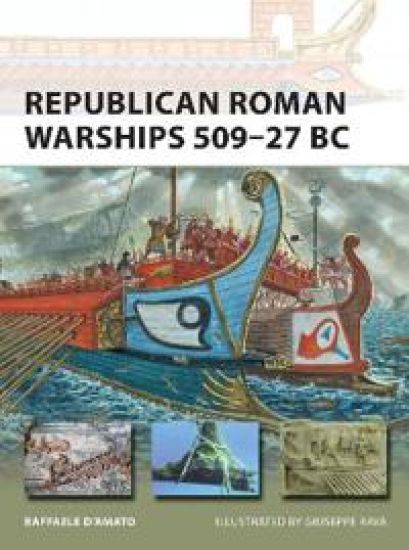
Republican Roman Warships 509–27 BC

Republican Roman Warships 509–27 BC

Raffaele D’Amato

Osprey Publishing
2015
nidottu
The birth of the mighty Roman Navy was anchored in the Romans’ extraordinary ability to absorb and perfect the technology of other states and empires. This is the story of the design, development and operation of the Republican Roman warship in the age of the conquest of the Mediterranean, from the first Roman naval adventure of 394 BC and the Punic Wars, to Pompey's operations against the Cilician Pirates and Caesar's victorious naval campaigns in Armorica, concluding with the consolidation of the Mediterranean Sea as Mare Nostrum with the battle of Actium in 31 BC. Archaeological photography, including those of exciting new finds, such as the Roman warship rosta (rams) found in the Aegates Islands, accompany lavish artistic reconstructions in illustrating the ships of the first Roman navy.
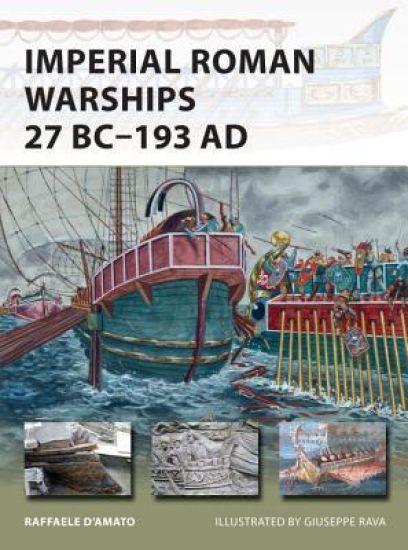
Imperial Roman Warships 27 BC–193 AD

Imperial Roman Warships 27 BC–193 AD

Raffaele D’Amato

Osprey Publishing
2016
nidottu
The Roman Empire was not only built by the strength of the legions but also by a navy that was the most powerful maritime force ever to have existed. It was the presence of this fleet that secured the trade routes and maintained the communications within the huge Empire. The superior design of their warships, coupled with skilled naval commanders such as Agrippa, Sextus Pompeius and Pontus Euxinus, gave the Roman Empire a formidable navy that could defend the coasts of the three continents under the rule of the Caesars.Featuring archaeological photography and lavish artistic reconstructions, this book reveals the design and development history of Rome's naval force at the height of its Imperial power. As well as examining its warships, it reveals the navy's structure and the tactics that were developed to make the most of Rome's naval design superiority.
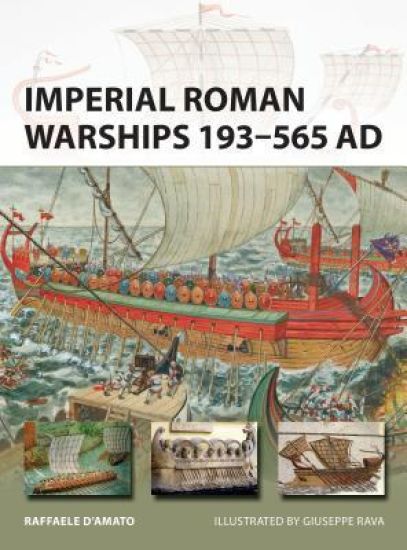
Imperial Roman Warships 193–565 AD

Imperial Roman Warships 193–565 AD

Raffaele D’Amato

Osprey Publishing
2017
nidottu
The period of relative peace enjoyed by the Roman Empire in its first two centuries ended with the Marcomannic Wars. The following centuries saw near-constant warfare, which brought new challenges for the Roman Navy. It was now not just patrolling the Mediterranean but also fighting against invaders with real naval skill such as Genseric and his Vandals. With research from newly discovered shipwrecks and archaeological finds as well as the rich contemporary source material, this study examines the equipment and tactics used by the navy and the battles they fought in this tumultuous period, which includes the fall of Rome and the resurgence of the Eastern Empire under Justinian the Great.Using spectacular illustrations, carefully researched ship profiles, and maps, this third volume in Osprey’s Roman Warships miniseries charts the ultimate evolution of the Roman fleet in one of the most fascinating periods of its history.
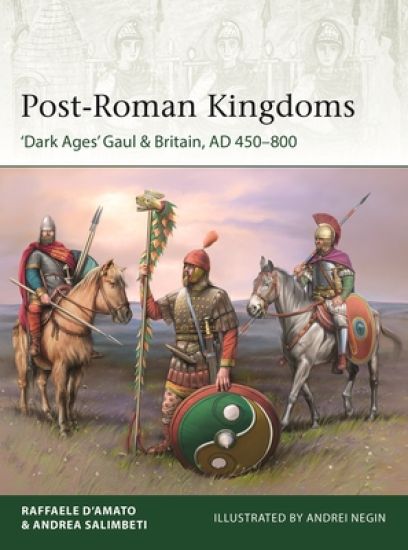
Post-Roman Kingdoms

Post-Roman Kingdoms

Raffaele D’Amato

BLOOMSBURY PUBLISHING PLC
2023
nidottu
Meticulously researched, this book examines the evidence for the post-Roman military forces of France and Britain during the 'Dark Ages', reconstructing their way of life and the battles they fought in compelling detail.The collapse of the former Western Roman Empire during the so called 'Dark Ages' c. AD 410 was gradual and piecemeal. Out of this vacuum arose regional tribes and leaders determined to take back kingdoms that were theirs and oust any Roman presence for good. However, the Roman guard was tenacious and survived in small pockets that emerged in both Gaul and Britain. These areas of Romano-Celtic resistance held out against the Saxons until at least the mid 6th century in Britain and against the Visigoths and the Merovingian Franks until the late 8th century in France.Drawing on archaeological finds, contemporary sculpture and manuscript illuminations, Dr Raffaele D’Amato presents contemporary evidence for 5th to 9th-century Gallic and British 'Dark Age' armies and reconstructs their way of life and the battles they fought. The text, accompanied by photographs and colour illustrations, paints an intricate picture of how these disparate groups of Roman soldiers survived and adapted on the fringes of the Roman Empire.
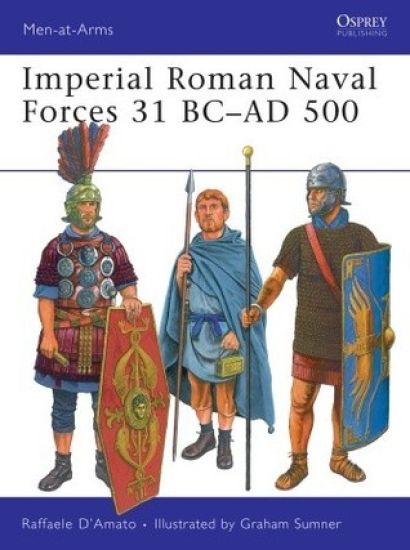
Imperial Roman Naval Forces 31 BC–AD 500

Imperial Roman Naval Forces 31 BC–AD 500

Raffaele D’Amato

Osprey Publishing
2009
nidottu
The Roman Navy, although somewhat overshadowed by the legions, played an important role for the Roman Empire. For the Army to conquer and rule its vast territories, control of the sea lanes was essential. The navy fleets needed to be structured and powerful in order to dominate the trade routes, transport legions and defend and attack against pirates and other enemies. Under Augustus in 31BC, the navy consisted of 800 warships with many being sent to Ravenna and Misenus in Italy, and smaller squadrons to the external coasts and to the major rivers to support land operations. This book provides a detailed re-evaluation of the vital contribution made by the Roman navy to Roman imperial power, covering the organisation of the fleets and the everyday life of the soldiers. Previously unpublished research is complemented by superb colour reconstructions of the uniforms and equipment, making this a central resource on a neglected piece of ancient history.
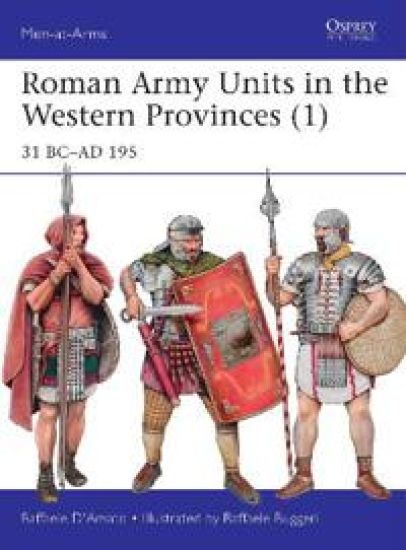
Roman Army Units in the Western Provinces (1)

Roman Army Units in the Western Provinces (1)

Raffaele D’Amato

Osprey Publishing
2016
nidottu
At its height the Roman Empire stretched across Europe, North Africa and the Middle East, maintained by an army of modest size but great diversity.In popular culture these soldiers are often portrayed in a generic fashion, but continuing research indicates significant variations in Roman armour and equipment not only between different legions and the provincially-raised auxiliary cohorts that made up half of the army, but also between different regions within the empire.With reference to up-to-date archaeological and documentary evidence Dr D'Amato investigates how Roman Army units in the Western provinces were equipped, exploring the local influences and traditions that caused the variations in attire.
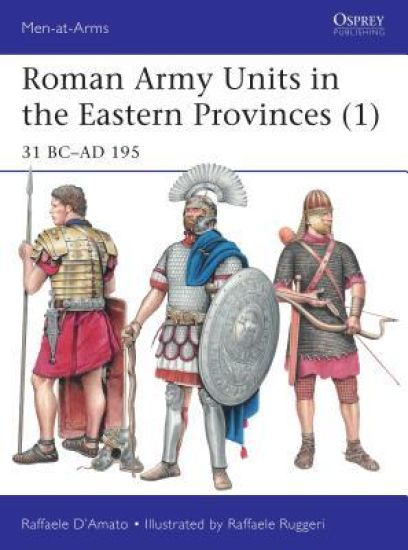
Roman Army Units in the Eastern Provinces (1)

Roman Army Units in the Eastern Provinces (1)

Raffaele D’Amato

Osprey Publishing
2017
nidottu
Between the reigns of Augustus and Septimius Severus, the Eastern provinces of the Roman Empire frequently saw brutal fighting, most notably during the conquest of Dacia by Trajan, the suppression of the Great Revolt in Judea and intermittent clashes with Rome's great rival Parthia. In these wars, Roman soldiers had to fight in a range of different climates and terrains, from the deserts of the Middle East to the islands of the eastern Mediterranean.Using full-colour artwork, this book examines the variation of equipment and uniforms both between different military units, and in armies stationed in different regions of the Empire. Using evidence drawn from recent archaeological finds, it paints a vivid portrait of Roman army units in the Eastern provinces in the first two centuries of the Imperial period.
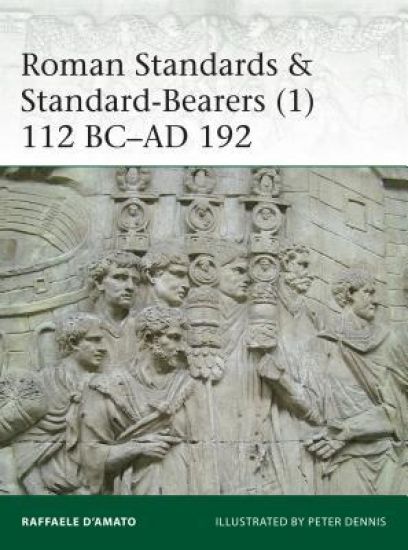
Roman Standards & Standard-Bearers (1)

Roman Standards & Standard-Bearers (1)

Raffaele D’Amato

Osprey Publishing
2018
nidottu
A fully illustrated study of the colourful standards employed by the Roman army, and the iconic standard bearers who led the legionaries into battle.Roman unit standards played a important role, both ceremonially and on the battlefield. With the armies of the late Roman Republic and early Empire continually engaged on the frontiers, the soldiers selected for the dangerous honour of carrying them were figures of particular renown and splendour. Standard-bearers wore special armour, with the heads and pelts of animals such as bears, wolves, or even lions draped over their helmets and shoulders. The standards themselves varied greatly, from the legion's Eagle and imperial portrait image to various cohort signa, flags (vexilla) and even dragon 'windsocks' (dracones) copied from barbarian enemies and allies. This first volume of a two-part series by Roman army expert, Rafaele D’Amato uses detailed colour plates and the latest research to examine these vital cogs in the Roman army machine that drove its soldiers to conquer the known world.
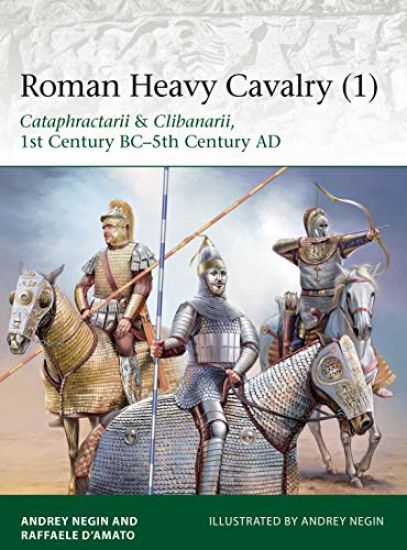
Roman Heavy Cavalry (1)

Roman Heavy Cavalry (1)

Raffaele D’Amato; Andrei Evgenevich Negin

Osprey Publishing
2018
nidottu
From the army of Marc Antony in the 1st century BC, Roman generals hired Oriental heavy armoured cavalry to serve in their military alongside the legions. These troops, both from the northern steppes and the Persian frontiers, continued an ancient tradition of using heavy armour and long lances, and fought in a compact formation for maximum shock effect. They were quite distinct from conventional Roman light cavalry, and they served across the Empire, including in Britain. They became ever more important during the 3rd century wars against Parthia, both to counter their cavalry and to form a mobile strategic reserve.Displaying these impressive and imposing cavalry units using vivid specially commissioned artwork, this first book in a two part series on Roman Heavy Cavalry examines their use over the Imperial period up to the fall of Western Empire in the 5th century A.D.
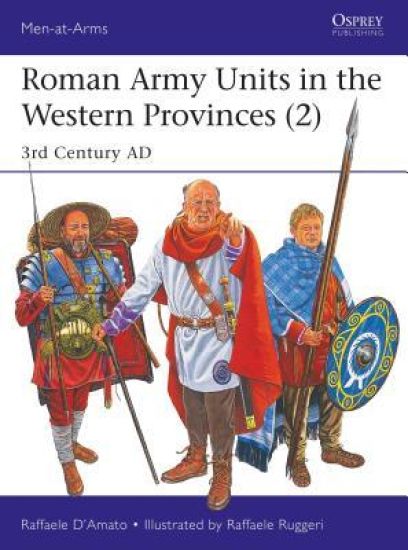
Roman Army Units in the Western Provinces (2)

Roman Army Units in the Western Provinces (2)

Raffaele D’Amato

Osprey Publishing
2019
nidottu
The appearance of Roman soldiers in the 3rd century AD has long been a matter of debate and uncertainty, largely thanks to the collapse of central control and perpetual civil war between the assassination of Severus Alexander in 235 and the accession of the great Diocletian in 284. During those years no fewer than 51 men were proclaimed as emperors, some lasting only a few days. Despite this apparent chaos, however, the garrisons of the Western Provinces held together, by means of localized organization and the recruitment of 'barbarians' to fill the ranks. They still constituted an army in being when Diocletian took over and began the widespread reforms that rebuilt the Empire – though an Empire that their forefathers would hardly have recognized. Fully illustrated with specially chosen colour plates, this book reveals the uniforms, equipment and deployments of Roman soldiers in the most chaotic years of the Empire.