Kirjahaku
Etsi kirjoja tekijän nimen, kirjan nimen tai ISBN:n perusteella.
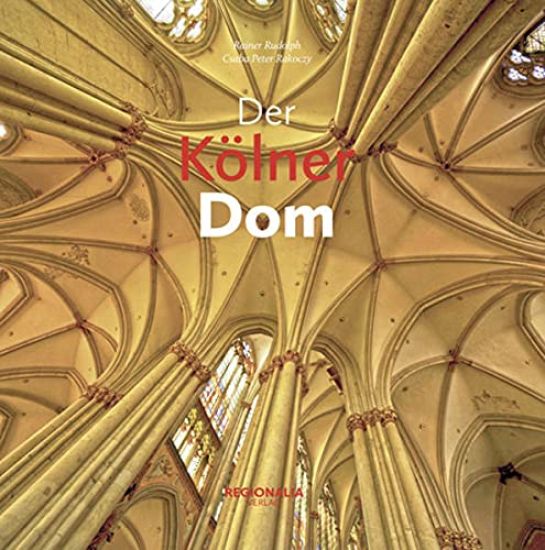
1000 tulosta hakusanalla Rainer Rudolph; Csaba Peter Rakoczy
Raymond Bellours Theorie zur Filmanalyse angewandt auf Rainer Werner Fassbinders "Angst essen Seele auf"
Yvonne Rudolph
Grin Publishing
2008
pokkari
Mildenfurth bei Wünschendorf
Benjamin Rudolph; Rainer Müller
Schnell Steiner GmbH
2025
lehtivihko, moniste

Atlas Sanierung
Georg Giebeler; Rainer Fisch; Harald Krause; Florian Musso; Karl-Heinz Petzinka; Alexander Rudolphi
Birkhauser
2008
sidottu
Refurbishment Manual
Georg Giebeler; Harald Krause; Rainer Fisch; Florian Musso; Bernhard Lenz; Alexander Rudolphi
Birkhauser
2009
isokokoinen pokkari
Planning tasks involving existing structures are currently among the most common types of contract, and almost every structure makes different demands and raises individual problems. Reflecting this state of affairs, there are a dizzying number of publications on the market, most of which are quite specialized. The Refurbishment Manual cuts through this jungle of publications. It defines terms and concepts, combines the narrowly focused perspectives of the specialists, and offers concrete approaches to this wide-ranging topic. The Refurbishment Manual closes the gap between basic constructional literature and one-sided, highly specialized technical literature. It constitutes a practical planning aid on the subject of refurbishment, providing a basic introduction to the relevant aspects of building physics, fire protection, sustainability and energy, hazardous materials, construction materials for interior and façade, historic preservation, and technical building equipment. It offers concrete tips on planning steps, methods of building analysis, and cost benchmarks, as well as clear constructional solutions with built projects as examples. A unique feature of the volume is the specially developed timeline, which allows the planner to quickly grasp, categorize, and evaluate a concrete building task and thus obtain an efficient planning overview. Planungsaufgaben im Bestand gehören derzeit zu den häufigsten Auftragsarten und nahezu jedes Bauwerk stellt andere Anforderungen und weist individuelle Probleme auf. Analog dazu gibt es auf dem Markt eine fast unüberschaubare Anzahl Publikationen in meist sehr spezialisierter Form. Der Sanierungsatlas möchte Licht in diesen Publikationsdschungel bringen: Er definiert Begrifflichkeiten, vereint die fokussierenden Betrachtungsweisen der Fachleute und vermittelt konkrete Herangehensweisen an diese weit gefächerte Thematik. Der Sanierungsatlas schließt die Lücke zwischen grundlegender Baukonstruktions- und sehr einseitig spezialisierter Fachliteratur. Das Buch stellt eine praktische Planungshilfe zum Thema Sanierung dar – und zwar in Form von relevanter Grundlagenvermittlung zu Bauphysik, Brandschutz, Nachhaltigkeits- und energetischen Aspekten, Schadstoffen, Baustoffen im Innenraum und an der Fassade, zu Aspekten der Denkmalpflege ebenso wie zur technischen Gebäudeausstattung. Er liefert konkrete Hinweise zu Planungsschritten, Methoden der Bauanalyse und Kostenkennwerten sowie anschauliche Konstruktionslösungen am Beispiel gebauter Projekte. Einzigartig ist die speziell entwickelte Zeitschiene, mit deren Hilfe eine konkrete Bauaufgabe schnell erfasst, kategorisiert und bewertet werden kann – und die dem Planer somit einen effizienten Planungsüberblick verschafft.
Some guys listen to music, some guys like to sing. I like to work people out.Rainer is a solitary delivery rider, moving across London, delivering food to whoever will summon her. From luxury flats to leafy suburbs, she loves to create stories in her head, re-imagining London as one of her favourite sci-fi films or Scorsese’s Taxi Driver. She loves her life. Until reality starts to slip and she begins forgetting stuff – even the city she knows so well. And when her one-time lover Jack disappears, when her mum keeps on calling, she has to ask herself: is everything really okay?A one-woman show partly inspired by Dylan Thomas’s Under Milkwood, Rainer is a celebration of a city and the people within it, seen and unseen. It was a finalist for Samuel French’s Off-Broadway Award, longlisted for Theatre Uncut’s Political Playwriting Award and winner of the Prix Royal competition in Paris. This edition was published to coincide with the production at the Arcola Theatre, London, in June 2022.
Originally published in English in 1951, this biography of one of Germany’s foremost mystical poets dis-proves many of the myths surrounding Rainer Maria Rilke and examines his life and work from social, historical and psychological perspectives, while all the time referencing Rilke’s works to his complex personality. The legacy of his work on younger generations is also examined. All German prose quotations have been translated into English for this edition, existing translations used for the German poetry.
Originally published in English in 1951, this biography of one of Germany’s foremost mystical poets dis-proves many of the myths surrounding Rainer Maria Rilke and examines his life and work from social, historical and psychological perspectives, while all the time referencing Rilke’s works to his complex personality. The legacy of his work on younger generations is also examined. All German prose quotations have been translated into English for this edition, existing translations used for the German poetry.
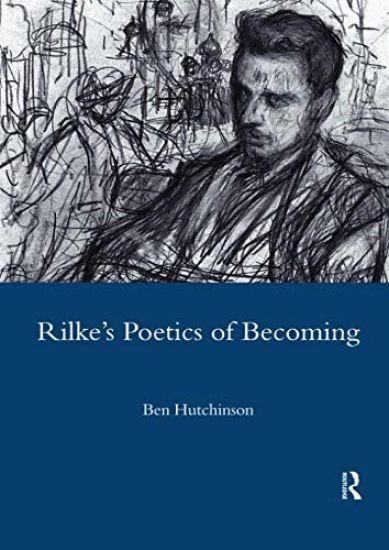
Rainer Maria Rike, 1893-1908: Poetry as Process - A Poetics of Becoming
Ben Hutchinson
Routledge
2020
nidottu
This book examines the intellectual climate as Rilke experienced it at the turn of the century. It draws on existing scholarship and the Rilke's own pronouncements in order to explore the major influences on the young Rilke's conception of processes of becoming.
These letters give the account of Rilke's own state of mind and of his final approach to the threshold of his great works. They show the rapid change he underwent after his reaction to the first excitement of the war; how his dismay at the cruelty and confusion of war helped to render the poet in him speechless for many years; how he nevertheless characteristically held to his own fundamental views throughout war and revolution and in spite of everything retained his belief in the capacity of humanity to create for itself a better future.

The period here covered reflects all the great experiences of Rilke's early adult life: his difficult beginnings, his relationships with Lou Andreas-Salome and with his wife Clara, his two journeys to Russia, his contact with the Worpswede artists, the influence of Paris, the revelation of Cezanne. Many of the letters are psychologically revealing; many touch upon characteristic themes, or freshly transcribe experience that sooner or later passes into the poetry.

There are important letters here to Muzot, Lou Andreas-Salome, to Princess Marie of Thurn and Taxis Hohenlohe, and many others. The most significant of the Wartime Letters: 1914-1921 are also included. An Introduction briefly traces the development of Rilke's work during these years; the Notes provide the necessary framework of biographical details and point up significant references to the poetry.
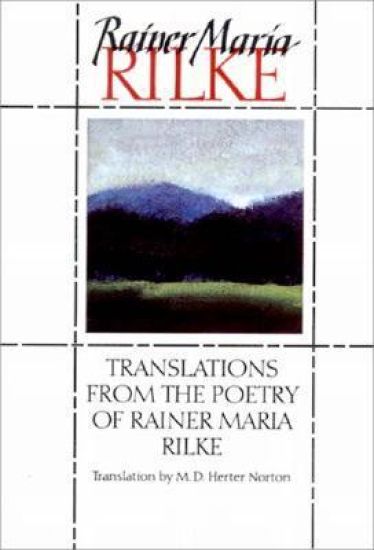
Translations from the Poetry of Rainer Maria Rilke
Rainer Maria Rilke; M. D. Herter Norton
WW Norton Co
1993
pokkari
These translations by M.D. Herter Norton offer Rilke's work to the English-speaking world in an accurate, sensitive, modern version.

First published in 1986. Routledge is an imprint of Taylor & Francis, an informa company.
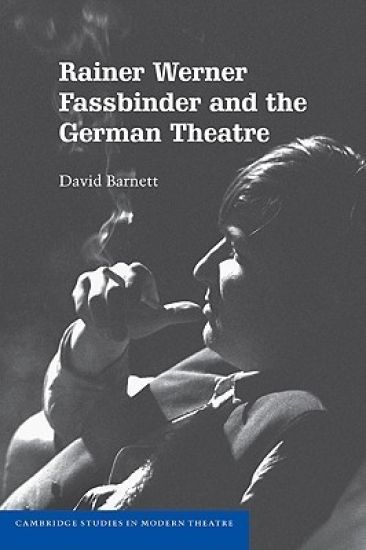
Rainer Werner Fassbinder and the German Theatre
David Barnett
Cambridge University Press
2009
pokkari
Using extensive and untapped archival material as well as a series of in-depth interviews with Fassbinder's main theatre associates, this book offers commentary on and insights into Fassbinder's plays, his dramaturgies and staging practice. David Barnett helps to unlock the much discussed theatricality of Fassbinder's films by showing its many concrete sources. The first study of Fassbinder's work in the theatre, as a playwright and director, this book gives a full contextualisation of his work within the upheavals of its times. Readers are introduced to the cultural history of the West German theatre in the late 1960s and early 1970s. Radicalism in society meets experiment on stage as Fassbinder emerges from the cellar theatre scene of Munich, co-founds the antiteater and is then integrated into the most subsidised theatre in Europe, before being offered his own theatre to run for one fateful season.
Rainer Maria Rilke's 'Gedichte An Die Nacht'
Anthony Stephens
Cambridge University Press
2010
pokkari
The Gedichte an die Nacht is a collection of 22 poems composed between January 1913 and February 1914, which Rilke copied into a manuscript book for his friend Rudolf Kassner in about 1916. The importance of the poems as a collection lies in the fact that they were written during the period of composition of Rilke's most outstanding work, the Duinese Elegien, and they show the poet at work on ideas and motifs which are central to the elegies. The first part of the book analyses the poems thematically, whilst the second part gives the results of this analysis wider application. During the period Rilke was writing Gedichte an die Nacht, the meaning of 'night' in the Elegies often approaches that of 'angel', whilst at other times it is quite different. Dr Stephens traces the genesis of this ambivalence in other poems, revealing the incomplete and sometimes contradictory nature of his poetic thought.
Rainer Werner Fassbinder and the German Theatre
David Barnett
Cambridge University Press
2005
sidottu
Using extensive and untapped archival material as well as a series of in-depth interviews with Fassbinder's main theatre associates, this book offers commentary on and insights into Fassbinder's plays, his dramaturgies and staging practice. David Barnett helps to unlock the much discussed theatricality of Fassbinder's films by showing its many concrete sources. The first study of Fassbinder's work in the theatre, as a playwright and director, this book gives a full contextualisation of his work within the upheavals of its times. Readers are introduced to the cultural history of the West German theatre in the late 1960s and early 1970s. Radicalism in society meets experiment on stage as Fassbinder emerges from the cellar theatre scene of Munich, co-founds the antiteater and is then integrated into the most subsidised theatre in Europe, before being offered his own theatre to run for one fateful season.