How could a woman be three times accused of witchcraft and go on running a successful farmstead? Why would men use a frying pan for cattle magic? Why did witches keep talking about the children? What kind of a relation did Finnish witches have with authority and power? These are among the questions Raisa Maria Toivo addresses in this study, as she explores the gender implications of the complex system of household management and public representation in which seventeenth-century Finnish women and men negotiated their positions. From specific case studies, Toivo broadens her narrative to include historiographical discussion on the history of witchcraft, on women's and gender history and on early modern social history, shedding new light on each theme. Toivo contributes to the on-going discussion in the European historiography about whether the early modern period witnessed an improvement, decline, or simply alteration in the conditions of oppression of women within patriarchal households by using a multidimensional set of roles that could be adopted by women. Finally, she demonstrates convincingly that members of the solid peasant class were not only subject of the newly forming states, but also avid users of the court system, which they manipulated and put to work in the interests of their own individual, household, and collective affairs.
Early modern Finland is rarely the focus of attention in the study of European history, but it has a place in the context of northern European religious and political culture. While Finland was theoretically Lutheran, a religious plurality – embodied in ceremonies and interpreted as magic – survived and flourished. Blessing candles, pilgrimages, and offerings to forest spirits merged with catechism hearings and sermon preaching among the lay piety. What were the circumstances that allowed for such a continuity of magic? How were the manifestations and experiences that defined faith and magic tied together? How did western and eastern religious influences manifest themselves in Finnish magic? Faith and Magic in Early Modern Finland shows us how peripheral Finland can shed light on the wider context of European magic and religion.
Early modern Finland is rarely the focus of attention in the study of European history, but it has a place in the context of northern European religious and political culture. While Finland was theoretically Lutheran, a religious plurality – embodied in ceremonies and interpreted as magic – survived and flourished. Blessing candles, pilgrimages, and offerings to forest spirits merged with catechism hearings and sermon preaching among the lay piety. What were the circumstances that allowed for such a continuity of magic? How were the manifestations and experiences that defined faith and magic tied together? How did western and eastern religious influences manifest themselves in Finnish magic? Faith and Magic in Early Modern Finland shows us how peripheral Finland can shed light on the wider context of European magic and religion.
‘Experience’ has become a catchword in scholarly as well as political debates. Raisa Maria Toivo convincingly contends in this open access book that while it is often used to denote something ‘simple and real’ instead of something theoretical or idealistic, experience is in fact much more than self-evident truth. Toivo makes the case that people have different experiences depending on their situation in life – be that their age, gender, social status, wealth, ethnicity and more; that as they try to express their experiences, they often find that not everyone is allowed to experience in the same ways. For example, in 17th-century Finland it was accepted that a young girl of 12 talked with angels, but an old woman of 50 was sentenced of witchcraft and a farmhand of 25 was deemed delusional when they all said they had met with divine spirits: experience was guided by identity and social status, but also by power relationships and cultural scripts. Expressed Experience in Early Modern Northern Europe explores different ways of communicating and curating experience. The first part of the book explores how experiences were spoken and written of in lower court records, while the second part looks at visual communication in church murals. The book goes on to examine spatial settings of experience in landscapes and public buildings, such as churches and public roads or private houses. The fourth part explores embodied experience and corporeality. Toivo draws all this together in a conclusion which reflects on how experience was curated through a combination of communication means.The ebook editions of this book are available open access under a CC BY-NC-ND 4.0 licence on bloomsburycollections.com. Open access was funded by Tampere University Library.
This study is an exploration of lived religion and gender across the Reformation, from the 14th–18th centuries. Combining conceptual development with empirical history, the authors explore these two topics via themes of power, agency, work, family, sainthood and witchcraft.By advancing the theoretical category of ‘experience’, Lived Religion and Gender reveals multiple femininities and masculinities in the intersectional context of lived religion. The authors analyse specific case studies from both medieval and early modern sources, such as secular court records, to tell the stories of both individuals and large social groups. By exploring lived religion and gender on a range of social levels including the domestic sphere, public devotion and spirituality, this study explains how late medieval and early modern people performed both religion and gender in ways that were vastly different from what ideologists have prescribed.Lived Religion and Gender covers a wide geographical area in western Europe including Italy, Scandinavia and Finland, making this study an invaluable resource for scholars and students concerned with the history of religion, the history of gender, the history of the family, as well as medieval and early modern European history.The Introduction chapter of this book is freely available as a downloadable Open Access PDF at http://www.taylorfrancis.com under a Creative Commons Attribution-Non Commercial-No Derivatives (CC-BY-NC-ND) 4.0 license.
This study is an exploration of lived religion and gender across the Reformation, from the 14th–18th centuries. Combining conceptual development with empirical history, the authors explore these two topics via themes of power, agency, work, family, sainthood and witchcraft.By advancing the theoretical category of ‘experience’, Lived Religion and Gender reveals multiple femininities and masculinities in the intersectional context of lived religion. The authors analyse specific case studies from both medieval and early modern sources, such as secular court records, to tell the stories of both individuals and large social groups. By exploring lived religion and gender on a range of social levels including the domestic sphere, public devotion and spirituality, this study explains how late medieval and early modern people performed both religion and gender in ways that were vastly different from what ideologists have prescribed.Lived Religion and Gender covers a wide geographical area in western Europe including Italy, Scandinavia and Finland, making this study an invaluable resource for scholars and students concerned with the history of religion, the history of gender, the history of the family, as well as medieval and early modern European history.The Introduction chapter of this book is freely available as a downloadable Open Access PDF at http://www.taylorfrancis.com under a Creative Commons Attribution-Non Commercial-No Derivatives (CC-BY-NC-ND) 4.0 license.
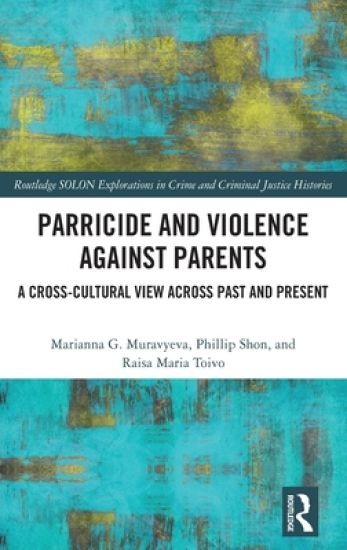
Parricide and Violence Against Parents takes a historical and criminological approach to the research on parricide and violence against parents, placing the research in the context of social development from the 1500s to contemporary society, and giving a global overview and comparison. The book examines parricide and violence against parents as historically and culturally sensitive phenomena. It offers evidence on a seemingly rare subject from different eras, areas, and cultures, and then uses the cross-disciplinary data to produce a new, systematic insight for the reader. Case studies shift the discussion from the contemporary focus on adolescent to parent abuse, to examining the sources of conflict during life cycles of parents and their offspring. A historical approach illuminates the variations in conflicts between parents and their offspring that are shaped by the life stages of the victims and offenders themselves across time. The book argues that parental authority has been marked by property ownership and tax paying responsibilities throughout history. The continued possession of property resulted in power, the reluctance to part with it, becoming a notable source of conflict across generations within families. Parental authority was protected by means of heavy penalties and punishments and didactic teachings in almost every society at every stage of historical development. It was also challenged constantly by children as a part of their coming into adulthood. The abuse of parents has often been connected to situations where adult children were prevented from gaining the amount of independence appropriate to their position in life. This led to disputes over authority and the legitimate grounds for that authority.Offering an insight into complicated and interconnected histories of generational conflicts and how they affect modern families in different parts of the world, this book will be of great interest to students and scholars of criminology, history of crime, history of the family, family violence, homicide studies, gender studies, history of emotions, political violence, and social work.
Parricide and Violence Against Parents takes a historical and criminological approach to the research on parricide and violence against parents, placing the research in the context of social development from the 1500s to contemporary society, and giving a global overview and comparison. The book examines parricide and violence against parents as historically and culturally sensitive phenomena. It offers evidence on a seemingly rare subject from different eras, areas, and cultures, and then uses the cross-disciplinary data to produce a new, systematic insight for the reader. Case studies shift the discussion from the contemporary focus on adolescent to parent abuse, to examining the sources of conflict during life cycles of parents and their offspring. A historical approach illuminates the variations in conflicts between parents and their offspring that are shaped by the life stages of the victims and offenders themselves across time. The book argues that parental authority has been marked by property ownership and tax paying responsibilities throughout history. The continued possession of property resulted in power, the reluctance to part with it, becoming a notable source of conflict across generations within families. Parental authority was protected by means of heavy penalties and punishments and didactic teachings in almost every society at every stage of historical development. It was also challenged constantly by children as a part of their coming into adulthood. The abuse of parents has often been connected to situations where adult children were prevented from gaining the amount of independence appropriate to their position in life. This led to disputes over authority and the legitimate grounds for that authority.Offering an insight into complicated and interconnected histories of generational conflicts and how they affect modern families in different parts of the world, this book will be of great interest to students and scholars of criminology, history of crime, history of the family, family violence, homicide studies, gender studies, history of emotions, political violence, and social work.
Kim M. Kimselius; Ulla Adamsson; Maria Attestål; Eva Frank; Lotta Gunnarsson; Christina Gustavson; Jenny Holmström; Maria Jagdell; Michaela Larsson; Dominiq Lindsol; Titti Nilsson; Beatrice Nyström; Idel Strålstjärna; Emma Sturesjö; Anni Svensson; Marianne Toftebjörk; Raisa Uotila
En novellsamling som kommit till efter skrivarkurserna på Färgargården sommaren 2015. Skrivkursledare är Kim M Kimselius, som även medverkar med ett flertal noveller. Baksidestext: Det är något magiskt med Färgargården. Direkt någon sätter foten innanför dörren börjar det hända saker. Människor passerar revy, livsöden flyter ihop och orden flödar. Vad hände egentligen här för länge sedan? Vad är det för speciellt med den gamla gården som gör att ingen lämnas oberörd? Sjutton författare har inspirerats av atmosfären i det gamla huset och berättelserna har vuxit fram. Genom novellerna får du ta del av det förflutna och se vad som händer när varken fantasi eller ord sätter några gränser. Vem är det som fortfarande finns kvar i huset, efter flera hundra år? Läs, njut och försvinn bort i gränslandet mellan fantasi och verklighet.
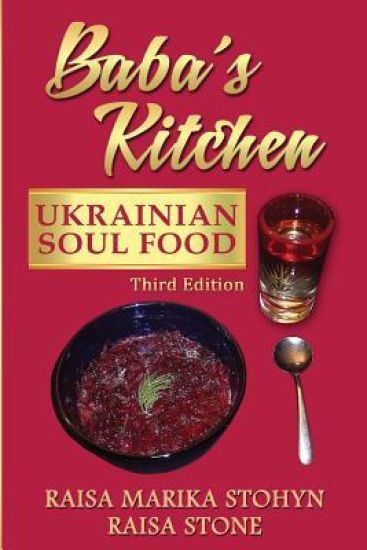
200 traditional Ukrainian recipes and home remedies, taught step by step as if grandma were at your side. Wild immigrant survival tales. Click on "Look Inside" at top of book cover photo for contents.Borshch, including VegetarianAn entire Holubtsi (Cabbage Rolls) chapterAn entire Varenyky (Perogies) chapterHoney CakeKhrustyky: Sweet Nothings, Ears, Angel WingsMakivnykTraditional Holiday customs and recipes for Easter & ChristmasKolach: Circle of Life BreadCompared to erotic games in the village bath & shoplifting live turkeys in your bloomers, immigrant life is beyond boring. So Baba (Grandma) is brewing up Old Country customs in her kitchen. She'll teach you to make delicious Ukrainian dishes the traditional & The Lazy Way, sabotage frenemies with garlic, & utter chilling Slavic curses such as, "May you be kicked by a duck "Between tales of magical encounters with Nature spirits & steaming bowls of borshch is the true confession of the author's elderly neighbour: she murdered her abusive husband.Imagine a mouth watering Honey Onion Sauce that recalls competing with cave bears and wild bees, and the seductive magic of preparing sweet delights for the Apple Harvest Blessing. In black & white text. -Ukrainian Canadian Congress Special Pick-Top 3 Ukrainian Cookbook & Cultural Book since 2015"Your book has us all laughing hysterically & uncontrollably Daikoyu=thank you " Capital Ukrainian Festival, Ottawa"Baba's Kitchen is a good companion to Savella Stechishin's book Traditional Ukrainian Cookery]. We will be presenting copies as awards at our year end dinner.." Los Angeles Ukrainian Cultural CentreIn a rollicking, entertaining read, Baba's Kitchen will lead you into the complex soul of Eastern Europe's Indigenous people.Ukrainian-Canadian Raisa Stone spent decades collecting outrageous stories and life advice, plus 200 recipes and home remedies from survivors of Soviet and Nazi terror---including her family. Raisa's narrator, Baba, is a composite of these invincible souls.Ukraine has been continuously inhabited by civilized, immensely inventive people for 44,000 years.For excerpts, video/audio clips and more, visit: www.ukrainiansoulfood.caUkrainians: first tamed horses, invented pants (for riding ), the bow and arrow, built homes from mammoth bone & pyramids older than Egypt's, & created Europe's first democratic constitution.Shamanic practices that sparked the original werewolf and Amazon legends (the latter documented by Greek physician Hippocrates) combine with recipes & customs reaching back to the Neolithic era._____________*Warning: 18+ Restricted*Wicked acts with honey and raspberries, pirates, cowboys, Kozaks, bald men, bad boys and mounted police officers.You'll laugh, you'll cry _____________________________________"I enjoy reading the stories as well as learning authentic Ukrainian dishes to cook for my family. I will be sharing these recipes with my daughters and teaching them how to cook A lovely book with something for everyone. You feel like Baba is turning the pages with you " Mattie Romanyshyn, Belfield, South Dakota"I found many recipes that I had been searching for since my time in the Carpathians in 2010. The one I looked for the most was a mushroom soup that to my pleasant surprise was here. I have cooked for friends and family since I received the book and 4 people have loved it so much they have ordered copies of their own. The humor is Ukrainian and part of what made me fall in love with Ukraine." Roberto Marquez, New Mexico
"Raise Your Head Up" offers a concise, comprehensive and practical roadmap for individuals navigating the challenging journey of post-concussion recovery. Drawing upon insights and tools from wellbeing science, this book provides evidence-based strategies to cultivate resilience, foster connection, and build joy throughout the post-concussion journey. With a focus on emotional wellbeing, this guide is crafted to empower readers, enabling them to reclaim control over their lives and rediscover joy and purpose. Each chapter provides actionable tools and exercises designed to help readers change their outlook and cultivate more positivity during their recovery process.Unlike conventional self-help guides, "Raise Your Head Up" adopts a no-nonsense approach, cutting through the clutter to deliver straightforward guidance that is both easy to understand and implement. Through empowering language and practical tools, readers are encouraged to take ownership of their recovery journey, propelling them toward meaningful positive shifts in their day to day life.Authored by a brain injury survivor, wellbeing educator, and resilience coach, this book combines knowledge and personal experience, recognizing the unique yet relatable nuances of the post-concussion experience. With compassion, empathy, and a touch of humor, the author candidly addresses the often overlooked aspects of living with a brain injury. Offering actionable strategies to navigate challenges surrounding thoughts, social relationships, acceptance, habits, and overcoming obstacles with confidence and resilience, readers are reminded that even in their toughest moments, they are not alone on this journey.
Elner is a lonely child, raised in a remote valley in postwar North East England, mainly by paternal grandparents. Her mother, a young Italian woman, finds living in with the paternal grandparents difficult. Her father, suffering from post-traumatic stress disorders, seeks his lost adolescence with a motorcycle gang. The parents start divorce proceedings as Elner starts school, aged four.Just as Elner begins to feel accepted and befriended, problems over family finances cause her grandparents to move, with her grandmother taking work as a cook-caretaker in a tied cottage home. Elner is made to change schools, wasting a year's progress and having problems making new friends. Her father finds work away from home, returning to his girlfriend at weekends.When Elner is eleven, her father and stepmother marry and move away. Elner passes her eleven-plus exam and enters a large highly competitive school of a thousand students aged eleven to eighteen. Her grandfather dies, and in a role reversal, she becomes her grandmother's carer.
Che sapore hanno l'amore e la passione?... il sangue e l'odio? Nel posto pi straordinario, affascinante e inospitale del nostro pianeta, i sentimenti non sono gli stessi che in altre latitudini... qui il sangue scorre nelle vene come liquido fuoco vivo. Amori e passioni, guerre tribali, razzie, intrighi e misteri, sanguinarie sette segrete, avventura e fantasia, qui, hanno spazi infiniti... Lo struggente sentimento che lega Rashid, il Rais pi temuto d'Arabia, alla principessa Jasmine regaler al lettore spasmi di vellutato piacere; la tenera e tormentata storia d'amore dello sceicco Harith per la bellissima Letizia gli riveler un mondo di magico splendore e l'amore proibito di sir Richard lord inglese, per l'indiana Zaira gli doner brividi inquieti.
An indispensable guide to welcoming children—from babies to teens—to a lifelong love of reading, written by Pamela Paul and Maria Russo, editors of The New York Times Book Review. Do you remember your first visit to where the wild things are? How about curling up for hours on end to discover the secret of the Sorcerer’s Stone? Combining clear, practical advice with inspiration, wisdom, tips, and curated reading lists, How to Raise a Reader shows you how to instill the joy and time-stopping pleasure of reading. Divided into four sections, from baby through teen, and each illustrated by a different artist, this book offers something useful on every page, whether it’s how to develop rituals around reading or build a family library, or ways to engage a reluctant reader. A fifth section, “More Books to Love: By Theme and Reading Level,” is chockful of expert recommendations. Throughout, the authors debunk common myths, assuage parental fears, and deliver invaluable lessons in a positive and easy-to-act-on way.
Säkenöivä romaani kunnianhimosta, yrityselämän kiemuroista ja mahtavasta liikenaisesta Marimekon takana. Marimekon perustaja Armi Ratia oli kuuluisa paitsi tinkimättömästä johtamistyylistään, myös oikuistaan ja lukuisista miessuhteistaan, joista tunnetuin oli Urho Kekkonen. Aviomies Viljo Ratia pysyi Armin vierellä korvaamattomana tukijana - kunnes hänen mittansa täyttyi.Tästä kaikesta Raija Oranen kertoo jäljittelemättömällä tyylillään, värikkäästi ja mukaansatempaavasti. Hän näyttää vaikutusvaltaisen liikenaisen loisteliaan uran, joka vaati ankaraa työtä, ponnistuksia ja paljon samppanjaa. Samalla Armi Ratian tarina läpivalaisee maamme lähihistoriaa pettämättömällä tarkkuudella.