

Kirjahaku
Etsi kirjoja tekijän nimen, kirjan nimen tai ISBN:n perusteella.
1000 tulosta hakusanalla Ralph Salimpour Dch Faap




Ralph is a picture book featuring truthful events in the lives of Ralph (dog), George (cat), Elaine Morrison, and friend Shadow (black dog) in Toronto, Jerusalem, and British Columbia - although Ralph does disclaim any incidence of himself parachuting. Ralph is volume 1 in the "Time, space, all you need is 8" series depicting philosophy on the meaning of life and is suitable for all ages.

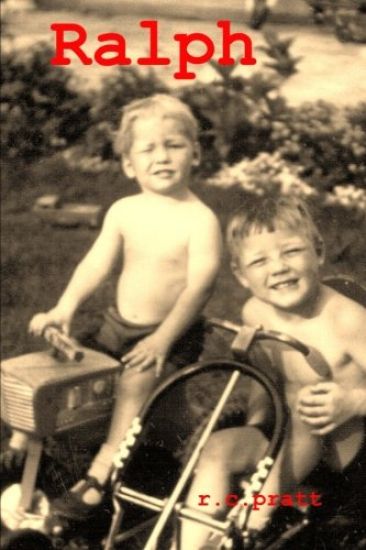




Ralph was a self-made man who took the good examples set by his parents and grandparents, started with very little, cut his losses when necessary, endured the Great Depression without folding and turned a half section of Iowa farm land into a prosperous operation. In so doing he passed on his work ethic and sound judgement to his family and provided a good life for himself and his family. Serving his country when asked to do so may have saved him from getting mired in the Montana homesteading disaster. But maybe his keen observation after experiencing both Montana life and Iowa life helped him make the right decision. That is for you to ponder and decide after reading the book. This is his story.

Ralph Ellison, Temporal Technologist examines Ralph Ellison's body of work as an extended and ever-evolving expression of the author's philosophy of temporalitya philosophy synthesized from the writings of Henri Bergson and Friedrich Nietzsche that anticipates the work of Gilles Deleuze. Germana presents Ellison's theory of temporality and social change as going up against all forms of linear causality and historical determinisma theory that views time as a multiplicity of dynamic processes, rather than a static container for the events of our lives. Integral to this theory is Ellison's observation that the social, cultural, and legal processes constitutive of racial formation are embedded in static temporalities reiterated by historians and sociologists. In other words, Ellison's critique of US racial history is, fundamentally, a matter of time. This book shows how Ellison's fiction, criticism, and photography reclaims technologies through which static time and linear history are formalizedin effect, revealing intensities implicit in the present that, if actualized, could help us "act un-historically." The result is a reinterpretation of Ellison's oeuvre, as well as an extension of Ellison's ideas about the dynamism of becoming and the open-endedness of the future. Ralph Ellison, Temporal Technologist reveals the chaos of possibility lurking beneath the patterns of living we mistake for enduring certainties.
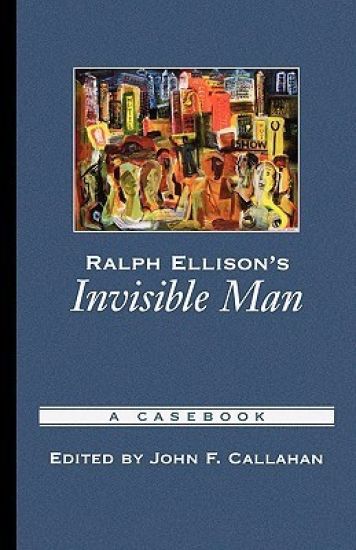
Ralph Ellison's Invisible Man
Oxford University Press Inc
2004
nidottu
Ralph Ellisons' Invisible Man: A Casebook offers students and scholars a rich variety of interpretations from which to fashion their own views of the novels and the man who created it. Both Ellison's comments, a number of which appear in print here for the first time, and those of ten distignuished scholars of American and African-American literature take the position that there can be no last word on Invisible Man. Different as they are, the essays share a respect for the novel's fluidity and for every reader's encounter with its narrator, story, and meanings.

Unlike some other reproductions of classic texts (1) We have not used OCR(Optical Character Recognition), as this leads to bad quality books with introduced typos. (2) In books where there are images such as portraits, maps, sketches etc We have endeavoured to keep the quality of these images, so they represent accurately the original artefact. Although occasionally there may be certain imperfections with these old texts, we feel they deserve to be made available for future generations to enjoy.

Unlike some other reproductions of classic texts (1) We have not used OCR(Optical Character Recognition), as this leads to bad quality books with introduced typos. (2) In books where there are images such as portraits, maps, sketches etc We have endeavoured to keep the quality of these images, so they represent accurately the original artefact. Although occasionally there may be certain imperfections with these old texts, we feel they deserve to be made available for future generations to enjoy.

This is the penultimate volume in the continuation of Ralph L. Rusk's 1939 edition of Emerson's letters. Vol 9 covers the years 1860-1869, when Emerson switched from using small, local publishers to the prestigious firm of Ticknor and Fields. This edition contains correspondence with the major political figures of the time, including Henry David Thoreau, Samuel Gray Ward, Hermann Grimm, John Sterling and William Henry Furness. It also contains new information about Emerson's response to Thoreau's death in 1862.

This final volume marks the twilight years of this American writer's life. In the seventh decade of his life, Emerson was still a prolific writer and speaker, publishing "Society and Solitude" (1870), "Parnassus" (1875), and "Letters and Societal Aims" (1876) and lecturing frequently at Harvard University. Since Columbia University Press first published Ralph L. Rusk's six-volume set of "The Letters" in 1939, some 2000 new letters have been uncovered. These letters, including many to Henry David Thoreau, William Henry Furness, Margaret Fuller, and Thomas Carlyle among others offer an intimate portrait of Emerson. In the final four volumes of this edition, Tilton provides detailed annotations to create a running documentary history of Ralph Waldo Emerson's life and times. Volume Ten includes a name index covering volumes seven through ten, supplementing the index to the first six volumes included at the end of Volume Six.

Trieste Publishing has a massive catalogue of classic book titles. Our aim is to provide readers with the highest quality reproductions of fiction and non-fiction literature that has stood the test of time. The many thousands of books in our collection have been sourced from libraries and private collections around the world.The titles that Trieste Publishing has chosen to be part of the collection have been scanned to simulate the original. Our readers see the books the same way that their first readers did decades or a hundred or more years ago. Books from that period are often spoiled by imperfections that did not exist in the original. Imperfections could be in the form of blurred text, photographs, or missing pages. It is highly unlikely that this would occur with one of our books. Our extensive quality control ensures that the readers of Trieste Publishing's books will be delighted with their purchase. Our staff has thoroughly reviewed every page of all the books in the collection, repairing, or if necessary, rejecting titles that are not of the highest quality. This process ensures that the reader of one of Trieste Publishing's titles receives a volume that faithfully reproduces the original, and to the maximum degree possible, gives them the experience of owning the original work.We pride ourselves on not only creating a pathway to an extensive reservoir of books of the finest quality, but also providing value to every one of our readers. Generally, Trieste books are purchased singly - on demand, however they may also be purchased in bulk. Readers interested in bulk purchases are invited to contact us directly to enquire about our tailored bulk rates.