Kirjojen hintavertailu. Mukana 11 241 044 kirjaa ja 12 kauppaa.

Kirjahaku

Etsi kirjoja tekijän nimen, kirjan nimen tai ISBN:n perusteella.

1000 tulosta hakusanalla Ralph Skea

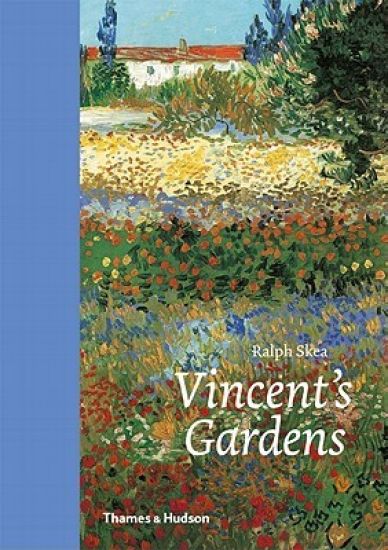
Vincent's Gardens

Vincent's Gardens

Ralph Skea

Thames Hudson Ltd
2011
sidottu
This glorious gift book presents Van Gogh’s lifelong love affair with the garden. Illustrated with an extraordinary range of works, from iconic oils such as Irises to exquisite etchings and intimate sketches, the book is a visual feast. The images are illuminated by a sensitive commentary, which augments the well-known facts of Van Gogh’s life by exploring the importance of the garden locations he sought out wherever he went.
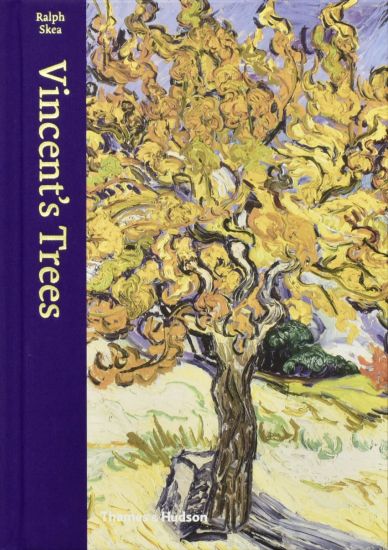
Vincent's Trees

Vincent's Trees

Ralph Skea

Thames Hudson Ltd
2013
sidottu
Vincent van Gogh (1853–1890) felt a profound empathy with the natural environment, and considered the spiritual essence of trees to be comparable with that of human figures. Vincent’s Trees traces Van Gogh’s development as a painter of trees in the natural landscape – from his home province of North Brabant, through Paris to Provence. Ralph Skea’s elegant prose is accompanied by Van Gogh’s vibrant illustrations of trees, which range from pencil and ink sketches to watercolours and oil. Stylistic experiments encompassing Pointillism and compositions inspired by Japanese prints give way to the expressive, painterly depictions of his later work. The book also includes quotes from Van Gogh’s letters, which convey the depth of his feeling for the natural landscape, and the force with which it affected him.
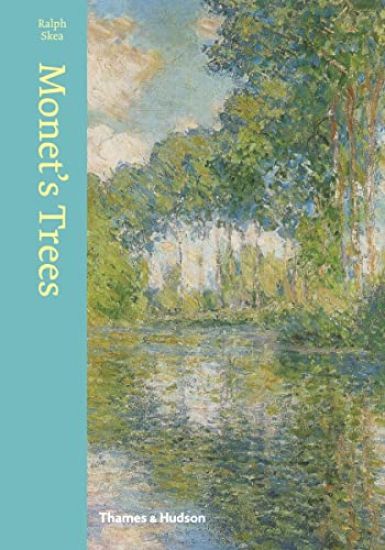
Monet's Trees

Monet's Trees

Ralph Skea

Thames Hudson Ltd
2015
sidottu
'I perhaps owe it to flowers', wrote Claude Monet (1840-1926), ‘that I became a painter.’ One of the leading figures of the Impressionist movement and perhaps the most celebrated landscape painter of his age, Monet dedicated his life to capturing the subtleties of the natural world. Trees – willows enveloped in the eerie mists of the Seine, palm trees beneath the bright Mediterranean sun or poplars heavily laden with snow – became a significant motif in his work, and he used them to experiment with an extraordinary variety of tones and colours. Ralph Skea’s account is split into five main chapters, each focusing on a different theme: Monet’s earliest drawings and paintings of trees; his atmospheric use of rivers and coastlines, from the English Channel to the Italian Riviera; the fields, farmlands and orchards of France; parks and gardens in both the city and the countryside, including his series of paintings featuring trees reflected in his water-lily pond; and his muted depictions of trees in winter. The result is a succint and highly accessible exploration of some of the best-loved landscapes in art.
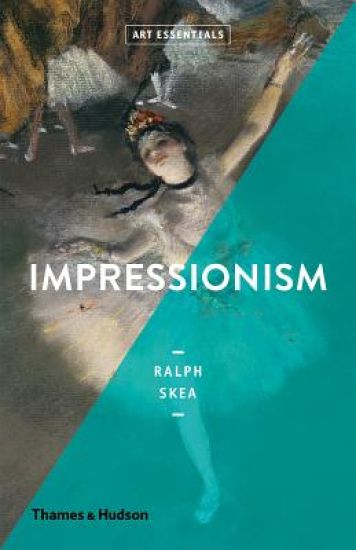
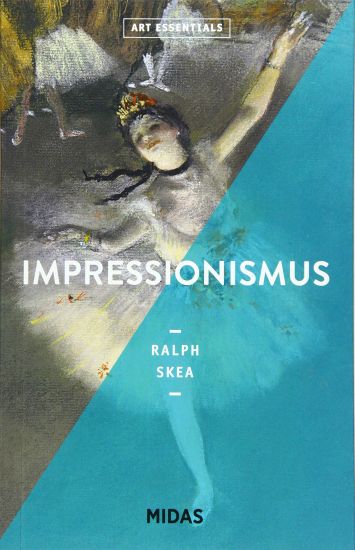
Impressionism

Impressionism

Ralph Skea

Thames Hudson Ltd
2019
nidottu
It is often forgotten just how provocative Impressionist canvases seemed when they were first exhibited in 1874. The advocates of the new style rejected the established principles of art prevalent at that time in France. This book traces Impressionism’s origins to its spread to America and Australia. Ralph Skea shows how Impressionist artists transformed everyday subject matter. Daringly using colour and rapid brushstrokes, the Impressionists worked out of doors, creating paintings that captured the transient effects of light and feeling. Impressionism’s initial shock factor gradually gave way to widespread acceptance, but only now can we appreciate how profound its influence has been on modern art.
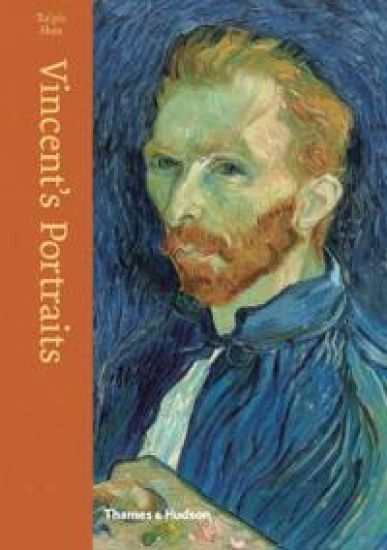
Vincent's Portraits

Vincent's Portraits

Ralph Skea

Thames Hudson Ltd
2018
sidottu
Despite his posthumous fame as a painter of flowers, still-lifes, gardens, landscapes and city scenes, during his lifetime Vincent van Gogh believed that his portraits constituted his most important works. Although as an artist he was ‘touched by so many different things’, he was nevertheless committed to the art of portraiture – a quality that distinguished him from his contemporaries. Van Gogh was passionate in his avoidance of bland, photographic resemblances, in the hope of capturing the essential character of his models by means of expressive colour and brushwork. Showcasing a dramatic set of portraits created during Van Gogh’s ten-year career, this book reflects the strong visual impact with which the artist captured the diversity of contemporary life. In his many portraits, we can discern the artist’s desire to record expressively a number of themes, from the plight of the agricultural workers in his native Brabant and the destitution of prostitutes and their children in urban Europe, to the lives of his cosmopolitan acquaintances in Paris, including café owners and art dealers. It was here that he began his remarkable sequence of self-portraits. With reference to Van Gogh’s extensive correspondence, Skea elaborates how the artist perceived his chosen subjects as would a writer, and how he felt that his portraits should somehow evoke what he considered to be the spiritual underpinning of human existence
Ralph

Ralph

Elaine Morrison

Createspace Independent Publishing Platform
2011
pokkari
Ralph is a picture book featuring truthful events in the lives of Ralph (dog), George (cat), Elaine Morrison, and friend Shadow (black dog) in Toronto, Jerusalem, and British Columbia - although Ralph does disclaim any incidence of himself parachuting. Ralph is volume 1 in the "Time, space, all you need is 8" series depicting philosophy on the meaning of life and is suitable for all ages.
Ralph

Ralph

Clarence Ralph Fitz; Mardelle Marie Fitz Meyer

Fideli Publishing Inc.
2025
pokkari
Ralph was a self-made man who took the good examples set by his parents and grandparents, started with very little, cut his losses when necessary, endured the Great Depression without folding and turned a half section of Iowa farm land into a prosperous operation. In so doing he passed on his work ethic and sound judgement to his family and provided a good life for himself and his family. Serving his country when asked to do so may have saved him from getting mired in the Montana homesteading disaster. But maybe his keen observation after experiencing both Montana life and Iowa life helped him make the right decision. That is for you to ponder and decide after reading the book. This is his story.
Ralph Ellison, Temporal Technologist

Ralph Ellison, Temporal Technologist

Michael Germana

Oxford University Press Inc
2018
sidottu
Ralph Ellison, Temporal Technologist examines Ralph Ellison's body of work as an extended and ever-evolving expression of the author's philosophy of temporalitya philosophy synthesized from the writings of Henri Bergson and Friedrich Nietzsche that anticipates the work of Gilles Deleuze. Germana presents Ellison's theory of temporality and social change as going up against all forms of linear causality and historical determinisma theory that views time as a multiplicity of dynamic processes, rather than a static container for the events of our lives. Integral to this theory is Ellison's observation that the social, cultural, and legal processes constitutive of racial formation are embedded in static temporalities reiterated by historians and sociologists. In other words, Ellison's critique of US racial history is, fundamentally, a matter of time. This book shows how Ellison's fiction, criticism, and photography reclaims technologies through which static time and linear history are formalizedin effect, revealing intensities implicit in the present that, if actualized, could help us "act un-historically." The result is a reinterpretation of Ellison's oeuvre, as well as an extension of Ellison's ideas about the dynamism of becoming and the open-endedness of the future. Ralph Ellison, Temporal Technologist reveals the chaos of possibility lurking beneath the patterns of living we mistake for enduring certainties.
Ralph Ellison's Invisible Man

Ralph Ellison's Invisible Man

Oxford University Press Inc
2004
nidottu
Ralph Ellisons' Invisible Man: A Casebook offers students and scholars a rich variety of interpretations from which to fashion their own views of the novels and the man who created it. Both Ellison's comments, a number of which appear in print here for the first time, and those of ten distignuished scholars of American and African-American literature take the position that there can be no last word on Invisible Man. Different as they are, the essays share a respect for the novel's fluidity and for every reader's encounter with its narrator, story, and meanings.