

Kirjahaku
Etsi kirjoja tekijän nimen, kirjan nimen tai ISBN:n perusteella.
1000 tulosta hakusanalla Ralph W. Harrington

Semifinalist, 22nd Annual Robert F. Kennedy Book Award, 2002 Finalist, Spur Award in western nonfiction biography, Western Writers of America, 2002Revered by many Texans and other Americans as "the People's Senator," Ralph Webster Yarborough (1903-1996) fought for "the little people" in a political career that places him in the ranks of the most influential leaders in Texas history. The only U. S. Senator representing a former Confederate state to vote for every significant piece of modern civil rights legislation, Yarborough became a cornerstone of Lyndon Johnson's Great Society programs in the areas of education, environmental preservation, and health care. In doing so, he played a major role in the social and economic modernization of Texas and the American South. He often defied conventional political wisdom with his stands against powerful political interests and with his vocal opposition to the Vietnam War. Yet to this day, his admirers speak of Yarborough as an inspiration for public service and a model of political independence and integrity.This biography offers the first in-depth look at the life and career of Ralph Yarborough. Patrick L. Cox draws on Yarborough's personal and professional papers, as well as on extensive interviews with the Senator and his associates, to follow Yarborough from his formative years in East Texas through his legal and judicial career in the 1930s, decorated military service in World War II, unsuccessful campaigns for Texas governor in the 1950s, distinguished tenure in the United States Senate from 1957 to 1970, and return to legal practice through the 1980s.Although Yarborough's liberal politics set him at odds with most of the Texas power brokers of his time, including Lyndon Johnson, his accomplishments have become part of the national fabric. Medicare recipients, beneficiaries of the Cold War G. I. Bill, and even beachcombers on Padre Island National Seashore all share in the lasting legacy of Senator Ralph Yarborough.
Educational Evaluation: Classic Works of Ralph W. Tyler
Kluwer Academic Publishers
1988
sidottu
I personally learned to know Ralph Tyler rather late in his career when, in the 1960s, I spent a year as a Fellow at the Center for Advanced Study in the Behavioral Sciences at Stanford. His term of office as Director of the Center was then approaching its end. This would seem to disqualify me thoroughly from preparing a Foreword to this "Classic Works. " Many of his colleagues and, not least, of his students at his dear Alma Mater, the University of Chicago, are certainly better prepared than I to put his role in American education in proper perspective. The reason for inviting me is, I assume, to bring out the influence that Tyler has had on the international educational scene. I am writing this Foreword on a personal note. Ralph Tyler's accomplishments in his roles as a scholar, policy maker, educational leader, and statesman have been amply put on record in this book, not least in the editors' Preface. My reflections are those of an observer from abroad but who, over the last 25 years, has been close enough to overcome the aloofness of the foreigner. Tyler has over many years been criss-crossing the North American con tinent generously giving advice to agencies at the federal, state, and local levels, lecturing, and serving on many committees and task forces that have been instrumental in shaping American education.
Educational Evaluation: Classic Works of Ralph W. Tyler
Springer
2011
nidottu
I personally learned to know Ralph Tyler rather late in his career when, in the 1960s, I spent a year as a Fellow at the Center for Advanced Study in the Behavioral Sciences at Stanford. His term of office as Director of the Center was then approaching its end. This would seem to disqualify me thoroughly from preparing a Foreword to this "Classic Works. " Many of his colleagues and, not least, of his students at his dear Alma Mater, the University of Chicago, are certainly better prepared than I to put his role in American education in proper perspective. The reason for inviting me is, I assume, to bring out the influence that Tyler has had on the international educational scene. I am writing this Foreword on a personal note. Ralph Tyler's accomplishments in his roles as a scholar, policy maker, educational leader, and statesman have been amply put on record in this book, not least in the editors' Preface. My reflections are those of an observer from abroad but who, over the last 25 years, has been close enough to overcome the aloofness of the foreigner. Tyler has over many years been criss-crossing the North American con tinent generously giving advice to agencies at the federal, state, and local levels, lecturing, and serving on many committees and task forces that have been instrumental in shaping American education.

Kindertransport: A Lifelong Journey of Survival and Redemption: The Story of Ralph W. Mollerick, A Kind
David H. Herschler
Createspace Independent Publishing Platform
2017
nidottu

The Life & Times of Ralph Marcum
Ralph W. Marcum; Charles E. Hayes
Createspace Independent Publishing Platform
2014
nidottu
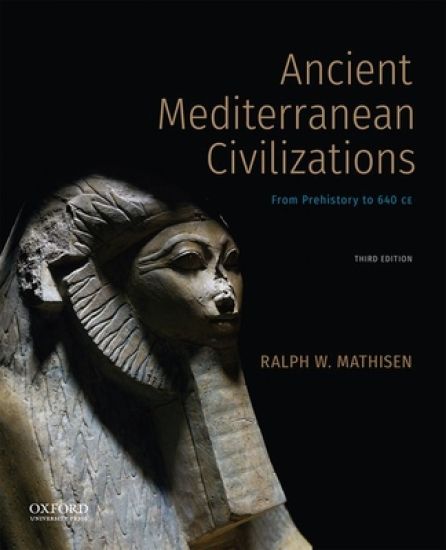
Ancient Mediterranean Civilizations: From Prehistory to 640 CE
Ralph W. Mathisen
Oxford Univ Pr
2020
nidottu
Challenging the stereotypes and myths that typically characterize students' understanding of antiquity, Ancient Mediterranean Civilizations: From Prehistory to 640 CE, Third Edition, focuses on continuity and connections, along with cultural diffusion and cultural diversity, to show how history is a cumulative process and that numerous similar themes recur in different times and places. The text also explores sensitive issues and debates including attitudes toward race, ethnicity, and tolerance; gender issues and roles; slavery; social mobility; religion; political evolution; the nature of government; and imperialism.
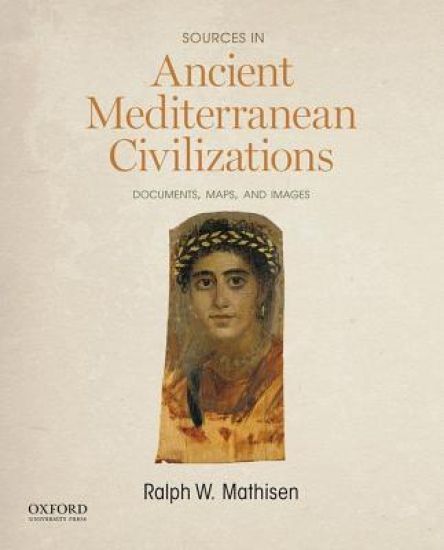
Sources in Ancient Mediterranean Civilizations: Documents, Maps, and Images
Ralph W. Mathisen
Oxford University Press
2016
nidottu
From the author of the best-selling Ancient Mediterranean Civilizations: From Prehistory to 640 CE, Second Edition (2015), Sources in Ancient Mediterranean Civilizations: Documents, Maps, and Images is both a stand-alone sourcebook and a companion reader. FEATURES 133 lengthy primary sources in translation, 14 maps, and 133 illustrations give equal coverage to the Near East, Greece, Roman Republic and Empire, and Late Antiquity Rather than simply presenting undigested snippets of text, Sources in Ancient Mediterranean Civilizations provides fully annotated, longer text excerpts, edited for readability, sense, consistency, and flow Every chapter opens with a full-page map that sets the sources in geographical context, and each document is accompanied by a related image and commentary that establish its authorship, historical context, and significance Includes two chapters on topics not covered in any other sourcebook: Accounts of the Creation of the Universe, Humans, and the Flood and Civilization beyond the Near East, Greece, and Rome
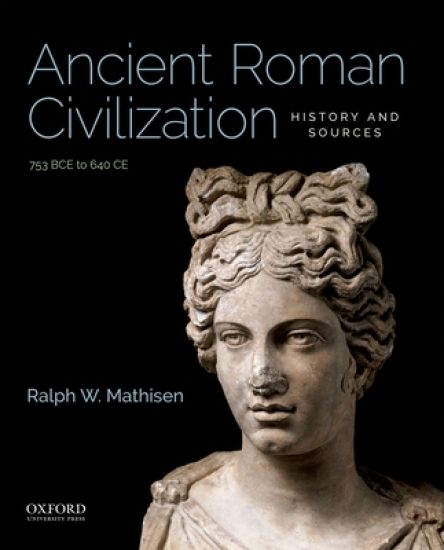
Ancient Roman Civilization: History and Sources
Ralph W. Mathisen
OXFORD UNIVERSITY PRESS INC
2018
nidottu
Ancient Roman Civilization: History and Sources: 753 BCE to 640 CE integrates in a single volume both a historical narrative and parallel translated primary sources. The book's unifying theme of cultural confrontation--how the Romans interacted or engaged with a multitude of other Mediterranean, Asiatic, and African cultures--is interwoven throughout.

Ancient Mediterranean Civilizations: From Prehistory to 640 Ce
Ralph W. Mathisen
Oxford University Press, USA
2020
muu
Challenging the stereotypes and myths that typically characterize students' understanding of antiquity, Ancient Mediterranean Civilizations: From Prehistory to 640 CE, Third Edition, focuses on continuity and connections, along with cultural diffusion and cultural diversity, to show howhistory is a cumulative process and that numerous similar themes recur in different times and places. The text also explores sensitive issues and debates including attitudes toward race, ethnicity, and tolerance; gender issues and roles; slavery; social mobility; religion; political evolution; thenature of government; and imperialism.
Basic Principles of Curriculum and Instruction
Ralph W. Tyler; Peter S. Hlebowitsh
University of Chicago Press
2013
nidottu
In 1949, a small book had a big impact on education. In just over one hundred pages, Ralph W. Tyler presented the concept that curriculum should be dynamic, a program under constant evaluation and revision. Curriculum had always been thought of as a static, set program, and in an era preoccupied with student testing, he offered the innovative idea that teachers and administrators should spend as much time evaluating their plans as they do assessing their students. Since then, Basic Principles of Curriculum and Instruction has been a standard reference for anyone working with curriculum development. Although not a strict how-to guide, the book shows how educators can critically approach curriculum planning, studying progress and retooling when needed. Its four sections focus on setting objectives, selecting learning experiences, organizing instruction, and evaluating progress. Readers will come away with a firm understanding of how to formulate educational objectives and how to analyze and adjust their plans so that students meet the objectives. Tyler also explains that curriculum planning is a continuous, cyclical process, an instrument of education that needs to be fine-tuned. This emphasis on thoughtful evaluation has kept Basic Principles of Curriculum and Instruction a relevant, trusted companion for over sixty years. And with school districts across the nation working feverishly to align their curriculum with Common Core standards, Tyler's straightforward recommendations are sound and effective tools for educators working to create a curriculum that integrates national objectives with their students' needs.
The Word Biblical Commentary delivers the best in biblical scholarship, from the leading scholars of our day who share a commitment to Scripture as divine revelation. This series emphasizes a thorough analysis of textual, linguistic, structural, and theological evidence. The result is judicious and balanced insight into the meanings of the text in the framework of biblical theology. These widely acclaimed commentaries serve as exceptional resources for the professional theologian and instructor, the seminary or university student, the working minister, and everyone concerned with building theological understanding from a solid base of biblical scholarship. Overview of Commentary OrganizationIntroduction—covers issues pertaining to the whole book, including context, date, authorship, composition, interpretive issues, purpose, and theology.Each section of the commentary includes:Pericope Bibliography—a helpful resource containing the most important works that pertain to each particular pericope.Translation—the author’s own translation of the biblical text, reflecting the end result of exegesis and attending to Hebrew and Greek idiomatic usage of words, phrases, and tenses, yet in reasonably good English.Notes—the author’s notes to the translation that address any textual variants, grammatical forms, syntactical constructions, basic meanings of words, and problems of translation.Form/Structure/Setting—a discussion of redaction, genre, sources, and tradition as they concern the origin of the pericope, its canonical form, and its relation to the biblical and extra-biblical contexts in order to illuminate the structure and character of the pericope. Rhetorical or compositional features important to understanding the passage are also introduced here.Comment—verse-by-verse interpretation of the text and dialogue with other interpreters, engaging with current opinion and scholarly research.Explanation—brings together all the results of the discussion in previous sections to expose the meaning and intention of the text at several levels: (1) within the context of the book itself; (2) its meaning in the OT or NT; (3) its place in the entire canon; (4) theological relevance to broader OT or NT issues.General Bibliography—occurring at the end of each volume, this extensive bibliography contains all sources used anywhere in the commentary.
This book, first published in 1935, is an examination of Hume’s theories of causal inference and belief in substance and his analysis of the understanding.
This book, first published in 1935, is an examination of Hume’s theories of causal inference and belief in substance and his analysis of the understanding.
First published in 1994, Five Fast Pennies was written by the Co-Founder of Food Lion, Inc., Ralph W. Ketner, to tell the story of the challenges and opportunities he faced throughout his life and career. Accessibly written, the book provides a detailed insight into Ketner’s philosophy of "Five fast pennies instead of one slow nickel", his views on success, and his journey from childhood through to Co-Founder of Food Lion, Inc., and beyond.

First published in 1994, Five Fast Pennies was written by the Co-Founder of Food Lion, Inc., Ralph W. Ketner, to tell the story of the challenges and opportunities he faced throughout his life and career. Accessibly written, the book provides a detailed insight into Ketner’s philosophy of "Five fast pennies instead of one slow nickel", his views on success, and his journey from childhood through to Co-Founder of Food Lion, Inc., and beyond.

A shop-floor guide to the machine soldering of electronics Sound electrical connections are the operational backbone of every piece of electronic equipmentand the key to success in electronics manufacturing. The Handbook of Machine Soldering is dedicated to excellence in the machine soldering of electrical connections. Self-contained, comprehensive, and down-to-earth, it cuts through jargon, peels away outdated notions, and presents all the information needed to select, install, and operate machine soldering equipment. This fully updated and revised volume covers all of the new technologies and processes that have emerged in recent years, most notably the use of surface mount technology (SMT). Supplemented with 200 illustrations, this thoroughly accessible text Describes reflow and wave soldering in detail, including reflow soldering of SMT boards and the use of nitrogen blankets *Explains the setup, operation, and maintenance of a variety of soldering machines *Discusses theory, selection, and control methods for solder, fluxes, and solder paste *Defines standards of quality and shows how they can be achieved and maintained Widely accepted in industrial and military circles, The Handbook of Machine Soldering is an important resource for production managers, engineers, supervisors, operators, and anyone involved day-to-day in electronic manufacturing. It is a proven text for upper-level undergraduate college courses and for soldering seminars geared toward apprentices and future managers.
People, Personal Expression, and Social Relations in Late Antiquity, Volume I
Ralph W. Mathisen
The University of Michigan Press
2003
sidottu
Late Antiquity, which lies between Classical Antiquity and the Middle Ages (ca. A.D. 250-750), heralded the gradual decline of Mediterranean classical civilization, and the initial formation of a strictly western European, Christian society. During this period, three momentous developments threatened the paternalistic Roman social system: the rise of the Christian church, the disintegration of the Roman Empire in the west, and the establishment of the barbarian kingdoms.In this volume Ralph W. Mathisen provides a new way of looking at the social transformations taking place in the Late Roman and early medieval worlds. During this tumultuous era, many marginalized groups found opportunities for literary self expression previously enjoyed only by Rome's secular male elite. Mathisen uses this literature of Late Antiquity to bring to light the personal concerns, private interactions, and family lives of the age, including a thorough exploration of the roles of women and children. Rather than extracting single words or phrases from the Latin documents, this volume gives concentrated attention to its literary sources. Mathisen provides translations of extended passages, allowing the literature of Late Antiquity to be interpreted, understood, and appreciated in the context of its own times.Ralph W. Mathisen is Professor of Ancient and Byzantine History; Louise Fry Scudder Professor of Humanities; and Director, Biographical Database for Late Antiquity at the University of South Carolina.
People, Personal Expression, and Social Relations in Late Antiquity, Volume II
Ralph W. Mathisen
The University of Michigan Press
2003
sidottu
Late Antiquity, which lies between Classical Antiquity and the Middle Ages (ca. A.D. 250-750), heralded the gradual decline of Mediterranean classical civilization, and the initial formation of a strictly western European, Christian society. During this period, three momentous developments threatened the paternalistic Roman social system: the rise of the Christian church, the disintegration of the Roman Empire in the west, and the establishment of the barbarian kingdoms.The first of its type, this volume presents a collection of Latin source documents illustrating the social upheaval taking place in the Late Roman and early medieval worlds. The texts included in this volume provide the original Latin for the selections that are translated in People, Personal Expression, and Social Relations in Late Antiquity, Volume I. The 140 selected texts gathered from 70 different sources offer the reader firsthand experience with the ways that the Latin language was being used during the transformative period of Late Antiquity.Ralph W. Mathisen is Professor of Ancient and Byzantine History; Louise Fry Scudder Professor of Humanities; and Director, Biographical Database for Late Antiquity at the University of South Carolina.