Kirjojen hintavertailu. Mukana 11 244 527 kirjaa ja 12 kauppaa.

Kirjahaku

Etsi kirjoja tekijän nimen, kirjan nimen tai ISBN:n perusteella.

1000 tulosta hakusanalla Raman Mehrzad

Student Success in Medical School

Student Success in Medical School

Raman Mehrzad

Elsevier - Health Sciences Division
2021
nidottu
Using proven methods of studying, learning, and reading, Student Success in Medical School delivers the practical, real-world information you need to optimize your learning and analytic abilities in medical school and beyond. Written by a medical doctor who understands exactly what it takes to increase educational performance, this comprehensive guide covers all the important elements involved in learning new knowledge, how to balance your studies and clinical rotations, and most importantly, how to apply knowledge in clinical practice. Explore the proven methods of studying, learning, and reading that work best for different types of students-all based on the latest research in learning strategies and why they're beneficial. Learn the best strategies for taking different types of exams, time management, and how to balance your studies with a healthy lifestyle. Discover how to read faster, learn more efficiently, and apply the knowledge to your field. Benefit from concise, easy-to-read chapters on stress management, healthcare literacy, motivation and mindset, goals and goal setting, accelerated learning, mentors, memorization techniques, and much more. Enhanced eBook version included with purchase. Your enhanced eBook allows you to access all of the text, figures, and references from the book on a variety of devices.

12 i alle fag

12 i alle fag

Raman Mehrzad

Gyldendal Trade 150
2019
nidottu
Vil du gå ud af folkeskolen og gymnasiet med topkarakterer? Du tror måske, det er umuligt, at du ikke er intelligent nok, eller at du ikke orker at kæmpe så hårdt. Men så kan du glæde dig over, at du tager fejl. Alle kan nemlig få gode karakterer – i alle fag. Og hvis du lærer dig studieteknikkerne og tilegner dig den mentalitet, som bogen 12 i alle fag står for, gælder det også dig. 12-tals-studenten Raman Mehrzad, der i dag er læge, forfatter, foredragsholder og selvstændig erhvervsdrivende, viser dig, hvordan du finder motivationen til at lykkes i skolen, og hvordan du opstiller mål og delmål. Desuden lærer du at planlægge og prioritere, at komme lærere og kammerater i møde, læse til eksamen og håndtere krisesituationer. Sidst, men ikke mindst får du at vide, hvordan du forbedrer din indlæringsevne gennem motion, kost og effektive husketeknikker. 12 i alle fag henvender sig til elever i folkeskolens ældste klasser og til gymnasieelever – samt alle andre, der ønsker at få bedre studieresultater.
Doktorns recept på ett yngre och friskare liv

Doktorns recept på ett yngre och friskare liv

Raman Mehrzad

Ego förlag i Stockholm
2009
isokokoinen pokkari
Nu behöver du inte läsa 15 böcker på flera tusen sidor för att leva ett friskare liv. Läkarstudenten Raman Mehrzad, tillsammans med Plastikkirurgen Elisabet Gudmundsdottir visar i den här boken hur vi alla kan göra för att hålla sjukdomar på avstånd och leva ett friskare, yngre och längre liv. Allt baserat på forskning och de senaste rönen. Tipsen är konkreta och passar alla som vill leva ett friskare liv med bättre hälsa. Här är vad receptet innehåller: Så enkelt minskar du dina risker för att få sjukdomar Hur du minskar dina risker för att drabbas av hjärt- och kärlsjukdomar Hur du minskar riskerna att drabbas av stroke. Hur du minskar riskerna att få cancer Hur du blir din egen doktor och håller koll på dig själv Kroppens varningar som du inte får ignorera Lär dig att bli lyckligare Hur hela din livsstil påverkar din hälsa och vad du kan göra åt det Hur du tar hand om dig själv och vad du vinner på det Hur du ska leva för att leva friskare och längre Bli yngre på cellnivå det är faktiskt möjligt Rätt kost så här lätt är det att äta rätt Hemligheterna med att äta rätt och på rätt sätt Vad du ska äta och absolut inte äta för att hålla dig ung och pigg Så här ska du äta frukost lunch och middag för att hålla dig friskare Rörelse Positiva saker som händer med en kropp som börjar röra sig Varför motion är som att borsta tänderna Så gör du träning som är kul Positiva effekter av träning som gör dig yngre 17 sjukdomar som du kan slippa om du tränar Vad du ska äta när du tränar och hur du ska tänka Komplett träningsprogram för att komma igång (som passar alla) Din psykiska hälsa påverkar allt Konsten att sluta stressa metoderna som hjälper Så får du en mycket bättre sömn Övningar som hjälper dig att bli lugnare som människa Sex och hälsa Praktiska tips Hur du går ner i vikt varaktigt och på riktigt Komplett kostschema för dig som vill gå ner i vikt Bli aldrig mer förkyld metoden som fungerar Hur du slutar röka för alltid och blir friskare Bonusdelen - Bli vackrare tips direkt från plastikkirurgen Hur du tar hand om rynkor och dålig hy Hudförändringar att vara på sin vakt emot Hur du minskar celluliter Skönhetsoperationer Hur du förebygger eksem, psoriasis och andra hudsjukdomar Så håller du huden ung och frisk Och mycket mer
Raman Amplifiers for Telecommunications 1

Raman Amplifiers for Telecommunications 1

Springer-Verlag New York Inc.
2003
sidottu
I remember vividly the ?rst time that I heard about the ?ber ampli?er. At that time, of course, it was the erbium-doped ?ber ampli?er, the predecessor of the Raman ampli?er that is the subject of this book. It was an early morning in a forgotten year in Murray Hill, New Jersey at one of our Bell Labs monthly research staff meetings. About twenty directors and executive directors of research organizations clustered around a long table in the imposing executive conference room. Arno Penzias, the vice president of research, presided at the foot of the table. Everyone who participated in those research staff meetings will long remember their culture and atmosphere. Arno would pick an arbitrary starting point somewhere around the table, and the designated person would head to the front of the table to give a short talk on “something new” in his or her research area. This ?rst speaker would invariably ?ddle helplessly with the controls embedded in the podium that controlled the viewgraph projector, but eventually we would hear machinery grinding in the back room as a large hidden mirror moved into place. We would all wait quietly, arranging and choosing our own viewgraphs from the piles that lay on the table in front of every participant.
Raman Amplifiers for Telecommunications 2

Raman Amplifiers for Telecommunications 2

Springer-Verlag New York Inc.
2003
sidottu
I remember vividly the ?rst time that I heard about the ?ber ampli?er. At that time, of course, it was the erbium-doped ?ber ampli?er, the predecessor of the Raman ampli?er that is the subject of this book. It was an early morning in a forgotten year in Murray Hill, New Jersey at one of our Bell Labs monthly research staff meetings. About twenty directors and executive directors of research organizations clustered around a long table in the imposing executive conference room. Arno Penzias, the vice president of research, presided at the foot of the table. Everyone who participated in those research staff meetings will long remember their culture and atmosphere. Arno would pick an arbitrary starting point somewhere around the table, and the designated person would head to the front of the table to give a short talk on “something new” in his or her research area. This ?rst speaker would invariably ?ddle helplessly with the controls embedded in the podium that controlled the viewgraph projector, but eventually we would hear machinery grinding in the back room as a large hidden mirror moved into place. We would all wait quietly, arranging and choosing our own viewgraphs from the piles that lay on the table in front of every participant.
Raman Spectroscopy Applied to Polymer Composites and Nanocomposites
Raman Spectroscopy Applied to Polymer Composites and Nanocomposites summarizes, in a comprehensive manner, recent research accomplishments in this important area. The book offers an in-depth study of the current state-of-the-art, covering the fundamentals and recent experimental developments. Almost all the characterization techniques coupled in situ with Raman spectroscopy are discussed in detail. The book also covers various aspects of polymer applications, as well as related topics in polymer composites and nanocomposites. Filled polymers, reinforced plastics, thermoplastics, thermosets, elastomers, and rubbers are also discussed. The book is designed to address all aspects of Raman spectroscopy with respect to polymers and measurements, along with experimental conditions. It contains numerous case study examples to illustrate how Raman spectroscopy coupled in situ with more classical techniques can be useful to enhance material performance.
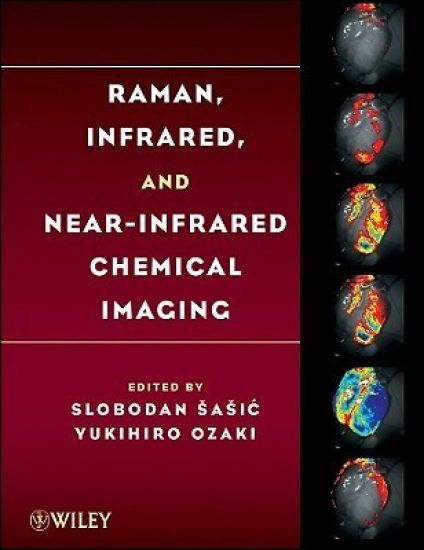
Raman, Infrared, and Near-Infrared Chemical Imaging
An all-inclusive guide on the analytical methods of Raman, infrared, and near-infrared chemical imaging An underutilized technology, chemical imaging through Raman, infrared (IR), and near-infrared (NIR) is beginning to gain recognition for its non-destructive method of permitting visualization of spatially resolved chemical information. This type of analysis is triggering a groundswell of demand as manufactured materials become more complex and the need for greater scrutiny and less damaging research practices is at a premium. Concentrating on the applications of chemical imaging, this book presents a thorough background on the theory, software, and hardware employed in this analytical technique. With full examination of this rapidly growing field, this book: Combines many different aspects and applications into one comprehensive volume Discusses how chemical imaging techniques have expanded greatly in terms of instruments and applications, but have lagged in general awareness among scientists and industries that would benefit the most from them Describes chemical imaging uses in key areas—biomedical, pharmaceutical, food, and polymer research Has chapters that outline hardware and instrumentation for the different methods of chemical imaging Encapsulating analytic methods without complicating the subject matter, this book shows where chemical imaging has been successfully applied, inspiring researchers to cultivate the exciting capabilities rooted within this powerful and multifaceted technology.
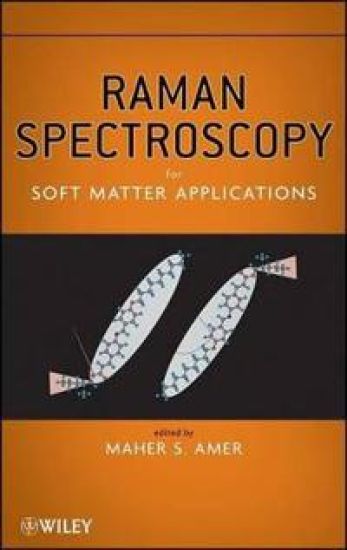
Raman Spectroscopy for Soft Matter Applications
Presents the fundamentals of Raman spectroscopy to scientists working in soft materials Filling the need for a title devoted especially to Raman spectroscopy for this important class of materials, Raman Spectroscopy for Soft Matter Applications assembles a group of global authorities from various institutions to discuss their areas of expertise. In so doing, this book provides an accessible guide for scientists working in the broad field of soft matter. Organized into three separate sections, Raman Spectroscopy for Soft Matter Applications covers: An overview of soft matter and Raman theory Raman applications for polymers, including films, fibers, composites and nanocomposites, emulsions, liquid crystals, foams, and food Raman spectroscopy applications in medicine, focusing on Raman capabilities in bone imaging and its ability to investigate cancer in soft tissue In each chapter, specifics of Raman theory and instrumentation are discussed as they relate to the chapter's subject. With contributions by experts from several countries, the book offers a truly global set of scientific views on these applications. Raman Spectroscopy for Soft Matter Applications offers an ideal guide for graduate students and professionals who work with or want to explore Raman spectroscopy in the wide field of soft matter.
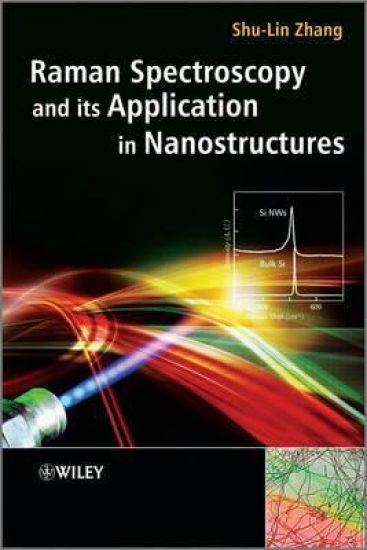
Raman Spectroscopy and its Application in Nanostructures
Raman Spectroscopy and its Application in Nanostructures is an original and timely contribution to a very active area of physics and materials science research. This book presents the theoretical and experimental phenomena of Raman spectroscopy, with specialized discussions on the physical fundamentals, new developments and main features in low-dimensional systems of Raman spectroscopy. In recent years physicists, materials scientists and chemists have devoted increasing attention to low-dimensional systems and as Raman spectroscopy can be used to study and analyse such materials as carbon nanotubes, quantum wells, silicon nanowires, etc., it is fast becoming one of the most powerful and sensitive experimental techniques to characterize the qualities of such nanostructures. Recent scientific and technological developments have resulted in the applications of Raman spectroscopy to expand. These developments are vital in providing information for a very broad field of applications: for example in microelectronics, biology, forensics and archaeology. Thus, this book not only introduces these important new branches of Raman spectroscopy from both a theoretical and practical view point, but the resulting effects are fully explored and relevant representative models of Raman spectra are described in-depth with the inclusion of theoretical calculations, when appropriate.
Raman Spectroscopy for Chemical Analysis

Raman Spectroscopy for Chemical Analysis

Richard L. McCreery

John Wiley Sons Inc
2000
sidottu
Owing to its unique combination of high information content and ease of use, Raman spectroscopy, which uses different vibrational energy levels to excite molecules (as opposed to light spectra), has attracted much attention over the past fifteen years. This book covers all aspects of modern Raman spectroscopy, including its growing use in both the laboratory and industrial analysis.
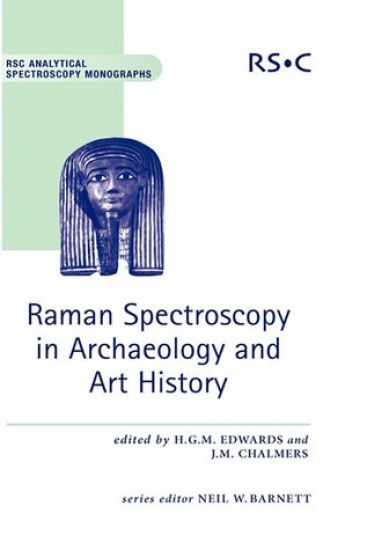
Raman Spectroscopy in Archaeology and Art History
Raman Spectroscopy in Archaeology and Art History highlights the important contributions Raman spectroscopy makes as a non-destructive method for characterising the chemical composition and structure and in determining the provenance and authenticity of objects of archaeological and historical importance. It brings together studies from diverse areas and represents the first dedicated work on the use of this technique in this increasingly important field. Coverage includes: An Introduction to Raman Spectroscopy, including practical aspects of Raman spectroscopy and complementary techniques; Dyes and Pigments; Artefacts; Biological Materials and Degradation; Jewellery and Precious Stones. The book contains a broad selection of real-world examples in the form of case studies to provide the reader with a true appreciation of the procedures that need to be invoked to derive spectroscopic information from some of the most challenging specimens and systems. Colour illustrations of objects of investigation and a database of 72 Raman spectra of relevant minerals are included. With its extensive examples, Raman Spectroscopy in Archaeology and Art History will be of particular interest to specialists in the field, including researchers and scientific/conservation staff in museums. Academics will find it an invaluable reference to the use of Raman spectroscopy.
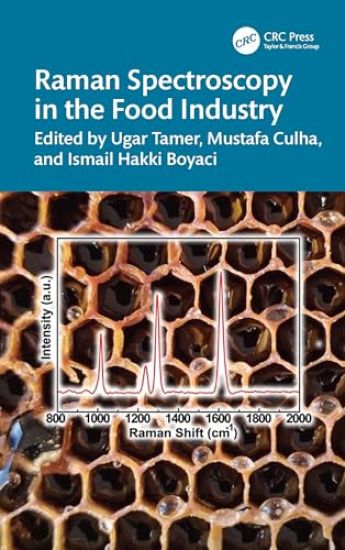
Raman Spectroscopy in the Food Industry
Raman spectroscopy has become one of the most important techniques effectively applied to detect specific analytes and microorganisms in food samples. Raman Spectroscopy in the Food Industry provides a comprehensive overview of the current state of the art and future prospects of Raman spectroscopy in food analyses. Through in-depth chapters, the authors discuss the fundamental principles of Raman spectroscopy, its instrumentation, methodologies, and its diverse applications across various food matrices. Real-world case studies and practical examples underscore the transformative potential of Raman spectroscopy in reshaping our understanding, analysis, and innovation within the realm of food science.Featured topics included are as follows:Raman spectroscopy applications in food science and technologyThe unique property of Raman phenomena, along with the variations in signal modesThe different food safety topics, such as toxins, biosafety, foodborne bacteria, and fermentationMachine-learning studies on Raman spectrosopy in food scienceAs the editors, we are committed to providing a valuable resource that inspires further exploration and collaboration in harnessing the power of Raman spectroscopy for the advancement of food analyses. We sincerely hope that this book serves as a catalyst for pushing the boundaries of knowledge and driving innovation in this exciting field.
Raman Scattering on Emerging Semiconductors and Oxides
Raman Scattering on Emerging Semiconductors and Oxides presents Raman scattering studies. It describes the key fundamental elements in applying Raman spectroscopies to various semiconductors and oxides without complicated and deep Raman theories.Across nine chapters, it covers:• SiC and IV-IV semiconductors,• III-GaN and nitride semiconductors,• III-V and II-VI semiconductors,• ZnO-based and GaO-based semiconducting oxides,• Graphene, ferroelectric oxides, and other emerging materials,• Wide-bandgap semiconductors of SiC, GaN, and ZnO, and• Ultra-wide gap semiconductors of AlN, Ga2O3, and graphene.Key achievements from the author and collaborators in the above fields are referred to and cited with typical Raman spectral graphs and analyses. Written for engineers, scientists, and academics, this comprehensive book will be fundamental for newcomers in Raman spectroscopy.Zhe Chuan Feng has had an impressive career spanning many years of important work in engineering and tech, including as a professor at the Graduate Institute of Photonics & Optoelectronics and Department of Electrical Engineering, National Taiwan University, Taipei; establishing the Science Exploring Lab; joining Kennesaw State University as an adjunct professor, part-time; and at the Department of Electrical and Computer Engineering, Southern Polytechnic College of Engineering and Engineering Technology. Currently, he is focusing on materials research for LED, III-nitrides, SiC, ZnO, other semiconductors/oxides, and nanostructures and has devoted time to materials research and growth of III-V and II-VI compounds, LED, III nitrides, SiC, ZnO, GaO, and other semiconductors/oxides.Professor Feng has also edited and published multiple review books in his field, alongside authoring scientific journal papers and conference/proceeding papers. He has organized symposiums and been an invited speaker at different international conferences and universities. He has also served as a guest editor for special journal issues.
Raman Scattering on Emerging Semiconductors and Oxides
Raman Scattering on Emerging Semiconductors and Oxides presents Raman scattering studies. It describes the key fundamental elements in applying Raman spectroscopies to various semiconductors and oxides without complicated and deep Raman theories.Across nine chapters, it covers:• SiC and IV-IV semiconductors,• III-GaN and nitride semiconductors,• III-V and II-VI semiconductors,• ZnO-based and GaO-based semiconducting oxides,• Graphene, ferroelectric oxides, and other emerging materials,• Wide-bandgap semiconductors of SiC, GaN, and ZnO, and• Ultra-wide gap semiconductors of AlN, Ga2O3, and graphene.Key achievements from the author and collaborators in the above fields are referred to and cited with typical Raman spectral graphs and analyses. Written for engineers, scientists, and academics, this comprehensive book will be fundamental for newcomers in Raman spectroscopy.Zhe Chuan Feng has had an impressive career spanning many years of important work in engineering and tech, including as a professor at the Graduate Institute of Photonics & Optoelectronics and Department of Electrical Engineering, National Taiwan University, Taipei; establishing the Science Exploring Lab; joining Kennesaw State University as an adjunct professor, part-time; and at the Department of Electrical and Computer Engineering, Southern Polytechnic College of Engineering and Engineering Technology. Currently, he is focusing on materials research for LED, III-nitrides, SiC, ZnO, other semiconductors/oxides, and nanostructures and has devoted time to materials research and growth of III-V and II-VI compounds, LED, III nitrides, SiC, ZnO, GaO, and other semiconductors/oxides.Professor Feng has also edited and published multiple review books in his field, alongside authoring scientific journal papers and conference/proceeding papers. He has organized symposiums and been an invited speaker at different international conferences and universities. He has also served as a guest editor for special journal issues.