

Kirjahaku
Etsi kirjoja tekijän nimen, kirjan nimen tai ISBN:n perusteella.
1000 tulosta hakusanalla Ramona Przyborowski

A moving love story with grand melodramatic touches, Ramona was linked with Uncle Tom's Cabin as one of the great ethical novels of the 19th century. A bestseller in 1884, Ramona was both a political and literary success and will continue to move modern readers with its sympathetic characters and its depiction of the Native American's struggle in the early West.
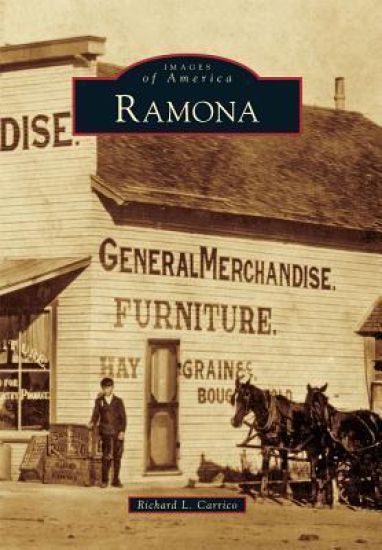
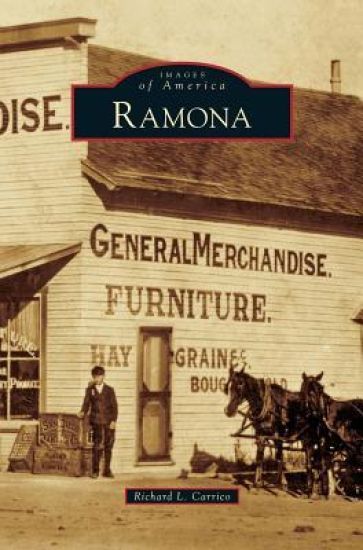
Originally founded as Nuevo, the community of Ramona is now known affectionately as the Valley of the Sun and was for decades labeled the Turkey Capital of the World. Long before Spanish missionaries trekked across the verdant valley, 'Ipaay and Kumeyaay Indians called the area home. The temperate climate, fertile valleys, and easy access to both the ocean and to the mountains have made Ramona an ideal place to live for thousands of years. From the Mexican era of land grants to today, Ramona has always been associated with ranching, rodeos, and rural life. Today, nestled in the hills above San Diego, Ramona is a unique blend of rural and urban life.
"If I could write a story that would do for the Indian a thousandth part of what Uncle Tom's Cabin did for the Negro," wrote Helen Hunt Jackson, "I would be thankful the rest of my life." Jackson surpassed this ambition with the publication of Ramona, her popular 1884 romantic bestseller. A beautiful half Native American, half-Scottish orphan raised by a harsh Mexican ranchera, Ramona enters into a forbidden love affair with a heroic Mission Indian named Alessandro. The pair's adventures after they elope paint a vivid portrait of California history and the woeful fate of Native Americans and Mexicans whose lands and rights were stripped as Anglo-Americans overran southern California. Set from the first American edition of 1884, this Modern Library Paperback Classic includes Jos Mart 's 1888 prologue (translated from the Spanish by Esther Allen).
Helen Hunt Jackson's "Ramona" remains a powerful and enduring tale of love and cultural clash set against the backdrop of 19th-century Southern California. This meticulously prepared edition brings to life a historical romance exploring the complex relationship between Native Americans, the Spanish, and the evolving landscape of the American West. A cornerstone of historical fiction, "Ramona" delves into California's rich cultural heritage, offering a poignant glimpse into a transformative era. Explore themes of love, identity, and the struggle for belonging amidst societal change. This classic novel provides an unforgettable journey into a bygone era, making it essential reading for anyone interested in California history and timeless stories of the heart.This work has been selected by scholars as being culturally important, and is part of the knowledge base of civilization as we know it.This work is in the public domain in the United States of America, and possibly other nations. Within the United States, you may freely copy and distribute this work, as no entity (individual or corporate) has a copyright on the body of the work.Scholars believe, and we concur, that this work is important enough to be preserved, reproduced, and made generally available to the public. We appreciate your support of the preservation process, and thank you for being an important part of keeping this knowledge alive and relevant.

Helen Hunt Jackson's "Ramona" remains a powerful and enduring tale of love and cultural clash set against the backdrop of 19th-century Southern California. This meticulously prepared edition brings to life a historical romance exploring the complex relationship between Native Americans, the Spanish, and the evolving landscape of the American West. A cornerstone of historical fiction, "Ramona" delves into California's rich cultural heritage, offering a poignant glimpse into a transformative era. Explore themes of love, identity, and the struggle for belonging amidst societal change. This classic novel provides an unforgettable journey into a bygone era, making it essential reading for anyone interested in California history and timeless stories of the heart.This work has been selected by scholars as being culturally important, and is part of the knowledge base of civilization as we know it.This work is in the public domain in the United States of America, and possibly other nations. Within the United States, you may freely copy and distribute this work, as no entity (individual or corporate) has a copyright on the body of the work.Scholars believe, and we concur, that this work is important enough to be preserved, reproduced, and made generally available to the public. We appreciate your support of the preservation process, and thank you for being an important part of keeping this knowledge alive and relevant.
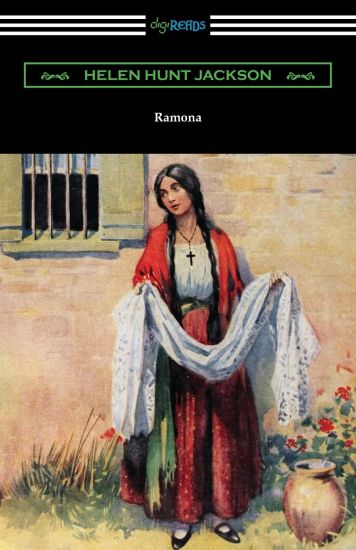
First serialized in the "Christian Union", and then published as a novel in 1884, "Ramona", by Helen Hunt Jackson, is the fictional story of its title character, a part Scottish and part Indian orphan girl who endures great discrimination while growing up in the late 19th century. Immensely popular when it first appeared, "Ramona" is set in Southern California shortly after the Mexican-American War and is well known for its depiction of Mexican colonial life and the unique culture of the region. The novel follows the difficult life of Ramona as she grows up in the loveless care of Se ora Moreno, the sister of Ramona's deceased foster mother. Ramona falls in love with Alessandro, a Native American sheep shearer who works on the Moreno ranch, and elopes with him after Se ora Moreno disapproves of their relationship. Ramona and Alessandro face great hardship and tragedy as they try to create a life together in a harsh and unforgiving world dominated by greedy American settlers and violent conflict. "Ramona" is a timeless and touching story of discrimination, displacement, heartache, and ultimately, hope and resilience. This edition is printed on premium acid-free paper.
Ramona (1884) is a novel by Helen Hunt Jackson. Inspired by her activism for the rights of Native Americans, Ramona is a story of racial discrimination, survival, and history set in California in the aftermath of the Mexican American War. Immensely popular upon publication, Ramona earned favorable comparisons to Harriet Beecher Stowe’s Uncle Tom’s Cabin and remains an influential sentimental novel to this day. Orphaned after the death of her foster mother, Ramona, a Scottish-Native American girl, is taken in by her reluctant foster aunt Señora Gonzaga Moreno. Early on, she experiences discrimination due to her mixed heritage and troubled upbringing, but Gonzaga Moreno begrudgingly provides for her as though she were her own daughter, in accordance with her sister’s wishes. When a group of Native American migrant workers arrives from Temecula to perform the annual sheep shearing, Ramona falls in love with Alessandro, a pious Catholic. Despite his honesty and capacity for hard work, Alessandro is viewed with contempt by the Señora. Faced with no alternative, the lovers elope and make their way toward the San Bernardino Mountains, facing racism and violence from American settlers along the way. Bound by love, rejected by the dominant cultures of the newly Americanized California, Alessandro and Ramona must do what they can to survive. With a beautifully designed cover and professionally typeset manuscript, this edition of Helen Hunt Jackson’s Ramona is a classic of American literature reimagined for modern readers.

Ramona (1884) is a novel by Helen Hunt Jackson. Inspired by her activism for the rights of Native Americans, Ramona is a story of racial discrimination, survival, and history set in California in the aftermath of the Mexican American War. Immensely popular upon publication, Ramona earned favorable comparisons to Harriet Beecher Stowe’s Uncle Tom’s Cabin and remains an influential sentimental novel to this day. Orphaned after the death of her foster mother, Ramona, a Scottish-Native American girl, is taken in by her reluctant foster aunt Señora Gonzaga Moreno. Early on, she experiences discrimination due to her mixed heritage and troubled upbringing, but Gonzaga Moreno begrudgingly provides for her as though she were her own daughter, in accordance with her sister’s wishes. When a group of Native American migrant workers arrives from Temecula to perform the annual sheep shearing, Ramona falls in love with Alessandro, a pious Catholic. Despite his honesty and capacity for hard work, Alessandro is viewed with contempt by the Señora. Faced with no alternative, the lovers elope and make their way toward the San Bernardino Mountains, facing racism and violence from American settlers along the way. Bound by love, rejected by the dominant cultures of the newly Americanized California, Alessandro and Ramona must do what they can to survive. With a beautifully designed cover and professionally typeset manuscript, this edition of Helen Hunt Jackson’s Ramona is a classic of American literature reimagined for modern readers.

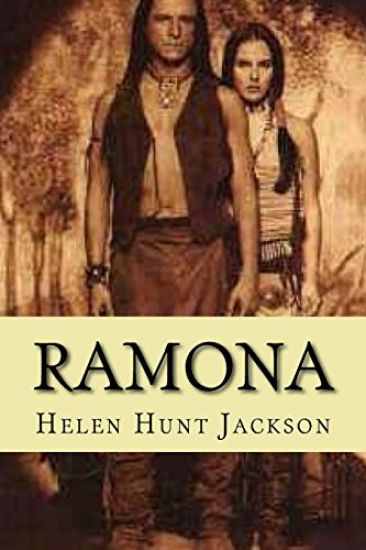
Plot summary In Southern California, shortly after the Mexican-American War, a Scots-Native American orphan girl, Ramona, is raised by Senora Gonzaga Moreno, the sister of Ramona's deceased foster mother. Ramona is referred to as illegitimate in some summaries of the novel, but chapter 3 of the novel says that Ramona's parents were married by a priest in the San Gabriel Mission. Se ora Moreno has raised Ramona as part of the family, giving her every luxury, but only because Ramona's foster mother had requested it as her dying wish. Because of Ramona's mixed Native American heritage, Moreno does not love her. That love is reserved for her only child, Felipe Moreno, whom she adores. Senora Moreno considers herself a Mexican, although California has recently been taken over by the United States. She hates the Americans, who have cut up her huge rancho after disputing her claim to it. Senora Moreno delays the sheep shearing, a major event on the rancho, awaiting the arrival of a group of Native Americans from Temecula whom she always hires for that work. She is also awaiting a priest, Father Salvierderra, from Santa Barbara. She arranges for the priest so that the Native American workers can worship and make confession in her chapel, rather than leaving the rancho. Ramona falls in love with Alessandro, a young Native American sheepherder and the son of Pablo Assis, the chief of the tribe. Se ora Moreno is outraged, because although Ramona is half-Native American, the Se ora does not want her to marry a Native American. Ramona realizes that Senora Moreno has never loved her and she and Alessandro elope. Alessandro and Ramona have a daughter, and travel around Southern California trying to find a place to settle. In the aftermath of the war, Alessandro's tribe was driven off their land, marking the beginning of European-American settlement in California. They endure misery and hardship, for the Americans who buy their land also demand their houses and their farm tools. Greedy Americans drive them off from several homesteads, and they cannot find a permanent community that is not threatened by encroachment of United States settlers. They finally move up into the San Bernardino Mountains. Alessandro slowly loses his mind, due to the constant humiliation. He loves Ramona fiercely, and regrets having taken her away from relative comfort in return for "bootless" wandering. Their daughter "Eyes of the Sky" dies because a white doctor would not go to their homestead to treat her. They have another daughter, named Ramona, but Alessandro still suffers. One day he rides off with the horse of an American, who follows him and shoots him, although he knew that Alessandro was mentally unbalanced. Biography She was born in Amherst, Massachusetts, Nathan Welby Fiske and Deborah Waterman Vinal. She had two brothers, who died shortly after their birth, and one sister, Anne. His father was a Protestant pastor, writer and professor of Latin, Greek and Philosophy at Amherst College. His mother died in 1844 and his father in 1847, leaving her in the care of an aunt. Until then, he had provided her with a good education: she had attended the Ipswich Women's Seminary and the Abbott Institute, an institution headed by Reverend J.S.C. Abbott in New York. She was a classmate of the future poet Emily Dickinson, also born in Amherst. They exchanged a correspondence all their lives, but few of their letters have been preserved. In 1852 Helen Fiske married Captain Edward Bissell Hunt of the United States Army, who died in a military accident in 1863. Their son Murray Hunt died in 1854 of a cerebral disease; The second, Rennie Hunt, died of diphtheria in 1865. Helen Hunt began writing after this last loss. She traveled a great deal. During the winter of 1873-74 she went to Colorado Springs to treat tuberculosis. She met William Sharpless Jackson, a rich banker who worked on the railways, and they married in 1875.
Ramona by Helen Hunt Jackson. Ramona is an 1884 American novel written by Helen Hunt Jackson. Set in Southern California after the Mexican-American War, it portrays the life of a mixed-race Scots-Native American orphan girl, who suffers racial discrimination and hardship. Originally serialized in the Christian Union on a weekly basis, the novel became immensely popular. It has had more than 300 printings, and been adapted five times as a film. A play adaptation has been performed annually outdoors since 1923. 'IT was sheep-shearing time in Southern California, but sheep-shearing was late at the Senora Moreno's. The Fates had seemed to combine to put it off. In the first place, Felipe Moreno had been ill. He was the Senora's eldest son, and since his father's death had been at the head of his mother's house. Without him, nothing could be done on the ranch, the Senora thought. It had been always, "Ask Senor Felipe," "Go to Senor Felipe," "Senor Felipe will attend to it," ever since Felipe had had the dawning of a beard on his handsome face.'
Jos Mart (1853-1895), one of the most distinguished authors, intellectuals and national heroes of the 19th century Latin America, offers in Ramona (1888) a literary translation that stands out for its aesthetic brilliance and ideological content, a unique text in the copious Marti work that, despite being a reflection of the concerns and conflicts of its time, still maintains a relevance and validity in our days.Originally published in 1884 by the famous American activist and writer Helen Hunt Jackson (1830-1885), Ramona would enter the annals of US history as the most representative novel of the so-called indigenous reform movement of the 1880s, becoming Jackson's latest attempt to denounce the mistreatment and policies of the federal government towards the indigenous tribes of his country.With more than 300 editions in English, a myriad of cultural adaptations and its colossal impact on tourism in Southern California, this great classic of American literature has never stopped being reissued in more than a century.Although Marti was a connoisseur of Jackson's cause in favor of the North American Indian, the Cuban thinker glimpsed another meaning through the pages of this book, postulating his translation of Ramona as "our novel."During his exile in New York he translated the novel arduously, and even paid for its publication to be distributed in Mexico.The plot that revolves around the interracial romance of the Indian, Alejandro, and the mestizo heroine, Ramona, serves to illustrate the hardships endured by the Indian and Mexican communities at the arrival of the white settlers just after the US intervention war in Mexico and the session of California and the rest of the Southwest to the United States.130 years after its publication, the reading and study of Marti's Ramona is essential today more than ever to learn from the past and encourage the construction of bridges and dialogues between all the peoples of the two Americas.