Kirjojen hintavertailu. Mukana 11 627 373 kirjaa ja 12 kauppaa.

Kirjahaku

Etsi kirjoja tekijän nimen, kirjan nimen tai ISBN:n perusteella.

70 tulosta hakusanalla Ramsland Katherine

Anne Rice Reader

Anne Rice Reader

Ramsland Katherine

RANDOM HOUSE USA INC
1997
pokkari
A collection of the most fascinating essays, articles, and interpretations of bestselling author Anne Rice's complete works, by a variety of journalists and scholars. It includes a history of vampire literature, a professional dominatrix's examination of Rice's erotica, and a behind-the-scenes look at the making of the film version of Interview with the Vampire. From the adventures of the Vampire Lestat to those of the Mayfair Witches, from the evocative historical epic Cry to Heaven to the uninhibited erotica of Exit to Eden and the Sleeping Beauty trilogy, The Anne Rice Reader presents a captivating range of perspectives on the imagination of a writer who has enthralled her generation.
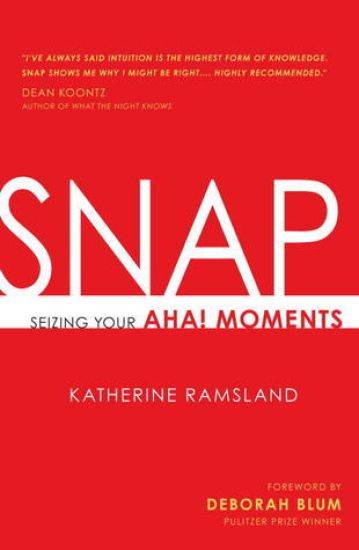
SNAP

SNAP

Ramsland Katherine

Prometheus Books
2012
sidottu
Sudden flashes of inspiration have triggered many discoveries and inventions throughout history. Are such aha! moments merely random, or is there a way to train the brain to harness these seemingly unpredictable creative insights? This fascinating overview of the latest neuroscience findings on spontaneous thought processes, or "snaps," describes how everyone-not just geniuses-can learn to improve the likelihood of their own "eureka" moments by adopting certain rewarding attitudes and habits. As the author explains, snaps are much more than new ideas. Snaps are insights plus momentum-they instantly compel or snap us toward action. They often occur after ordinary problem solving hits an impasse. We may feel stuck, but while we're in a quandary, the brain is rebooting. Then, when we least expect it, the solution pops into our heads. She describes the results of numerous scientific experiments studying this phenomenon. She also recounts intriguing stories of people in diverse disciplines who have had a snap experience. Both the research and the stories illustrate that it's possible to enhance our facility for snap moments by training ourselves to scan, sift, and solve. In the emerging economy, businesses and individuals need new strategies, and it's clear that just thinking harder no longer works. People who can snap are often a step ahead: they have a vigilance advantage from exercising brain cells that build mental agility. While snapping is rewarding, fun, and good for improving our mental skills, it's also much more: people who snap life-changing ideas that affect many others will redirect our future. Written in an accessible, jargon-free narrative that weaves together the latest research with illuminating stories of innovative people, this book teaches us how to cultivate our own inner epiphanies to gain an edge in our imaginations, our careers, our goals-indeed, in every aspect of our lives.
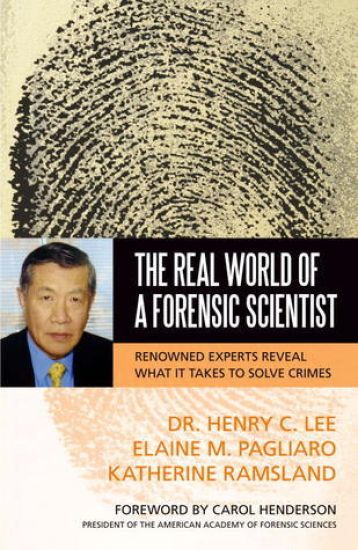
The Real World of a Forensic Scientist

The Real World of a Forensic Scientist

Lee Henry C.; Pagliaro Elaine M.; Ramsland Katherine

Prometheus Books
2009
sidottu
With the skyrocketing popularity of TV crime shows like CSI and CSI-Miami, interest in forensic science has reached unprecedented levels. However compelling these programs are as dramas, they spread many misconceptions about the real world of the forensic scientist. Students who wish to pursue a career in this field are often unaware of the many diverse career choices available or have superficial notions of the rigors involved. In this in-depth insider's guide to this crucial area of criminal investigation, renowned forensic scientist Henry C. Lee, along with veteran forensic experts Elaine M. Pagliaro and Katherine Ramsland, provides a realistic picture of the education, skills, challenges, and rewards involved in the many specialties that encompass forensic science. All are used to unravel seemingly baffling crimes. The first part of the book highlights Dr. Lee's personal story and forty-year career to demonstrate how forensic science developed in the twentieth century and came to be recognized by the courts and law enforcement as a crucial approach to investigating crimes. Dr. Lee shares many interesting stories about his experiences and those of his colleagues, who were instrumental in developing forensic science laboratories in the United States. The second part focuses on careers in forensic science, illustrated by descriptions of high profile cases that required different forensic disciplines, including engineering, accounting, psychology, crime scene investigation, and DNA analysis. These cases also underscore the importance of forensic evidence in criminal and civil cases, national security, environmental protection, and public safety. The third part presents the various specialties in forensic science created by the American Academy of Forensic Science; describes the types of evidence generally analyzed in each area; and lays out the steps one should take to prepare for a career in a particular specialty. Also included is useful information about professional organizations, certification programs and requirements, laboratory opportunities, and university forensic science programs. For those who wish to pursue a career in forensic science or for anyone who is interested in how criminal investigation is really done, this book is a must read.
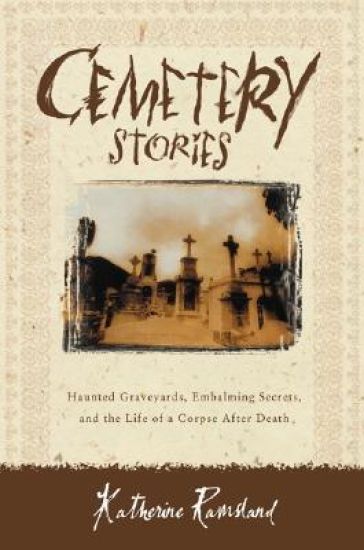
Cemetery Stories: Haunted Graveyards, Embalming Secrets, and the Life of a Corpse After Death
Never look at a grave the same way again Admit it: You're fascinated by cemeteries. We all die, and for most of us, a cemetery is our final resting place. But how many people really know what goes on inside, around, and beyond them?Enter the world of the dead as Katherine Ramsland talks to mortuary assistants, gravediggers, funeral home owners, and more, and find out about: Stitching and cosmetic secrets used on mutilated bodiesEmbalmers who do more than just embalmThe rising popularity of cremation artGhosts that infest graveyards everywhereIf you've ever scoffed at the high price of burying the dead, or ever wondered how your loved ones are handled when they die, or simply stared at tombstones with morbid fascination, then take a trip with Katherine Ramsland and learn about the booming industry -- and strange tales -- that surround cemeteries everywhere.
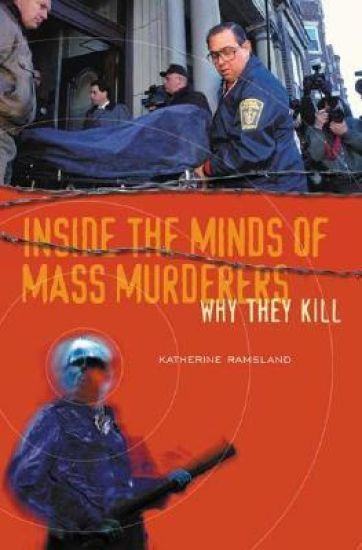
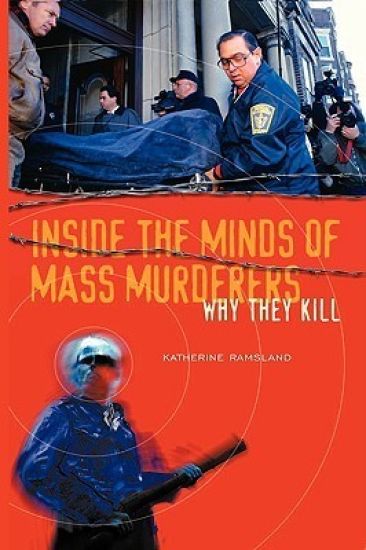
Inside the Minds of Mass Murderers

Inside the Minds of Mass Murderers

Katherine Ramsland

Praeger Publishers Inc
2005
sidottu
The idea that a person might suddenly snap and slaughter large numbers of people has become part of our cultural understanding through events such as the Columbine High School massacre and the D.C. Sniper case. But this image of the sudden turn from ordinary citizen, quiet neighbor, or non-descript teenager to mass murderer is generally false. People who go out one day and kill innocent people or supposed enemies have typically thought about it, planned it, and even mentioned it to others before they actually do it—and the act is usually the result of a buildup of stress and frustration. Here, Katherine Ramsland, a seasoned crime writer, examines true stories of mass murder and reveals the complexity behind the development of a mass killer. She provides common signals, based on actual cases, that will help readers identify warning signs and understand the various psychological factors that may lead a person to kill. Since the first recorded U.S. case of mass murder in 1949, massacres have been increasing each decade, with workplace violence taking the lead as the most common form. The psychology of the killers, however, differs from that of spree, serial, or situational murderers. The red flags of a developing mass killer are obvious and predictable, Ramsland argues, and people who learn to recognize them may be able to defuse a potentially violent situation before it occurs. Using details from various cases, the author examines the different kinds of mass murders, from visionary to family to workplace, and the distinct psychological dynamics of the different types of murders. This essential book exposes the inner world of mass murderers and dismantles the stereotypes we hold about them.
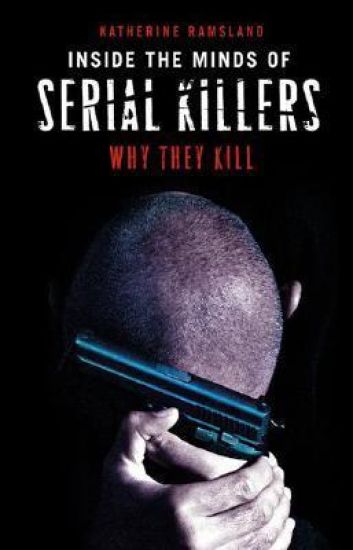
Inside the Minds of Serial Killers

Inside the Minds of Serial Killers

Katherine Ramsland

Praeger Publishers Inc
2006
sidottu
There are many cultural myths about serial killers, often propagated even by mental health professionals. Many assume there is a profile of a serial killer, that serial killers always go for the same victim type or always use the same MO, that they are more clever than ordinary people, and that they are inevitably charming and attractive. The truth is not as simple as that. There are different types of serial killers, and while there are many books that discuss the serial killer phenomenon especially in relationship to victim types or context, researchers have not yet been able to come up with a definition, or type, that covers the broad spectrum of serial killers and their complex psychological dynamics. Ramsland looks at the variety of serial killer types, illustrating that it is difficult to accurately depict these elusive, intriguing, and dangerous killers. There are many cultural myths about serial killers, often propagated even by mental health professionals. Many assume there is a profile of a serial killer, that serial killers always go for the same victim type or always use the same MO, that they are more clever than ordinary people, and that they are inevitably charming and attractive. The truth is not as simple as that. There are different types of serial killers and while there are many books that discuss the serial killer phenomenon especially in relationship to victim types or context, researchers have not yet been able to come up with a definition, or type, that covers the broad spectrum of serial killers and their complex psychological dynamics. Ramsland looks at serial killer types, illustrating that it is difficult to accurately depict these elusive, intriguing, and dangerous killers. This book examines a variety of serial killers, from sexual predators to psychotic killers, from murder teams to odd eccentric stalkers, in order to present the distinct psychological dynamics that set serial killers apart from other violent murderers. Among the motives addressed are lust, control, glory, profit, thrill, delusions, rage, the desire for company, the need to please a partner, and even murder as an intellectual exercise. Serial killers live double lives, hiding their violence even from those who live with them, so along with a study of motives are chapters devoted to how close associates have described killers, including parents, siblings, co-workers, lovers, and survivors. There is no profile of a serial killer, and this book establishes that in vivid and frightening detail.
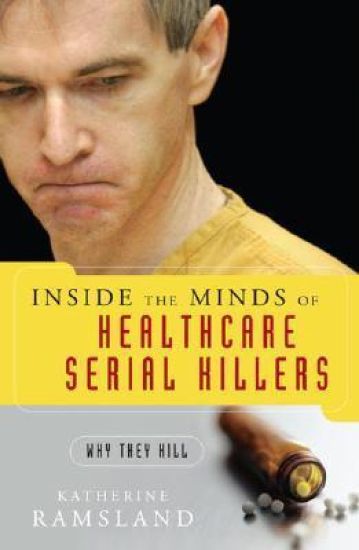
Inside the Minds of Healthcare Serial Killers

Inside the Minds of Healthcare Serial Killers

Katherine Ramsland

Praeger Publishers Inc
2007
sidottu
In 2004, Charles Cullen was arrested and charged in the deaths of more than 30 patients in his care. Crossing several jurisdictions in seven counties in New Jersey and Pennsylvania, he was stopped after a fifteen-year spree at ten institutions. While many people do not think of healthcare workers as serial killers, their profession is disproportionately represented among the serial killer population, and they tend to be more prolific than other serial killers, having more opportunities, better cover, and easy alibis. Healthcare professionals who kill have learned how to exploit the atmosphere of trust in the healthcare community and to hasten deaths that may go unnoticed in an already vulnerable arena. This book delves into the world of the healthcare serial killer, looking at the special characteristics of the different groups of murderers, the motives, the methods, and the outcomes. Crime specialists have long suspected that many healthcare serial killers have gone undetected. Because it is easier to cover up their crimes, it is harder to uncover that a crime has even been committed. Here, Ramsland identifies some of the warning signs that a serial killer may be on the loose in a healthcare setting. Further, she offers suggestions for reform in the healthcare and criminal justice communities that would help identify potential killers before they have a chance to strike, or strike again. Using numerous real-life cases in every chapter, she provides a fuller picture of this most deadly type of serial killer and helps readers understand how they work, and how they can be stopped.
Inside the Minds of Mass Murderers

Inside the Minds of Mass Murderers

Katherine Ramsland

Praeger Publishers Inc
2005
nidottu
The idea that a person might suddenly snap and slaughter large numbers of people has become part of our cultural understanding through events such as the Columbine High School massacre and the D.C. Sniper case. But this image of the sudden turn from ordinary citizen, quiet neighbor, or non-descript teenager to mass murderer is generally false. People who go out one day and kill innocent people or supposed enemies have typically thought about it, planned it, and even mentioned it to others before they actually do it—and the act is usually the result of a buildup of stress and frustration. Here, Katherine Ramsland, a seasoned crime writer, examines true stories of mass murder and reveals the complexity behind the development of a mass killer. She provides common signals, based on actual cases, that will help readers identify warning signs and understand the various psychological factors that may lead a person to kill. Since the first recorded U.S. case of mass murder in 1949, massacres have been increasing each decade, with workplace violence taking the lead as the most common form. The psychology of the killers, however, differs from that of spree, serial, or situational murderers. The red flags of a developing mass killer are obvious and predictable, Ramsland argues, and people who learn to recognize them may be able to defuse a potentially violent situation before it occurs. Using details from various cases, the author examines the different kinds of mass murders, from visionary to family to workplace, and the distinct psychological dynamics of the different types of murders. This essential book exposes the inner world of mass murderers and dismantles the stereotypes we hold about them.
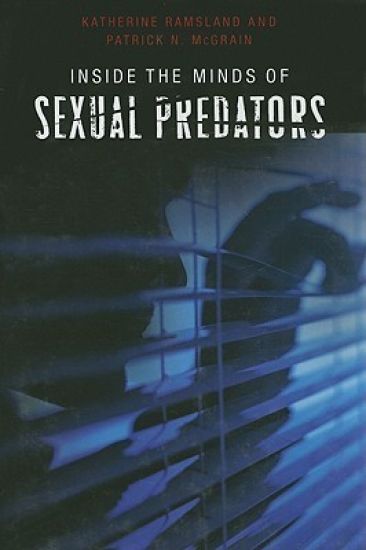
Inside the Minds of Sexual Predators

Inside the Minds of Sexual Predators

Katherine Ramsland; Patrick N. McGrain

Praeger Publishers Inc
2009
sidottu
This revealing look inside the minds of sexual predators, from cyber-stalkers to rapists to teachers who exploit underage children, explains why they commit their heinous crimes. They are among the most frightening of all criminals, yet few have attempted to document the complex mindset of the sexual predator through intimate case details. Inside the Minds of Sexual Predators reexamines this intentional criminal behavior, describing the different types of sexual predators and explaining why they choose to commit their specific type of predatory acts. Each chapter of the book addresses a different category of predator or a specific, complex issue related to predatory behavior. Distinctions are drawn between types of offenders, from the casual offender to the depraved rapist and serial lust killer, and the variables that play a part in an individual's sexual predation are explored. Like Ramsland's Inside the Minds of Mass Murderers, this book is essential reading for professionals in law enforcement and psychology, as well as for everyone seeking to go beyond the headlines to understand this difficult and controversial topic.
The Mind of a Murderer

The Mind of a Murderer

Katherine Ramsland; Michael Stone

Praeger Publishers Inc
2011
sidottu
This unique history of the last 100 years of criminal psychology shares insights about infamous murderers from the psychiatrists and other trained psychological professionals who analyzed and treated them.The Mind of a Murderer: Privileged Access to the Demons That Drive Extreme Violence presents a series of cases in which a psychiatrist, psychologist, or counselor gained privileged access to a mass or serial murderer, going beyond the typical mental assessment to learn more about criminal behavior. Through their work, readers are granted a unique view of criminology and a better understanding of the criminal mind. The book opens with the earliest professional observations of criminals in the late 19th century and goes on to explore the rudimentary behavioral profiling and case analysis of the early 20th century. It shows how, by the 1960s and 1970s, behavioral professionals recognized the need for intense study of extreme offenders and got close to the likes of Richard Speck, John Wayne Gacy, and Ted Bundy to gain a fuller picture of their psychological development. Finally, readers learn how today's behavioral professionals rely on neurobiological correlates to assess predatory, impulsive, and addictive behavior.
The Psychology of Death Investigations

The Psychology of Death Investigations

Katherine Ramsland

CRC Press
2021
nidottu
The Psychology of Death Investigations outlines definitively how behavioral evidence can often provide the necessary components and "missing pieces" to complement physical evidence as an essential tool for incident reconstruction. In order to determine the direction of an investigation and to prioritize leads, if necessary, death investigators must establish the manner of a death: natural, accident, homicide or suicide. The most overlooked aspect of death investigation is the psychological dimension, which can provide unique leads, correct false assumptions, enhance investigative awareness, and solve cases in surprising ways. In an estimated 10–20% of cases, the manner of death cannot be determined, or worse, has been erroneously categorized. Since many jurisdictions can’t afford behavioral consultants, this book has been written to provide practical information for a basic psychological analysis. If the circumstances surrounding a death are equivocal, psychological consultants can compile information retrospectively about a deceased person’s mental state and possible motive to assist with unravelling ambiguity about the manner of death. This is the primary function of a psychological autopsy, and, as such, this is the first book of its kind dedicated solely to the topic. In the event that the manner of death is determined to be a homicide, behavioral profiling can help to focus the potential pool of suspects. Professionals and students alike will benefit from the exercise of cognitive awareness and the application of psychological logic presented. Psychologists, medical examiners, coroners, attorneys, fraud examiners, law enforcement personnel, death and homicide investigators, and students enrolled in criminal profiling, forensic psychology, and criminal justice programs will find this text to be a compelling and insightful reference to add to their professional toolkit.
The Forensic Science of C.S.I.

The Forensic Science of C.S.I.

Katherine Ramsland

BERKLEY BOOKS
2001
nidottu
The CBS television show, "C.S.I.: Crime Scene Investigation," has captured audiences - and ratings - with its unflinchingly realistic details of forensic science, tools, and technology. This fascinating new book - written by an acclaimed biographer with a master's degree in forensic psychology - goes behind the crime-solving techniques dramatized on the TV show to examine the reality of these cutting-edge procedures. From DNA typing and ballistics, to bitemark and blood pattern analysis, here are detailed accounts of the actual techniques used in today's crime investigations. Prominent experts in the field offer rare glimpses into cases ranging from missing persons to murder. For fans of the television show, as well as true crime buffs and science readers - this is the real thing.
The Science of Vampires

The Science of Vampires

Katherine Ramsland

BERKLEY BOOKS
2002
nidottu
- Are any vampire myths based on fact?- Bloodsucking villain to guilt-ridden loner--what has inspired the redemption of the vampire in fiction and film?- What is Vampire Personality Disorder? What causes a physical addiction to another person's blood?- Are there any boundaries in the polysexual world of vampires?- How could a vampire hide in today's world of advanced forensic science?- What is the psychopathology of the vampire?- What happens in the brain of a vampire's victim? Si...
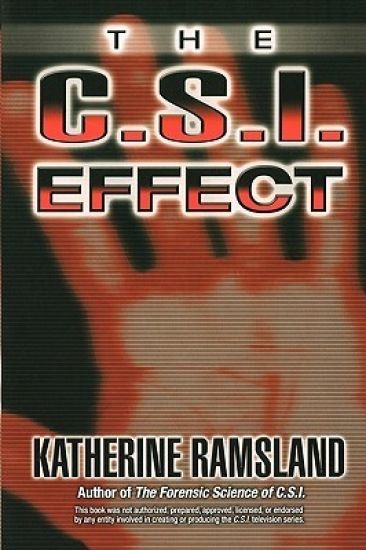
The C.S.I. Effect

The C.S.I. Effect

Katherine Ramsland

BERKLEY BOOKS
2006
nidottu
Inspired by storylines based on the blockbuster TV franchise C.S.I., the author of The Forensic Science of C.S.I. looks at the latest cutting-edge techniques in crime scene analysis and investigation and revisits some of history's most notorious crimes in light of the these new investigative tools. Original. 40,000 first printing.
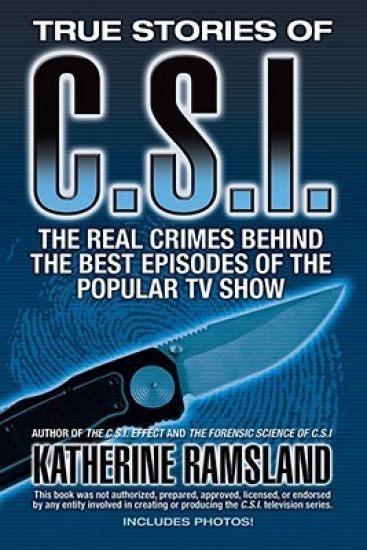
True Stories of Csi: The Real Crimes Behind the Best Episodes of the Popular TV Show
The bestselling forensic psychologist examines the true crimes that inspired the television smash hit, C.S.I. Katherine Ramsland follows the evidence and revisits some of the most absorbing episodes of the phenomenally popular C.S.I. television franchise, and explores the real-life crimes that inspired them. She also looks into the authenticity of the forensic investigations recreated for the dramatizations, and the painstaking real-life forensic process employed in every one of the actual cases?from notorious mass-murderer Richard Speck, to the massacre of Buddhist monks in an Arizona Temple, to a baffling case of apparent spontaneous combustion.
The Devil's Dozen: How Cutting-Edge Forensics Took Down 12 Notorious Serial Killers
A forensics expert follows the historic evolution of CSI through a century of serial killers. "Katherine Ramsland has brilliantly captured the insights and drama of some fascinating cases" (Dr. Henry Lee) in her previous bestselling books. Now she examines the case histories of twelve of the most notorious serial killers of the last one hundred years, and answers the questions: What clues did they leave behind? How were they eventually caught? How was each twist and turn of their crimes matched by the equally compelling weapons of science and logic? From exploring the nineteenth century's earliest investigative tools to remarkable twenty-first century CSI advances, The Devil's Dozen provides a fascinating window into the world of those who kill-and those who dedicate their lives to bringing them to justice.
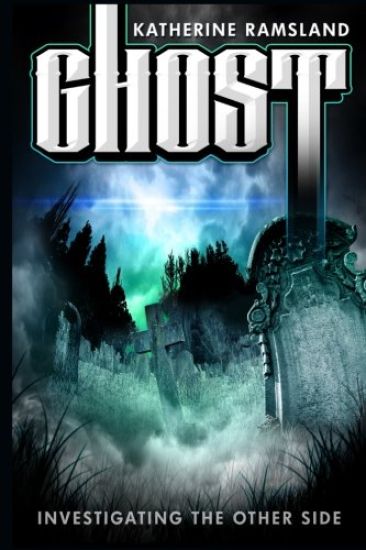
Ghost: Investigating the Other Side

Ghost: Investigating the Other Side

Katherine Ramsland

Indigo Fox
2016
nidottu
With the same personal style in which she undertook "Piercing the Darkness: Undercover with Vampires in America Today", Katherine Ramsland turns her "participant journalism" toward the world of ghost hunters. She'd acquired a reputedly haunted ring from a self-described vampire, and with it she moves right into the world of digital imagery, infrared videotaping, electronic voice phenomena, overnights alone in haunted rooms, s ances, and ghost hunting. She once believed you just sat around in graveyards and waited for ghosts. How wrong she was The extraordinary investigative memoir takes readers into the action, and they learn as Ramsland learns how to record the voice and image of a ghost. No stranger to risk, she does anything and everything to contact the paranormal. At the same time, she studies those around her who believe in these phenomena.