

Kirjahaku
Etsi kirjoja tekijän nimen, kirjan nimen tai ISBN:n perusteella.
1000 tulosta hakusanalla Ramzi Marruchi

Madness and Subversion in Saul Bellow’s Later Novels
Ramzi Marrouchi
PETER LANG PUBLISHING INC
2023
sidottu
Saul Bellow emphasized to a remarkable degree that the protagonists in his later novels were intellectuals trained in the humanistic traditions of European liberal education. He supposed that these protagonists would lead modern American society and predict its future. However, they were ostracized from the intellectual center of modern America, marginalized and rejected by the ethics of capitalism, and therefore denied any significant moral or ethical role. Bellow addressed this gap and acknowledged that deconstructing the negativity of capitalism helped solve this intellectual and moral decay in America. Madness and Subversion in Saul Bellow’s Later Novels examines how and why intellectuals were regarded in European humanistic tradition as wise heroes who sought to deconstruct the norms of their society, which was dominated by low culture. It goes on to explain the unravelling of the Bellovian paradigm, unrealizable in a society where democracy and capitalism were the dominant ideologies. Author Ramzi Marrouchi uses a combination of Derrida’s premises on deconstructionism, Foucault’s conception of "épistémè", and de Man’s view on blindness and insight to explain the social and historical fracture from which Bellow’s intellectuals suffered. This book is the first to investigate Bellow’s later novels from a deconstructionist perspective. It will be appeal to all scholars and students interested in Bellow’s creations, and in the intellectual and literary history of twentieth-century America. The book, like its author, is innovative, clear, and able to open pathways to new ideas. —Dr. Wael Mustafa, Fayoum University, Cairo, Egypt, Associate Professor of Literary Theory and Criticism Hilariously entertaining and thoroughly written. —Dr. Shaimaa El-Ateek, Imam University, Riyadh, KSA Associate Professor of Literary Theory and Criticism
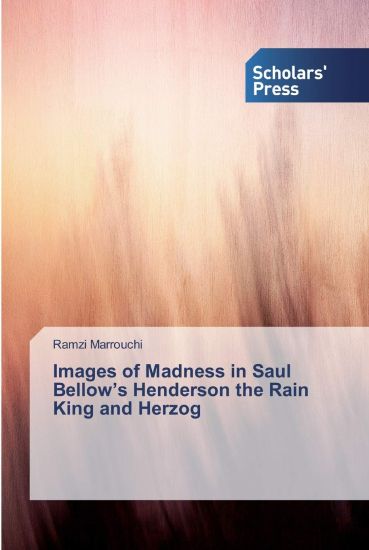
Images of Madness in Saul Bellow's Henderson the Rain King and Herzog
Ramzi Marrouchi
Scholars' Press
2019
pokkari
This book argues that Herzog's and Henderson's madness is nothing but the wisdom of unrecognized intellectuals. These protagonists are ostracized from the center of modern American society. They are marginalized, forgotten and faded away from the public's attention. Yet, being possessors of European high culture and deeply immersed in European liberal education, namely, in humanities, they survive to subvert and deconstruct the amoral ethics of post-industrial American society.



Imágenes de locura en Henderson el Rey de la Lluvia
Ramzi Marrouchi
Editorial Académica Española
2020
nidottu

Obrazy szalenstwa w Hendersonie Saula Bellow'a
Ramzi Marrouchi
Wydawnictwo Bezkresy Wiedzy
2020
pokkari
Ta książka dowodzi, że szaleństwo Herzoga i Hendersona jest niczym innym jak mądrością nieuznanych intelektualist w. Ci bohaterowie są ostraszeni z centrum wsp lczesnego spoleczeństwa amerykańskiego. Są zepchnięci na margines, zapomniani i zanikają uwadze publiczności. A jednak, będąc posiadaczami europejskiej wysokiej kultury i glęboko zanurzeni w europejskiej liberalnej edukacji, czyli w naukach humanistycznych, przeżywają, by obalic i zdekonstruowac amoralną etykę postindustrialnego spoleczeństwa amerykańskiego.



We're so proud to be releasing second updated personalized magazine of The Reader's House that exists to connect writers, authors, artists, musicians, coaches who are always ready to share their story and passion with an interview, and we put them to The Reader's House spotlight. On our cover is acclaimed Author and spiritual thinker Ramzi Najjar, has released a new book, The YOU beyond you, that various authorities have already rewarded. We have had an ample time to talk about his career and his praised title "The You Beyond You." We continue to connect people who are always ready to share their story and passion with an interview, and we put them to The Reader's House spotlight. We have interviewed not just acclaimed, as well as award winning authors like Jennifer Anne Gordon, a gothic horror/literary fiction novelist, won the Kindle Award for Best Horror/Suspense for 2020, Won Best Horror 2020 from Authors on the Air, was a Finalist for American Book Fest's Best Book Award- Horror, 2020. She also received the Platinum 5 Star Review from Reader's Choice as well as the Gold Seal from Book View. We featured Enlightened Thought Leader Dr. Ch rie Carter-Scott on the cover of March issue. Dr Ch rie is #1 New York Times Best Selling Author (19 Books), Oprah Winfrey Endorsed, Consultant to Fortune 500 companies. International Bestselling Author Kathrin Hutson, NY Times Bestseller Author Tosca Lee, Acclaimed crime fiction Canadian Author, Melissa Yi, Past President of the Sisters In Crime NJ and Award Winning Author, Kristina Rienzi are some of authors we will feature on the cover in upcoming issues. Enjoy reading,

Before 9/11: A Biography of World Trade Center Mastermind Ramzi Yousef
Fergus Mason
Createspace Independent Publishing Platform
2013
nidottu
He plotted to kill Pope John Paul...to crash a plane into CIA headquarters...to blow 11 airliners flying from Asia to the United States. But it isn't the things that he plotted that he is known for--it's the one that was carried out: the 1993 World Trade Center bombing. Today the attack is largely overshadowed by 9/11, but at the time it was one of the most memorable attacks on American soil.This book provides insight into Yousef life, his planning of the attacks, and, perhaps, one of the most bizarre twists of fates of any Islamic extremist: how he allegedly became a born again Christian while in prison.

Integration of Decision Systems With Production Information for Operations Management
Ramzi Khuri
Dissertation Discovery Company
2019
pokkari
Abstract: Integration of decision systems with production information for operations management Dissertation Discovery Company and University of Florida are dedicated to making scholarly works more discoverable and accessible throughout the world. This dissertation, "Integration of Decision Systems With Production Information for Operations Management" by Ramzi S. Khuri, was obtained from University of Florida and is being sold with permission from the author. A digital copy of this work may also be found in the university's institutional repository, IR@UF. The content of this dissertation has not been altered in any way. We have altered the formatting in order to facilitate the ease of printing and reading of the dissertation.

Integration of Decision Systems With Production Information for Operations Management
Ramzi Khuri
Dissertation Discovery Company
2019
sidottu
Abstract: Integration of decision systems with production information for operations management Dissertation Discovery Company and University of Florida are dedicated to making scholarly works more discoverable and accessible throughout the world. This dissertation, "Integration of Decision Systems With Production Information for Operations Management" by Ramzi S. Khuri, was obtained from University of Florida and is being sold with permission from the author. A digital copy of this work may also be found in the university's institutional repository, IR@UF. The content of this dissertation has not been altered in any way. We have altered the formatting in order to facilitate the ease of printing and reading of the dissertation.

Before the Arabs conquered northwest Africa in the seventh century, Ramzi Rouighi asserts, there were no Berbers. There were Moors (Mauri), Mauretanians, Africans, and many tribes and tribal federations such as the Leuathae or Musulami; and before the Arabs, no one thought that these groups shared a common ancestry, culture, or language. Certainly, there were groups considered barbarians by the Romans, but "Barbarian," or its cognate, "Berber" was not an ethnonym, nor was it exclusive to North Africa. Yet today, it is common to see studies of the Christianization or Romanization of the Berbers, or of their resistance to foreign conquerors like the Carthaginians, Vandals, or Arabs. Archaeologists and linguists routinely describe proto-Berber groups and languages in even more ancient times, while biologists look for Berber DNA markers that go back thousands of years. Taking the pervasiveness of such anachronisms as a point of departure, Inventing the Berbers examines the emergence of the Berbers as a distinct category in early Arabic texts and probes the ways in which later Arabic sources, shaped by contemporary events, imagined the Berbers as a people and the Maghrib as their home. Key both to Rouighi's understanding of the medieval phenomenon of the "berberization" of North Africa and its reverberations in the modern world is the Kitab al-'ibar of Ibn Khaldun (d. 1406), the third book of which purports to provide the history of the Berbers and the dynasties that ruled in the Maghrib. As translated into French in 1858, Rouighi argues, the book served to establish a racialized conception of Berber indigenousness for the French colonial powers who erected a fundamental opposition between the two groups thought to constitute the native populations of North Africa, Arabs and Berbers. Inventing the Berbers thus demonstrates the ways in which the nineteenth-century interpretation of a medieval text has not only served as the basis for modern historical scholarship but also has had an effect on colonial and postcolonial policies and communal identities throughout Europe and North Africa.

The thirteenth century marks a turning point in the history of the western Mediterranean. The armies of Castile and Aragon won significant and decisive victories over Muslims in Iberia and took over a number of important cities including Cordoba, Seville, Jaen, and Murcia. Chased out of their native cities, a large number of Andalusis migrated to Ifrīqiya in northern Africa. There, a newly founded Hafsid dynasty (1229-1574) welcomed members of the Andalusi elite and showered them with honors and high positions at court. While historians have tended to conceive of Ifrīqiya as a region ruled by the Hafsids, Ramzi Rouighi argues in The Making of a Mediterranean Emirate that the Andalusis who joined the Hafsid court supported economic arrangements and political relationships that effectively prevented regional integration from taking place during this period. Rouighi examines an array of documentary, literary, and legal sources to argue that Ifrīqiya was integrated neither politically nor economically and that, consequently, it was not a region in a meaningful sense. Through a close reading of narrative sources, especially historical chronicles, Rouighi further argues that the emergence in the late fourteenth century of the political ideology of Emirism accounts for the representation of the rule of the Hafsid dynasty over cities as its rule over the whole of Ifrīqiya. Setting the activities of Andalusis such as the celebrated historian Ibn Khaldun (1332-1406) in relation to specific political, economic, and intellectual developments in Ifrīqiya, The Making of a Mediterranean Emirate proposes a counter to the dynastic-centric view of the period that pervades medieval sources and continues to inform most modern generalizations about the Maghrib and the Mediterranean.

Before the Arabs conquered northwest Africa in the seventh century, Ramzi Rouighi asserts, there were no Berbers. There were Moors (Mauri), Mauretanians, Africans, and many tribes and tribal federations such as the Leuathae or Musulami; and before the Arabs, no one thought that these groups shared a common ancestry, culture, or language. Certainly, there were groups considered barbarians by the Romans, but "Barbarian," or its cognate, "Berber" was not an ethnonym, nor was it exclusive to North Africa. Yet today, it is common to see studies of the Christianization or Romanization of the Berbers, or of their resistance to foreign conquerors like the Carthaginians, Vandals, or Arabs. Archaeologists and linguists routinely describe proto-Berber groups and languages in even more ancient times, while biologists look for Berber DNA markers that go back thousands of years. Taking the pervasiveness of such anachronisms as a point of departure, Inventing the Berbers examines the emergence of the Berbers as a distinct category in early Arabic texts and probes the ways in which later Arabic sources, shaped by contemporary events, imagined the Berbers as a people and the Maghrib as their home. Key both to Rouighi's understanding of the medieval phenomenon of the "berberization" of North Africa and its reverberations in the modern world is the Kitab al-'ibar of Ibn Khaldun (d. 1406), the third book of which purports to provide the history of the Berbers and the dynasties that ruled in the Maghrib. As translated into French in 1858, Rouighi argues, the book served to establish a racialized conception of Berber indigenousness for the French colonial powers who erected a fundamental opposition between the two groups thought to constitute the native populations of North Africa, Arabs and Berbers. Inventing the Berbers thus demonstrates the ways in which the nineteenth-century interpretation of a medieval text has not only served as the basis for modern historical scholarship but also has had an effect on colonial and postcolonial policies and communal identities throughout Europe and North Africa.

Grammarians and Grammatical Theory in the Medieval Arabic Tradition
Ramzi Baalbaki
Ashgate Publishing Limited
2004
sidottu
Professor Baalbaki deals here with the Arabic grammatical tradition and the analytical methods of the medieval Arab grammarians. The essays included open new perspectives on the most authoritative work on Arabic grammar, Sibawayhi's tome or Kitab, on the relation between grammatical study and other areas of linguistic enquiry such as Qur'anic readings and stylistics, and on the techniques which the grammarians employed to explain and rationalize usage and to incorporate within their system the vast body of dialectal material which the corpus comprises. The author has sought to highlight the central position which Arabic grammar enjoys within the wider Arab culture, and in so doing has examined several aspects of a legacy which has been revered over a millennium and which forms to this very day the backbone of the teaching of grammar in the Arab world.
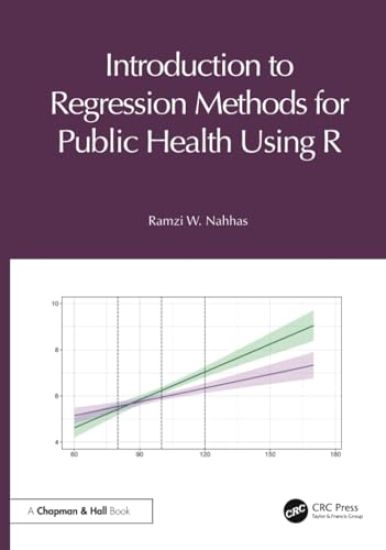
Introduction to Regression Methods for Public Health Using R
Ramzi W. Nahhas
TAYLOR FRANCIS LTD
2024
sidottu
Introduction to Regression Methods for Public Health Using R teaches regression methods for continuous, binary, ordinal, and time-to-event outcomes using R as a tool. Regression is a useful tool for understanding the associations between an outcome and a set of explanatory variables, and regression methods are commonly used in many fields, including epidemiology, public health, and clinical research. The focus of this book is on understanding and fitting regression models, diagnosing model fit, and interpreting and writing up results. Examples are drawn from public health and clinical studies. Designed for students, researchers, and practitioners with a basic understanding of introductory statistics, this book teaches the basics of regression and how to implement regression methods using R, allowing the reader to enhance their understanding and begin to grasp new concepts and models.The text includes an overview of regression (Chapter 2); how to examine and summarize the data (Chapter 3), simple (Chapter 4) and multiple (Chapter 5) linear regression; binary, ordinal, and conditional logistic regression, and log-binomial regression (Chapter 6); Cox proportional hazards regression (survival analysis) (Chapter 7); handling data arising from a complex survey design (Chapter 8); and multiple imputation of missing data (Chapter 9). Each chapter closes with a comprehensive set of exercises.Key Features:Comprehensive coverage of the most commonly used regression methods, as well as how to use regression with complex survey data or missing dataAccessible to those with only a first course in statisticsServes as a course textbook, as well as a reference for public health and clinical researchers seeking to learn regression and/or how to use R to do regression analysesIncludes examples of how to diagnose the fit of a regression modelIncludes examples of how to summarize, visualize, table, and write up the resultsIncludes R code to run the examples