Kirjojen hintavertailu. Mukana 11 244 527 kirjaa ja 12 kauppaa.

Kirjahaku

Etsi kirjoja tekijän nimen, kirjan nimen tai ISBN:n perusteella.

62 tulosta hakusanalla Ranabir Samaddar

Neo-Liberal Strategies of Governing India

Neo-Liberal Strategies of Governing India

Ranabir Samaddar

Routledge India
2019
nidottu
Neo-liberal Strategies of Governing India and its companion volume Ideas and Frameworks of Governing India tell the story of governance in independent India and address the critical question: how is a post-colonial democracy governed? Further, they attempt to understand why the process of governing a post-colonial democracy, particularly in the neo
Ideas and Frameworks of Governing India

Ideas and Frameworks of Governing India

Ranabir Samaddar

Routledge India
2019
nidottu
Ideas and Frameworks of Governing India and its companion volume Neo-liberal Strategies of Governing India tell the story of governance in independent India and address the critical question: how is a post-colonial democracy governed? Further, they attempt to understand why the process of governing a post-colonial democracy, particularly in the neo
The Postcolonial Age of Migration

The Postcolonial Age of Migration

Ranabir Samaddar

Routledge India
2020
sidottu
This book critically examines the question of migration that appears at the intersection of global neo-liberal transformation, postcolonial politics, and economy. It analyses the specific ways in which colonial relations are produced and reproduced in global migratory flows and their consequences for labour, human rights, and social justice. The postcolonial age of migration not only indicates a geopolitical and geo-economic division of the globe between countries of the North and those of the South marked by massive and mixed population flows from the latter to the former, but also the production of these relations within and among the countries of the North. The book discusses issues such as transborder flows among countries of the South; migratory movements of the internally displaced; growing statelessness leading to forced migration; border violence; refugees of partitions; customary and local practices of care and protection; population policies and migration management (both emigration and immigration); the protracted nature of displacement; labour flows and immigrant labour; and the relationships between globalisation, nationalism, citizenship, and migration in postcolonial regions. It also traces colonial and postcolonial histories of migration and justice to bear on the present understanding of local experiences of migration as well as global social transformations while highlighting the limits of the fundamental tenets of humanitarianism (protection, assistance, security, responsibility), which impact the political and economic rights of vast sections of moving populations.Topical and an important intervention in contemporary global migration and refugee studies, the book offers new sources, interpretations, and analyses in understanding postcolonial migration. It will be useful to scholars and researchers of migration studies, refugee studies, border studies, political studies, political sociology, international relations, human rights and law, human geography, international politics, and political economy. It will also interest policymakers, legal practitioners, nongovernmental organisations, and activists.
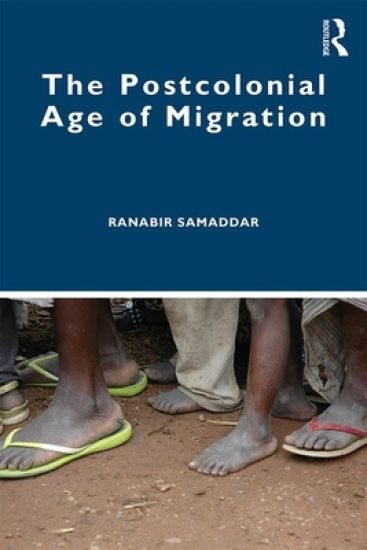
The Postcolonial Age of Migration

The Postcolonial Age of Migration

Ranabir Samaddar

Routledge India
2020
nidottu
This book critically examines the question of migration that appears at the intersection of global neo-liberal transformation, postcolonial politics, and economy. It analyses the specific ways in which colonial relations are produced and reproduced in global migratory flows and their consequences for labour, human rights, and social justice. The postcolonial age of migration not only indicates a geopolitical and geo-economic division of the globe between countries of the North and those of the South marked by massive and mixed population flows from the latter to the former, but also the production of these relations within and among the countries of the North. The book discusses issues such as transborder flows among countries of the South; migratory movements of the internally displaced; growing statelessness leading to forced migration; border violence; refugees of partitions; customary and local practices of care and protection; population policies and migration management (both emigration and immigration); the protracted nature of displacement; labour flows and immigrant labour; and the relationships between globalisation, nationalism, citizenship, and migration in postcolonial regions. It also traces colonial and postcolonial histories of migration and justice to bear on the present understanding of local experiences of migration as well as global social transformations while highlighting the limits of the fundamental tenets of humanitarianism (protection, assistance, security, responsibility), which impact the political and economic rights of vast sections of moving populations.Topical and an important intervention in contemporary global migration and refugee studies, the book offers new sources, interpretations, and analyses in understanding postcolonial migration. It will be useful to scholars and researchers of migration studies, refugee studies, border studies, political studies, political sociology, international relations, human rights and law, human geography, international politics, and political economy. It will also interest policymakers, legal practitioners, nongovernmental organisations, and activists.
The Politics of Dialogue

The Politics of Dialogue

Ranabir Samaddar

Ashgate Publishing Limited
2004
sidottu
Offering a detailed analysis of post-colonial South Asia, The Politics of Dialogue discusses the creation and impact of borders and the pervasive tension between the new nations. Neither all-out war nor complete peace, this fragile condition makes political leaders and strategists feel claustrophobic - a war produces an end result but peace allows the rulers to carry out their policies for governing along their preferred path of development. The book shows how cartographic, communal and political lines are not only dividing countries, but that they are being replicated within countries, creating new visible and invisible internal frontiers. It argues that, in a situation where geopolitics constrains democracy, the political class becomes incapable of coping with the tension between the inside/outside, eg democracy appears as an internal problem and geopolitics appears as a problem related to the 'outside'.
Alternative Futures and the Present

Alternative Futures and the Present

Ranabir Samaddar

TAYLOR FRANCIS LTD
2024
nidottu
This book explores the idea that alternatives to our present condition are available in the present, such that a search for alternatives must involve rigorous study of some of its central texts, events, and thinkers. Through engagement with selected modern thinkers, texts, and events, it imagines a different future from the position of the current postcolonial moment, indicating the possibilities that emerge from the present and which shape contemporary radical thinking. An invitation to imagine a possible future marked with alternative possibilities of conducting struggles, and living through contentions and social restructuring, it will appeal to scholars with interests in social and political theory, political philosophy, colonialism and postcolonialism, and historical materialism.
Alternative Futures and the Present

Alternative Futures and the Present

Ranabir Samaddar

TAYLOR FRANCIS LTD
2023
sidottu
This book explores the idea that alternatives to our present condition are available in the present, such that a search for alternatives must involve rigorous study of some of its central texts, events, and thinkers. Through engagement with selected modern thinkers, texts, and events, it imagines a different future from the position of the current postcolonial moment, indicating the possibilities that emerge from the present and which shape contemporary radical thinking. An invitation to imagine a possible future marked with alternative possibilities of conducting struggles, and living through contentions and social restructuring, it will appeal to scholars with interests in social and political theory, political philosophy, colonialism and postcolonialism, and historical materialism.
The Marginal Nation

The Marginal Nation

Ranabir Samaddar

TAYLOR FRANCIS LTD
2025
sidottu
The Marginal Nation analyses the realities of transborder migration in the South Asia region going beyond the domains of economics and demography. It provides an in-depth look into the historical, cultural and geographic dimensions of migration across the India–Bangladesh border that challenges fixed definitions of borders, nations and identities.Drawing from extensive fieldwork, the author encapsulates the lives and aspirations of migrants exploring the social affinities and historical ties that bind people across territories and ‘marginalises’ national identity. The book chronicles the lived experiences of migrants and their everyday lives, conflicts and contradictions. It pits these narratives against ‘national’ concerns over security, statehood, and demarcated borders interrogating their immutability in the South Asian context. This revised edition reflects upon the significance and relevance of the book to migration and refugee studies in South Asia and beyond twenty-five years after it was first published.A classic, this book will be of interest to students and scholars in the fields of political science, sociology, history, human rights studies, refugee studies, demography and South Asian studies.
The Marginal Nation

The Marginal Nation

Ranabir Samaddar

TAYLOR FRANCIS LTD
2025
nidottu
The Marginal Nation analyses the realities of transborder migration in the South Asia region going beyond the domains of economics and demography. It provides an in-depth look into the historical, cultural and geographic dimensions of migration across the India–Bangladesh border that challenges fixed definitions of borders, nations and identities.Drawing from extensive fieldwork, the author encapsulates the lives and aspirations of migrants exploring the social affinities and historical ties that bind people across territories and ‘marginalises’ national identity. The book chronicles the lived experiences of migrants and their everyday lives, conflicts and contradictions. It pits these narratives against ‘national’ concerns over security, statehood, and demarcated borders interrogating their immutability in the South Asian context. This revised edition reflects upon the significance and relevance of the book to migration and refugee studies in South Asia and beyond twenty-five years after it was first published.A classic, this book will be of interest to students and scholars in the fields of political science, sociology, history, human rights studies, refugee studies, demography and South Asian studies.
The Politics of Dialogue

The Politics of Dialogue

Ranabir Samaddar

Routledge
2017
nidottu
Offering a detailed analysis of post-colonial South Asia, The Politics of Dialogue discusses the creation and impact of borders and the pervasive tension between the new nations. Neither all-out war nor complete peace, this fragile condition makes political leaders and strategists feel claustrophobic - a war produces an end result but peace allows the rulers to carry out their policies for governing along their preferred path of development. The book shows how cartographic, communal and political lines are not only dividing countries, but that they are being replicated within countries, creating new visible and invisible internal frontiers. It argues that, in a situation where geopolitics constrains democracy, the political class becomes incapable of coping with the tension between the inside/outside, eg democracy appears as an internal problem and geopolitics appears as a problem related to the 'outside'.
Ideas and Frameworks of Governing India

Ideas and Frameworks of Governing India

Ranabir Samaddar

Routledge India
2016
sidottu
Ideas and Frameworks of Governing India and its companion volume Neo-liberal Strategies of Governing India tell the story of governance in independent India and address the critical question: how is a post-colonial democracy governed? Further, they attempt to understand why the process of governing a post-colonial democracy, particularly in the neo-liberal age, should be studied as the central question within the history of post-colonial democracy. The volumes offer hitherto unexplored analyses of governance — political and ideological aspects along with technological characteristics — in a historical framework. This volume discusses: ideas and issues at the core of governance in post-colonial India constitution, state-making and government formation the asymmetrical nature of the anti-colonial foundations of governanceIn breaking new ground in the study of what constitutes the political subject, these volumes will be indispensable to scholars, researchers and students of politics, public administration, development studies, South Asian studies and modern India.
Neo-Liberal Strategies of Governing India

Neo-Liberal Strategies of Governing India

Ranabir Samaddar

Routledge India
2016
sidottu
Neo-liberal Strategies of Governing India and its companion volume Ideas and Frameworks of Governing India tell the story of governance in independent India and address the critical question: how is a post-colonial democracy governed? Further, they attempt to understand why the process of governing a post-colonial democracy, particularly in the neo-liberal age, should be studied as the central question within the history of post-colonial democracy. The volumes offer hitherto unexplored analyses of governance — political and ideological aspects along with technological characteristics — in a historical framework. This volume discusses: a contemporary history of democracy — ways of governing, resistance and their engagement political economy, development and neo-liberal governance governance as a strategy of accommodating claims and facilitating accumulation In breaking new ground in the study of what constitutes the political subject, these volumes will be indispensable to scholars, researchers and students of politics, public administration, development studies, South Asian studies and modern India.
Government of Peace

Government of Peace

Ranabir Samaddar

Routledge
2015
sidottu
Government of Peace addresses a major question in world politics today: how does post-colonial democracy produce a form of governance that copes with conflicts, insurgencies, revolts, and acute dissents? The contributors view social governance as a crucial component in answering this question and their narratives of governance aim to show how certain appropriate governing modes make social conflicts more manageable or at least also occasions for development. They show how government often expands to cope with acute conflicts; money is made more readily available; the transfer of resources acquires frantic pace; and so society becomes more attuned to a money-centric, modern life. Yet this style of governance is not the only approach. Dialogues from below challenge this accepted path to peacebuilding and new subjectivities emerge from movements for social justice by women, migrants, farmers, dalits, low-caste, and other subaltern groups. The idea of a government of peace sits at the core of the interlinked issues of social governance, peace-building, and security. By exploring this idea and analysing the Indian experience of insurgencies and internal conflicts the contributors collectively show how rules of social governance can and have evolved.
The Materiality of Politics: Volume 1

The Materiality of Politics: Volume 1

Ranabir Samaddar

Anthem Press
2007
sidottu
‘The Materiality of Politics’ uses a series of historical illustrations to reveal the physicality and underlying ‘materiality’ of political processes. Volume 1, subtitled ‘The Technologies of Rule’ discusses the techniques of modern rule which form the basis of the post-colonial Indian state. Beginning with the rule of law, the volume analyses the nature and manifestations of constitutional rule, the relation between law and terror and the construction of ‘extraordinary’ sovereign power. The author also investigates the methods of care, protection, segregation and stabilization by which rule proceeds. In the processes, the material core of the ‘cultural’ and the ‘aesthetic’ is exposed.
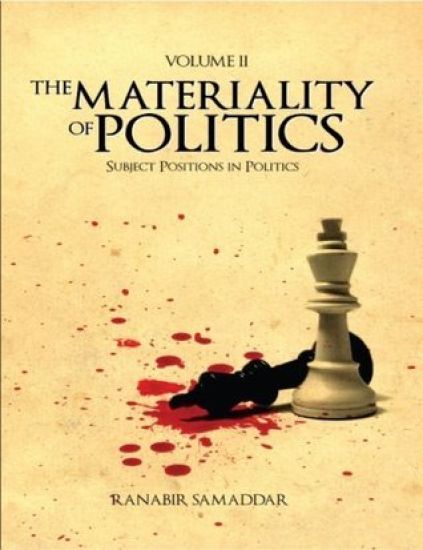
The Materiality of Politics: Volume 2

The Materiality of Politics: Volume 2

Ranabir Samaddar

Anthem Press
2007
sidottu
‘The Materiality of Politics’ uses a series of historical illustrations to reveal the physicality and underlying ‘materiality’ of political processes. Volume 2, subtitled ‘Subject Positions in Politics’ focuses on the political subject emerging from post-colonial politics. The 1940s are closely examined in order to trace the genesis of the modern Indian political subject, his/her dreams of liberty and recognition of freedom’s qualifications. Contentious politics illuminates the dual tendency of the political subject to demand justice in court, and engage in rebellious street politics, clamouring for justice and equality. As the author demonstrates, the subject’s desire for the autonomy of politics manifests itself in various ways.
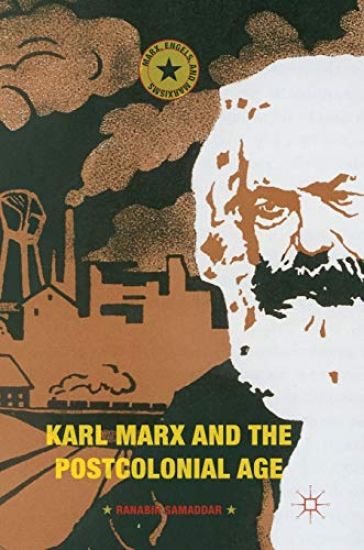
Karl Marx and the Postcolonial Age

Karl Marx and the Postcolonial Age

Ranabir Samaddar

Springer International Publishing AG
2017
sidottu
This book seeks to explicitly engage Marxist and post-colonial theory to place Marxism in the context of the post-colonial age. Those who study Marx, particularly in the West, often lack an understanding of post-colonial realities; conversely, however, those who fashion post-colonial theory often have an inadequate understanding of Marx. Many think that Marx is not relevant to critique postcolonial realities and the legacy of Marx seldom reaches the post-colonial countries directly. This work will read Marx in the contemporary post-colonial condition and elaborate the current dynamics of post-colonial capitalism. It does this by analysing contemporary post-colonial history and politics in the framework of inter-relations between the three categories of class, people, and postcolonial transformation. Examining the structure of power in postcolonial countries and revisiting the revolutionary theory of dual power in that context, it appreciates and explains the transformative potentialities of Marx in relation to post-colonial condition.
Karl Marx and the Postcolonial Age

Karl Marx and the Postcolonial Age

Ranabir Samaddar

Springer International Publishing AG
2018
nidottu
This book seeks to explicitly engage Marxist and post-colonial theory to place Marxism in the context of the post-colonial age. Those who study Marx, particularly in the West, often lack an understanding of post-colonial realities; conversely, however, those who fashion post-colonial theory often have an inadequate understanding of Marx. Many think that Marx is not relevant to critique postcolonial realities and the legacy of Marx seldom reaches the post-colonial countries directly. This work will read Marx in the contemporary post-colonial condition and elaborate the current dynamics of post-colonial capitalism. It does this by analysing contemporary post-colonial history and politics in the framework of inter-relations between the three categories of class, people, and postcolonial transformation. Examining the structure of power in postcolonial countries and revisiting the revolutionary theory of dual power in that context, it appreciates and explains the transformative potentialities of Marx in relation to post-colonial condition.
Biopolitics from Below

Biopolitics from Below

Ranabir Samaddar

CENTRAL EUROPEAN UNIVERSITY PRESS
2025
nidottu
The current social turmoil enveloping the world has produced knee jerk reactions and a plethora of policy declarations. At the same time, the scenario is marked with response of those with low socioeconomic status to the worldwide chaos and precarious living conditions. In this context, how do we make sense of what is being described variously as a breakdown of democracy, its exhaustion, and the new challenges in the form of an alternative politics of life or a phenomenon that we may term as “biopolitics from below”? The theme of the book is crisis, conjuncture, and rupture. It relates to the question of correlation of social and political forces in the emergence of certain events, presents certain events as illustrations, and takes a historiographical-analytical route to argue why certain things happen in the way they happen. Usually, crisis is the explanatory factor. This book seeks to go deeper and find out why some crises and not all produce unexpected outcomes. Or, as this book puts it differently, the essential gradient of a crisis is the correlation of forces at a particular time - and thus the question of conjuncture. The book seeks to open up to new adventures in thought, imagining new openings, and creating exits from the situation we find ourselves in.
A Post-Colonial Enquiry into Europe’s Debt and Migration Crisis
This important and topical volume is composed around the debt and migration crisis in Europe in 2015 (known as the Greece crisis), and written almost concurrently as the two crises developed in quick succession. The central argument here is that Europe’s present crisis suggests a post-colonial bind, or to put in stronger terms, a post-colonial destiny of Europe. The European situation bears remarkable similarity with the post-colonial condition elsewhere in the world and suggests a strong bond between Europe’s present situation and the post-colonial bind in which much of the world finds itself. The purpose of this volume is to examine in the light of 21st century capitalism notions such as debt, crisis, rupture, dialogue, mobilization, neo-liberalism, war and migration, and the old, never to be settled, question of ideology. The volume ends with reflections on Europe’s migration crisis, and reinforces the point that a critical post-colonial sense of history, accumulation, globalization, and the resilience of the nation form will help us reflect on the present European crisis, and draw appropriate lessons.