Kirjojen hintavertailu. Mukana 11 244 527 kirjaa ja 12 kauppaa.

Kirjahaku

Etsi kirjoja tekijän nimen, kirjan nimen tai ISBN:n perusteella.

1000 tulosta hakusanalla Randall Bennett Woods

Fulbright

Fulbright

Randall Bennett Woods

Cambridge University Press
2006
pokkari
J. William Fulbright is the author of the Fulbright-Connally resolution which committed the United States to participating in the UN. Creator of the exchange programme that bears his name, Fulbright was the longest-serving and most powerful chair of the Senate Foreign Relations Committee. This volume describes the family dynamic, educational process and environments - Arkansas, Oxford, Washington, DC - which produced this remarkable man. It delves into his complex attitude toward race and details Fulbright's role in the civil rights movement. The narrative includes the major international events of the Cold War era - the Suez Crisis, the U-2 incident, the Bay of Pigs, the Missile Crisis, Vietnam, the ABM controversies, the Arab-Israeli conflict - and Fulbright's role in them. Woods explains Fulbright's shift from a champion of executive power in foreign affairs to a defender of congressional prerogatives.
Fulbright

Fulbright

Randall Bennett Woods

Cambridge University Press
1995
sidottu
J. William Fulbright is the second most successful Oxford-educated politician to come from Arkansas. Author of the Fulbright-Connally resolution which committed the United States to participating in the U.N., and creator of the exchange program that bears his name, Fulbright was the longest serving and most powerful chair of the Senate Foreign Relations Committee. This volume describes the family dynamic, educational process, and environments - Arkansas, Oxford, Washington, D.C. - which produced this remarkable man. It delves into his complex attitude toward race and details Fulbright’s role in the civil rights movement. The narrative includes the major international events of the Cold War era - the Suez Crisis, the U-2 incident, the Bay of Pigs, the Missile Crisis, Vietnam, the ABM controversies, the Arab-Israeli conflict - and Fulbright’s role in them. Woods explains Fulbright’s shift from a champion of executive power in foreign affairs to a defender of congressional prerogatives.
Quest for Identity

Quest for Identity

Randall Bennett Woods

Cambridge University Press
2005
pokkari
Quest for Identity is a survey of the American experience from the close of World War II, through the Cold War and 9/11, to the present. It helps students understand postwar American history through a seamless narrative punctuated with accessible analyses. Randall Woods addresses and explains the major themes that punctuate the period: the Cold War, the Civil Rights and Women's Rights movements, and other great changes that led to major realignments of American life. While political history is emphasized, Woods also discusses in equal measure cultural matters and socio-economic problems. Dramatic new patterns of immigration and migration characterized the period as much as the counterculture, the growth of television and the Internet, the interstate highway system, rock and roll, and the exploration of space. The pageantry, drama, irony, poignancy and humor of the American journey since World War II are all here.
J. William Fulbright, Vietnam, and the Search for a Cold War Foreign Policy
J. William Fulbright was the longest serving and most powerful chair of the Senate Foreign Relations Committee. Both an intellectual and an internationalist, he had great influence over the course of American foreign relations in the 1960s and 1970s. Fulbright was also the most prominent, and the most effective, of the first American critics of the Vietnam War. His criticism was particularly galling and damning to Lyndon Johnson because Fulbright was a principled internationalist who could not be dismissed as an ideologue. Fulbright used hearings by the Foreign Relations Committee as a forum in which to advance his powerful critique of the war, and his writings constitute an ongoing, comprehensive critique of American foreign policy. This abridgement of Woods’ prize-winning biography of J. William Fulbright presents the full story of Fulbright’s role as one of the leading congressional opponents of the Vietnam War.
J. William Fulbright, Vietnam, and the Search for a Cold War Foreign Policy
J. William Fulbright was the longest serving and most powerful chair of the Senate Foreign Relations Committee. Both an intellectual and an internationalist, he had great influence over the course of American foreign relations in the 1960s and 1970s. Fulbright was also the most prominent, and the most effective, of the first American critics of the Vietnam War. His criticism was particularly galling and damning to Lyndon Johnson because Fulbright was a principled internationalist who could not be dismissed as an ideologue. Fulbright used hearings by the Foreign Relations Committee as a forum in which to advance his powerful critique of the war, and his writings constitute an ongoing, comprehensive critique of American foreign policy. This abridgement of Woods' prize-winning biography of J. William Fulbright presents the full story of Fulbright's role as one of the leading congressional opponents of the Vietnam War.
Quest for Identity

Quest for Identity

Randall Bennett Woods

Cambridge University Press
2005
sidottu
Quest for Identity is a survey of the American experience from the close of World War II, through the Cold War and 9/11, to the present. It helps students understand postwar American history through a seamless narrative punctuated with accessible analyses. Randall Woods addresses and explains the major themes that punctuate the period: the Cold War, the Civil Rights and Women's Rights movements, and other great changes that led to major realignments of American life. While political history is emphasized, Woods also discusses in equal measure cultural matters and socio-economic problems. Dramatic new patterns of immigration and migration characterized the period as much as the counterculture, the growth of television and the Internet, the interstate highway system, rock and roll, and the exploration of space. The pageantry, drama, irony, poignancy and humor of the American journey since World War II are all here.
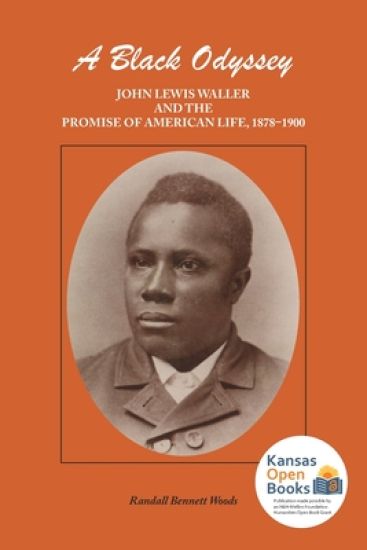
A Black Odyssey

A Black Odyssey

Randall Bennett Woods

UNIVERSITY PRESS OF KANSAS
2021
nidottu
This book focuses on the career of a single individual—an ambitious, resourceful Black American—and his efforts to realize personal fulfillment in a racist world.No Black American was more determined to realize the promise of American life following the Civil War, nor more frustrated by his inability to do so than John Lewis Waller. Waller, whose first twelve years were spent in slavery, overcame his humble beginnings to become a politician, lawyer, journalist, and diplomat. Nevertheless, his life provides a case study of a middle class black caught between a desire to work within the existing political and economic framework and a need to reject a milieu that was becoming increasingly racist.Waller spent his childhood as a slave in Missouri, and his adolescence on a farm in Iowa. Circumstances and personal ambition combined to allow Waller to acquire a trade—barbering—and a profession—lawyering—in the 1870s. In 1878 he migrated to frontier Kansas, where he practiced law, edited a newspaper, rose to a position of leadership in the black community, and became an important figure in the state Republican party. His political career ended abruptly in 1890, however, when the Republicans rejected his bid to be nominated as the party’s candidate for state auditor. Convinced that his defeat was due to the rising tide of racism throughout the nation, he turned his attentions abroad.Waller was particularly susceptible to the lure of overseas empire because he had spent much of his adult life in the midst of a community of people who had succumbed to the myth of a “promised land,” who were convinced that the Black person would be best able to realize his potential in economically under-developed regions not yet exploited and controlled by the white man. In 1891 President Benjamin Harrison appointed Waller United States consul to the east African island of Madagascar. By 1894 Waller had obtained a huge land grant there for the founding of a black utopia. He hoped to establish a plantation-colony that would simultaneously advance his personal fortunes, serve as an investment opportunity for aspiring black capitalists, and constitute a refuge for oppressed Afro-Americans who wished to immigrate. He was thwarted once again by racism, however—this time in the guise of French imperialism. Viewing Waller and his plans as a threat to their hegemony in Madagascar, French authorities quashed the concession, arrested Waller on a charge of being a spy, and sentenced him to twenty years in prison. There followed a full-scale diplomatic confrontation between the United States and France. Waller was released after serving ten months in a French prison, but only after the Cleveland administration agreed to discredit him to the point where he would seem guilty as charged.In his early manhood John Lewis Waller had realized that because he was a Negro personal achievement could not be separated from racial advancement. Responding to that perception, he spent a lifetime searching for a frontier where blacks could enjoy the blessings of democracy and capitalism, and yet be free of the blight of racism. Unlike the vast majority of American Blacks of his time, Waller was able to articulate his dreams, have an impact on the larger, white dominated environment, and realize his individual potential to a remarkable degree. Nevertheless, his dreams were ultimately dashed by racism. His sad but fascinating story deserves the careful attention of all students of politics and race relations during the complex post-Civil War year.
The Roosevelt Foreign-Policy Establishment and the "Good Neighbor

The Roosevelt Foreign-Policy Establishment and the "Good Neighbor

Randall Bennett Woods

UNIVERSITY PRESS OF KANSAS
2021
nidottu
The Good Neighbor Policy was tested to the breaking point by Argentina-U.S. relations during World War II. In part, its durability had depended both upon the willingness of all American republics to join with the United States in resisting attempts by extrahemispheric sources to intervene in New World affairs and upon continuity within the United States foreign-policy establishment. During World War II, neither prerequisite was satisfied, Argentina chose to pursue a neutralist course, and the Latin American policy of the United States became the subject of a bitter bureaucratic struggle within the Roosevelt administration. Consequently, the principles of nonintervention and noninterference, together with “absolute respect for the sovereignty of all states,” ceased to be the guideposts of Washington’s hemispheric policy.In this study, Randall Bennett Woods argues persuasively that Washington’s response to Argentine neutrality was based more on internal differences—individual rivalries and power struggles between competing bureaucratic empires—than on external issues or economic motives. He explains how bureaucratic infighting within the U.S. government, entirely irrelevant to the issues involved, shaped important national policy toward Argentina.Using agency memoranda, State Department records, notes on conversations and interviews, memoirs, and personal archives of the participants, Woods looks closely at the rivalries that swayed the course of Argentine-American relations. He describes the personal motives and goals of men such as Sumner Welles, Cordell Hull, Henry Morgenthau, Harry Dexter White, Henry A. Wallace, and Milo Perkins. He delineates various cliques within the State Department, including the contending groups of Welles Latin Americanists and Hull internationalists—and describes the power struggles between the State Department, the Treasury Department, the Board of Economic Welfare, the Caribbean Defense Command, and other agencies. Of special interest to students of contemporary history will be Woods’s discussion of the careers and views of Juan Peron and Nelson Rockefeller—for American policy contributed in no small way to Peron’s rise, and Rockefeller was the man chiefly responsible for the U.S. rapprochement with Argentina in 1944–45. Woods also gives special attention to the impact of the Wilsonian tradition—especially its contradictions—on policy formation. The last chapter, dealing with Argentina’s admission to the U.N., sheds some light on the origins of the Cold War.Wood’s investigation of the Argentine problem makes a significant contribution toward the understanding of U.S.-Latin American relations in the era of the Good Neighbor Policy, and provides new insights into the evolution of hemispheric policy as a whole during World War II. It reflects the growing emphasis on bureaucratic politics as a principal determinant of U.S. diplomacy.
Going The Distance: The Adventure of Marnie Bennett

Going The Distance: The Adventure of Marnie Bennett

Randall S. Breason

Independently Published
2019
nidottu
Losing her mother at the age of 16 and left all alone in foster care, Marnie makes the decision to search for the father she never knew. Knowing it is a long shot, she meets up with two bikers who are coerced into assisting in her search. Along the way she meets one of his old army buddies, One-Arm Willie, who's life was actually saved by her dad in the jungles of South East Asia. Ride along with her, One-way, and Big Ugly as they travel the road on a life-changing adventure.
Randall Jarrell and His Age

Randall Jarrell and His Age

Stephen Burt

Columbia University Press
2002
sidottu
Randall Jarrell (1914-1965) was the most influential poetry critic of his generation. He was also a lyric poet, comic novelist, translator, children's book author, and close friend of Elizabeth Bishop, Robert Lowell, Hannah Arendt, and many other important writers of his time. Jarrell won the 1960 National Book Award for poetry and served as poetry consultant to the Library of Congress. Amid the resurgence of interest in Randall Jarrell, Stephen Burt offers this brilliant analysis of the poet and essayist. Burt's book examines all of Jarrell's work, incorporating new research based on previously undiscovered essays and poems. Other books have examined Jarrell's poetry in biographical or formal terms, but none have considered both his aesthetic choices and their social contexts. Beginning with an overview of Jarrell's life and loves, Burt argues that Jarrell's poetry responded to the political questions of the 1930s, the anxieties and social constraints of wartime America, and the apparent prosperity, domestic ideals, and professional ideology that characterized the 1950s. Jarrell's work is peopled by helpless soldiers, anxious suburban children, trapped housewives, and lonely consumers. Randall Jarrell and His Age situates the poet-critic among his peers-including Bishop, Lowell, and Arendt-in literature and cultural criticism. Burt considers the ways in which Jarrell's efforts and achievements encompassed the concerns of his time, from teen culture to World War II to the Cuban Missile Crisis; the book asks, too, how those efforts might speak to us now.
Randall Jarrell and His Age

Randall Jarrell and His Age

Stephen Burt

Columbia University Press
2005
pokkari
Randall Jarrell (1914-1965) was the most influential poetry critic of his generation. He was also a lyric poet, comic novelist, translator, children's book author, and close friend of Elizabeth Bishop, Robert Lowell, Hannah Arendt, and many other important writers of his time. Jarrell won the 1960 National Book Award for poetry and served as poetry consultant to the Library of Congress. Amid the resurgence of interest in Randall Jarrell, Stephen Burt offers this brilliant analysis of the poet and essayist. Burt's book examines all of Jarrell's work, incorporating new research based on previously undiscovered essays and poems. Other books have examined Jarrell's poetry in biographical or formal terms, but none have considered both his aesthetic choices and their social contexts. Beginning with an overview of Jarrell's life and loves, Burt argues that Jarrell's poetry responded to the political questions of the 1930s, the anxieties and social constraints of wartime America, and the apparent prosperity, domestic ideals, and professional ideology that characterized the 1950s. Jarrell's work is peopled by helpless soldiers, anxious suburban children, trapped housewives, and lonely consumers. Randall Jarrell and His Age situates the poet-critic among his peers-including Bishop, Lowell, and Arendt-in literature and cultural criticism. Burt considers the ways in which Jarrell's efforts and achievements encompassed the concerns of his time, from teen culture to World War II to the Cuban Missile Crisis; the book asks, too, how those efforts might speak to us now.
Randall Jarrell on W. H. Auden

Randall Jarrell on W. H. Auden

Columbia University Press
2005
sidottu
"To read Randall Jarrell on W. H. Auden is to read the best-equipped of American critics of poetry of the past century on the best-equipped of its Anglo-American poets, and we rush to read, perhaps, less out of an academic interest in fair judgment than out of a spectator's love of virtuosity in flight." From Adam Gopnik's foreword Randall Jarrell was one of the most important poet-critics of the past century, and the poet who most fascinated and infuriated him was W. H. Auden. In Auden, Jarrell found a crucial poetic influence that needed to be both embraced and resisted. During the 1940s, Jarrell wrestled with Auden's work, writing a series of notorious articles on Auden that remain admired and controversial examples of devoted and contentious criticism. While Jarrell never completed his proposed book on Auden, these previously unpublished lectures revise and reprise his earlier articles and present new insights into Auden's work. Delivered at Princeton University in 1951 and 1952, Jarrell's lectures reflect a passionate appreciation of Auden's work, a witty attack from an informed opponent, and an important document of a major poet's reception. Jarrell's lectures offer readings of many of Auden's works, including all of his long poems, and illuminate his singular use of a variety of stylistic registers and poetic genres. In the lecture based on the article "Freud to Paul," Jarrell traces the ideas and ideologies that animated and, at times, overwhelmed Auden's poetry. More precisely, he considers the influence of left-liberal politics, psychoanalytic and evolutionary theory, and the idiosyncratic Christian theology that characterized Auden's poems of the 1940s. While an admiring and sympathetic reader, Jarrell does not avoid identifying Auden's poetic failures and political excesses. He offers occasionally blistering assessments of individual poems and laments Auden's turn from a cryptic, feeling, impassioned poet to a rhetorical, self-conscious one. Stephen Burt's introduction provides a backdrop to the lectures and their reception and importance for the history of modern poetry.
Randall Thompson

Randall Thompson

Caroline C. Benser; David F. Urrows

Greenwood Press
1991
sidottu
This is the first major reference work on this important choral composer. As is usual for volumes in this valuable series, the book is clearly printed and well bound, and it is highly recommended for undergraduate and graduate music collections as well as for public libraries serving communities with active choral societies. ChoiceWhen Randall Thompson died in 1984, America lost one of its most distinguished musicians. At the time of his death, it was already apparent that an assessment of his varied contributions to our musical life in the context of his contemporary generation was sorely needed. Randall Thompson: A Bio-Bibliography is the first comprehensive study of Thompson's oeuvre since his death.The volume is organized into five parts, beginning with a substantial biography written by David Francis Urrows, Thompson's final student and amanuensis. Urrows presents new information on Thompson's youth, his study in Italy and the influence of Malipiero on his work, his educational and compositional philosophy, and his role in the emergence of American music from the influence of European models. Benser's most complete catalog of works compiled to date follows. This vital list includes previously unpublished compositions, particularly those newly made available by Thompson's longtime publisher, E. C. Schirmer, and new recordings made by Bay Cities Music. A sampling of prose writings by Thompson offers a eclectic overview. The complete, extensively annotated bibliography, discography, and two appendixes that list Thompson's compositions chronologically and alphabetically complete this study. Music libraries will want to add this volume to their collections. It will also be an invaluable reference for choral directors, program note annotators, and American music enthusiasts.
Black Folk Could Fly: Selected Writings by Randall Kenan
Virtuosic in his use of literary forms, nurtured and unbounded by his identities as a Black man, a gay man, an intellectual, and a Southerner, Randall Kenan was known for his groundbreaking fiction. Less visible were his extraordinary nonfiction essays, published as introductions to anthologies and in small journals, revealing countless facets of Kenan's life and work.Flying under the radar, these writings were his most personal and autobiographical: memories of the three women who raised him--a grandmother, a schoolteacher great-aunt, and the great-aunt's best friend; recollections of his boyhood fear of snakes and his rapturous discoveries in books; sensual evocations of the land, seasons, and crops--the labor of tobacco picking and hog killing--of the eastern North Carolina lowlands where he grew up; and the food (oh the deliriously delectable Southern foods ) that sustained him. Here too is his intellectual coming of age; his passionate appreciations of kindred spirits as far-flung as Eartha Kitt, Gordon Parks, Ingmar Bergman, and James Baldwin. This powerful collection is a testament to a great mind, a great soul, and a great writer from whom readers will always wish to have more to read.
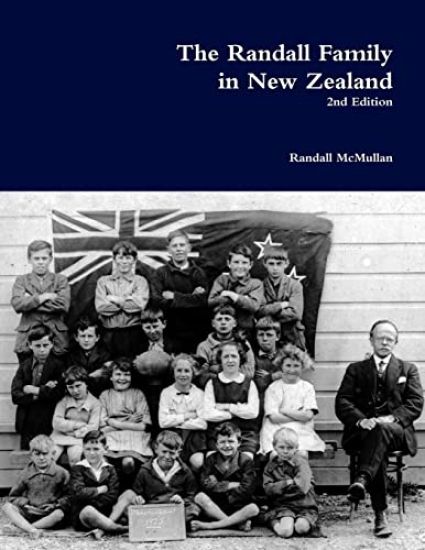
The Randall Family in New Zealand

The Randall Family in New Zealand

Randall McMullan

Pianobeach
2015
pokkari
This collection of stories, facts and photos is about a family living in New Zealand in the twentieth century. The earlier family members crossed the world to live in New Zealand in the 1800s. The information centres on Lindsay Randall and Margaret Ryan and their four children - Clement (Mick), Noreen, Agnes and Audrey. Between them they lived from the 1880s until the 2000s. As with most families, their lives were both ordinary and special.
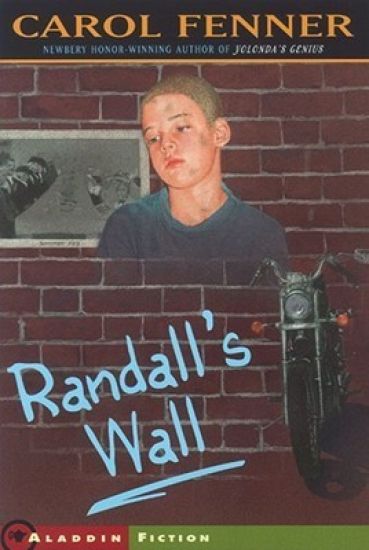
Randall's Wall

Randall's Wall

Carol Fenner

Aladdin
2000
pokkari
Inside your wall, no one can touch you It was Randall's sister who first told him about the invisible wall that protected her from the cruelty of her classmates. By the time Randall is in fifth grade, he's had his own wall for years. Inside his wall, he doesn't have to think about his abusive father, gone for several months, or his thin, suffering mother, who never leaves the house -- the house with no running water for laundry or baths. Inside his wall, he can dream about picnics, about riding on his Uncle Luke's motorcycle, and, always, he can lose himself in his drawing. But one day Randall makes a friend, and slowly, frighteningly, his wall begins to crumble. And miraculously, the gift that comforted Randall within his wall opens up a new world outside it.