Kirjojen hintavertailu. Mukana 11 244 527 kirjaa ja 12 kauppaa.

Kirjahaku

Etsi kirjoja tekijän nimen, kirjan nimen tai ISBN:n perusteella.

1000 tulosta hakusanalla Randall W Klein

Workplace Safety

Workplace Safety

Randall W. Ferris; Daniel Murphy

Butterworth-Heinemann Inc
2015
nidottu
Workplace Safety: Establishing an Effective Violence Prevention Program includes a powerful model on how to overcome organizational rationalization, objection, and denial when confronted with proposing a workplace violence protection program. The book offers real-life cases studies on how violence was successfully avoided using the book’s program, and also shows how to recognize and report precursor behaviors that precede violence. In addition, the book demonstrates proven methods for properly, and effectively, responding to violence should it occur, and tactfully managing the aftermath.
China's Oil Future: A Case of Modest Expectations
Much has been written recently about China's emergence as a potential oil power. Comparisons have ranged from those that picture China as another Middle East, with a Middle East-like impact on future global oil markets, to more modest images of an oil-producing nation that can meet its rapidly expanding internal needs through the late 1980s and still have some oil for export to its neighbor, Japan. Yet to fulfill even the latter prediction, the People's Republic of China will have to surmount a series of substantial political and technical obstacles. This book identifies those constraints, assesses the likelihood of China's overcoming them, examines the incentives for increasing Chinese petroleum exports, and analyzes the role such exports could play in Peking's foreign policy.
The Challenge Of Globalization And Institution Building

The Challenge Of Globalization And Institution Building

Randall W. Kindley; David F Good

Routledge
2019
sidottu
Describing and analyzing the links between monetary policy and economic governance in small countries in both Western and Eastern Europe, this interdisciplinary volume demonstrates how interest groups shape monetary policy decisions in increasingly globalized financial markets. The contributors' findings hold great relevance even for large contries like the United States, which are now struggling with the challenges of internationalization. A diverse group of political scientists and economists, the contributors contend that although the small states have limited options, they are nonetheless able to make choices that enable their export industries to flourish in an environment of increasing internationalization. The authors conclude that lack of control over the future shape of monetary union in Europe is not inimical to future prosperity.
The Challenge Of Globalization And Institution Building

The Challenge Of Globalization And Institution Building

Randall W. Kindley; David F Good

Routledge
2021
nidottu
Describing and analyzing the links between monetary policy and economic governance in small countries in both Western and Eastern Europe, this interdisciplinary volume demonstrates how interest groups shape monetary policy decisions in increasingly globalized financial markets. The contributors' findings hold great relevance even for large contries like the United States, which are now struggling with the challenges of internationalization. A diverse group of political scientists and economists, the contributors contend that although the small states have limited options, they are nonetheless able to make choices that enable their export industries to flourish in an environment of increasing internationalization. The authors conclude that lack of control over the future shape of monetary union in Europe is not inimical to future prosperity.
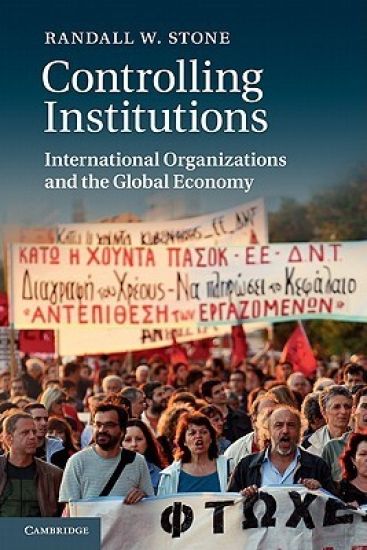
Controlling Institutions

Controlling Institutions

Randall W. Stone

Cambridge University Press
2011
pokkari
How is the United States able to control the IMF with only 17 per cent of the votes? How are the rules of the global economy made? This book shows how a combination of formal and informal rules explains how international organizations really work. Randall W. Stone argues that formal rules apply in ordinary times, while informal power allows leading states to exert control when the stakes are high. International organizations are therefore best understood as equilibrium outcomes that balance the power and interests of the leading state and the member countries. Presenting a new model of institutional design and comparing the IMF, WTO, and EU, Stone argues that institutional variations reflect the distribution of power and interests. He shows that US interests influence the size, terms, and enforcement of IMF programs, and new data, archival documents, and interviews reveal the shortcomings of IMF programs in Mexico, Russia, Korea, Indonesia, and Argentina.
Lending Credibility

Lending Credibility

Randall W. Stone

Princeton University Press
2002
pokkari
With the end of the Cold War, the International Monetary Fund emerged as the most powerful international institution in history. But how much influence can the IMF exert over fiercely contested issues in domestic politics that affect the lives of millions? In Lending Credibility, Randall Stone develops the first systematic approach to answering this question. Deploying an arsenal of methods from a range of social sciences rarely combined, he mounts a forceful challenge to conventional wisdom. Focusing on the former Soviet bloc, Stone finds that the IMF is neither as powerful as some critics fear, nor as weak as others believe, but that the answer hinges on the complex factor of how much credibility it can muster from country to country. Stone begins by building a formal, game-theoretic model of lending credibility, which he then subjects to sophisticated quantitative testing on original data from twenty-six countries over the 1990s. Next come detailed, interview-based case studies on negotiations between the IMF and Russia, Ukraine, Poland, and Bulgaria. Stone asserts that the IMF has exerted startling influence over economic policy in smaller countries, such as Poland and Bulgaria. However, where U.S. foreign policy interests come more heavily into play, as in Russia, the IMF cannot credibly commit to enforcing the loans-for-policy contract. This erodes its ability to facilitate enduring market reforms. Stone's context is the postcommunist transition in Europe and Asia, but his findings carry implications for IMF activities the world over.
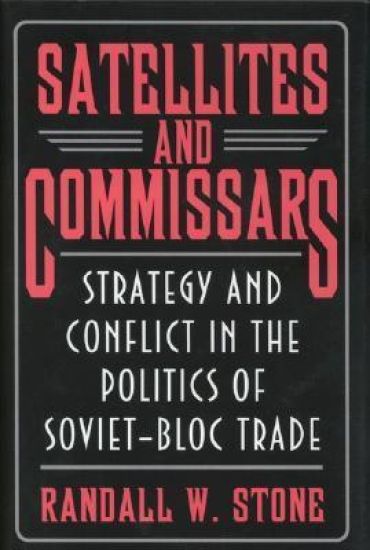
Satellites and Commissars

Satellites and Commissars

Randall W. Stone

Princeton University Press
2002
pokkari
Why did the Soviet Union squander the political leverage afforded by its trade subsidy to Eastern Europe? Why did Soviet officials fail to bargain with resolve, to link subsidies to salient political issues, to make credible commitments, and to monitor the satellites' policies? Using an unprecedented array of formerly secret documents housed in archives in Moscow, Warsaw, and Prague, as well as interviews with former Communist officials across Eastern Europe, Randall Stone answers these questions and others that have long vexed Western political scientists. Stone argues that trade politics revolved around the incentives created by distorted prices. The East European satellites profited by trading on the margin between prices on the Western market and those in the Soviet bloc. The Soviet Union made numerous attempts to reduce its implicit trade subsidy and increase the efficiency of the bloc, but the satellites managed consistently to outmaneuver Soviet negotiators. Stone demonstrates how the East Europeans artfully resisted Soviet objectives. Stone draws upon recent developments in bargaining and principal-agent theory, arguing that the incentives created by domestic institutions weakened Soviet bargaining strategies. In effect, he suggests, perverse incentive structures in the Soviet economy were exported into Soviet foreign policy. Furthermore, Stone argues, incentives to smother information were so deeply entrenched that they frustrated numerous attempts to reform Soviet institutions.
The U. S. Naval Academy

The U. S. Naval Academy

Randall W. Bannister

Schiffer Publishing Ltd
2008
sidottu
One hundred years ago, the United States Naval Academy, in Annapolis, Maryland, the cradle of Navy and Marine Corps leadership, was in the midst of the most remarkable period of growth and change in its history. Its campus, known simply as “The Yard,” was expanded and the patchwork of old and dilapidated buildings housing it was replaced with magnificent new buildings befitting an institution of its caliber. This amazing renaissance fostered a golden age at the school in academics, training, athletics, and the advent of traditions that still exist today. Through images on over 475 postcards produced between 1900 and 1930, also the golden age of picture postcards, this book lets you see what the Academy and life there were like when midshipmen with names like Nimitz, Halsey, King, Spruance, Mitscher and Burke were among its residents.
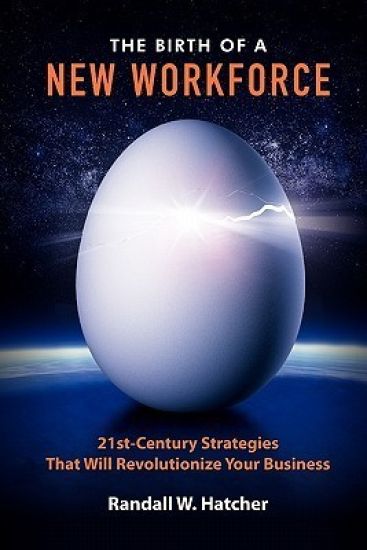
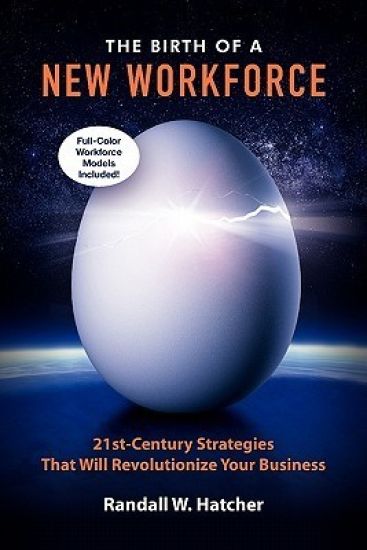
The Birth of a New Workforce: 21st-Century Strategies That Will Revolutionize Your Business
A veteran in the staffing and outsourcing industries, Randy Hatcher has collected over thirty years of tested ideas for transforming companies and making them more competitive. In The Birth of a New Workforce, he introduces a new workforce model that frees you to focus on what really matters--your value-added core functions--while third-party specialists manage the rest. Every part of your organization will operate at peak efficiency and expertise, giving you the edge you need to succeed in today's global economy. The Birth of a New Workforce will show you how to: Easily identify your core and noncore business processes Adopt a strategic approach to your workforce--and rocket ahead of your rivals Run nimble and lean in a fast-paced, cutthroat marketplace Take advantage of the evolution of the workforce to improve your bottom line Select the best outsourced partners to manage your peripheral tasks Filled with practical tools and bold solutions, this full-color deluxe edition is a must-read for all business leaders and their management teams.
Controlling Institutions

Controlling Institutions

Randall W. Stone

Cambridge University Press
2011
sidottu
How is the United States able to control the IMF with only 17 per cent of the votes? How are the rules of the global economy made? This book shows how a combination of formal and informal rules explains how international organizations really work. Randall W. Stone argues that formal rules apply in ordinary times, while informal power allows leading states to exert control when the stakes are high. International organizations are therefore best understood as equilibrium outcomes that balance the power and interests of the leading state and the member countries. Presenting a new model of institutional design and comparing the IMF, WTO, and EU, Stone argues that institutional variations reflect the distribution of power and interests. He shows that US interests influence the size, terms, and enforcement of IMF programs, and new data, archival documents, and interviews reveal the shortcomings of IMF programs in Mexico, Russia, Korea, Indonesia, and Argentina.
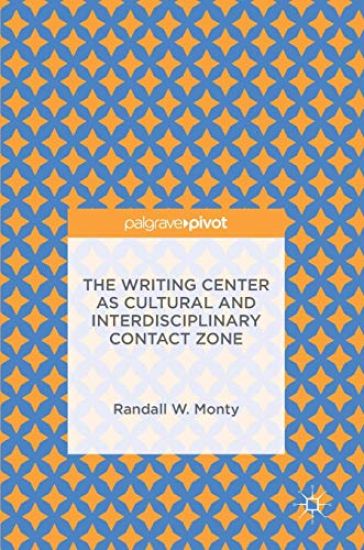
The Writing Center as Cultural and Interdisciplinary Contact Zone
Writing centers are complex. They are places of scholarly work, spaces of interdisciplinary interaction, and programs of service, among other things. With this complexity in mind, this book theorizes writing center studies as a function of its own rhetorical and discursive practices. In other words, the things we do and make define who we are and what we value. Through a comprehensive methodological framework grounded in critical discourse analysis, this book takes a closer look at prominent writing center discourses by temporarily shifting attention away from the stakeholders, work, locations, and scholarship of the discipline, and onto things—the artifacts and networks that make up the discipline. Through this approach, we can see the ways the discipline reinforces, challenges, reproduces, and subverts structures of institutional power. As a result, writing center studies can be seen a vast ecosystem of interconnectivity and intertextuality.