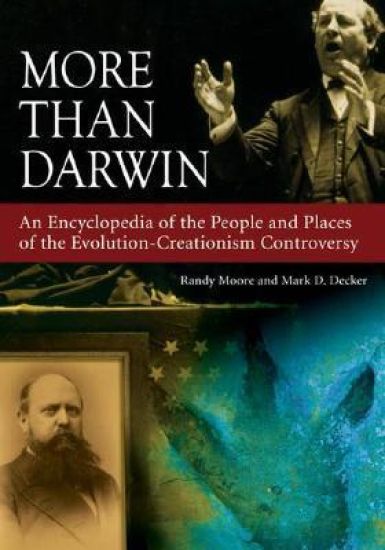
Since the middle of the 19th century, debates over evolution have occurred almost non-stop. From the publication of Charles Darwin's Origin of Species to the recent Kitzmiller v. Dover trial, there has rarely been a time in which scientists, educators, theologians, politicians, and judges have not been involved in these debates. How can anyone keep all of these individuals straight without a scorecard? More than Darwin: An Encyclopedia of the People and Places of the Evolution-Creationism Controversy is that resource, providing accessible and balanced synopses of every major person, organization, and place involved in the long history of the evolution-creationism controversies.
A unique chronology with entries describing the key events in the 3,000-year conflict between religion and science over the explanation and definition of life on Earth.Exhaustively researched and authoritative, Chronology of the Evolution-Creationism Controversy does what no other work does: it examines the conflict between the religious and scientific views of life on Earth in its full 3,000-year historical context, showing readers how this roiling debate has played out over the centuries. With hundreds of entries, Chronology of the Evolution-Creationism Controversy describes specific cultural, religious, and scientific events relevant to the evolution-creationism controversy from the first notions of creationism in ancient Egypt to the present. Within this historical approach, it identifies a number of recurring themes that have shaped the debate through the ages, including famous court cases, the recurrence of the “intelligent design” argument, disagreements over the age of the Earth, and the impact of technological advances on both the scientific and faith-based viewpoints. While approaching the subject globally throughout, the book’s second half focuses on tensions between science and religious thought in the United States since the early 1900s.Comprises over 1,400 chronologically arranged entries on important political, legal, and social events in the ongoing controversy between science- and faith-based views of the Earth and lifeOffers a thorough bibliography spanning historical aspects of the controversy, creationist literature, and resources from evolutionary biologyIncludes a one-of-a-kind glossary for easy access to definitions of relevant terms used by both anti-evolutionists and scientistsProvides an extensive index serving as a reference tool and as a way to explore recurring themesPresents detailed appendices on estimating Earth's age, the geologic timescale, major species of known Hominines, and key legal decisions involving the teaching of evolution and creationism
Providing an appealing chronology of "all things dinosaur," this book covers these ancient creatures' roles and surprising importance in science, religion, and society at large.This exhaustive, up-to-date book contains more than 2,000 entries about dinosaurs and dinosaur-related topics. It provides not only detailed information about their discovery, underlying science, and recent technologies and theories but also encompasses all of the facets of dinosaurs in society—for example, their use in consumer marketing and promotion, popularization of dinosaurs in the media, as "proof" for both evolutionists and creationists to substantiate their claims about life's origins, and as cultural artifacts.Organized chronologically, the book offers an informative and entertaining timeline of how dinosaurs have appeared in science, religion, and society since they were discovered in the 1800s, covering everything from dinosaur museum displays to how dinosaurs served advocates of young-Earth creationism. This fascinating work enables a broad appreciation for the surprising significance of dinosaurs in many aspects of our daily lives and modern society.
Randy Moore presents 99 original poems for Baby Boomers and the people who love them. Angel Ghost is a fun and sometimes poignant snapshot of one man's lifetime. Many of Randy's insights will resonate with adults of all ages and walks of life. The main categories include his affinity for the outdoors, autobiographical reminiscing, disdain for political inertia, and higher aspirations. Angel Ghost also features 33 cartoon strips from the Holy Mole collection by artist Rick Hotton.
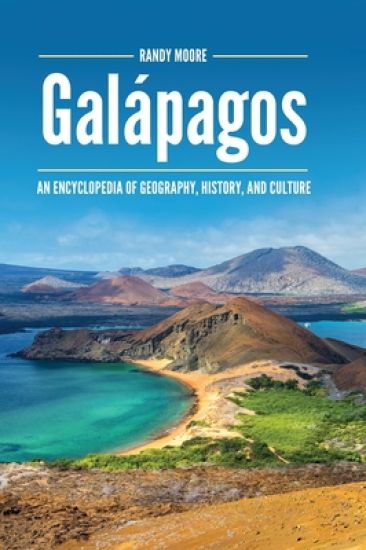
Winner, 2022 RUSA Outstanding Reference SourceThis encyclopedia provides readers with a comprehensive look at the Galápagos Islands, from the wildlife and scientists that made them famous to the challenges and issues the islands face today.In the mid-1800s, the Galápagos Islands served as Charles Darwin's playground, a volcanic archipelago where he famously worked on his theories of evolution and natural selection. But who actually discovered the islands? Why didn't any country claim them for more than 200 years? And is ecotourism hurting or helping these mysterious islands?This volume explores the history, science, and culture of the Galápagos Islands. A preface, introduction, chronology, and "Galápagos at a Glance" primer introduce readers to the islands that are so famously associated with Charles Darwin. Twelve thematic essays allow readers to explore such topics as evolution, the geology of the islands, invasive species, and tourism in depth. Topical entries follow, covering key individuals and organizations as well as other important concepts and ideas.Thirteen primary document excerpts allow readers to study firsthand accounts from explorers and visitors to the islands. Appendices, a glossary, a bibliography, and sidebars round out the text. Students of history, geography, and science will find this volume informative, while general readers will be intrigued to learn about these unique islands.
This book introduces readers to the "Trial of the Century," revealing how the trial originated, what caused and happened during and after the trial, what happened to the trial's participants, and why the trial still matters nearly 100 years later.Ongoing controversies about school curricula, such as the teaching of Critical Race Theory and the role of parents in public education, can all be traced to the Scopes Trial. Today, the question remains: who controls the school curriculum? This was a foundational issue in the Scopes Trial, and we have been debating this question ever since. This book will help readers understand where these controversies originated and how courts, politicians, and the public handled these issues nearly a century ago.Featuring new information from previously untapped sources and providing an in-depth study of John Scopes himself, this book interrogates the facts, fictions, and legend of the Scopes Trial, which historians rank as one of the defining events of the 20th century. It is an ideal resource for anyone interested in the ongoing controversy about evolution, science, and religion in education and American life.
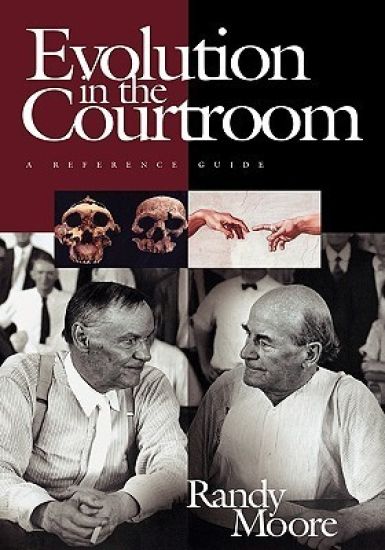
This unique reference offers a discussion of the social and legal history behind the ongoing evolution versus creationism controversy.Evolution in the Courtroom: A Reference Guide chronicles the legal history of the evolution/creation debate sparked by Charles Darwin's publication On the Origin of Species by Means of Natural Selection in 1859. The first seven chapters provide a detailed historical overview of the debate, reviewing all of the major court cases with particular emphasis on the infamous Scopes "Monkey Trial" which pitted fundamentalist William Jennings Bryan against ACLU defense attorney Clarence Darrow, and became the standard to which all subsequent evolution trails have been compared.Ensuing discussions of the rise and fall of creationism as a science and the failure of "balanced treatment" in public schools culminate in a summary of skirmishes over the last decade. Profiles of scientists, politicians, clergy, and other influential people from Galileo to Frank White, the Arkansas governor who signed the equal time law without ever reading it, reveal fascinating facts and perspectives on both sides of the controversy.Detailed chronology of the history of the debate from Aristotle in 310 B.C. to the U.S. Senate's adoption of "Sense of the Senate" in June 2002Biographies of 172 key individuals on both sides of the controversy, including Leona Wilson, who initiated the first lawsuit by creationistsAn edited collection of the eight principal court decisions, including Mclean v. Arkansas and Segraves v. State of CaliforniaPhotographs and illustrations of influential people like Herbert Spencer, who coined the terms "evolution" and "survival of the fittest"
We live in an abundance of calories. They are everywhere and it is sometimes hard to determine how many calories one is actually eating. At times of stress, or in good company, calories creep up into our lives without us even aware they are there. This book will help you learn the basics of different methods of intermittent fasting as well as techniques that will help with the fasting process to make appetite go away and the ability to burn off weight increase. A common problem with weight gain is that habits and lifestyle aren't sustainable and ultimately fail. This is where fasting comes into play. It can help you gain confidence over your diet and create patterns that are easy to maintain over a long period of time, true halmarks of a healthy life. Here Is A Preview Of What You'll Learn... Eating strategies to put on muscle WITHOUT also putting on a lot of fat. How to ENSURE you eat healthy and aren't tempted to cheat on your diet. Easiest Way To Start Intermittent Fasting What Can I Eat During My Intermittent Fasting How I Got The Best Fat Loss Results From Intermittent Fasting How to Make Intermittent Fasting Easier Can I Eat Junk Food and Get Ripped? Intermittent Fasting Shortcut to Build Muscle, Lose Fat and Easy Weight Loss teaches you to cut calories - and the time and money you spend preparing meals. This diet also increases your sensitivity to insulin, and gives you better growth hormone production - both of which make weight-loss much easier. Does even the idea of fasting make you anxious? Do you feel overwhelmed by the idea of fitting it into your schedule? Are you concerned about safety, and explaining your new diet to others? This book explains five types of intermittent fasts and helps you understand which one will fit best into your lifestyle. It also offers tips for safety, fitting a fast into a busy lifestyle, and helping your friends understand your new diet
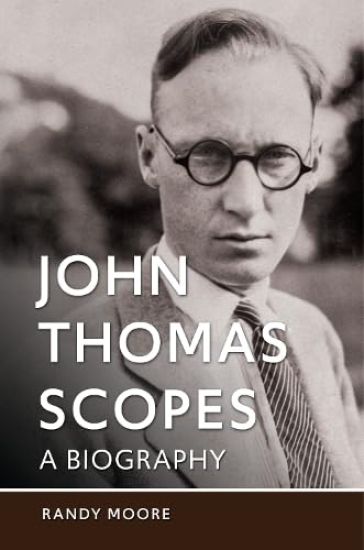
This is the first comprehensive, annotated biography of John Scopes, the famed defendant in the Scopes Monkey Trial. This biography uses new, never-before-published sources, photographs, and stories from untapped sources—John Scopes's family and friends. In 1967, John Scopes published his memoirs, which focused overwhelmingly on his eight-day trial and not on the rest of his life, ignoring several important events, such as his divorce and remarriage, his run for the U.S. Congress, and his challenges with his family. This volume is the first complete, annotated biography of John Scopes. It details his entire life and, where appropriate, those of his parents, siblings, wife, and children, all supported by hundreds of cited sources, quotations, and family stories. Ideal for readers with an interest in academic freedom, free speech, or the evolution-creationism controversy, this book uncovers the facts of Scopes's post-trial life, including the challenges that Scopes faced in his personal life, his conversion from a socialist to a political conservative, and his final years and death. Readers will be surprised to learn that John Scopes's life differed significantly from what has often been presented in the media.
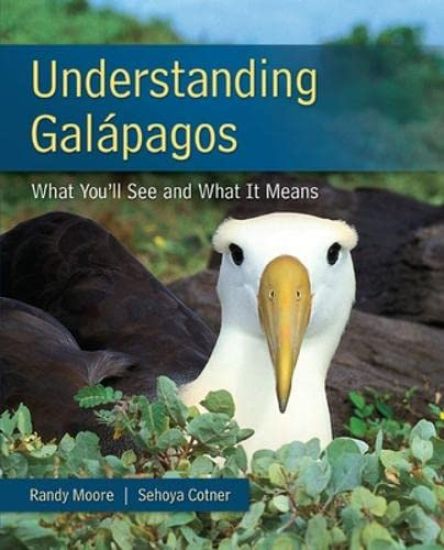
We wanted a book that includes up-to-date information about evolution in Galápagos, yet is accessibleby professional biologists, laypeople, students, armchair travelers, and the merely curious. Namingthe endemic-and often curious-organisms in Galápagos from checklists can be rewarding; that's whyyou will find checklists of the islands' iconic species in this book (Chapter 12). But understanding whatyou see is a different adventure, and that is one thing that we hope distinguishes this book from others.In short, we wanted to write a book that would help you not lust identify what you see, but understandwhat you see. Such an understanding goes beyond identification guides and traditional natural historyand requires a context that includes the islands' biology, geology, climate, and history.In this book, you will find discussions (and checklists) of the native and endemic organisms you'llsee, especially the iconic ones such as penguins, land and marine iguanas, finches, giant tortoises,and albatrosses (see color images). However, we have not described all of the organisms on theislands-after all, there are more than 600 species of lichens and 2,9OO species of marine organisms,not to mention the more than 50 families, 300 genera, and 370 species of endemic and nativebeetles. Similarly, we discuss many, but not all, of the most troublesome introduced species (at lastcount, there were more than 1,400 such species). We have focused on the native and endemic "stars"of Galápagos that fill tourists' must-see lists.Although our book emphasizes evolution, we have also addressed several other topics, for evolutioncannot be understood without a corresponding understanding of its context: namely, the geology,climate, and historical impact of humans on the ecosystem. This is why you will find discussions of theislands' geology, weather, trails, and Visitor Sites in this book.We also wrote this book to emphasize the importance of preserving Galápagos, as well as to helpreaders understand the challenges facing the islands.To ensure accuracy and consistency, the information in this book was derived from visiting theislands more than 30 times over many years; talking with numerous Galápagos National Park Serviceguides, boat captains, boat crews, school teachers and other residents of Galápagos, and former prisonersat the Wall of Tears penal colony; documenting the GPS coordinates of more than 350 sites,usually with two independent GNPS units (Appendix 1); studying documents at a variety of libraries,research stations, and related locations such as GNPS, Charles Darwin Research Station, NationalGeospatial Intelligence Agency, and Instituto Oceanografico de la Armada; being on the bridge withboat captains in the most challenging conditions and regions of the islands (Appendix 2); and, whennecessary, hiking, scuba diving, and interviewing local residents to resolve controversies (e.g., theexact location of Jessica; see Chapter 11).
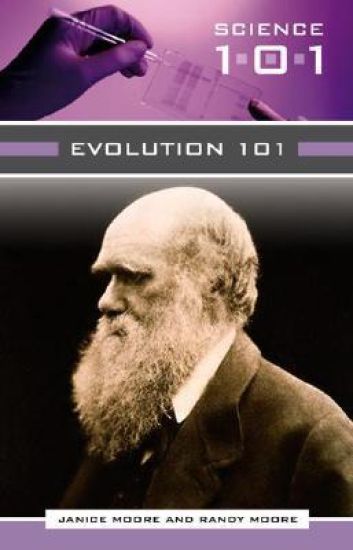
What should the average person know about science? Because science is so central to life in the 21st century, science educators and other leaders of the scientific community believe that it is essential that everyone understand the basic concepts of the most vital and far-reaching disciplines. Evolution 101 does exactly that. This accessible volume provides readers - whether students new to the field or just interested members of the lay public - with the essential ideas of evolution using a minimum of jargon and mathematics. Concepts are introduced in a progressive order so that more complicated ideas build on simpler ones, and each is discussed in small, bite-sized segments so that they can be more easily understood. Evolution 101 provides an introduction for non-scholars to this most powerful scientific theory, covering such issues as: the history of evolutionary thought, from before Darwin to the present day; the evidence for evolution, from fields as diverse as geology, molecular biology, paleontology, and more, that show how strongly supported evolution is; how evolution works, including topics ranging from behavior (e.g., sexual selection) to molecular biology (e.g., mutation); and evolution in our daily lives, including how evolution accounts for phenomena such as antibiotic resistance and pesticide resistance. This essential resource will answer the questions students and lay people have regarding evolution, and will point them on the path to further understanding.
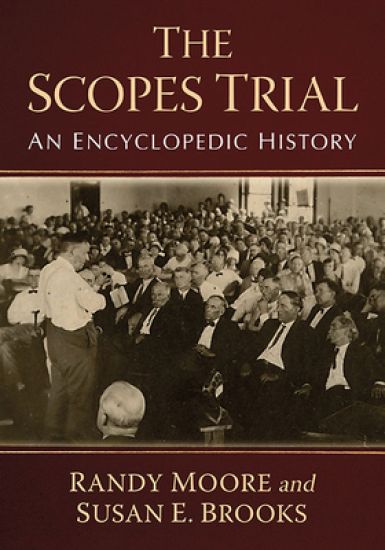
The 1925 trial of John Scopes in tiny Dayton, Tennessee, remains a defining moment in American history. This "trial of the century"--a "media event" before the term was coined--addressed issues that still affect our society today, such as control of the school curriculum, the ongoing tensions between science and faith in public schools, and the ramifications of teaching evolution and human origins. This book is the first encyclopedic treatment of the Scopes Trial. The text draws on media reports, family interviews, and Scopes' personal correspondence, providing new information and perspectives. The book includes previously unseen photos and information about Scopes and his relatives, as well as insights about the trial's instigators, participants, and issues, all organized in a concise and easily accessible format.
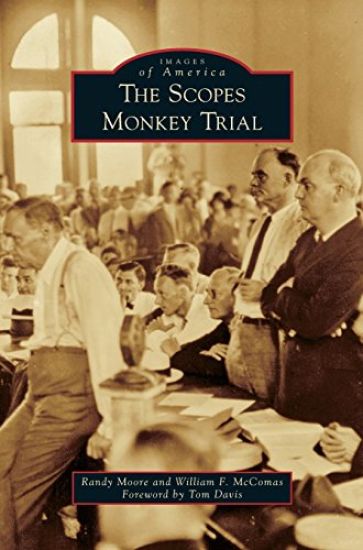
The 1925 case against high school coach and science teacher John Scopes, arrested for teaching evolution in defiance of a Tennessee state law, was America s original Trial of the Century. The proceedings began as a publicity stunt but grew into a landmark event in the nation s history. The trial featured three-time presidential candidate and fundamentalist leader William Jennings Bryan, who argued on behalf of the prosecution, and famed agnostic attorney Clarence Darrow, who helped defend Scopes. Although the Scopes case produced no legal precedent, the trial has been analyzed by historians, praised and vilified by politicians and preachers, cited in countless legal, political, and theological skirmishes, and retold in plays, movies, museum exhibits, and television documentaries. Images of America: The Scopes Monkey Trial examines the events that captured the attention of the world and still have much to teach us today."
This single-volume encyclopedia examines the Grand Canyon in depth, from the native peoples who have survived there for centuries to the explorers who charted its vast expanses and to the challenges that Grand Canyon National Park faces.The Grand Canyon is one of the most internationally recognized landscapes and symbols of nature in North America. In this one-volume encyclopedia, readers can dive into the many people, places, stories, and issues associated with the Grand Canyon as well as the scientific, religious, and social contexts of events that have made the Grand Canyon what it is. At the front of the encyclopedia are thematic essays that examine the Grand Canyon's history, geography, and culture. Essays cover topics including John Wesley Powell, to whom the Grand Canyon "belongs," the Native Americans who live at the Grand Canyon, and the future of the Grand Canyon. Following the thematic essays are approximately 150 topical entries focusing on more specific aspects of the Grand Canyon, such as trails and camps, natural formations, and courageous heroes as well as shameless profiteers who have influenced the Grand Canyon's history. The encyclopedia is rounded out by a chronology of human history at the Grand Canyon, a Grand Canyon "at a glance" section, and multiple fact-based sidebars. Through the people, places, and stories explored in this work, readers will gain a better understanding of how the history of the Grand Canyon is relevant to the world today.
This timely encyclopedia presents an arsenal of evidence for evolution that goes beyond the typical textbook examples.Arguing for Evolution: An Encyclopedia for Understanding Science provides readers with a single source for the scientific evidence supporting evolution. The book shows how scientists have tested the predictions of evolutionary theory and created an unshakeable foundation of evidence supporting its truth. As such, it demonstrates how evolution serves as a case study for understanding the scientific method and presents a logical model for scientific inquiry.The evidence for evolution is presented historically and topically in an accessible, example-rich, and logical format, using an arsenal of examples that goes beyond the typical textbook matter. The chapters are structured around a series of hypotheses that the authors put to the test, amassing evidence on fossils, comparative anatomy, molecules, and evolutionary biology in order to conclude that evolution is scientific fact. Learning about this fascinating field is enhanced through "see for yourself" examples that include original data and figures from key historical and contemporary papers in evolutionary biology.
Randy the Rooster is the second book in the Billy the Balloon series aimed at telling the story behind the scenes of Billy the Balloon. The reader of Billy the Balloon will have been amazed at how quickly the connection was made between Fred the Farmer and Sally and her parents despite the fact that many miles separate the two families. The wind was a powerful force that moved a helium-filled balloon from an urban setting to a rural farm. But to Fred, the unusual wasn't expected and so he needed further help to find the original owner of Billy the Balloon and that is where Randy the Rooster comes into the story
Randy the Rooster is the second book in the Billy the Balloon series aimed at telling the story behind the scenes of Billy the Balloon. The reader of Billy the Balloon will have been amazed at how quickly the connection was made between Fred the Farmer and Sally and her parents despite the fact that many miles separate the two families. The wind was a powerful force that moved a helium-filled balloon from an urban setting to a rural farm. But to Fred, the unusual wasn't expected and so he needed further help to find the original owner of Billy the Balloon and that is where Randy the Rooster comes into the story