"Ezekiel's pointed volume is the best available modern source for grasping the psychological foundations of the Radical Right."—Thomas F Pettigrew, Univ. of Cal., Santa Cruz.
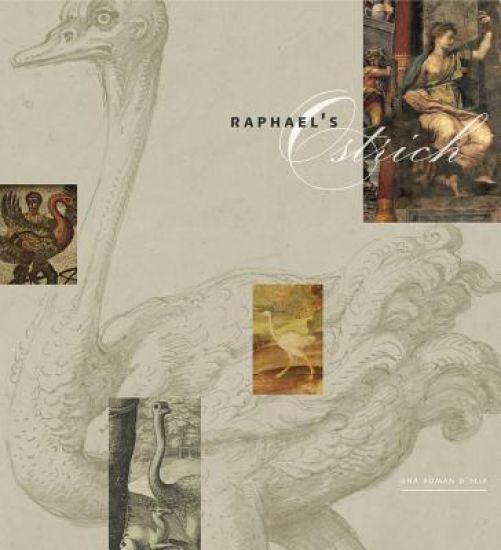
Raphael’s Ostrich begins with a little-studied aspect of Raphael’s painting—the ostrich, which appears as an attribute of Justice, painted in the Sala di Costantino in the Vatican. Una Roman D’Elia traces the cultural and artistic history of the ostrich from its appearances in ancient Egyptian hieroglyphs to the menageries and grotesque ornaments of sixteenth-century Italy. Following the complex history of shifting interpretations given to the ostrich in scientific, literary, religious, poetic, and satirical texts and images, D’Elia demonstrates the rich variety of ways in which people made sense of this living “monster,” which was depicted as the embodiment of heresy, stupidity, perseverance, justice, fortune, gluttony, and other virtues and vices. Because Raphael was revered as a god of art, artists imitated and competed with his ostrich, while religious and cultural critics complained about the potential for misinterpreting such obscure imagery. This book not only considers the history of the ostrich but also explores how Raphael’s painting forced viewers to question how meaning is attributed to the natural world, a debate of central importance in early modern Europe at a time when the disciplines of modern art history and natural history were developing. The strangeness of Raphael’s ostrich, situated at the crossroads of art, religion, myth, and natural history, both reveals lesser-known sides of Raphael’s painting and illuminates major cultural shifts in attitudes toward nature and images in the Renaissance. More than simply an examination of a single artist or a single subject, Raphael’s Ostrich offers an accessible, erudite, and charming alternative to Vasari’s pervasive model of the history of sixteenth-century Italian art.
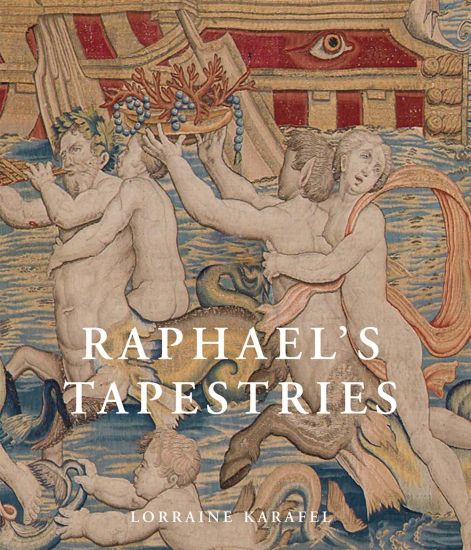
Around 1515, Raphael (1483-1520) designed a set of tapestries for Leo X, the first Medici pope. Each was sumptuously woven in gold, silver, and silk, and depicted scenes from classical mythology with inventive grotesques. Now lost, these spectacular, grand-scale textiles are reconstructed in Raphael’s Tapestries and set among a series of unprecedented decorative projects that Pope Leo commissioned from the artist. Likely produced by the Brussels weaver Pieter van Aelst, the tapestries pioneered a new all’antica style analogous with contemporary painted and sculpted interior programs. Tapestries played a central role at Leo’s court, as spectacle and as propaganda, and the Grotesques of Leo X would inform tapestry design for the next three centuries. Their beauty and complexity rivaled those of contemporary painting, and their luxurious materials made them highly prized. With this new study, the Grotesques take their rightful place as Renaissance masterworks and as documents of the fervent humanist culture of early 16th-century Rome.
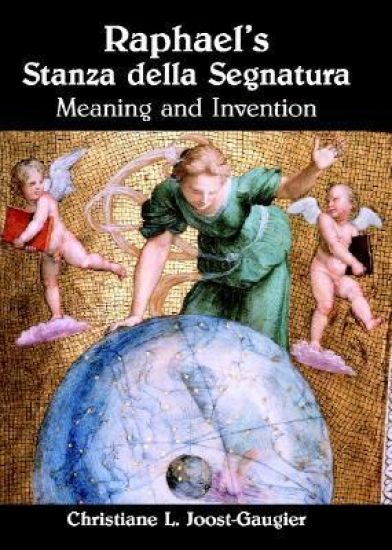
Raphael was the preeminent painter of Renaissance Rome, whose classical style marks some of the most enduring masterpieces of Italian Renaissance art. Of these, the Stanza della Segnatura in the Vatican Palace has often been considered the most aesthetically perfect. Executed between 1508 and 1511 for the notoriously temperamental, but adventurous, patron of the arts, Pope Julius II, it was the commission that propelled Raphael, then a young man, into international prominence. The work consists of a chamber with a painted ceiling, a pavement of inlaid marble, and four frescoed walls, all orchestrated with a cast of famous historical figures who exemplify the various disciplines of learning. Joost-Gaugier's study is the first to examine the elements of the Stanza della Segnatura as an ensemble. The volume focuses on the meaning of the frescoes and accompanying decoration in light of recent studies into the intellectual world of High Renaissance Rome.