Kirjojen hintavertailu. Mukana 11 244 527 kirjaa ja 12 kauppaa.

Kirjahaku

Etsi kirjoja tekijän nimen, kirjan nimen tai ISBN:n perusteella.

1000 tulosta hakusanalla Rashid Khalidi

Under Siege

Under Siege

Rashid Khalidi

Columbia University Press
1985
sidottu
A fascinating and often terrifying firsthand account of the 1982 war in Lebanon, Under Siege vividly reveals the complex negotiations and military maneuvers which ended with the evacuation of the P.L.O. from Beirut. Rashid Khalidi, a Palestinian, lived with his family in Beirut during the siege and ensuing massacres. Using many usually inaccessible sources, such as P.L.O. telexes and government messages, and interviews with key military officials and diplomats, he tells the story from the compelling viewpoint of those living amid the fighting. Khalidi provides a carefully detailed picture of the P.L.O. from within, the local Lebanese environment, the military pressure on the P.L.O. and Palestinian and Lebanese civilians, and of U.S. diplomacy during the crisis. While focusing primarily on the inner workings of the P.L.O., the author also addresses various aspects of Lebanese and inter-Arab politics and examines the military and diplomatic behavior of involved outside parties such as the United States, France, and the former Soviet Union. Offering a totally new perspective on the longest Arab-Israeli war since 1948, Under Siege will have broad appeal to those in international relations, Middle East studies, the Arab-Israeli conflict, and the general reader interested in American foreign relations and the Middle East.
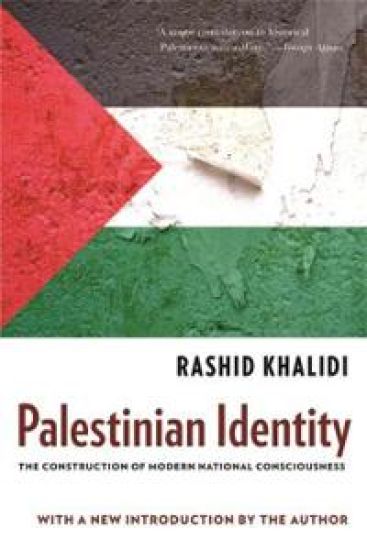
Palestinian Identity

Palestinian Identity

Rashid Khalidi

Columbia University Press
2009
sidottu
This foundational text now features a new introduction by Rashid Khalidi reflecting on the significance of his work over the past decade and its relationship to the struggle for Palestinian nationhood. Khalidi also casts an eye to the future, noting the strength of Palestinian identity and social solidarity yet wondering whether current trends will lead to Palestinian statehood and independence.
Palestinian Identity

Palestinian Identity

Rashid Khalidi

Columbia University Press
2009
pokkari
This foundational text now features a new introduction by Rashid Khalidi reflecting on the significance of his work over the past decade and its relationship to the struggle for Palestinian nationhood. Khalidi also casts an eye to the future, noting the strength of Palestinian identity and social solidarity yet wondering whether current trends will lead to Palestinian statehood and independence.
Under Siege

Under Siege

Rashid Khalidi

Columbia University Press
2014
pokkari
Under Siege is Rashid Khalidi's firsthand account of the 1982 Lebanon War and the complex negotiations for the evacuation of the P.L.O. from Beirut. Utilizing unconventional sources and interviews with key officials and diplomats, Khalidi paints a detailed portrait of the siege and ensuing massacres, providing insight into the military pressure experienced by the P.L.O., the war's impact on Palestinian and Lebanese civilians, and diplomatic efforts by the United States. A new preface by Khalidi considers developments across the Middle East in the thirty years since the conflict. The preface also cites recently declassified Israeli documents to offer surprising new revelations about the roles and responsibilities of both Israeli leaders and American diplomats in the tragic coda to the war, the Sabra and Shatila massacres.
The Iron Cage: The Story of the Palestinian Struggle for Statehood
At a time when a lasting peace between the Palestinians and the Israelis seems virtually unattainable, understanding the roots of their conflict is an essential step in restoring hope to the region. In The Iron Cage, Rashid Khalidi, one of the most respected historians and political observers of the Middle East, homes in on Palestinian politics and history. By drawing on a wealth of experience and scholarship, Khalidi provides a lucid context for the realities on the ground today, a context that has been, until now, notably lacking in our discourse. The story of the Palestinian search to establish a state begins in the mandate period immediately following the breakup of the Ottoman Empire, the era of British control, when fledgling Arab states were established by the colonial powers with assurances of eventual independence. Mandatory Palestine was a place of real promise, with unusually high literacy rates and a relatively advanced economy. But the British had already begun to construct an iron cage to hem in the Palestinians, and the Palestinian leadership made a series of errors that would eventually prove crippling to their dream of independence. The Palestinians' struggle intensified in the stretch before and after World War II, when colonial control of the region became increasingly unpopular, population shifts began with heavy Jewish immigration from Eastern Europe, and power began to devolve to the United States. In this crucial period, Palestinian leaders continued to run up against the walls of the ever-constricting iron cage. They proved unable to achieve their long-cherished goal of establishing an independent state--a critical failure that set a course for the decades that followed, right through the eras of the Palestinian Liberation Organization, the Palestinian Authority, and Hamas. Rashid Khalidi's engrossing narrative of this torturous history offers much-needed perspective for anyone concerned about peace in the Middle East.
The Iron Cage: The Story of the Palestinian Struggle for Statehood
In Resurrecting Empire, Rashid Khalidi dissected the failures of colonial policy over the entire span of the modern history of the Middle East, predicted the meltdown in Iraq that we are now witnessing with increasing horror, and offered viable alternatives for achieving peace in the region. His newest book, The Iron Cage, hones in on Palestinian politics and history. Once again Khalidi draws on a wealth of experience and scholarship to elucidate the current conflict, using history to provide a clear-eyed view of the situation today. The story of the Palestinian search to establish a state begins in the era of British control over Palestine and stretches between the two world wars, when colonial control of the region became increasingly unpopular and power began to shift toward the United States. In this crucial period, and in the years immediately following World War II, Palestinian leaders were unable to achieve the long-cherished goal of establishing an independent state-a critical failure that throws a bright light on the efforts of the Palestinians to create a state in the many decades since 1948. By frankly discussing the reasons behind this failure, Khalidi offers a much-needed perspective for anyone concerned about peace in the Middle East.
Brokers of Deceit

Brokers of Deceit

Rashid Khalidi

Beacon Press
2014
pokkari
Winner of the 2014 Lionel Trilling Book Award An examination of the failure of the United States as a broker in the Palestinian-Israeli peace process, through three key historical moments For more than seven decades the conflict between Israel and the Palestinian people has raged on with no end in sight, and for much of that time, the United States has been involved as a mediator in the conflict. In this book, " "acclaimed historian Rashid Khalidi zeroes in on the United States s role as the purported impartial broker in this failed peace process. Khalidi closely analyzes three historical moments that illuminate how the United States involvement has, in fact, thwarted progress toward peace between Israel and Palestine. The first moment he investigates is the Reagan Plan of 1982, when Israeli prime minister Menachem Begin refused to accept the Reagan administration s proposal to reframe the Camp David Accords more impartially. The second moment covers the period after the Madrid Peace Conference, from 1991 to 1993, during which negotiations between Israel and Palestine were brokered by the United States until the signing of the secretly negotiated Oslo accords. Finally, Khalidi takes on President Barack Obama s retreat from plans to insist on halting the settlements in the West Bank. Through in-depth research into and keen analysis of these three moments, as well as his own firsthand experience as an advisor to the Palestinian delegation at the 1991 pre Oslo negotiations in Washington, DC, Khalidi reveals how the United States and Israel have actively colluded to prevent a Palestinian state and resolve the situation in Israel s favor. "Brokers of Deceit" bares the truth about why peace in the Middle East has been impossible to achieve: for decades, US policymakers have masqueraded as unbiased agents working to bring the two sides together, when, in fact, they have been the agents of continuing injustice, effectively preventing the difficult but essential steps needed to achieve peace in the region. "From the Hardcover edition.""
The Iron Cage

The Iron Cage

Rashid Khalidi

Oneworld Publications
2015
nidottu
At a time when a lasting peace between Palestinians and Israelis seems virtually unattainable, understanding the roots of the longest-running conflict in the Middle East is an essential step in restoring hope to the region. In The Iron Cage, Rashid Khalidi, one of the most respected historians and political observers of the Middle East, examines the Palestinian’s struggle for statehood, presenting a succinct and insightful history of the people and their leadership throughout the twentieth century. Ranging from the Palestinian struggle against colonial rule and the establishment of the State of Israel to the current rivalry between Hamas and Fatah, this is an unflinching and sobering critique of the Palestinian failure to achieve statehood, as well as a balanced account of the odds ranged against them. Lucid yet challenging, Rashid Khalidi’s engrossing narrative of this tortuous history is required reading for anyone concerned about peace in the Middle East.
Resurrecting Empire

Resurrecting Empire

Rashid Khalidi

I.B. Tauris
2004
nidottu
Rashid Khalidi's powerful new book examines the record of Western involvement in the Middle East and analyzes the likely outcomes of the U.S.A's most recent incursions in the region. Begun as the United States and Britain moved their forces into Iraq, and specially updated for this U.K. paperback edition to cover the shocking revelations of abuse of Iraqi prisoners and the debate over the war's legitimacy, Khalidi paints a chilling scenario of the present situation. America's path of conflict, occupation and colonial rule is an object reminder that those who refuse to learn from history are doomed to repeat it. This cogent and highly accessible book provides the historical and cultural perspective so vital to understanding the U.S.A's dangerous present situation and offers a tangible alternative that can lead America to pursue a more effective and just foreign policy that will lead to peace rather than empire.
Hundrede års krig mod Palæstina

Hundrede års krig mod Palæstina

Rashid Khalidi

Informations Forlag
2025
nidottu
I over hundrede år har Palæstina været plaget af krig og ødelæggelse. Fra den tidlige zionisme i slutningen af 1800-tallet, over de store folkebevægelser i kølvandet på Anden Verdenskrig og frem til vor tids brændpunkter. Men slaget står ikke mellem to nationalstater, argumenterer Rashid Khalidi. Snarere er der tale om en kolonikrig, hvor talrige magthavere tvinger en oprindelig befolkning til at overgive deres land mod deres vilje.Professor Rashid Khalidi fortæller Palæstinas historie og indvier samtidig læseren i sin egen families historie, hvor generation efter generation har gennemlevet konflikten.Rashid Khalidi (1948) er professor emeritus i historie og mellemøststudier ved Columbia University i New York. Han har været redaktør af Journal of Palestine og er forfatter til bøgerne Palestinian Identity, The Iron Cage og Brokers of Deceit. Hundrede års krig mod Palæstina er hans hovedværk, som er oversat til talrige sprog.Anmeldelser:EN NEW YORK TIMES BESTSELLER»Den bedste bog, der er skrevet om kampen om Palæstina. Et mesterværk.«– Avi Shlaim, professor på University of Oxford»Khalidi er klar og grundig i sin argumentation. Retfærdig overfor sine opponenter og ydmyg overfor sin egen fejlbarlighed.«– FINANCIAL TIMES»Passioneret og vidende ... en elegi forpalæstinenserne, deres tab og deres fejlslagne modstandskamp.«– THE GUARDIAN»At fortælle denne historie er i sig selv en form for modstand.« – THE NATION»En af det palæstinensiske folks største nulevende historikere.«– LITERARY REVIEW»Denne bog er alt andet end en tør videnskabelig afhandling. Den er fortællekunst, bygget på historisk forskning og forfatterens personlige erfaringer.«– FRANKFURTER ALLGEMEINE ZEITUNG
Hundraårskriget mot Palestina : bosättningskolonialism och motstånd 1917-2024
Konflikten mellan judar och palestinier över rätten till området ­Palestina har pågått i mer än hundra år. Lika länge har diskussionen pågått om hur den mest rättvisande ska beskrivas.I Hundraårskriget mot Palestina hävdar den pale­stinsk-amerikanske historikern Rashid Khalidi att konflikten bäst förstås som en sentida utlöpare av den västerländska bosättarkoloniala modellen.* Med utgångspunkt i historisk forskning, och utifrån sina och sin familjs erfarenheter, beskriver författaren konfliktens historia, alltifrån Balfourdeklarationen 1917 till Hamas attack mot Israel den 7 oktober 2023 och det efterföljande israeliska angreppet på Gaza. Avkoloniseringens epok. Så har decennierna efter andra världskriget kallats. Det var en tid då urinvånare reste sig mot koloniala förtryckarregimer och många länder utropade sin självständighet. Men i ett område vid ­Medelhavets östra strand gick utvecklingen i rakt motsatt riktning. Här underkuvades eller fördrevs istället den ­inhems­ka befolknings­majoriteten av ett annat folk, som ville lägga beslag på hela territoriet och där upprätta en stat bara för sig självt. »Istället för att skriva en sammanfattande översikt över Pale­stinas historia har jag valt att fokusera på sex olika vändpunkter i kampen om Pale­stina. Dessa händelser belyser den koloniala karaktären i det hundraåriga kriget mot Palestina och den avgörande roll som yttre krafter har spelat. Framställningen bygger på erfarenheter hos ­palestinier som överlevt kriget, liksom på ögonvittnesskild­ringar, egna minnen och material från min egen och andras släkter. Huvudsyftet är att visa att konflikten måste ses ur en annan synvinkel än de som numera dominerar.« Rashid Khalidi * Bosättarkolonialism avser en specifik form av kolonisering där utländska bosättare anländer till ett redan bebott område med avsikt att där permanent bosätta sig och etablera ett nytt samhälle. Kännetecknande för denna form av kolonialism är bl.a. att de befintliga invånarna fördrivs eller elimineras och att deras samhälle undanträngs eller förstörs. OM FÖRFATTARENRashid Khalidi är en palestinsk-amerikansk historiker vid Columbia University i New York, där han innehar Edward Said-professuren. Han är en av redaktörerna för Journal of Palestine Studies och har framträtt som skribent i New York Times, New York Review of Books och en rad andra publikationer. Rashid Khalidi har tidigare skrivit bl.a. böckerna British Policy towards Syria and Palestine, 1906-1914 (1980), Under Siege: PLO Decision-making during the 1982 War (1986), Palestinian Identity: The Construction of Modern National Consciousness (1997), The Iron Cage: The Story of the Palestinian Struggle for State­hood (2006), Sowing Crisis: The Cold War and American Dominance in the Middle East (2009), Brokers of Deceit: How the U.S. has Undermined Peace in the Middle East (2013). SAGT OM BOKEN»Måsteläsning för det växande antalet männi­skor som är intresserade av att förstå de verk­liga rötterna till den israelisk-­palestinska konflikten.« John Mearsheimer »I sin smärtsamt nyktra analys av vad som gjorde sionismen så framgångsrik visar Khalidi också hur palestinierna trotsar sitt öde och vägrar att försvinna. Hans bok är både en hyllning till och ett uttryck för hans folks stora uthållighet.« Amira Hass, israelisk journalist »Detta enastående historiska verk rymmer också dramatik och fascine­rande berättelser ... en milstolpe i litteraturen om den arabisk-israeliska konflikten.« Avi Shlaim, israelisk historiker, Oxford University »Ytterst väldokumenterad ...« Chris Hedges, Pulitzerprisbelönad journalist »En lyckad sammanflätning av tre distinkta trådar: en djupgående undersökning om kampen mellan sionistiska ambitioner och pale­stinskt motstånd, ett analytiskt ramverk som knyter konflikten till bosättarkolonialism, och en personlig familjehistoria som ger berättelsen liv.« William B. Quandt »[Khalidi] balanserar skickligt sin professio­nella ana­lys av historiska och diplomatiska dokument med in­sikter från sina egna och sin familjs erfarenheter ... Rekommenderas varmt.« Library Journal »Khalidi har ett välförtjänt rykte som en av de mest framstående nu levande histori­kerna som behandlar det palestinska folkets öde ...« Literary Review »På ett klokt och insiktsfullt sätt gör Rashid Khalidi upp med illusionerna hos både israeler och palesti­nier. Han kombinerar briljant historisk undersökning med förmedlingen av omfattande förstahandserfa­renheter av krig och diplomati. Han pläderar för ömsesidig acceptans och lika rättigheter som enda sättet att avsluta ett århundrade av konflikter. En märkvärdig bok.« Eugene Rogan
Palestiina

Palestiina

Rashid Khalidi

Siltala
2024
nidottu
Palestiina-kirjan keskiössä on sata vuotta kestänyt kolonialistinen sota palestiinalaisia vastaan. Khalidi kuvaa sionistisen liikkeen ja Israelin kolonialistisen väkivallan historiaa sekä länsimaisten suurvaltojen, Iso-Britannian ja Yhdysvaltojen, roolia asutuskolonialismin vankkoina tukijoina. Khalidi kertaa satavuotisen sodan historian vuoden 1917 Balfour-julistuksesta ja vuoden 1948 ”nakbasta” aina 2000-luvun alun toiseen intifadaan ja Gazan saartoon sekä loppumattomaan ja mihinkään johtamattomaan rauhanprosessiin.Khalidi kirjoittaa kolonialistisen sodan eri vaiheista nimenomaan palestiinalaisten näkökulmasta tukeutuen paitsi runsaaseen arkisto- ja tutkimusaineistoon myös omaan sukuhistoriaansa.Palestiina ei ole uhriutumisen kronikka, eikä se pyri pyyhkimään pois palestiinalaisten johtajien virheitä. Kirja tarjoaa uuden, länsimaisesta uutisvirrasta poikkeavan ja vahvasti perustellun näkemyksen Lähi-idän päättymättömästä konfliktista ja sen taustoista.
Sowing Crisis: The Cold War and American Dominance in the Middle East
Acclaimed historian and political commentator Rashid Khalidi presents the compelling case that U.S. and Soviet intervention in the Middle East not only exacerbated civil wars and provoked the breakdown of fragile democracies, but continues to this day to shape global conflict in the region. Examining the strategic interplay of cold war superpowers, Khalidi explains how the momentous events that have occurred over the last two decades including two Gulf wars, the occupation of Iraq, and the rise of terrorism can only be understood in light of this chilling legacy."
Edward Said

Edward Said

Nubar Hovsepian; Rashid Khalidi

AMERICAN UNIVERSITY IN CAIRO PRESS
2025
sidottu
“A learned and intimate exploration of Said’s thought with deep relevance for today’s debates about Palestine and Israel and American intellectual life.”—Peter Beinart, author of Being Jewish After the Destruction of Gaza An exploration of the political thought of one of the twentieth century's most influential thinkers and the foremost advocate for the Palestinian cause in the WestEdward Said was one of the most influential intellectuals of the twentieth century. A literary scholar with an aesthete’s temperament, he did not experience his political awakening until the 1967 Arab–Israeli war, which transformed his thinking and led him to forge ties with political groups and like-minded scholars. Said’s subsequent writings, which cast light on the interplay between cultural representation and the exercise of Western political power, caused a seismic shift in scholarly circles and beyond. In this intimate intellectual biography, by a close friend and confidant, Nubar Hovsepian offers fascinating insight into the evolution of Said’s political thought.Through analysis of Said’s seminal works and the debates surrounding them, Edward Said: The Politics of an Oppositional Intellectual traces the influence of Foucault on Said, and how Said eventually diverged from this influence to arrive at a more pronounced understanding of agency, resistance, and liberation. He consequently affiliated more closely with Raymond Williams, Antonio Gramsci, and more contemporaneously, with his friends the late Eqbal Ahmad and Ibrahim Abu-Lughod.Said held that it is the intellectual’s responsibility to expose lies and deceptions of the holders of power. A passionate advocate for the Palestinian cause, his solidarity did not prevent him from launching a sustained critique of the Palestinian leadership. Hovsepian charts both Said’s engagement with the Palestinian national movement and his exchanges with a host of intellectuals over Palestine, arguing that Said’s interventions have succeeded in changing the parameters of the discourse in the humanities, and among younger Jews searching for political affiliation.Drawing on his diaries, in which he recorded his meetings with Said, as well as access to some of Said’s private letters, Hovsepian illuminates, in rich detail, the trajectory of Said’s political thinking and the depth and breadth of his engagement with peers and critics over issues that continue to resonate to this day.
The Iron Cage

The Iron Cage

Khalidi Rashid

Oneworld Publications
2007
sidottu
At a time when a lasting peace between Palestinians and Israelis seems virtually unattainable, understanding the roots of the longest-running conflict in the Middle East is an essential step in restoring hope to the region. In The Iron Cage, Rashid Khalidi, one of the most respected historians and political observers of the Middle East, examines the Palestinian’s struggle for statehood, presenting a succinct and insightful history of the people and their leadership throughout the twentieth century. Ranging from the Palestinian struggle against colonial rule and the establishment of the State of Israel to the current rivalry between Hamas and Fatah, this is an unflinching and sobering critique of the Palestinian failure to achieve statehood, as well as a balanced account of the odds ranged against them. Lucid yet challenging, Rashid Khalidi’s engrossing narrative of this tortuous history is required reading for anyone concerned about peace in the Middle East.
The Iron Cage

The Iron Cage

Khalidi Rashid

Oneworld Publications
2009
nidottu
At a time when a lasting peace between Palestinians and Israelis seems virtually unattainable, understanding the roots of the longest-running conflict in the Middle East is an essential step in restoring hope to the region. In "The Iron Cage", Rashid Khalidi, one of the most respected historians and political observers of the Middle East, examines the Palestinian's struggle for statehood, presenting a succinct and insightful history of the people and their leadership throughout the twentieth century. Ranging from the Palestinian struggle against colonial rule and the establishment of the State of Israel, through the eras of the PLO, the Palestinian Authority, and Hamas, this is an unflinching and sobering critique of the Palestinian failure to achieve statehood, as well as a balanced account of the odds ranged against them. Lucid yet challenging, Rashid Khalidi's engrossing narrative of this tortuous history is required reading for anyone concerned about peace in the Middle East.