Kirjojen hintavertailu. Mukana 11 699 587 kirjaa ja 12 kauppaa.

Kirjahaku

Etsi kirjoja tekijän nimen, kirjan nimen tai ISBN:n perusteella.

622 tulosta hakusanalla Rashna Jennifer Qadria

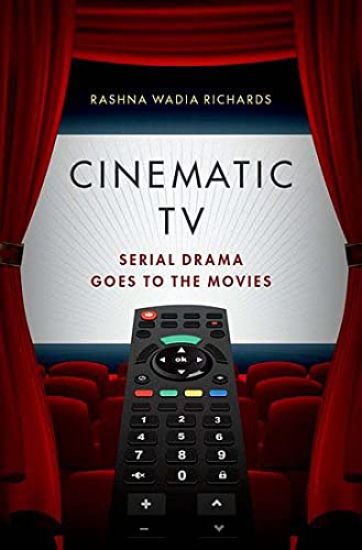
Cinematic TV

Cinematic TV

Rashna Wadia Richards

Oxford University Press Inc
2021
sidottu
For decades after its invention, television was considered by many to be culturally deficient when compared to cinema, as analyses rooted in communication studies and the social sciences tended to focus primarily on television's negative impact on consumers. More recently, however, denigration has largely been replaced by serious critical consideration of what television represents in the post-network era. Once derided as a media wasteland, TV is now praised for its visual density and complexity. In the last two decades, media scholars have often suggested that television has become cinematic. Serial dramas, in particular, are acclaimed for their imitations of cinema's formally innovative and narratively challenging conventions. But what exactly does "cinematic TV" mean? In Cinematic TV, author Rashna Wadia Richards takes up this question comprehensively, arguing that TV dramas quote, copy, and appropriate (primarily) American cinema in multiple ways and toward multiple ends. Constructing an innovative theoretical framework by combining intertextuality and memory studies, Cinematic TV focuses on four modalities of intermedial borrowings: homage, evocation, genre, and parody. Through close readings of such exemplary shows as Stranger Things, Mad Men, Damages, and Dear White People, the book demonstrates how serial dramas reproduce and rework, undermine and idolize, and, in some cases, compete with and outdo cinema.
Cinematic TV

Cinematic TV

Rashna Wadia Richards

Oxford University Press Inc
2021
nidottu
For decades after its invention, television was considered by many to be culturally deficient when compared to cinema, as analyses rooted in communication studies and the social sciences tended to focus primarily on television's negative impact on consumers. More recently, however, denigration has largely been replaced by serious critical consideration of what television represents in the post-network era. Once derided as a media wasteland, TV is now praised for its visual density and complexity. In the last two decades, media scholars have often suggested that television has become cinematic. Serial dramas, in particular, are acclaimed for their imitations of cinema's formally innovative and narratively challenging conventions. But what exactly does "cinematic TV" mean? In Cinematic TV, author Rashna Wadia Richards takes up this question comprehensively, arguing that TV dramas quote, copy, and appropriate (primarily) American cinema in multiple ways and toward multiple ends. Constructing an innovative theoretical framework by combining intertextuality and memory studies, Cinematic TV focuses on four modalities of intermedial borrowings: homage, evocation, genre, and parody. Through close readings of such exemplary shows as Stranger Things, Mad Men, Damages, and Dear White People, the book demonstrates how serial dramas reproduce and rework, undermine and idolize, and, in some cases, compete with and outdo cinema.
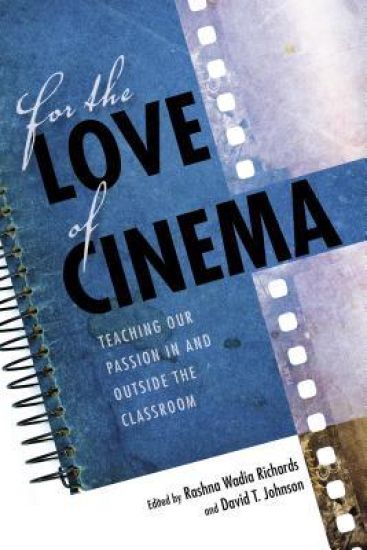
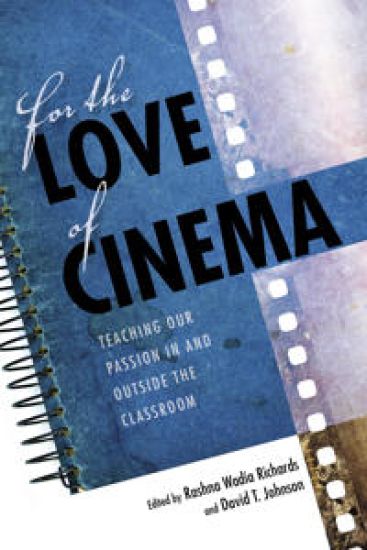
For the Love of Cinema

For the Love of Cinema

Rashna Wadia Richards; David T. Johnson

Indiana University Press
2017
sidottu
What role does love—of cinema, of cinema studies, of teaching and learning—play in teaching film? For the Love of Cinema brings together a wide range of film scholars to explore the relationship between cinephilia and pedagogy. All of them ask whether cine-love can inform the serious study of cinema. Chapter by chapter, writers approach this question from various perspectives: some draw on aspects of students' love of cinema as a starting point for rethinking familiar films or generating new kinds of analyses about the medium itself; others reflect on how their own cinephilia informs the way they teach cinema; and still others offer new ways of writing (both verbally and audiovisually) with a love of cinema in the age of new media. Together, they form a collection that is as much a guide for teaching cinephilia as it is an energetic dialogue about the ways that cinephilia and pedagogy enliven and rejuvenate one another.
For the Love of Cinema

For the Love of Cinema

Rashna Wadia Richards; David T. Johnson

Indiana University Press
2017
pokkari
What role does love—of cinema, of cinema studies, of teaching and learning—play in teaching film? For the Love of Cinema brings together a wide range of film scholars to explore the relationship between cinephilia and pedagogy. All of them ask whether cine-love can inform the serious study of cinema. Chapter by chapter, writers approach this question from various perspectives: some draw on aspects of students' love of cinema as a starting point for rethinking familiar films or generating new kinds of analyses about the medium itself; others reflect on how their own cinephilia informs the way they teach cinema; and still others offer new ways of writing (both verbally and audiovisually) with a love of cinema in the age of new media. Together, they form a collection that is as much a guide for teaching cinephilia as it is an energetic dialogue about the ways that cinephilia and pedagogy enliven and rejuvenate one another.
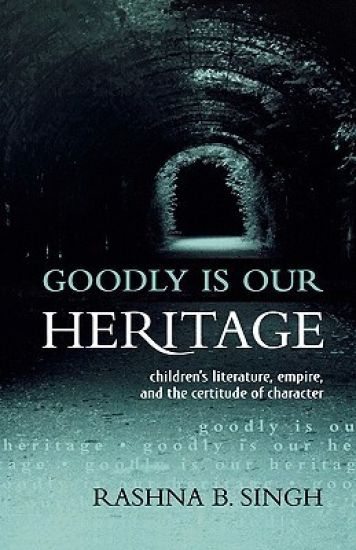
Goodly Is Our Heritage

Goodly Is Our Heritage

Rashna B. Singh

Scarecrow Press
2004
nidottu
"Patterns of sublimation begin in childhood. So does binary and hierarchical thinking. The child must be trained to see in oppositions and on a scale of order. So the story of nation and people, race and culture begins as the bedtime story." (The author) How else, asks Rashna Singh, do we explain the uncanny physical resemblance between Osama bin Laden and the evil Jaffar (of Disney's motion picture Aladdin)? Singh provides a most persuasive argument for why these sentiments are both insidious and compelling, and how they resonate to this day. While she includes such classic examples as The Secret Garden, Robinson Crusoe, and the Babar series, it is her inclusion of genuinely neglected fictions that lends her analyses a special richness. In an engaging narrative style, Singh demonstrates how constructions of character evolve into cultural imprints which encourage their young readers to choose the "goodly" side, with little thought of "badly" repercussions.
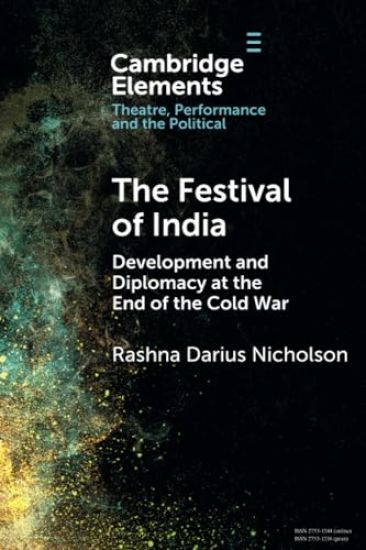
The Festival of India

The Festival of India

Rashna Darius Nicholson

Cambridge University Press
2024
pokkari
An in-depth study of the Festival of India (1985–1986) in the United States, one of the biggest events ever mounted to promote goodwill between two countries. Comprising more than seven hundred programs of music, dance, drama, film shows, art exhibitions, and workshops sponsored by over two hundred cultural institutions across over a hundred cities, the festival constituted a prismatic event that refracted the complex forces at play on the global stage during the 1980s. The Element delineates how this multi-sited spectacle of unprecedented size and near unfathomable political, economic, and cultural influence impacted theatre and performance studies. Simultaneously, it traces how two complex historical shifts were communicated to the global public at the end of the Cold War: India's desire to transition from planned Nehruvian socialism to laissez faire capitalism and the efflorescence of the model of 'cultural development' that centred the arts in development.
The Festival of India

The Festival of India

Rashna Darius Nicholson

Cambridge University Press
2024
sidottu
An in-depth study of the Festival of India (1985–1986) in the United States, one of the biggest events ever mounted to promote goodwill between two countries. Comprising more than seven hundred programs of music, dance, drama, film shows, art exhibitions, and workshops sponsored by over two hundred cultural institutions across over a hundred cities, the festival constituted a prismatic event that refracted the complex forces at play on the global stage during the 1980s. The Element delineates how this multi-sited spectacle of unprecedented size and near unfathomable political, economic, and cultural influence impacted theatre and performance studies. Simultaneously, it traces how two complex historical shifts were communicated to the global public at the end of the Cold War: India's desire to transition from planned Nehruvian socialism to laissez faire capitalism and the efflorescence of the model of 'cultural development' that centred the arts in development.
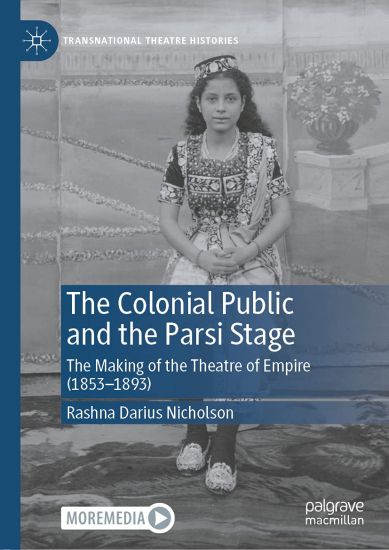
The Colonial Public and the Parsi Stage

The Colonial Public and the Parsi Stage

Rashna Darius Nicholson

Springer Nature Switzerland AG
2021
sidottu
The Colonial Public and the Parsi Stage is the first comprehensive study of the Parsi theatre, colonial South and Southeast Asia’s most influential cultural phenomenon and the precursor of the Indian cinema industry. By providing extensive, unpublished information on its first actors, audiences, production methods, and plays, this book traces how the theatre—which was one of the first in the Indian subcontinent to adopt European stagecraft—transformed into a pan-Asian entertainment industry in the second half of the nineteenth century. Nicholson sheds light on the motivations that led to the development of the popular, commercial theatre movement in Asia through three areas of investigation: the vernacular public sphere, the emergence of competing visions of nationhood, and the narratological function that women served within a continually shifting socio-political order. The book will be of interest to scholars across several disciplines, including cultural history, gender studies, Victorian studies, the sociology of religion, colonialism, and theatre.Winner of the Theatre Library Association George Freedley Memorial Award Special Jury Prize. Shortlisted for the TaPRA David Bradby book prize. Finalist for the American Society for Theatre Research Barnard Hewitt Award.
The Colonial Public and the Parsi Stage

The Colonial Public and the Parsi Stage

Rashna Darius Nicholson

Springer Nature Switzerland AG
2022
nidottu
The Colonial Public and the Parsi Stage is the first comprehensive study of the Parsi theatre, colonial South and Southeast Asia’s most influential cultural phenomenon and the precursor of the Indian cinema industry. By providing extensive, unpublished information on its first actors, audiences, production methods, and plays, this book traces how the theatre—which was one of the first in the Indian subcontinent to adopt European stagecraft—transformed into a pan-Asian entertainment industry in the second half of the nineteenth century. Nicholson sheds light on the motivations that led to the development of the popular, commercial theatre movement in Asia through three areas of investigation: the vernacular public sphere, the emergence of competing visions of nationhood, and the narratological function that women served within a continually shifting socio-political order. The book will be of interest to scholars across several disciplines, including cultural history, gender studies, Victorian studies, the sociology of religion, colonialism, and theatre.Winner of the Theatre Library Association George Freedley Memorial Award Special Jury Prize. Shortlisted for the TaPRA David Bradby book prize. Finalist for the American Society for Theatre Research Barnard Hewitt Award.
Drei verschiedenfarbige und duftende Reissorten aus Nordostindien
Den ayurvedischen Abhandlungen zufolge kann Reis die Tridoshas (K rpers fte) - Vata, Pitta und Kapha - lindern oder z geln, deren Ungleichgewicht im menschlichen K rper verschiedene Arten von Krankheiten verursacht. Zus tzlich zu seiner F higkeit, solche Ungleichgewichte zu beheben, besitzt Reis die seltene F higkeit, K rperelemente anzureichern, toxische Stoffwechselprodukte auszuscheiden, den K rper zu st rken, zu revitalisieren und mit Energie zu versorgen, den Blutdruck zu regulieren, Hautkrankheiten und vorzeitigem Altern vorzubeugen.
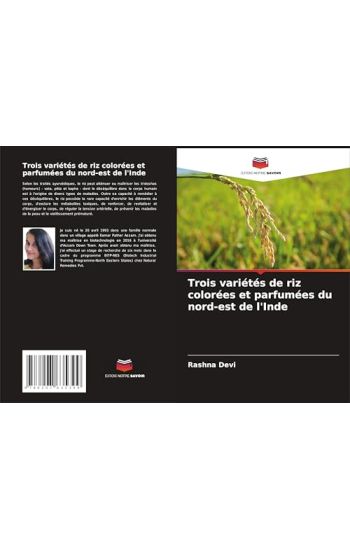
Trois variétés de riz colorées et parfumées du nord-est de l'Inde
Selon les trait s ayurv diques, le riz peut att nuer ou ma triser les tridoshas (humeurs) - vata, pitta et kapha - dont le d s quilibre dans le corps humain est l'origine de divers types de maladies. Outre sa capacit rem dier ces d s quilibres, le riz poss de la rare capacit d'enrichir les l ments du corps, d'exclure les m tabolites toxiques, de renforcer, de revitaliser et d' nergiser le corps, de r guler la tension art rielle, de pr venir les maladies de la peau et le vieillissement pr matur .
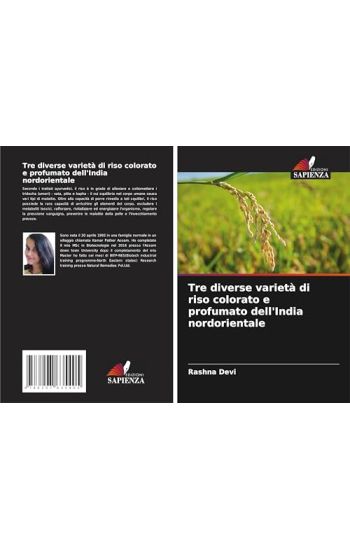
Tre diverse varietà di riso colorato e profumato dell'India nordorientale
Secondo i trattati ayurvedici, il riso in grado di alleviare o sottomettere i tridosha (umori) - vata, pitta e kapha - il cui squilibrio nel corpo umano causa vari tipi di malattie. Oltre alla capacit di porre rimedio a tali squilibri, il riso possiede la rara capacit di arricchire gli elementi del corpo, escludere i metaboliti tossici, rafforzare, rivitalizzare ed energizzare l'organismo, regolare la pressione sanguigna, prevenire le malattie della pelle e l'invecchiamento precoce.
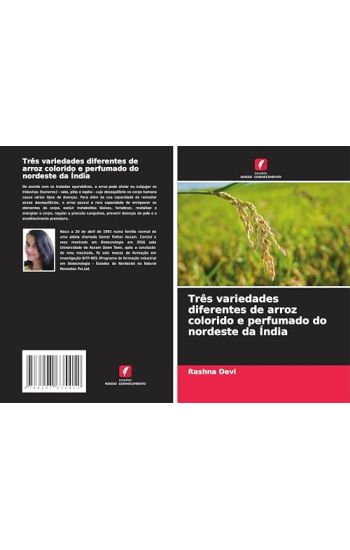
Três variedades diferentes de arroz colorido e perfumado do nordeste da Índia
De acordo com os tratados ayurv dicos, o arroz pode aliviar ou subjugar os tridoshas (humores) - vata, pitta e kapha - cujo desequil brio no corpo humano causa v rios tipos de doen as. Para al m da sua capacidade de remediar esses desequil brios, o arroz possui a rara capacidade de enriquecer os elementos do corpo, excluir metabolitos t xicos, fortalecer, revitalizar e energizar o corpo, regular a press o sangu nea, prevenir doen as de pele e o envelhecimento prematuro.
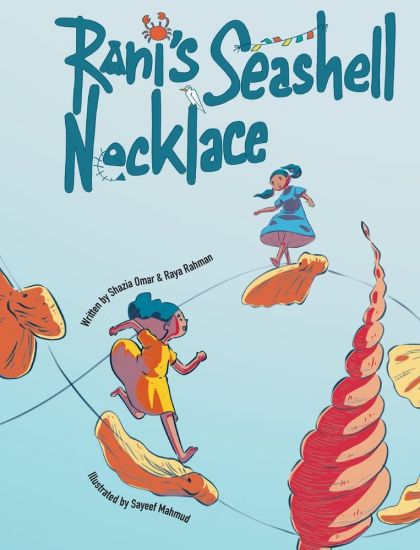
Rani's Seashell Necklace

Rani's Seashell Necklace

Shazia Omar; Raya Rashna Rahman

Guba Publishing LLC
2023
sidottu
Rani, wearing her beloved seashell necklace, enjoys going to school and playing with her little sister, Asma. But her family falls into hard times and she must leave school to support them. Though she is upset at first, a chance meeting at a refugee camp helps Rani to understand the true meaning of family and friendship. This story is part of The Asia Foundation's Gom Acho Collection.
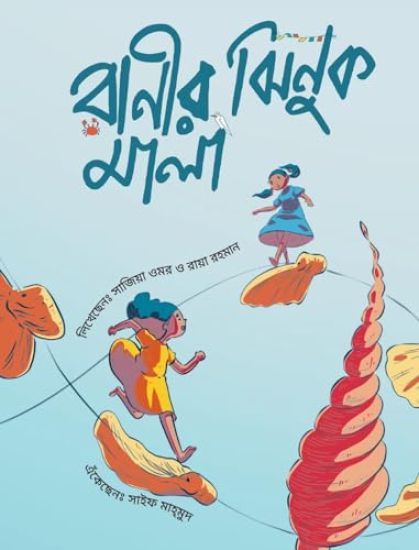
Rani's Seashell Necklace (Bengali) / Ranir Jhinuk Mala

Rani's Seashell Necklace (Bengali) / Ranir Jhinuk Mala

Shazia Omar; Raya Rashna Rahman

Guba Publishing LLC
2023
sidottu
Rani, wearing her beloved seashell necklace, enjoys going to school and playing with her little sister, Asma. But her family falls into hard times and she must leave school to support them. Though she is upset at first, a chance meeting at a refugee camp helps Rani to understand the true meaning of family and friendship. This story is part of The Asia Foundation's Gom Acho Collection.