
Kirjahaku
Etsi kirjoja tekijän nimen, kirjan nimen tai ISBN:n perusteella.
1000 tulosta hakusanalla Raymond B. Cattell

Expanding on his earlier work, Cattell applies the Beyondist viewpoint to major ethical questions. Starting from the premise that evolution is the fundamental process present in the universe, he explains that human evolution is governed by natural selection among groups, which in turn, is based upon genetic and cultural selection among individuals. Since natural selection of individuals is directed toward forming a viable group, the genetic and cultural shaping of individuals must fit the survival conditions of the group. The goal of Beyondism is to find these ethical and cultural conditions that are necessary for successful evolutionary adaptation and advancement.

Originally published in 1950, the need for a small standard text on basic principles of personality structure and development had been very apparent to teachers of psychology for some time. There were many books illustrating specialized or applied aspects of the psychology of personality – such as abnormal psychology, educational psychology, child psychology, mental measurement, vocational guidance, etc. – but lacking was a treatment of personality study as pure psychology, concentrating on the fundamentals. The aim of this title was therefore to bring the general problems of personality description and development, normal and abnormal, into a single perspective and to integrate the principle fields of observation in clear cut generalizations.
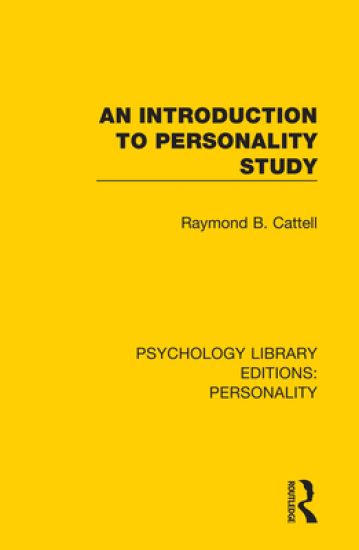
Originally published in 1950, the need for a small standard text on basic principles of personality structure and development had been very apparent to teachers of psychology for some time. There were many books illustrating specialized or applied aspects of the psychology of personality – such as abnormal psychology, educational psychology, child psychology, mental measurement, vocational guidance, etc. – but lacking was a treatment of personality study as pure psychology, concentrating on the fundamentals. The aim of this title was therefore to bring the general problems of personality description and development, normal and abnormal, into a single perspective and to integrate the principle fields of observation in clear cut generalizations.

Raymond B. Randolph Et Al. V. Virginia. U.S. Supreme Court Transcript of Record with Supporting Pleadings
Charles L Black; Robert Y Button
Gale, U.S. Supreme Court Records
2011
pokkari

Raymond's Story: The Questionable Decisions of Raymond B(Only) Reneau
Raymond B. Reneau
Independently Published
2020
nidottu
What some may consider a cautionary tale, Dr. Raymond Reneau shares the questionable and sometimes misguided decisions he has made throughout his long and exciting life. Growing up during the depression era in a small farm in Kentucky, Dr. Reneau used the (many) lessons he learned as a child to pursue a life of education, travel, and commitment to family. Now, for the first time ever in print, you can read captivating stories straight from the source, such as Mom Learns to Drive, A Pencil in the Neck, My Brothers Almost Drown, and Be Quiet While I Fish. Be entertained, and maybe learn a lesson or two yourself, while joining Dr. Reneau on this exciting trip from boyhood to fatherhood and beyond.

On October 1, 1920, the city of Santiago, Chile, came to a halt as tens of thousands stopped work and their daily activities to join the funeral procession of José Domingo Gómez Rojas, a 24 year old university student and acclaimed poet. Nicknamed "the firecracker poet" for his incendiary poems, such as "The Cry of the Renegade" Gómez Rojas was a member of the University of Chile's student federation (the FECh) which had come under repeated attack for its critiques of Chile's political system and ruling parties. Government officials accused the FECh's leaders of being advocates for the destruction of the social order, subversives who had the temerity to question national policy making, and insolent youths who did not know their place. Arrested for alleged sedition as part of a five-month-long "prosecution of subversives," Gómez Rojas joined other students and workers in Santiago's prison system. He never left. After two months in police custody, he died in Santiago's asylum, quickly to be reborn as a political martyr for students and workers alike. This microhistory recovers the context within which Gómez Rojas's arrest, imprisonment, and death unfolded and the experiences of men he counted as friends, comrades, colleagues, mentors, and pupils. Fifty years before the much-heralded student movements of 1968, Raymond Craib shows, university students and workers were active political collaborators and radicalized political subjects. In interwar Chile, members of Chile's sizeable working class marched side-by-side with students from the FECh. At the same time, increasingly radicalized university students, as well as former students, workers, and worker-intellectuals, gathered together to talk, read, and find common cause. Members of what Craib calls a "capacious Left" they shared a wide-ranging interest in works of sociology and political theory, a penchant for poetry, and an eclectic embrace of anarchist, socialist, and communist principles and practices. They also shared the experience of repression, an experience that ultimately cost Gómez Rojas his life and marked an entire generation of political organizers and agitators, including future president Salvador Allende and poet Pablo Neruda.

On October 1, 1920, the city of Santiago, Chile, came to a halt as tens of thousands stopped work and their daily activities to join the funeral procession of José Domingo Gómez Rojas, a 24 year old university student and acclaimed poet. Nicknamed "the firecracker poet" for his incendiary poems, such as "The Cry of the Renegade", Gómez Rojas was a member of the University of Chile's student federation (the FECh) which had come under repeated attack for its critiques of Chile's political system and ruling parties. Government officials accused the FECh's leaders of being advocates for the destruction of the social order, subversives who had the temerity to question national policy making, and insolent youths who did not know their place. Arrested for alleged sedition as part of a five-month-long "prosecution of subversives", Gómez Rojas joined other students and workers in Santiago's prison system. He never left. After two months in police custody, he died in Santiago's asylum, quickly to be reborn as a political martyr for students and workers alike. This microhistory recovers the context within which Gómez Rojas's arrest, imprisonment, and death unfolded and the experiences of men he counted as friends, comrades, colleagues, mentors, and pupils. Fifty years before the much-heralded student movements of 1968, Raymond Craib shows, university students and workers were active political collaborators and radicalized political subjects. In interwar Chile, members of Chile's sizeable working class marched side-by-side with students from the FECh. At the same time, increasingly radicalized university students, as well as former students, workers, and worker-intellectuals, gathered together to talk, read, and find common cause. Members of what Craib calls a "capacious Left", they shared a wide-ranging interest in works of sociology and political theory, a penchant for poetry, and an eclectic embrace of anarchist, socialist, and communist principles and practices. They also shared the experience of repression, an experience that ultimately cost Gómez Rojas his life and marked an entire generation of political organizers and agitators, including future president Salvador Allende and poet Pablo Neruda.
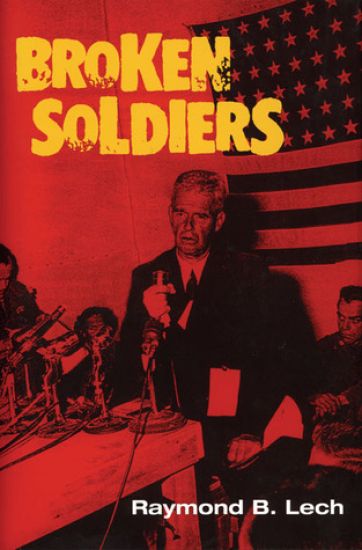
Traversing the no-man's-land of political loyalty and betrayal, Broken Soldiers documents the fierce battle for the minds and hearts of American prisoners during the Korean War. In scorching detail, Raymond Lech describes the soldiers' day-to-day experiences in prisoner-of-war camps and the shocking treatment some of them received at the hands of their own countrymen after the war. Why, he asks, were only fourteen American soldiers tried as collaborators when thousands of others who admitted to some of the same offenses were not? Drawing on some 60,000 pages of court-martial transcripts Lech secured through the Freedom of Information Act, Broken Soldiers documents the appalling treatment and the sophisticated propagandizing to which American POWs fell victim during the Korean conflict. Three thousand American soldiers perished in North Korean camps over the winter of 1950-51, most from starvation. Through the unsentimental testimony of survivors, Lech describes how these young men, filthy and lice-infested, lost an average of 40 percent of their body weight. Many also lost their powers of resistance and their grip on soldierly conduct. After six months of starvation, the emaciated, disoriented prisoners were subjected to a relentless campaign to educate them to the virtues of communism. Bombarded with propaganda, the Americans were organized into study groups and forced to discuss and write about communism and Marxism, even to broadcast harangues against capitalist aggression and appeals for an end to the war. Lech traces the spiral of debilitation and compromise, showing how parroting certain phrases came to seem a small price to pay for physical safety. Threatened with starvation and indefinite confinement in Korea, many POWs succumbed to pressure to mouth communist slogans and provide information far in excess of the regulation "name, rank, and service number." Of the thousands of American soldiers who, while prisoners in North Korea, spoke and wrote favorably of communism and disparaged their country, a handful were charged with collaborating with the enemy. Why were so few singled out? Why did each branch of the armed services judge parallel circumstances differently, and why were American soldiers not realistically prepared for capture? A powerful indictment of justice miscarried, Broken Soldiers raises troubling questions that remain unanswered decades after the events.
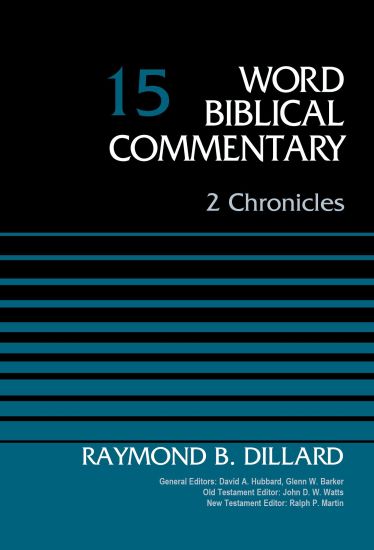
The Word Biblical Commentary delivers the best in biblical scholarship, from the leading scholars of our day who share a commitment to Scripture as divine revelation. This series emphasizes a thorough analysis of textual, linguistic, structural, and theological evidence. The result is judicious and balanced insight into the meanings of the text in the framework of biblical theology. These widely acclaimed commentaries serve as exceptional resources for the professional theologian and instructor, the seminary or university student, the working minister, and everyone concerned with building theological understanding from a solid base of biblical scholarship.Overview of Commentary OrganizationIntroduction—covers issues pertaining to the whole book, including context, date, authorship, composition, interpretive issues, purpose, and theology.Each section of the commentary includes:Pericope Bibliography—a helpful resource containing the most important works that pertain to each particular pericope.Translation—the author’s own translation of the biblical text, reflecting the end result of exegesis and attending to Hebrew and Greek idiomatic usage of words, phrases, and tenses, yet in reasonably good English.Notes—the author’s notes to the translation that address any textual variants, grammatical forms, syntactical constructions, basic meanings of words, and problems of translation.Form/Structure/Setting—a discussion of redaction, genre, sources, and tradition as they concern the origin of the pericope, its canonical form, and its relation to the biblical and extra-biblical contexts in order to illuminate the structure and character of the pericope. Rhetorical or compositional features important to understanding the passage are also introduced here.Comment—verse-by-verse interpretation of the text and dialogue with other interpreters, engaging with current opinion and scholarly research.Explanation—brings together all the results of the discussion in previous sections to expose the meaning and intention of the text at several levels: (1) within the context of the book itself; (2) its meaning in the OT or NT; (3) its place in the entire canon; (4) theological relevance to broader OT or NT issues.General Bibliography—occurring at the end of each volume, this extensive bibliographycontains all sources used anywhere in the commentary.
Provides readers with the fundamentals necessary for a basic understanding of the soil landscape. Divided into three major sections, it covers stratigraphy, geomorphology, hydrology, and the ways in which these geologic processes shape the landscape. Early chapters cover the textural characteristics of soil materials, fluvial systems, hillslope sediments and transitional environments. Later chapters explore volcanics, saprolite, the evolutionary process of landscapes, rates of denudation, streams, hillslope processes and mass movement. Included at the end of the chapters are lists of references, figures, tables and additional reading sources.
Desert Journal: A Naturalist Reflects on Arid California is both a tribute to the life and work of Raymond B. Cowles and a call to reflect on humanity's relationship with nature. Born in 1896 in South Africa, Cowles developed a lifelong fascination with wildlife during his boyhood, which shaped his pioneering work in reptilian thermoregulation—a field he helped establish. His research extended far beyond academia, influencing generations of students and laying the foundation for ecological awareness in California and beyond. Cowles was a visionary, deeply concerned about the impact of human population growth on biodiversity. Long before these ideas gained mainstream attention, he identified the intrinsic link between overpopulation and environmental degradation. Though his book on the subject was never published, the themes resonate throughout his writings, particularly in Chapter 23 of this volume. Cowles’ holistic perspective embraced the biosphere as an interconnected entity, and his ethical framework extended to all life forms. He was not only a scientist but also a humanist, reveling in the sensory experiences of nature and mourning their loss in an increasingly mechanized world. His poetic reflections, like a letter written shortly before his death, reveal his enduring love for the natural world and his plea for others to preserve its beauty. His life was one of dedication and insight, as exemplified in his final public discussions about overpopulation and resource scarcity. Even in his later years, he demonstrated vitality, intellectual sharpness, and a profound ability to connect with people. His legacy, captured in this book and in the memories of those he inspired, underscores the urgency of harmonizing human aspirations with the needs of the planet. This title is part of UC Press's Voices Revived program, which commemorates University of California Press’s mission to seek out and cultivate the brightest minds and give them voice, reach, and impact. Drawing on a backlist dating to 1893, Voices Revived makes high-quality, peer-reviewed scholarship accessible once again using print-on-demand technology. This title was originally published in 1977.

This title is part of UC Press's Voices Revived program, which commemorates University of California Press’s mission to seek out and cultivate the brightest minds and give them voice, reach, and impact. Drawing on a backlist dating to 1893, Voices Revived makes high-quality, peer-reviewed scholarship accessible once again using print-on-demand technology. This title was originally published in 1959.

Desert Journal: A Naturalist Reflects on Arid California is both a tribute to the life and work of Raymond B. Cowles and a call to reflect on humanity's relationship with nature. Born in 1896 in South Africa, Cowles developed a lifelong fascination with wildlife during his boyhood, which shaped his pioneering work in reptilian thermoregulation—a field he helped establish. His research extended far beyond academia, influencing generations of students and laying the foundation for ecological awareness in California and beyond. Cowles was a visionary, deeply concerned about the impact of human population growth on biodiversity. Long before these ideas gained mainstream attention, he identified the intrinsic link between overpopulation and environmental degradation. Though his book on the subject was never published, the themes resonate throughout his writings, particularly in Chapter 23 of this volume. Cowles’ holistic perspective embraced the biosphere as an interconnected entity, and his ethical framework extended to all life forms. He was not only a scientist but also a humanist, reveling in the sensory experiences of nature and mourning their loss in an increasingly mechanized world. His poetic reflections, like a letter written shortly before his death, reveal his enduring love for the natural world and his plea for others to preserve its beauty. His life was one of dedication and insight, as exemplified in his final public discussions about overpopulation and resource scarcity. Even in his later years, he demonstrated vitality, intellectual sharpness, and a profound ability to connect with people. His legacy, captured in this book and in the memories of those he inspired, underscores the urgency of harmonizing human aspirations with the needs of the planet. This title is part of UC Press's Voices Revived program, which commemorates University of California Press’s mission to seek out and cultivate the brightest minds and give them voice, reach, and impact. Drawing on a backlist dating to 1893, Voices Revived makes high-quality, peer-reviewed scholarship accessible once again using print-on-demand technology. This title was originally published in 1977.

This title is part of UC Press's Voices Revived program, which commemorates University of California Press’s mission to seek out and cultivate the brightest minds and give them voice, reach, and impact. Drawing on a backlist dating to 1893, Voices Revived makes high-quality, peer-reviewed scholarship accessible once again using print-on-demand technology. This title was originally published in 1959.
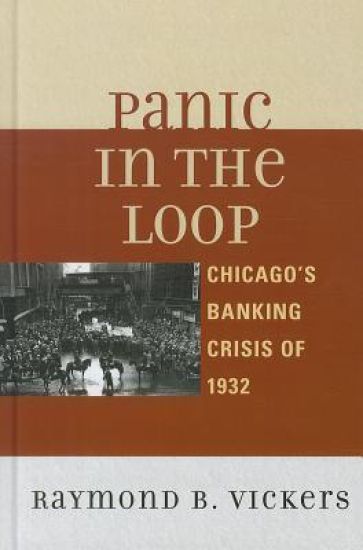
Relying on a broad array of records used together for the first time, Panic in the Loop reveals widespread fraud and insider abuse by bankers—and the complicity of corrupt politicians—that caused the Chicago banking debacle of 1932. It provides a fresh interpretation of the role played by bankers who turned the nation’s financial crisis of the early 1930s into the decade-long Great Depression. It also calls for the abolition of secrecy that still permeates the bank regulatory system, which would have prevented the Enron fiasco and the financial meltdown of 2008. This book focuses on the recurrent failures of the financial system—the savings and loan crisis of the 1980s, the Enron debacle of the early 2000s, and finally the financial collapse of 2008. Because of regulatory secrecy, knowing what happened in Chicago in 1932 is critical to understanding the glaring problems in the regulation of American finance, in particular the lack of transparency, the abuse of financial institutions by insiders, and the capture of public institutions by insiders going through the revolving door between the private and public sectors. Eight decades later little has changed. The regulatory failures of the 1930s—especially the pervasive system of secrecy that allowed the fraud and insider abuse to flourish—were repeated during the collapse of 2008. Transparency would strike at the alliance between the executives of financial institutions and public officials, who caused the worst economic upheaval since the Great Depression.
Relying on a broad array of records used together for the first time, Panic in the Loop reveals widespread fraud and insider abuse by bankers—and the complicity of corrupt politicians—that caused the Chicago banking debacle of 1932. It provides a fresh interpretation of the role played by bankers who turned the nation’s financial crisis of the early 1930s into the decade-long Great Depression. It also calls for the abolition of secrecy that still permeates the bank regulatory system, which would have prevented the Enron fiasco and the financial meltdown of 2008. This book focuses on the recurrent failures of the financial system—the savings and loan crisis of the 1980s, the Enron debacle of the early 2000s, and finally the financial collapse of 2008. Because of regulatory secrecy, knowing what happened in Chicago in 1932 is critical to understanding the glaring problems in the regulation of American finance, in particular the lack of transparency, the abuse of financial institutions by insiders, and the capture of public institutions by insiders going through the revolving door between the private and public sectors. Eight decades later little has changed. The regulatory failures of the 1930s—especially the pervasive system of secrecy that allowed the fraud and insider abuse to flourish—were repeated during the collapse of 2008. Transparency would strike at the alliance between the executives of financial institutions and public officials, who caused the worst economic upheaval since the Great Depression.

The monumental reshaping of Canada during the Mulroney Era.
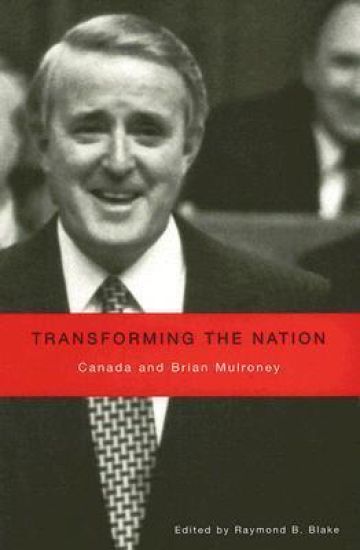
The monumental reshaping of Canada during the Mulroney Era.
This book explores the family allowance phenomenon from the idea's debut in the House of Commons in 1929 to the program's demise as a universal program under the Mulroney government in 1992. Although successive federal governments remained committed to its underlying principle of universality, party politics, bureaucracy, federal-provincial wrangling, and the shifting priorities of citizens eroded the rights-based approach to social security and replaced it with one based on need. In tracing the evolution of one social security program within a national perspective, From Rights to Needs sheds new light on how Canada's welfare state and social policy has been transformed over the past half century.