Kirjojen hintavertailu. Mukana 11 244 527 kirjaa ja 12 kauppaa.

Kirjahaku

Etsi kirjoja tekijän nimen, kirjan nimen tai ISBN:n perusteella.

1000 tulosta hakusanalla Raymond Carver

Raymond Carver

Raymond Carver

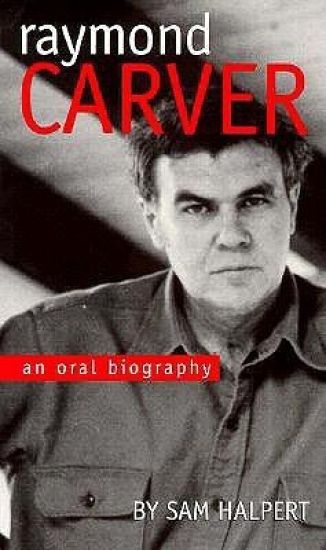
Sam Halpert

University of Iowa Press
1995
nidottu
Raymond Carver has become a literary icon for our time. When he died in 1988 at the age of fifty, he was acclaimed as the greatest influence on the American short story since Hemingway. Carver's friends were the stuff of legend as well. In this rich collection - greatly expanded from the earlier When We Talk about Raymond Carver - of interviews with close companions, acquaintances, and family, Sam Halpert has chronologically arranged the reminiscences of Carver's adult life, recalling his difficult "Bad Raymond" days through his second life as a recovering alcoholic and triumphantly successful writer. Some of America's most distinguished writers remember Raymond Carver in these pages, including Richard Ford, Leonard Michaels, Scott Turow, Tobias Wolff, Geoffrey Wolff, Chuck Kinder, William Kittredge, Stephen Dobyns, Douglas Unger, Dick Day, John Leggett, Donald Justice, Jay McInerney, and Robert Stone. His first wife, Maryann Carver, and their daughter, Chris Carver, also contribute their recollections of his early efforts to become a writer while struggling with poverty and alcoholism.
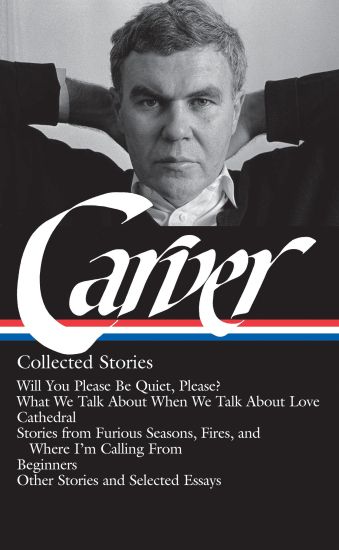
Raymond Carver: Collected Stories (Loa #195): Will You Please Be Quiet, Please? / What We Talk about When We Talk about Love /Cathedral / Stories from
In collections such as Will You Please Be Quiet, Please? and What We Talk About When We Talk About Love, Raymond Carver wrote with unflinching exactness about men and women enduring lives on the knife-edge of poverty and other deprivations. Beneath his pared-down surfaces run disturbing, violent undercurrents. Suggestive rather than explicit, and seeming all the more powerful for what is left unsaid, Carver's stories were held up as exemplars of a new school in American fiction known as minimalism or "dirty realism," a movement whose wide influence continues to this day. Carver's stories were brilliant in their detachment and use of the oblique, ambiguous gesture, yet there were signs of a different sort of sensibility at work. In books such as Cathedral and the later tales included in the collected stories volume Where I'm Calling From, Carver revealed himself to be a more expansive writer than in the earlier published books, displaying Chekhovian sympathies toward his characters and relying less on elliptical effects. In gathering all of Carver's stories, including early sketches and posthumously discovered works, The Library of America's Collected Stories provides a comprehensive overview of Carver's career as we have come to know it: the promise of Will You Please Be Quiet, Please? and the breakthrough of What We Talk About, on through the departures taken in Cathedral and the pathos of the late stories. But it also prompts a fresh consideration of Carver by presenting Beginners, an edition of the manuscript of What We Talk About When We Talk About Love that Carver submitted to Gordon Lish, his editor and a crucial influence on his development. Lish's editing was so extensive that at one point Carver wrote him an anguished letter asking him not to publish the book; now, for the first time, readers can read both the manuscript and published versions of the collection that established Carver as a major American writer. Offering a fascinating window into the complex, fraught relation between writer and editor, Beginners expands our sense of Carver and is essential reading for anyone who cares about his achievement. LIBRARY OF AMERICA is an independent nonprofit cultural organization founded in 1979 to preserve our nation's literary heritage by publishing, and keeping permanently in print, America's best and most significant writing. The Library of America series includes more than 300 volumes to date, authoritative editions that average 1,000 pages in length, feature cloth covers, sewn bindings, and ribbon markers, and are printed on premium acid-free paper that will last for centuries.
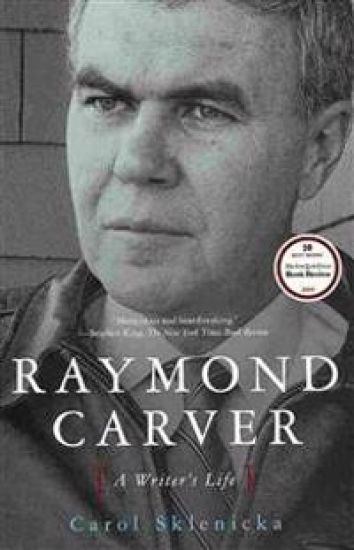
Raymond Carver: A Writer's Life

Raymond Carver: A Writer's Life

Carol Sklenicka

Scribner Book Company
2010
nidottu
When Raymond Carver died at age fifty, readers lost a distinctive voice in its prime. Carver was, the Times of London said, "the Chekhov of middle America." His influence on a generation of writers and on the short story itself has been widely noted. Not so generally known are how Carver became a writer, how he suffered to achieve his art, and how his troubled and remarkable personality affected those around him. Carol Sklenicka's meticulous and absorbing biography re-creates Carver's early years in Yakima, Washington, where he was the nervous, overweight son of a kindly, alcohol-dependent lumbermill worker. By the time he was nineteen, Ray had married his high school sweetheart, Maryann Burk. From a basement apartment where they were raising their first child and expecting their second, they determined that Ray would become a writer. Despite the handicaps of an erratic education and utter lack of financial resources, he succeeded. Sklenicka describes Carver's entry into the literary world via "little magazines" and the Iowa Writers' Workshop; his publication by Esquire editor Gordon Lish and their ensuing relationship; his near-fatal alcoholism, which worsened even as he produced many of the unforgettable stories collected in Will You Please Be Quiet, Please? and What We Talk About When We Talk About Love. She examines the dissolution of his first marriage and his partnership with poet Tess Gallagher, who helped him enjoy the full measure of his success. Carol Sklenicka draws on hundreds of interviews with people who knew Carver, prodigious research in libraries and private collections, and all of Carver's poems and stories for Raymond Carver. Her portrait is generous and wise without swerving from discordant issues in Carver's private affairs. Above all Sklenicka shows how Carver's quintessentially American life fostered the stories that knowing readers have cherished from their first publication until the present day.
Raymond Carver's Short Fiction in the History of Black Humor
This first book-length study on the black humor in Raymond Carver's work includes valuable interpretations of Carver's aesthetics as well as the psycho-social implications of his short fiction. The presence of an indeterminate menace in the oppressive situations of black humor in Carver - as compared to a European tradition of existentialist writing and his American predecessors including Twain, Heller, Barth and others - is mitigated through humor so it is not dominant. As a result, a subtle promise emerges in the characters' lives.
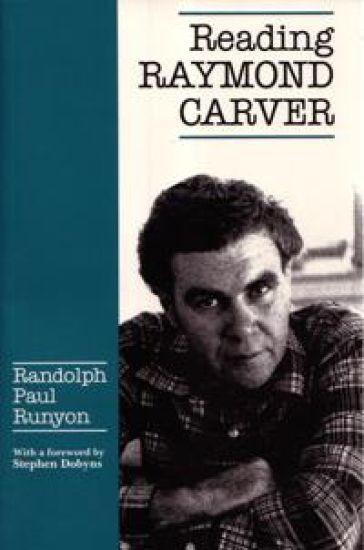
Reading Raymond Carver

Reading Raymond Carver

Randolph Paul Runyon

Syracuse University Press
1993
nidottu
This study of the short stories of Raymond Carver also takes excursions into his poetry and essays. Runyon argues that the stories are intricately linked as part of a cohesive body of work.
The Visual Poetics of Raymond Carver

The Visual Poetics of Raymond Carver

Ayala Amir

Lexington Books
2010
sidottu
The Visual Poetics of Raymond Carver draws on the study of visual arts to illuminate the short stories of noted author Raymond Carver, in the broader context of vision and visualization in a literary text. Ayala Amir examines Carver's use of the eye-of-the-camera technique. Amir uncovers the tensions that structure his visual aesthetics and examines assumptions that govern scholarly discussions of his work, relating these matters to the complex nature of photography and to the current "visual turn" of cultural studies. The research uses visual approaches to reflect upon traditional issues of narrative study-duration, dialogue, narration, description, frame, character, and meaning. Amir shows how Carver's visual aesthetics shapes the meaning of his stories, while also challenging accepted notions of the boundaries of "the literary."
The Visual Poetics of Raymond Carver

The Visual Poetics of Raymond Carver

Ayala Amir

Lexington Books
2011
nidottu
The Visual Poetics of Raymond Carver explores the visual dimensions of literary texts by looking at the rich representations of vision, movement and space in Raymond Carver's short fiction. Ayala Amir analyzes Carver's stories using insights borrowed from the critical discourse of the visual arts to reflect upon and challenge traditional issues of narrative study.
The Stories of Raymond Carver

The Stories of Raymond Carver

Kirk Nesset

Ohio University Press
1995
pokkari
Raymond Carver, known in some circles as the "godfather of minimalism," has been credited by many as the rejuvenator of the once-dying American short story. (See the link on this page to a 2008 Kenyon Review story that discusses the recent controversy over the editing of Carver's stories.) Drawing on representative tales from each of Carver's major volumes of fiction, Nesset's critical exploration leads us deep into the heart of Carver country, an eerie post-industrial world of low-rent survivors. In the earliest fiction, the politics of sex are tied to politics of fortune and chance; marriage as an institution is capricious and unsettling. In later stories, the gesture of telling stories provides an escape for certain of these characters, metaphorically and otherwise; and in Carver's last stories, subtle strategies of language offer a similar, if more tentative release. From beginning to end, Carver's distinctive, highly imitative style is intrinsic to his subject and is crucial in presenting what Carver called the "dark side of Reagan's America." In this comprehensive study of Carver, Nesset discusses the relationship of minimalism and postmodern trends and the rise of new realism. By locating Carver in the gallery of American letters, Nesset shows him to be at once more simple and more complex than we might have believed, skillfully laying the groundwork for Carver studies to come.
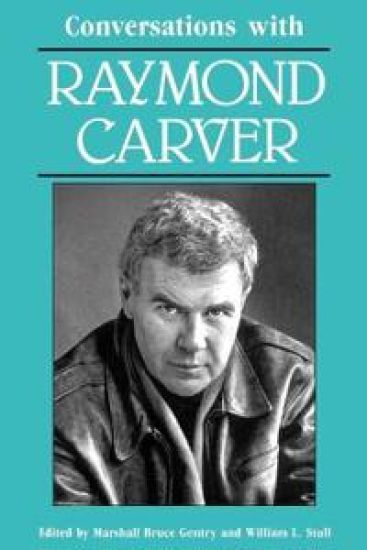
Conversations with Raymond Carver

Conversations with Raymond Carver

University Press of Mississippi
1990
nidottu
This collection of Raymond Carver's interviews reveals him to have been perhaps the premier short-story writer of his generation, a lyric-narrative poet of singular resonance, and a staunch proponent of realistic fiction in the wake of postmodern formalism. The twenty-five conversations gathered here, several available in English for the first time, include craft interviews, biographical portraits, self-analyses, and wide-ranging reflections on the current literary scene.Carver discusses his changing views of his widely influential fiction collections What We Talk About When We Talk About Love (1981), Cathedral (1983), and Where I'm Calling From (1988). Carver explains how at the height of his fame as a fiction writer he turned to poetry, producing three prize-winning books in as many years. Finally, in the closing months of his life, he talks about the coming of his last triumphant stories, the ones that secured his reputation.