The purpose of this book is to introduce the substantial literature on consumption tax policy and the taxation of capital income, the early literature on optimal tax theory in dynamic overlapping generations models, the more recent literature on optimal taxation in the Ramsey growth model and models of endogenous growth, and the literature on taxation in open economies. The authors summarize the main arguments for and against consumption taxation, present the main theoretical and empirical results of the technical literature, and, finally, extend the literature in a number of useful ways by complicating the models used to study tax issues. These extensions include bequeathing behavior, the time consistency problem, the capital levy, charity and privately produced public goods, environmental externalities and renewable resources, durable goods and land, and money used in exchange and as an asset. Chapters are self-contained as far as possible, and each uses a variety of models rather than just one to study the issue at hand. Models and notation are explained each time they are used, so that the reader can open the book at any chapter without needing to refer back to earlier discussions. The book will be of value to specialists working on tax policy and to the general economist interested in a broad survey of research on tax policy. It will also be useful for students interested in learning how research on tax issues is done, especially the technical aspects of manipulating models, deriving predictions, as well as bringing theory and empirical tools to bear on tax policy issues.
This annotated bibliography provides an analytic aid for research and teaching about Soviet intelligence and security services and its role in both Soviet domestic politics and contemporary world affairs.
This annotated bibliography is a valuable tool for research and teaching on Soviet intelligence and security services and its role in the country's domestic and international affairs. It categorizes nearly 500 books, articles, and government documents pertaining to Soviet intelligence.
First published in 1924. This extensive volume explores the history of political theory from Ancient Greece up until proletarian thought in the early twentieth century. The author pays particular attention to the connection between economic and political theory during the eighteenth and nineteenth centuries. History of Political Thought will be of great interest to students of history, politics, and philosophy.
First published in 1924. This extensive volume explores the history of political theory from Ancient Greece up until proletarian thought in the early twentieth century. The author pays particular attention to the connection between economic and political theory during the eighteenth and nineteenth centuries. History of Political Thought will be of great interest to students of history, politics, and philosophy.
Written by a tribological expert with more than thirty years of experience in the field, Mechanical Wear Fundamentals and Testing, Second Edition compiles an extensive range of graphs, tables, micrographs, and drawings to illustrate wear, friction, and lubrication behavior in modern engineering applications. The author promotes a clear understanding of wear testing methodologies for avoidance and resolution of deterioration and weakening in specific engineering designs. Comprehensively describes more than 20 different phenomenological wear tests and over 10 operational wear tests
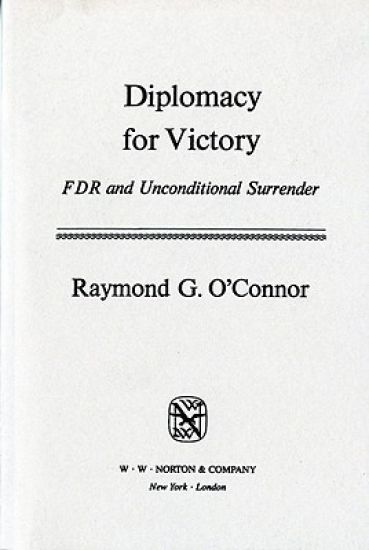
That statement, demanding the unconditional surrender of Germany, Italy, and Japan, was attacked immediately by those who felt it would prolong the war. Now, three decades later, it is still the subject of heated debate. In this new study, Raymond G. O'Connor views the unconditional surrender policy as one of Roosevelt's great successes. It did not prolong the war, and by eliminating the preconditions for a negotiated peace, and the territorial disputes that accompany them, it helped to maintain the tenuous relationship between the three Allied leaders, so important in bringing about the Axis capitulation. Equally important, the policy was a vital instrument in achieving the war's political objectives—objectives the author says Roosevelt understood better than his British counterpart, Winston Churchill. With the availability of new sources, Professor O'Connor has been able to reconsider thoroughly all aspects of the unconditional surrender policy, from its origins and Churchill's role in its formation to its effects on the victory it helped to bring about.
Fourier Series and Optical Transform Techniques in ContemporaryOptics An Introduction For anyone new to Fourier methods, this remarkable book willilluminate the subject like no other currently available. With over280 illustrations generated by computer graphics, it depicts in3-space (rather than the usual 2-space) the many basic functions ofoptical diffraction and imaging. These mind-stretchingvisualizations give the reader an enhanced understanding of bothFourier transform techniques and key principles in optics. At thesame time, the author provides a lucid text that covers wavenotation, the Fourier analysis of signals, the processing of lightin diffraction phenomena and imaging, Zernicke polynomials, Fouriertransforms for Fresnel diffraction, laser beacon adaptive optics,and related topics. Ideal for self-teaching, this book is highly recommended forworking engineers, technical staff, students of physical optics andsignal analysis, and Fourier novices in all fields.
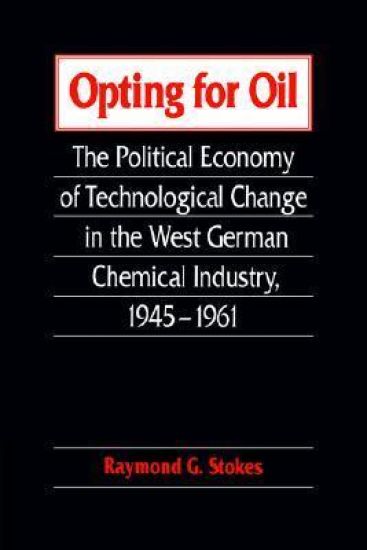
This book investigates the causes, course and consequences of the shift in West German chemical technology from a coal to a petroleum basis between 1945 and 1961. It examines the historical underpinnings of the technological culture of the German chemical industry; changing political and economic constraints on technological decision-making in the post-war period; and the actual decision-making process within five individual firms. By addressing a wide variety of broader issues - including the origins and impact of the division of Germany; the effects of the Wirtschaftswunder, or economic miracle; European integration; and the changing role of the West German Federal Republic in the international political order - this book explains how West German industry regained and then retained a competitive position in world markets.
This book investigates the causes, course and consequences of the shift in West German chemical technology from a coal to a petroleum basis between 1945 and 1961. It examines the historical underpinnings of the technological culture of the German chemical industry; changing political and economic constraints on technological decision-making in the post-war period; and the actual decision-making process within five individual firms. By addressing a wide variety of broader issues - including the origins and impact of the division of Germany; the effects of the Wirtschaftswunder, or economic miracle; European integration; and the changing role of the West German Federal Republic in the international political order - this book explains how West German industry regained and then retained a competitive position in world markets.
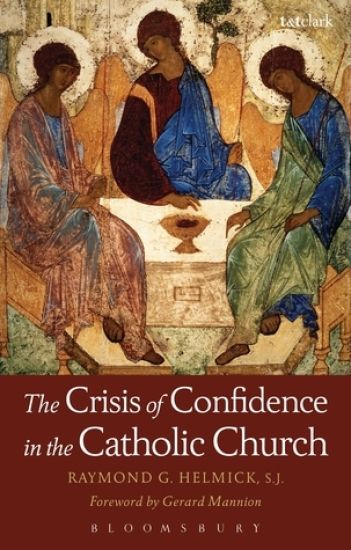
The Catholic Church in the United States and Europe has seen declining numbers both in regular attendance and in clergy and religious life.Scandals have torn at people's allegiance, and feelings of disappointment, disillusion, and anger have become widespread. Church authorities have seemed reluctant to acknowledge or address these problems and have responded with vexation to those who raise them from the Right or Left. The Crisis of Confidence in the Catholic Church examines the roots of this crisis in light of the nature of the Church community, its institutional structure, and the historical experiences that have brought it to this pass. Raymond Helmick, SJ, traces the problems of the Catholic Church far back in its history - concentration of Church leadership on control of the Christian population, a requirement of obedience to their rulings rather than on the Gospel values of Jesus, the defensiveness and self-righteousness in the face of any criticism. Helmick also emphasizes the role of the Second Vatican Council as it brought the Church to an awareness of its potentiality for an active life of faith by its total membership. How will the Church revive? Helmick believes that a new growth of Christianity can come now only by a return to the love and care of its original premises, to the things that are redolent of the life of Jesus. The 'new evangelization' can only be done by living a Christian life, giving an example.
The Catholic Church in the United States and Europe has seen declining numbers both in regular attendance and in clergy and religious life.Scandals have torn at people's allegiance, and feelings of disappointment, disillusion, and anger have become widespread. Church authorities have seemed reluctant to acknowledge or address these problems and have responded with vexation to those who raise them from the Right or Left. The Crisis of Confidence in the Catholic Church examines the roots of this crisis in light of the nature of the Church community, its institutional structure, and the historical experiences that have brought it to this pass. Raymond Helmick, SJ, traces the problems of the Catholic Church far back in its history - concentration of Church leadership on control of the Christian population, a requirement of obedience to their rulings rather than on the Gospel values of Jesus, the defensiveness and self-righteousness in the face of any criticism. Helmick also emphasizes the role of the Second Vatican Council as it brought the Church to an awareness of its potentiality for an active life of faith by its total membership. How will the Church revive? Helmick believes that a new growth of Christianity can come now only by a return to the love and care of its original premises, to the things that are redolent of the life of Jesus. The 'new evangelization' can only be done by living a Christian life, giving an example.
Non-stop action and adventure.In a flash of yellow-white light, in a wave of searing heat, and in an ocean of flames, lives are forever changed, destroyed, and resurrected from the ashes that remain. From those ashes has arisen...Pyrotechs. In the not too distant future, Earth is succumbing to the ravages of global warming, and a new threat that lurks on the horizon pyroterrorists. Faced with this worldwide menace, the United States Congress is willing to gamble on a controversial project, Code Name: Pyrotechs. Using state-of-the-art equipment fire-retardant exo-armor suits, global positioning satellites, heat-vision, and other high-tech devices, Pyrotechs team members will battle some of the greatest dangers known to mankind. But before these futuristic firefighters can save the world, they must first face The Fire Within.