Kirjojen hintavertailu. Mukana 11 342 296 kirjaa ja 12 kauppaa.

Kirjahaku

Etsi kirjoja tekijän nimen, kirjan nimen tai ISBN:n perusteella.

1000 tulosta hakusanalla Reiko Hiroshima

Magazin dikovinnykh sladostej "Schaste za monetku"
Esli vam poschastlivilos vstretit na svojom puti etot strannyj magazin, do potolka nabityj raznoobraznymi sladostjami, budte uvereny: ego khozjajka gospozha Beniko podberjot dlja vas idealnoe lakomstvo.Marmelad "Rusalochka", "Zverskoe pechene", "Morozhenoe s prizrakami", konfeta "Kharizma" - za kazhdym iz nikh svoja istorija: trogatelnaja ili pouchitelnaja, smeshnaja ili grustnaja, zakhvatyvajuschaja ili takaja, ot kotoroj murashki po kozhe...V korobke s ugoscheniem est instruktsija. Obeschaete prochest ejo ot nachala do kontsa?
Magazin dikovinnykh sladostej Schaste za monetku. Kniga 2
Kakoe u vas samoe zavetnoe zhelanie? Byt mozhet, vy mechtaete stat talantlivym doktorom, pianistom-virtuozom, predskazatelem buduschego ili neulovimym vorom? Vsjo vozmozhno, esli vam poschastlivitsja vstretit na puti magazin volshebnykh sladostej "Schaste za monetku".Nabor "Doktor Drazhe", "Muzykalnye sneki", "Risovye krekery Inari" ili bulochka "Neulovimyj vor" pomogut ispolnit mechtu, no sumeete li vy uderzhat udachu, ili soblazn perejti granitsu dozvolennogo okazhetsja slishkom velik?Perevodchik Darovskaja Ekaterina
Reiko's Team

Reiko's Team

Megan Borgert-Spaniol

Lerner Publications (Tm)
2022
nidottu
Are you a good teammate? Do you try your best? Do you follow rules and play fair? Explore these and other ways to be a good sport with these fun books Reiko is the goalie for her soccer team. By being a good teammate, she helps her team score Pairs with the nonfiction title Being a Good Teammate.
Reiko's Team

Reiko's Team

Megan Borgert-Spaniol

Lerner Publications (Tm)
2022
sidottu
Are you a good teammate? Do you try your best? Do you follow rules and play fair? Explore these and other ways to be a good sport with these fun books Reiko is the goalie for her soccer team. By being a good teammate, she helps her team score Pairs with the nonfiction title Being a Good Teammate.
El Equipo de Reiko (Reiko's Team)

El Equipo de Reiko (Reiko's Team)

Megan Borgert-Spaniol

Ediciones Lerner
2022
nidottu
Reiko es la portera de su equipo de f tbol. Como es una buena compa era de equipo, ayuda a su equipo a anotar Este libro se combina con el t tulo de no ficci n Compa erismo de equipo.Reiko is the goalie for her soccer team. By being a good teammate, she helps her team score This Spanish book pairs with the nonfiction title Compa erismo de equipo.
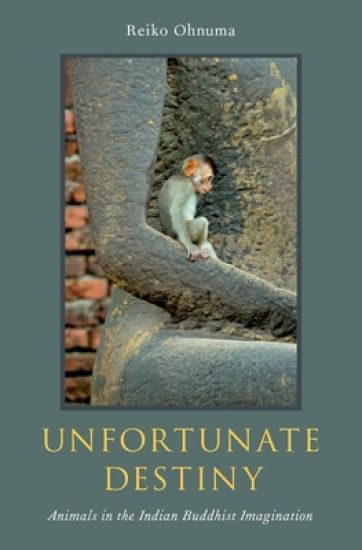
Unfortunate Destiny

Unfortunate Destiny

Reiko Ohnuma

Oxford University Press Inc
2017
sidottu
Unfortunate Destiny focuses on the roles played by nonhuman animals within the imaginative thought-world of Indian Buddhism, as reflected in pre-modern South Asian Buddhist literature. These roles are multifaceted, diverse, and often contradictory: In Buddhist doctrine and cosmology, the animal rebirth is a most "unfortunate destiny" (durgati), won through negative karma and characterized by a lack of intelligence, moral agency, and spiritual potential. In stories about the Buddha's previous lives, on the other hand, we find highly anthropomorphized animals who are wise, virtuous, endowed with human speech, and often critical of the moral shortcomings of humankind. In the life-story of the Buddha, certain animal characters serve as "doubles" of the Buddha, illuminating his nature through identification, contrast or parallelism with an animal "other." Relations between human beings and animals likewise range all the way from support, friendship, and near-equality to rampant exploitation, cruelty, and abuse. Perhaps the only commonality among these various strands of thought is a persistent impulse to use animals to clarify the nature of humanity itself--whether through similarity, contrast, or counterpoint. Buddhism is a profoundly human-centered religious tradition, yet it relies upon a dexterous use of the animal other to help clarify the human self. This book seeks to make sense of this process through a wide-ranging-exploration of animal imagery, animal discourse, and specific animal characters in South Asian Buddhist texts.
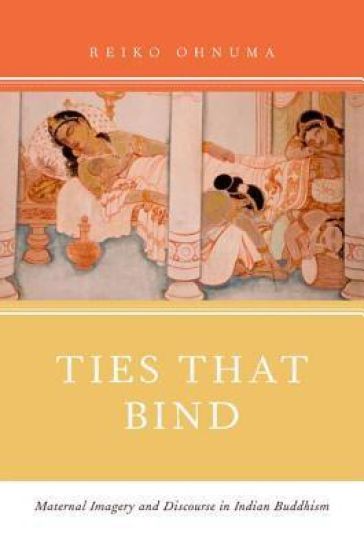
Ties That Bind

Ties That Bind

Reiko Ohnuma

Oxford University Press Inc
2012
sidottu
Reiko Ohnuma offers a wide-ranging exploration of maternal imagery and discourse in pre-modern South Asian Buddhism, drawing on textual sources preserved in Pali and Sanskrit. She demonstrates that Buddhism in India had a complex and ambivalent relationship with mothers and motherhood-symbolically, affectively, and institutionally. Symbolically, motherhood was a double-edged sword, sometimes extolled as the most appropriate symbol for buddhahood itself, and sometimes denigrated as the most paradigmatic manifestation possible of attachment and suffering. On an affective level, too, motherhood was viewed with the same ambivalence: in Buddhist literature, warm feelings of love and gratitude for the mother's nurturance and care frequently mingle with submerged feelings of hostility and resentment for the unbreakable obligations thus created, and positive images of self-sacrificing mothers are counterbalanced by horrific depictions of mothers who kill and devour. Institutionally, the formal definition of the Buddhist renunciant as one who has severed all familial ties seems to co-exist uneasily with an abundance of historical evidence demonstrating monks' and nuns' continuing concern for their mothers, as well as other familial entanglements. Ohnuma's study provides critical insight into Buddhist depictions of maternal love and maternal grief, the role played by the Buddha's own mothers, Maya and Mahaprajapati, the use of pregnancy and gestation as metaphors for the attainment of enlightenment, the use of breastfeeding as a metaphor for the compassionate deeds of buddhas and bodhisattvas, and the relationship between Buddhism and motherhood as it actually existed in day-to-day life.
Ties That Bind

Ties That Bind

Reiko Ohnuma

Oxford University Press Inc
2012
nidottu
Reiko Ohnuma offers a wide-ranging exploration of maternal imagery and discourse in pre-modern South Asian Buddhism, drawing on textual sources preserved in Pali and Sanskrit. She demonstrates that Buddhism in India had a complex and ambivalent relationship with mothers and motherhood-symbolically, affectively, and institutionally. Symbolically, motherhood was a double-edged sword, sometimes extolled as the most appropriate symbol for buddhahood itself, and sometimes denigrated as the most paradigmatic manifestation possible of attachment and suffering. On an affective level, too, motherhood was viewed with the same ambivalence: in Buddhist literature, warm feelings of love and gratitude for the mother's nurturance and care frequently mingle with submerged feelings of hostility and resentment for the unbreakable obligations thus created, and positive images of self-sacrificing mothers are counterbalanced by horrific depictions of mothers who kill and devour. Institutionally, the formal definition of the Buddhist renunciant as one who has severed all familial ties seems to co-exist uneasily with an abundance of historical evidence demonstrating monks' and nuns' continuing concern for their mothers, as well as other familial entanglements. Ohnuma's study provides critical insight into Buddhist depictions of maternal love and maternal grief, the role played by the Buddha's own mothers, Maya and Mahaprajapati, the use of pregnancy and gestation as metaphors for the attainment of enlightenment, the use of breastfeeding as a metaphor for the compassionate deeds of buddhas and bodhisattvas, and the relationship between Buddhism and motherhood as it actually existed in day-to-day life.
Head, Eyes, Flesh, Blood

Head, Eyes, Flesh, Blood

Reiko Ohnuma

Columbia University Press
2006
sidottu
Head, Eyes, Flesh, and Blood is the first comprehensive study of a central narrative theme in premodern South Asian Buddhist literature: the Buddha's bodily self-sacrifice during his previous lives as a bodhisattva. Conducting close readings of stories from Sanskrit, Pali, Chinese, and Tibetan literature written between the third century BCE and the late medieval period, Reiko Ohnuma argues that this theme has had a major impact on the development of Buddhist philosophy and culture. Whether he takes the form of king, prince, ascetic, elephant, hare, serpent, or god, the bodhisattva repeatedly gives his body or parts of his flesh to others. He leaps into fires, drowns himself in the ocean, rips out his tusks, gouges out his eyes, and lets mosquitoes drink from his blood, always out of selflessness and compassion and to achieve the highest state of Buddhahood. Ohnuma places these stories into a discrete subgenre of South Asian Buddhist literature and approaches them like case studies, analyzing their plots, characterizations, and rhetoric. She then relates the theme of the Buddha's bodily self-sacrifice to major conceptual discourses in the history of Buddhism and South Asian religions, such as the categories of the gift, the body (both ordinary and extraordinary), kingship, sacrifice, ritual offering, and death. Head, Eyes, Flesh, and Blood reveals a very sophisticated and influential perception of the body in South Asian Buddhist literature and highlights the way in which these stories have provided an important cultural resource for Buddhists. Combined with her rich and careful translations of classic texts, Ohnuma introduces a whole new understanding of a vital concept in Buddhists studies.